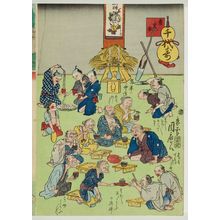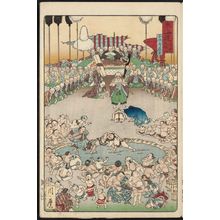
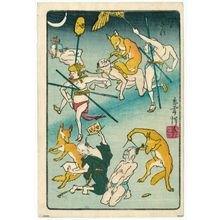
A third surviving impression of the Tenpôzan children's sumo sheet from Kyosai's contribution to the Tôkaidô meisho fûkei series. The existence of multiple impressions indicates the sheet was in demand and that blocks remained in use across a period during which inking and color registration could vary. The subject — a children's sumô (kodomo sumô) viewing event at Tenpôzan in Osaka — was well suited to Kyosai's expressive figural style: compact wrestlers in dynamic poses, animated spectators, and a recognizable landscape setting combine [meisho-e](/glossary/meisho-e) geographic specificity with genre-scene vitality. The Tôkaidô series as a whole documents the visual culture of travel and regional identity in the transition from late Edo to Meiji Japan, and Kyosai's inclusion of Osaka sites extends the series beyond the narrowly highway-adjacent locations typical of earlier Tôkaidô print suites.
Woodblock print
Woodblock print
Woodblock print
Woodblock print
"Tenpôzan in Osaka: Viewing Children's Sumo (Naniwa Tenpôzan kodomo sumô shôran), from the series Scenes of Famous Places along the Tôkaidô Road (Tôkaidô meisho fûkei), also known as the Processional Tôkaidô (Gyôretsu Tôkaidô), here called Tôkaidô" was created by Kawanabe Kyosai (河鍋暁斎).
Yes — "Tenpôzan in Osaka: Viewing Children's Sumo (Naniwa Tenpôzan kodomo sumô shôran), from the series Scenes of Famous Places along the Tôkaidô Road (Tôkaidô meisho fûkei), also known as the Processional Tôkaidô (Gyôretsu Tôkaidô), here called Tôkaidô" is part of the Scenes of Famous Places along the Tôkaidô Road series by Kawanabe Kyosai.
"Tenpôzan in Osaka: Viewing Children's Sumo (Naniwa Tenpôzan kodomo sumô shôran), from the series Scenes of Famous Places along the Tôkaidô Road (Tôkaidô meisho fûkei), also known as the Processional Tôkaidô (Gyôretsu Tôkaidô), here called Tôkaidô" depicts daily life, tōkaidō, and famous places (meisho-e).