Biography
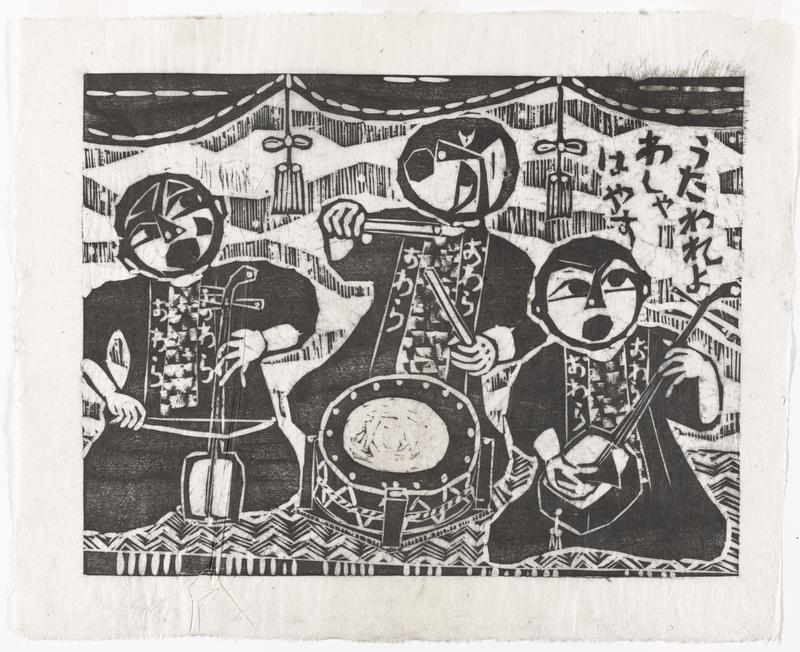
Amano Kazumi was a Japanese painter and printmaker born in Takaoka City, Toyama Prefecture, who studied furniture design before turning to woodblock prints in the early 1950s under the influence of Munakata Shiko. By the early 1960s, while still living in Japan, his style had evolved from figurative work into vibrant abstract geometric compositions with deep embossing. He later moved to the United States, settling in New York City in 1971. His prints are held in the permanent collections of the National Museum of Modern Art in Tokyo and the Museum of Modern Art in New York.
Key Facts
- Active Period
- 1927–2001
- Nationality
- 🇯🇵Japan
- Movement
- Contemporary Mokuhanga
- Works Indexed
- 37
Frequently Asked Questions
Amano Kazumi was a Japanese painter and printmaker born in Takaoka City, Toyama Prefecture, who studied furniture design before turning to woodblock prints in the early 1950s under the influence of Munakata Shiko. By the early 1960s, while still living in Japan, his style had evolved from figurative work into vibrant abstract geometric compositions with deep embossing. He later moved to the United States, settling in New York City in 1971. His prints are held in the permanent collections of the National Museum of Modern Art in Tokyo and the Museum of Modern Art in New York.
Amano Kazumi was active from 1927 to 2001. They were associated with the Contemporary Mokuhanga movement.
Amano Kazumi's work was shaped by the Contemporary Mokuhanga tradition in Japanese woodblock printmaking. Contemporary Mokuhanga: Contemporary mokuhanga (literally "wood-block print") encompasses artists working from approximately 1970 to the present who continue or reinvent traditional Japanese woodblock printing techniques.
Amano Kazumi's prints frequently feature abstract, music, embossing, figures, calligraphy, animals.
Original prints by Amano Kazumi can be found in collections including Minneapolis Institute of Art, Fine Arts Museums of San Francisco, Japanese Art Open Database, Legion of Honor.