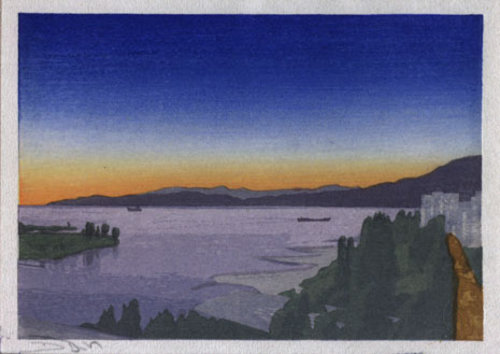
Biography
David Bull (born 1951) is a Canadian woodblock printmaker who has lived and worked in Japan since 1986, dedicating his career to mastering and perpetuating the traditional Japanese mokuhanga (woodblock printing) craft. Through his decades of practice as both a carver and printer, his prolific publishing activities, and his role as founder of the Mokuhankan studio and print shop in Tokyo's Asakusa district, Bull has become one of the most important figures in the contemporary mokuhanga world — a unique bridge between the centuries-old Japanese woodblock tradition and a global audience of print enthusiasts, collectors, and aspiring printmakers.
Born in England and raised in Canada, Bull had no early exposure to Japanese art. He first encountered Japanese woodblock prints in his twenties and was immediately captivated by their technical sophistication and aesthetic beauty. Unlike most Western admirers who appreciate the prints from a distance, Bull felt compelled to learn the craft itself — to understand from the inside how these extraordinary objects were made. In 1986, he moved to Japan and began the long, arduous process of teaching himself the traditional techniques of woodblock carving and printing, working from historical manuals and studying surviving examples of master craftsmanship.
Bull's first major project, begun in 1989, was an ambitious decade-long endeavor to reproduce a complete set of one hundred designs from Katsukawa Shunshō's 'One Hundred Poems by One Hundred Poets' (Hyakunin Isshu), a challenging body of work that tested and developed his skills as both carver and printer. This project, which he documented through a newsletter and later online, attracted a dedicated following of subscribers who supported his work by purchasing the prints as they were completed. The model of subscription publishing — in which collectors commit in advance to purchasing a series of prints released over time — became central to Bull's business approach and connected him to a tradition of print publishing with deep roots in Japanese history.
Over the following decades, Bull produced numerous series of prints based on classical ukiyo-e designs, including reproductions of works by Hiroshige, Utamaro, Hokusai, and other masters. His reproductions are not facsimiles but rather fresh interpretations created through the traditional process of hand-carving cherry wood blocks and printing them with water-based pigments on handmade washi paper using a baren. Each print requires Bull to analyze the original design, carve the necessary set of woodblocks (often ten to twenty or more for a single image), mix pigments to match or reinterpret the original colors, and print each impression individually by hand. The results are prints of remarkable quality that honor the originals while bearing the distinctive character of Bull's own craftsmanship.
In addition to his classical reproductions, Bull has increasingly produced original designs and has commissioned contemporary artists to create designs for him to carve and print. This expansion of his practice reflects his conviction that mokuhanga is not merely a heritage craft to be preserved but a living art form capable of producing new and relevant work. His original prints and collaborations bring a contemporary sensibility to the traditional medium, demonstrating its versatility and vitality.
Bull founded Mokuhankan, a combined workshop and retail shop located in Asakusa, one of Tokyo's most historic neighborhoods. Mokuhankan serves multiple functions: it is a working printmaking studio where Bull and his team produce prints; a retail shop selling prints to collectors and visitors; and an educational center where visitors can watch the printing process and even try their hand at making a print. The shop has become a destination for tourists and art lovers visiting Tokyo, introducing thousands of people each year to the art of traditional Japanese woodblock printing.
Bull's contribution to the mokuhanga world extends well beyond his prints. He has been an extraordinarily effective communicator and advocate for the craft, using his website, YouTube channel, and social media presence to share the processes, techniques, and pleasures of woodblock printing with a global audience of millions. His detailed videos showing the carving and printing process have demystified mokuhanga for viewers worldwide, inspiring a new generation of artists and enthusiasts to engage with the medium. His willingness to share his knowledge freely — including detailed technical information that traditional craftsmen might have guarded as trade secrets — has made him an invaluable educational resource.
His work is held in private collections worldwide, and his prints have been exhibited in Japan and internationally. Bull has been recognized by both the printmaking community and the broader cultural world for his unique contribution to keeping the mokuhanga tradition alive and relevant. His career represents a remarkable story of cross-cultural dedication — a Western-born artist who has devoted his life to a Japanese craft, mastering it to a degree that commands the respect of Japanese practitioners while making it accessible to a global audience.
Key Facts
- Active Period
- 1951
- Nationality
- 🇨🇦Canada
- Movement
- Contemporary Mokuhanga
- Works Indexed
- 11
Frequently Asked Questions
David Bull (born 1951) is a Canadian woodblock printmaker who has lived and worked in Japan since 1986, dedicating his career to mastering and perpetuating the traditional Japanese mokuhanga (woodblock printing) craft. Through his decades of practice as both a carver and printer, his prolific publishing activities, and his role as founder of the Mokuhankan studio and print shop in Tokyo's Asakusa district, Bull has become one of the most important figures in the contemporary mokuhanga world — a unique bridge between the centuries-old Japanese woodblock tradition and a global audience of print enthusiasts, collectors, and aspiring printmakers.
David Bull was active born in 1951. They were associated with the Contemporary Mokuhanga movement.
David Bull's work was shaped by the Contemporary Mokuhanga tradition in Japanese woodblock printmaking. Contemporary Mokuhanga: Contemporary mokuhanga (literally "wood-block print") encompasses artists working from approximately 1970 to the present who continue or reinvent traditional Japanese woodblock printing techniques.
Woodblock Prints by David Bull (11)
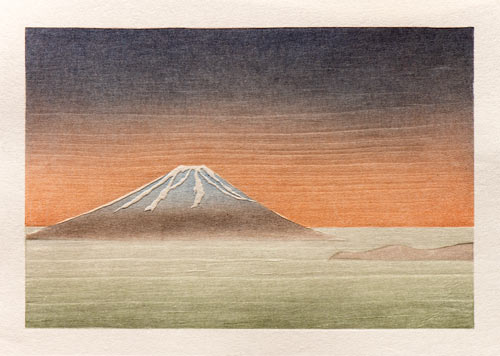
Dawn over Fuji
朝焼けの富士
1992
Woodblock print
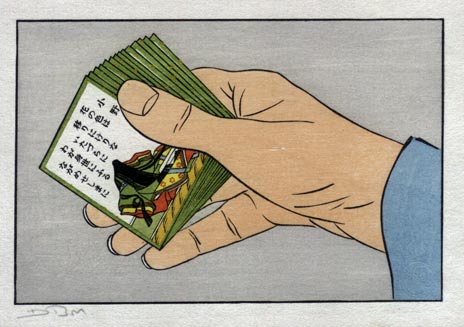
Ono no Komachi
小野小町
1994
Woodblock print

The Forest in Summer
2007
Woodblock print

The Seacoast in Autumn
2008
Woodblock print

The Forest in Autumn
2008
Woodblock print

The Seacoast in Spring
2009
Woodblock print

The Seacoast in Winter
2009
Woodblock print
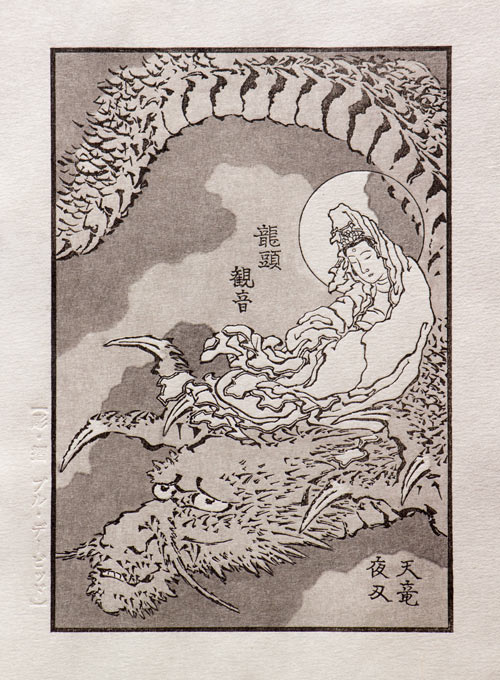
Hokusai Reborn: Buddhist Deity on Dragon
2023
Woodblock print
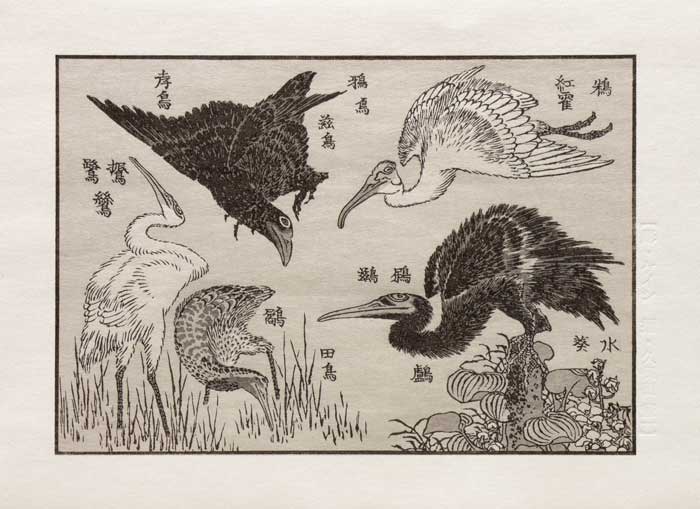
Hokusai Reborn: A Bevy of Birds
2024
Woodblock print

Daruma
ダルマ
Woodblock print
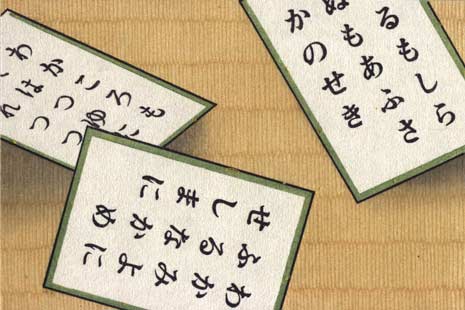
Flying Cards
カルタ
Woodblock print