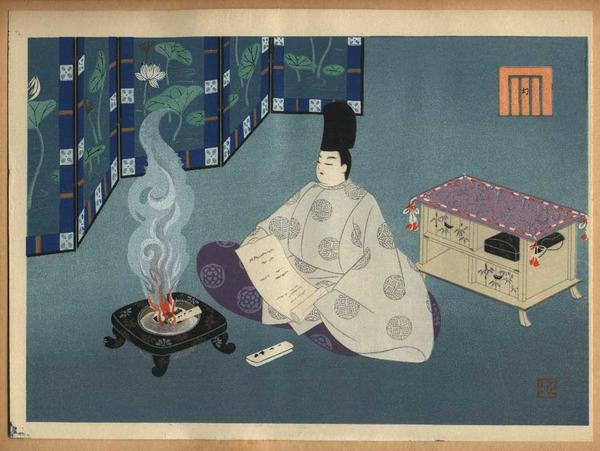
Ebina Masao
海老名正夫
Japan
Biography
Ebina Masao (海老名正夫) was a Japanese artist active during the twentieth century whose most significant body of work consists of a series of woodblock prints illustrating chapters of "The Tale of Genji" (Genji Monogatari), the eleventh-century novel by Murasaki Shikibu that is widely considered the foundational work of Japanese literature. Ebina's Genji prints---with titles referencing individual chapters such as "Kiritsubo," "Sakaki," "Leaves of Wisteria" (Fuji no Uraba), "Young Fresh Greens" (Wakana), "The Flute," "A Singing Insect," "Yugiri," "The Imperial Visit," "Plum Branch," "Prayer Offering," and "Hashi-hime (The Bride Maiden)"---represent a sustained engagement with the novel's fifty-four chapters through the medium of the woodblock print.
This Genji project placed Ebina within a long artistic tradition of illustrating the tale, stretching from Heian-period handscroll paintings through Edo-period ukiyo-e editions to modern interpretations. His prints translated the novel's courtly world of seasonal poetry, romantic intrigue, and aristocratic ceremony into a visual language that balanced fidelity to the literary source with the expressive possibilities of woodblock printing. Subjects included natural motifs---wisteria, morning glory, bracken, butterflies, autumn leaves---that echoed the chapter titles' poetic associations.
Beyond the Genji series, Ebina produced prints of figures in traditional dress, including images of girls in kimono and bijin subjects. Without confirmed birth and death dates, the precise period of his activity remains uncertain, though the style and production of his known works suggest he was active during the mid-twentieth century.
Key Facts
- Nationality
- 🇯🇵Japan
- Works Indexed
- 63
Frequently Asked Questions
Ebina Masao (海老名正夫) was a Japanese artist active during the twentieth century whose most significant body of work consists of a series of woodblock prints illustrating chapters of "The Tale of Genji" (Genji Monogatari), the eleventh-century novel by Murasaki Shikibu that is widely considered the foundational work of Japanese literature. Ebina's Genji prints---with titles referencing individual chapters such as "Kiritsubo," "Sakaki," "Leaves of Wisteria" (Fuji no Uraba), "Young Fresh Greens" (Wakana), "The Flute," "A Singing Insect," "Yugiri," "The Imperial Visit," "Plum Branch," "Prayer Offering," and "Hashi-hime (The Bride Maiden)"---represent a sustained engagement with the novel's fifty-four chapters through the medium of the woodblock print.
Ebina Masao's prints frequently feature figures, bijin-ga, interiors, travel scenes, spring, trees.
Original prints by Ebina Masao can be found in collections including Japanese Art Open Database, Ohmi Gallery, ukiyo-e.org, Asian Collection Internet Auction.