Biography
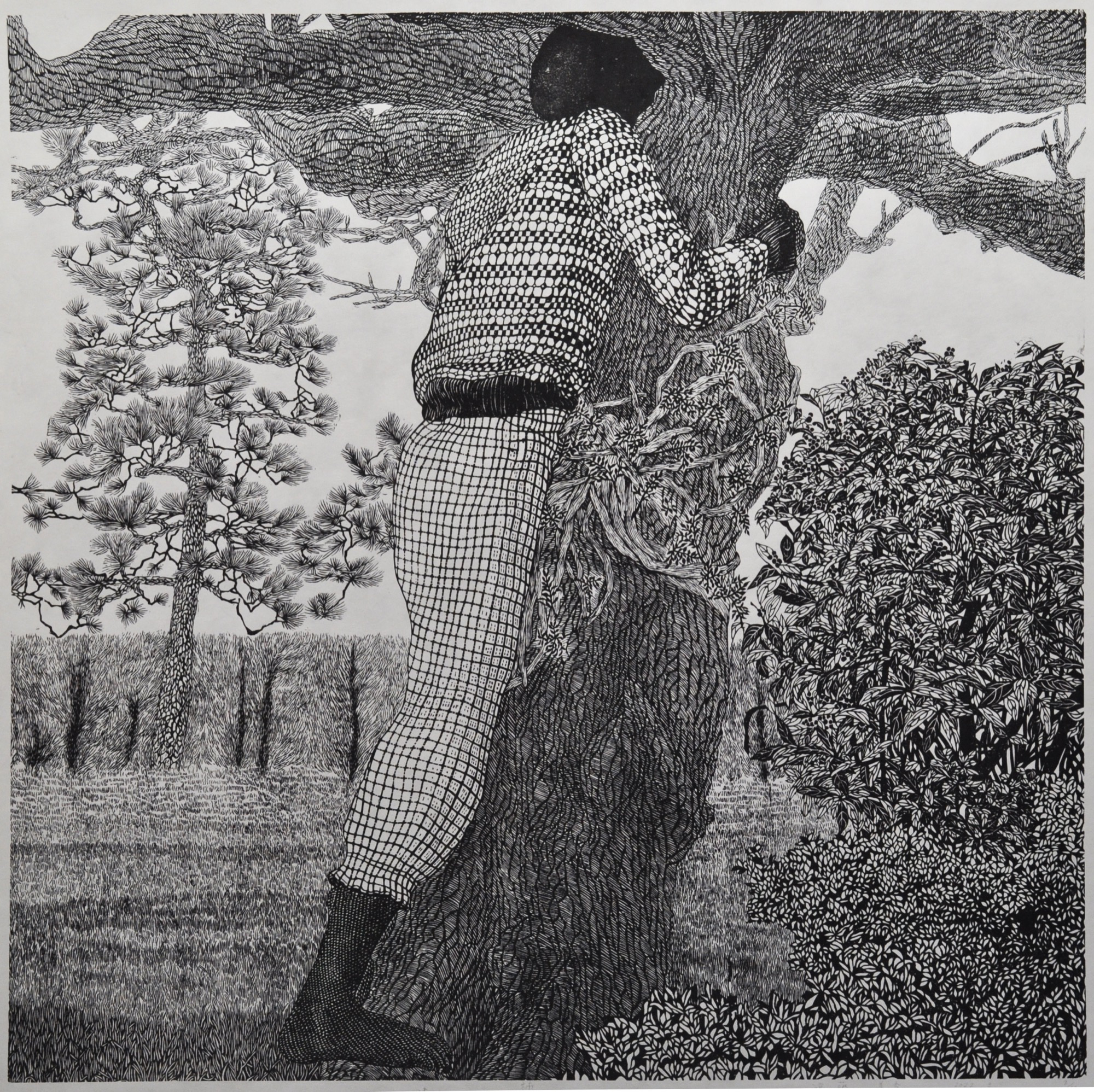
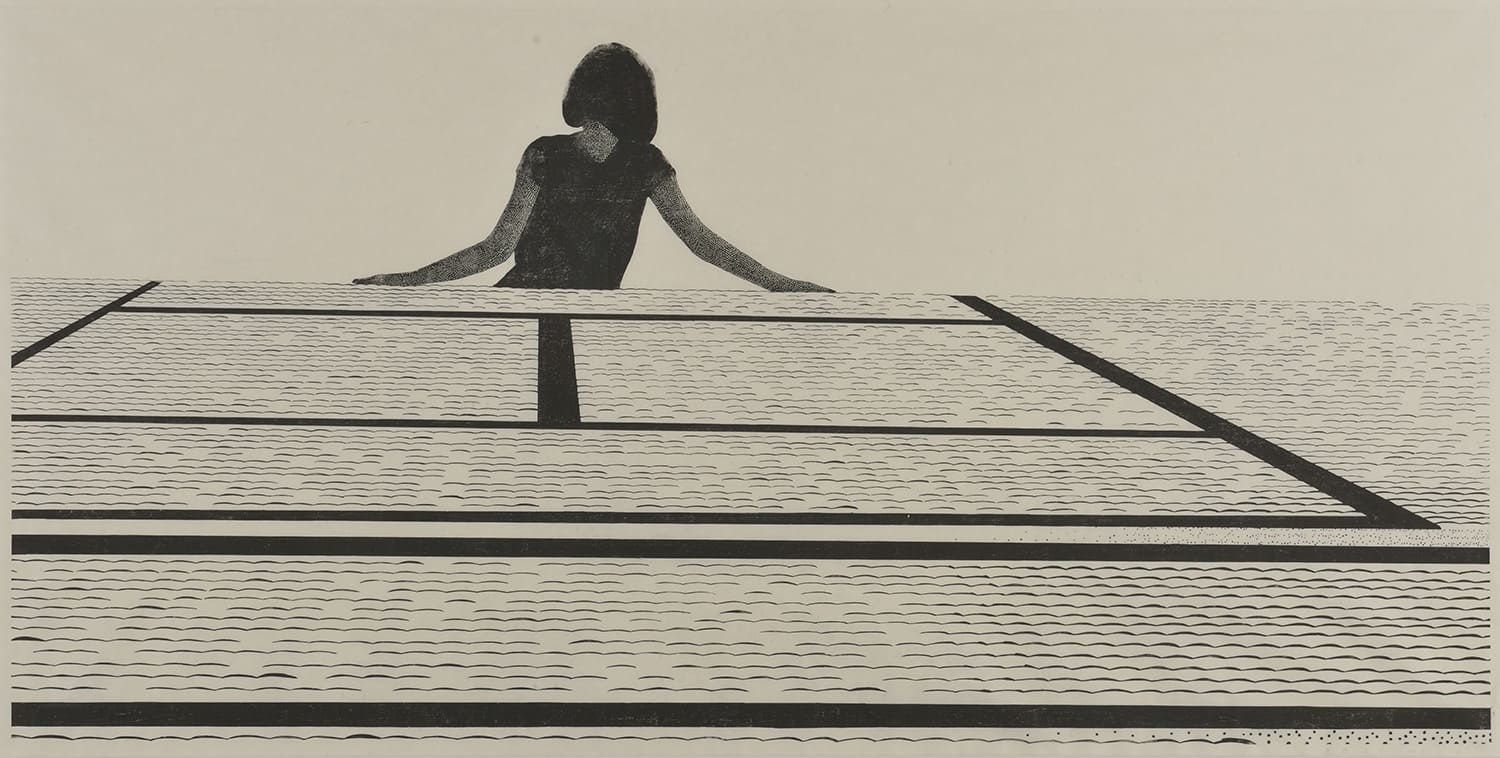
Mika Endo (born 1984, Shizuoka Prefecture) is a Japanese woodblock printmaker whose work is distinguished by its strict adherence to monochrome ink — every print rendered in black sumi on white washi paper — and by the meticulous carved-line vocabulary she draws from traditional Japanese woodblock to depict everyday subjects: persimmon fruit, carp, camphor trees, kotatsu tables, airplanes. The technical commitment to single-block, single-colour woodcut places her in conversation with the postwar sosaku-hanga generation while the subject matter remains grounded in contemporary Shizuoka domestic life.
Endo received her undergraduate degree from Nihon University Faculty of Art, Department of Fine Arts, with a Printmaking major in 2007, and completed her MA in Oil Painting and Printmaking at Aichi Prefectural University of Fine Arts and Music in 2009. Her early career was marked by a rapid sequence of major awards: the Munakata Memorial Grand Prize (2007); the Ishibashi Foundation Museum Award and Japan Print Society Newcomer Award (2009); the Shell Art Award Encouragement Prize (2011, judged by Kunio Motoe); and most prominently, the FACE 2016 Grand Prix (Sompo Japan Nipponkoa Art Award) for her woodcut 'Narcissus' (2015, 182 x 91 cm), a large vertical composition rendered in tightly carved monochrome lines.
Endo's mature solo exhibitions have been concentrated at Gallery Natsuka in Tokyo (2009, 2016, 2018, 2024) and at her hometown museum in Hamamatsu, Shizuoka. The 2022 solo show at the Hamamatsu City Museum of Art, 'Endo Mika: Take Root Here,' presented a sequence of large-scale prints alongside smaller, intimate studies. The same year she received the Hamamatsu City Education and Culture Encouragement Award. A square woodcut of persimmons, 'Persimmon' (柿, 2022), represents her at the 4th PATinKyoto Print Art Triennale 2025.
Her practice frames woodblock as a discipline of reduction: she has stated that the clear contrast of black and white reveals what is essential, and that the quality of the carved line carries the work. The technical procedure is straightforward — woodblock + ink + washi — but the carving is exacting, with detail carried by line weight and rhythm rather than by colour or composition tricks. The result has a distinct visual register: dense controlled patterning, large repeating motifs, a contemporary deadpan registering as gravely classical.
Works by Endo are held in the public collections of the Sompo Japan Nipponkoa Museum of Art (Tokyo), the Kanuma City Kawakami Sumio Art Museum (Tochigi), and the Hamamatsu City Museum of Art. Her positioning within the contemporary Japanese print scene is as a serious mid-career woodcut specialist whose monochrome commitment has produced a distinctive body of work that crosses the gallery and public-museum boundary in a way that few peers have managed.
Key Facts
- Active Period
- 1984
- Nationality
- 🇯🇵Japan
- Movement
- Contemporary Mokuhanga
- Works Indexed
- 2
Frequently Asked Questions
Mika Endo (born 1984, Shizuoka Prefecture) is a Japanese woodblock printmaker whose work is distinguished by its strict adherence to monochrome ink — every print rendered in black sumi on white washi paper — and by the meticulous carved-line vocabulary she draws from traditional Japanese woodblock to depict everyday subjects: persimmon fruit, carp, camphor trees, kotatsu tables, airplanes. The technical commitment to single-block, single-colour woodcut places her in conversation with the postwar sosaku-hanga generation while the subject matter remains grounded in contemporary Shizuoka domestic life.
Mika Endo was active born in 1984. They were associated with the Contemporary Mokuhanga movement.
Mika Endo's work was shaped by the Contemporary Mokuhanga tradition in Japanese woodblock printmaking. Contemporary Mokuhanga: Contemporary mokuhanga (literally "wood-block print") encompasses artists working from approximately 1970 to the present who continue or reinvent traditional Japanese woodblock printing techniques.