Biography
Florence Neal is an American printmaker, sculptor, painter, and curator based in Brooklyn, New York, who co-founded the Kentler International Drawing Space in Red Hook in 1990 and has served as its Executive Director and chief curator for over three decades. Through Kentler, Neal has built one of the most important platforms for contemporary drawing and mokuhanga in the United States, while continuing to maintain her own artistic practice.
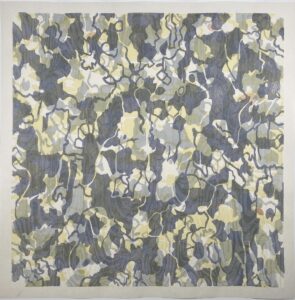
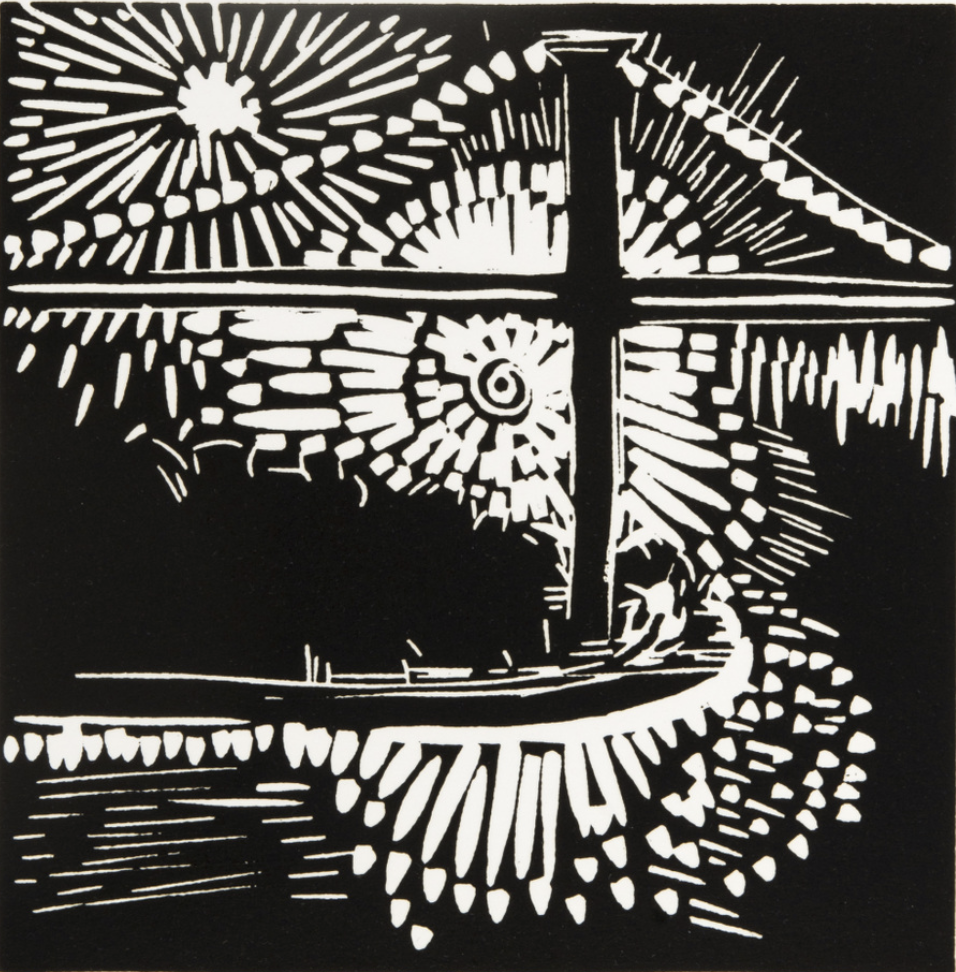
Neal holds a BFA from Auburn University, where she studied under Maltby Sykes, and she grew up in Columbus, Georgia, on the Chattahoochee River — a proximity to water that has profoundly shaped her artistic sensibility. Water has remained a dominant presence in her life and work, from the rivers of the American South to the waterways of New York City. Her mokuhanga prints employ the Japanese water-based woodblock technique to create richly colored images that explore themes of water, environment, and the natural forces that shape the world.
Her exhibition "Waters of the Future" at FiveMyles in Crown Heights, Brooklyn (2019) exemplified her engaged approach to art-making. The installation of water-based woodcut prints invited viewer participation, asking audiences to consider "What is the color of the water of the future?" and to hand-print their responses using the traditional mokuhanga technique. This merger of community engagement, environmental consciousness, and traditional craft reflects Neal's belief in art as a vehicle for social dialogue.
Her exhibition "Fire and Water: Prints by Florence Neal" at the Jule Collins Smith Museum of Fine Art at Auburn University (2019) showcased her range across printmaking techniques, juxtaposing water-themed mokuhanga works with prints on the complementary theme of fire.
Neal's broader artistic career encompasses wind sculptures, installations, and public art commissions. Her outdoor wind sculpture "Four Winds" (1990) was installed in downtown Omaha, Nebraska, and "Dance of Life" (1993) was commissioned by the University of Alabama at Birmingham. She received a fellowship from the Pollock-Krasner Foundation (2014) and has completed residencies at Sculpture Space in Utica, New York, and the Woodstock School of Art. Her work is held in the collections of the Museum of Modern Art, the New York Public Library, the Brooklyn Museum, and the Hofstra University Museum, among others. Active in the international mokuhanga community, she has served on the International Mokuhanga Association's international board and took part in the 2024 International Mokuhanga Conference in Echizen, Japan.
Key Facts
- Nationality
- 🇺🇸United States
- Movement
- Contemporary Mokuhanga
- Subjects
- LandscapesRivers & Lakes
- Works Indexed
- 2
Frequently Asked Questions
Florence Neal is an American printmaker, sculptor, painter, and curator based in Brooklyn, New York, who co-founded the Kentler International Drawing Space in Red Hook in 1990 and has served as its Executive Director and chief curator for over three decades. Through Kentler, Neal has built one of the most important platforms for contemporary drawing and mokuhanga in the United States, while continuing to maintain her own artistic practice.
Florence Neal's work was shaped by the Contemporary Mokuhanga tradition in Japanese woodblock printmaking. Contemporary Mokuhanga: Contemporary mokuhanga (literally "wood-block print") encompasses artists working from approximately 1970 to the present who continue or reinvent traditional Japanese woodblock printing techniques.
Florence Neal's prints frequently feature landscapes, rivers & lakes.