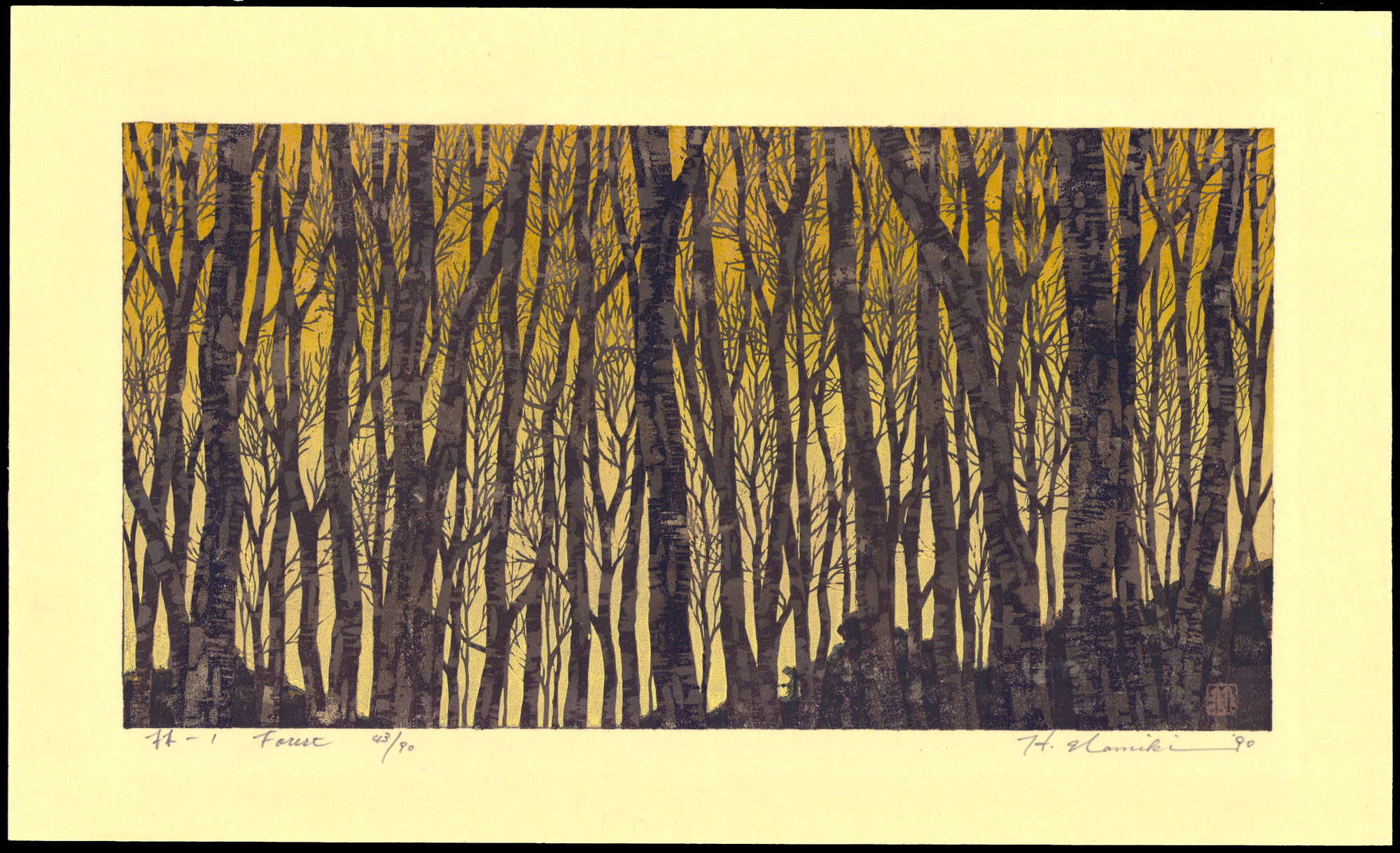
Biography
Hajime Namiki (並木一, born 1947) is a Japanese woodblock print artist renowned for his ethereal depictions of trees and forests, which have made him one of the most popular and widely collected contemporary mokuhanga practitioners. His signature images of solitary trees and tree-lined paths, rendered in luminous color against softly graduated backgrounds, combine the contemplative spirit of traditional Japanese art with a distinctly modern simplicity that has won him an enthusiastic international following.
Born in 1947, Namiki developed his artistic vision over decades of dedicated practice in the mokuhanga tradition. He carves and prints his own blocks using water-based pigments on handmade washi paper, following the sosaku-hanga principle of the artist as sole creator. This hands-on engagement with every stage of the printmaking process gives his work an intimacy and consistency of vision that collectors find deeply appealing.
Namiki's most celebrated prints depict individual trees or small groups of trees, often rendered as simplified silhouettes against richly graduated color fields that suggest sky, mist, or atmospheric light. His "Tree Scene" series, which numbers well over a hundred prints, has become iconic in the contemporary mokuhanga world. Each print in the series captures a different tree — cherry, maple, ginkgo, pine, zelkova — in a different season or atmospheric condition, yet all share the same essential qualities of stillness, luminosity, and quiet reverence for the natural world. The trees are rendered with enough botanical specificity to be recognizable but are simplified and idealized to an almost archetypal degree, becoming universal symbols of growth, endurance, and seasonal change.
The technical hallmark of Namiki's prints is his masterful use of bokashi, the graduated color-blending technique that has been a defining feature of Japanese woodblock printing since the eighteenth century. His backgrounds, which shift seamlessly from deep indigo through turquoise to pale gold, or from rich purple through rose to warm amber, are achieved through painstaking application of pigment and careful hand-printing with the baren. These luminous gradations give his prints an atmospheric depth that belies their apparent simplicity, enveloping each tree in a halo of colored light that evokes specific times of day or seasons of the year.
Beyond his tree subjects, Namiki also produces landscape prints depicting mountains, lakes, gardens, and traditional Japanese architecture. These compositions share the same qualities of luminous color, atmospheric depth, and contemplative stillness that characterize his tree prints. Moon-viewing scenes, snow landscapes, and garden views are among his other recurring subjects.
Namiki's work has been exhibited in Japan and internationally, and his prints are held in private collections across the world. He has become particularly popular with Western collectors, who are drawn to the accessibility of his imagery and the meditative quality of his compositions. His prints are widely available through Japanese print galleries and online dealers, and he is frequently represented at international print fairs.
Key Facts
- Active Period
- 1947
- Nationality
- 🇯🇵Japan
- Movements
- Contemporary MokuhangaSōsaku-hanga
- Works Indexed
- 40
Frequently Asked Questions
Hajime Namiki (並木一, born 1947) is a Japanese woodblock print artist renowned for his ethereal depictions of trees and forests, which have made him one of the most popular and widely collected contemporary mokuhanga practitioners. His signature images of solitary trees and tree-lined paths, rendered in luminous color against softly graduated backgrounds, combine the contemplative spirit of traditional Japanese art with a distinctly modern simplicity that has won him an enthusiastic international following.
Hajime Namiki was active born in 1947. They were associated with the Contemporary Mokuhanga and Sōsaku-hanga movements.
Hajime Namiki's work was shaped by the Contemporary Mokuhanga and Sōsaku-hanga traditions in Japanese woodblock printmaking. Contemporary Mokuhanga: Contemporary mokuhanga (literally "wood-block print") encompasses artists working from approximately 1970 to the present who continue or reinvent traditional Japanese woodblock printing techniques. Sōsaku-hanga: ## What is sōsaku-hanga? Sōsaku-hanga (創作版画, "creative prints") was a twentieth-century Japanese print movement defined by a single commitment: the artist must design, carve, and print every work alone.
Hajime Namiki's prints frequently feature trees, birds & flowers, cherry blossoms, autumn foliage, animals, mythology.
Original prints by Hajime Namiki can be found in collections including Art Institute of Chicago, wbp, Japanese Art Open Database.
Woodblock Prints by Hajime Namiki (40)

Cherry Blossom Tree Kanda
20/200, 2000
Woodblock print

Fuji-10
2001
Color woodblock print; edition 20/200

Dogwood 2
2001
Color woodblock print; edition 128/200
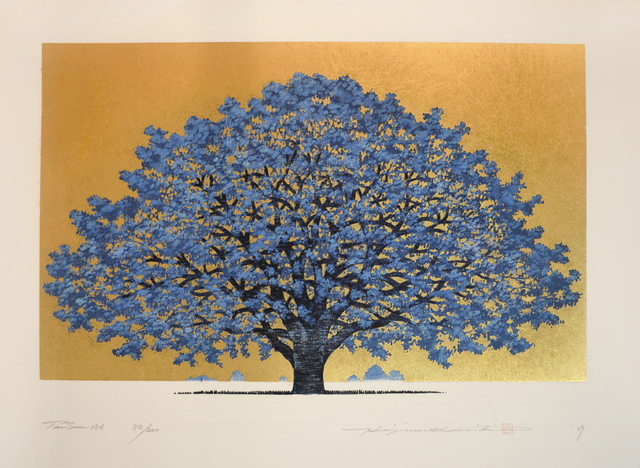
Blue Tree
2009
Woodblock Print
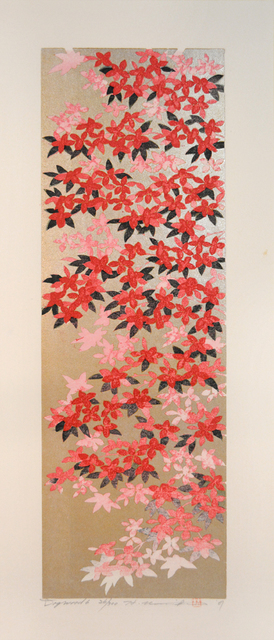
Dogwood 6
2009
Woodblock Print

Tree Scene 95B
Mokuhanga (Japanese woodblock)
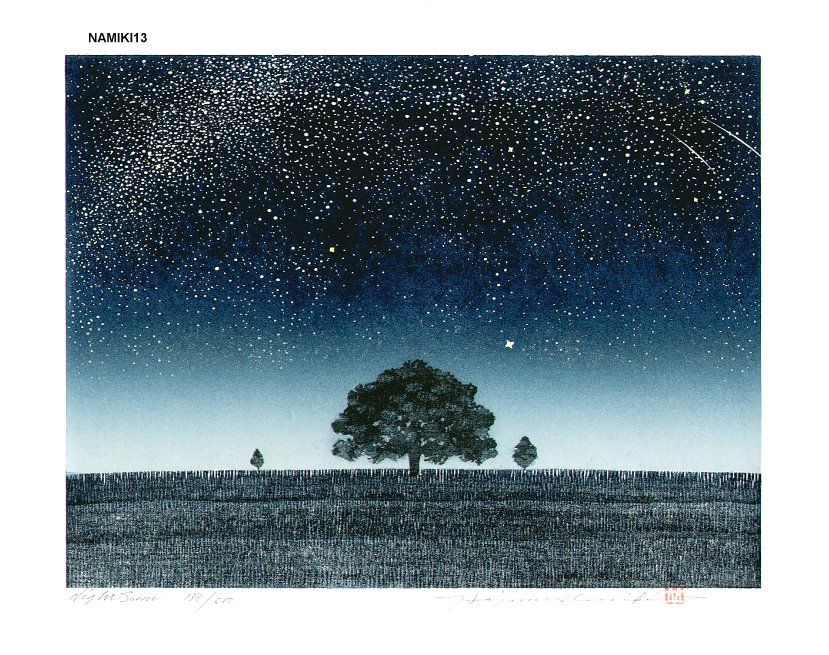
Night Scene
138/500
Woodblock print
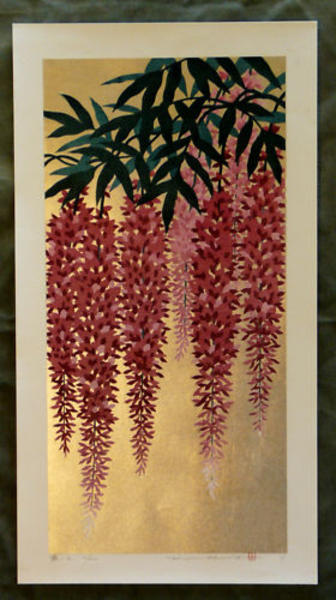
Wisteria 2
Not set
Woodblock print

Wisteria 1
Mokuhanga (Japanese woodblock)

Magnolia 2
Mokuhanga (Japanese woodblock)

Magnolia 3
Mokuhanga (Japanese woodblock)

Fuji 15
Mokuhanga (Japanese woodblock)

Momiji 2
Mokuhanga (Japanese woodblock)

Sakura 5
Mokuhanga (Japanese woodblock)

Dogwood 6
Mokuhanga (Japanese woodblock)

Momiji 1
Mokuhanga (Japanese woodblock)

Dogwood 3 B
Mokuhanga (Japanese woodblock)

Iris 78
Mokuhanga (Japanese woodblock)

Momiji 3
Mokuhanga (Japanese woodblock)

Dogwood 10
Mokuhanga (Japanese woodblock)

Dogwood 11
Mokuhanga (Japanese woodblock)

Dogwood 4
Mokuhanga (Japanese woodblock)

Dogwood 3-A
Mokuhanga (Japanese woodblock)

Run
Mokuhanga (Japanese woodblock)