Biography
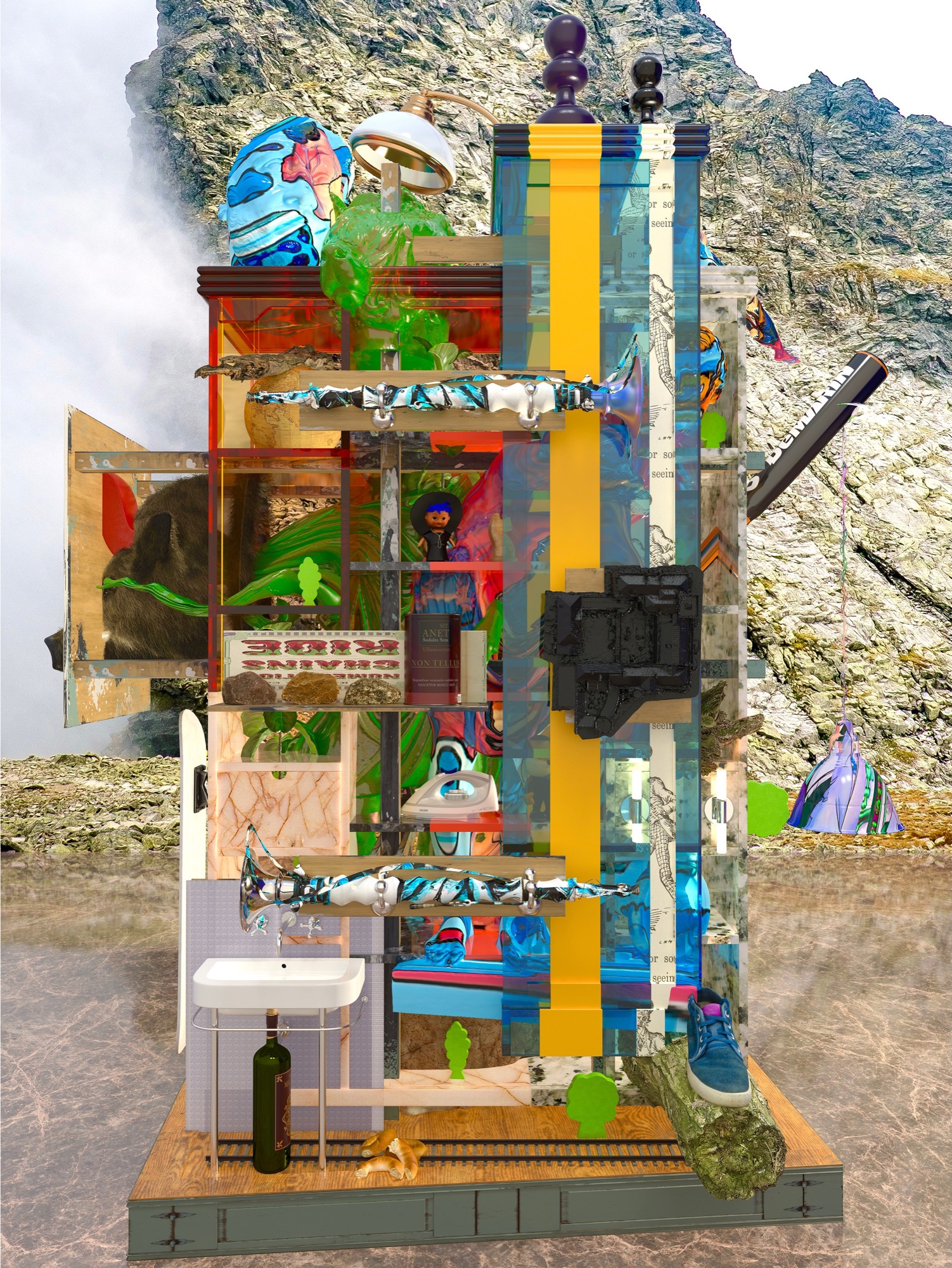
Naoya Hirata (born 1991, Nagano Prefecture) is a Japanese contemporary artist whose practice extends the print logic of replication and circulation onto digital, three-dimensional, and lenticular substrates — 3D-printed PLA-plastic sculpture, digital silver prints, lenticular-sheet works, UV prints, and inkjet on tarpaulin. He was selected in 2025 for the 4th PATinKyoto Print Art Triennale, where his work is treated as expanded printmaking rather than conventional intaglio or relief printmaking; his recommendation for the triennale came from the art historian Masahiko Haito.
Hirata graduated from the Department of Sculpture, College of Art and Design at Musashino Art University in 2014, and currently lives in Saitama Prefecture. The training as sculptor and his subsequent move into digital photographic and 3D-print media mark his work as part of the post-2015 expansion of Japanese 'print' practice into algorithmic and machine-output forms.
A defining feature of Hirata's mature work is its emphasis on found-image research as the source of all subsequent fabrication: he collects materials from internet image archives, photographic databases, and screenshots, then uses 3D-modeling and CG-rendering pipelines to produce both flat photographic prints and physical sculptural objects in PLA. The results — 'Ouija #2 (The Grantham Tomb),' 'Ouija #3 (Puck),' 'Ouija #5 (Penelope),' 'Cat tower,' 'Toleme,' '十把一絡げ #1 (cap),' 'Six-fold entanglement (Moonlit night horn)' — read as flattened-and-warped artifacts of digital research, restored to physical form through industrial 3D-printing.
In 2018 Hirata received the Grand Prize at the 18th Graphic '1_WALL' Exhibition (Recruit Holdings) and was selected for the 21st Media Arts Festival Art Division (Agency for Cultural Affairs). In 2019 he received the Gateau Festa Harada Award at the Gunma Biennale for Young Artists 2019. Earlier, in 2016, he was selected for Tokyo Wonder Wall 2016. He is represented by Satoko Oe Contemporary in Tokyo and is a PATinKyoto-circulating contemporary artist whose mature exhibition base is Tokyo's commercial-gallery rather than print-association circuit.
Hirata's solo exhibitions include 'Moonlit night horn' (2024, Satoko Oe Contemporary, Tokyo), 'Sakashima' (2021, Satoko Oe Contemporary), 'Incomplete Prison' (2019, Guardian Garden, Tokyo), 'Recently Cyber Existence' (2019, Recruit Holdings Headquarters), 'Paranoia Drive' (2019, ANAGRA Tokyo), and '∃, Parallels, Invulnerability' (2018, Tokyo Arts and Space Hongo). Group exhibitions include VOCA at the Ueno Royal Museum (2022), 'Before/After' at the Hiroshima City Museum of Contemporary Art (2023), and the Aichi Prefectural Museum of Art (2023).
Key Facts
- Active Period
- 1991
- Nationality
- 🇯🇵Japan
- Movement
- Contemporary Mokuhanga
- Subjects
- Mountains
- Works Indexed
- 1
Frequently Asked Questions
Naoya Hirata (born 1991, Nagano Prefecture) is a Japanese contemporary artist whose practice extends the print logic of replication and circulation onto digital, three-dimensional, and lenticular substrates — 3D-printed PLA-plastic sculpture, digital silver prints, lenticular-sheet works, UV prints, and inkjet on tarpaulin. He was selected in 2025 for the 4th PATinKyoto Print Art Triennale, where his work is treated as expanded printmaking rather than conventional intaglio or relief printmaking; his recommendation for the triennale came from the art historian Masahiko Haito.
Naoya Hirata was active born in 1991. They were associated with the Contemporary Mokuhanga movement.
Naoya Hirata's work was shaped by the Contemporary Mokuhanga tradition in Japanese woodblock printmaking. Contemporary Mokuhanga: Contemporary mokuhanga (literally "wood-block print") encompasses artists working from approximately 1970 to the present who continue or reinvent traditional Japanese woodblock printing techniques.
Naoya Hirata's prints frequently feature mountains.