Biography
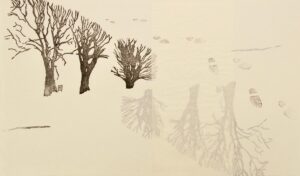
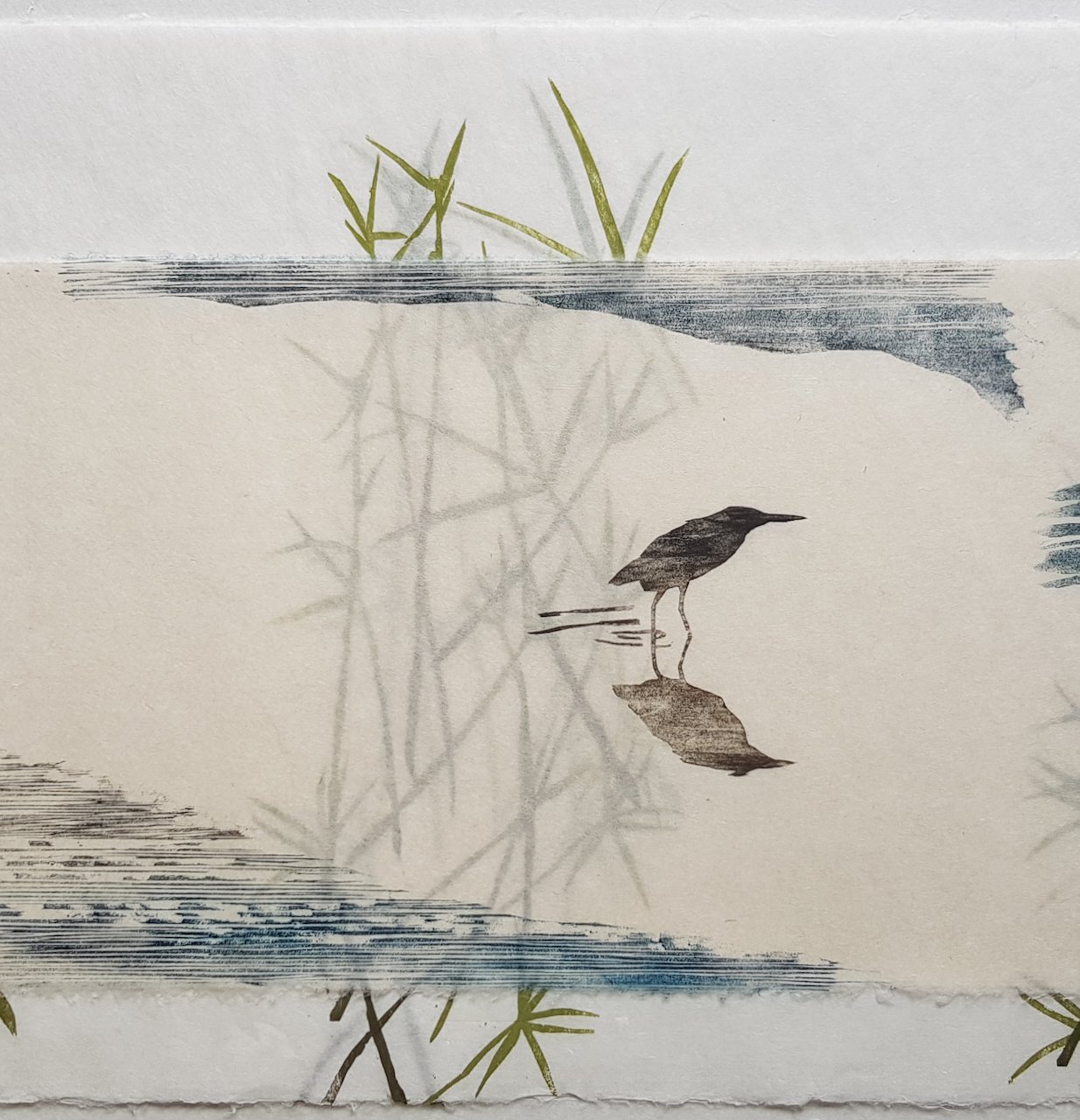
Jacqueline Gribbin is an Australian mokuhanga printmaker based near Darwin in the Northern Territory, whose work draws deeply on the landscapes, waters, and ecological systems of tropical Australia while maintaining a committed engagement with Japanese woodblock printing traditions. Trained in England and Japan, Gribbin has spent years developing a practice that bridges mokuhanga technique with the distinctive light, color, and environmental narratives of Australia's Top End.
Gribbin was an Artist-in-Residence at the Mokuhanga Innovation Laboratory at Lake Kawaguchi, Japan in 2012, where she deepened her understanding of water-based woodblock printing. Originally trained as a printer in intaglio -- which she describes as her first love -- she later learned mokuhanga and now applies both techniques to her creative practice. The translucent, water-based qualities of mokuhanga prove particularly suited to capturing the atmospheric effects of Darwin Harbour, the wetlands, and the dramatic weather systems of northern Australia.
Her exhibition "Shifting Tides" at the Library and Archives Northern Territory brought together woodblock prints of Darwin Harbour that reference maritime charts from the Library's collection, considering navigational challenges, tides, and the harbour's changing weather. The series "Ode to the River" (2024) continues her exploration of Australian waterways through mokuhanga. Earlier projects include her "Hot Burn" woodblocks, which respond to the cycle of bushfire and recovery in the Australian landscape, and "Secret World: Carnivorous Plants of the Howard Sand Sheets," which documents the remarkable ecology of Darwin's sandy plains.
Particularly significant is Gribbin's work introducing mokuhanga to Indigenous Australian communities. In 2007, she brought the technique to artists at Buku Larrnggay Mulka Centre in Arnhem Land, resulting in an exhibition at the outdoor Gapan Gallery during the 2007 Garma Festival. She has subsequently worked with artists at Babbarra Women's Centre in Maningrida and Waralungku Arts in Borroloola, Northern Territory. This cross-cultural exchange represents a unique contribution to both mokuhanga practice and Indigenous Australian art.
Gribbin serves on the board of the International Mokuhanga Association and has exhibited and presented at the International Mokuhanga Conferences, including the 5th conference held in Japan in 2024. She is a member of the Print Council of Australia and the Kentler International Drawing Space Flatfiles program in New York.
Key Facts
- Nationality
- 🇦🇺Australia
- Movement
- Contemporary Mokuhanga
- Subjects
- LandscapesWashiSeascapes
- Works Indexed
- 5
Frequently Asked Questions
Jacqueline Gribbin is an Australian mokuhanga printmaker based near Darwin in the Northern Territory, whose work draws deeply on the landscapes, waters, and ecological systems of tropical Australia while maintaining a committed engagement with Japanese woodblock printing traditions. Trained in England and Japan, Gribbin has spent years developing a practice that bridges mokuhanga technique with the distinctive light, color, and environmental narratives of Australia's Top End.
Jacqueline Gribbin's work was shaped by the Contemporary Mokuhanga tradition in Japanese woodblock printmaking. Contemporary Mokuhanga: Contemporary mokuhanga (literally "wood-block print") encompasses artists working from approximately 1970 to the present who continue or reinvent traditional Japanese woodblock printing techniques.
Jacqueline Gribbin's prints frequently feature landscapes, washi, seascapes.