Biography
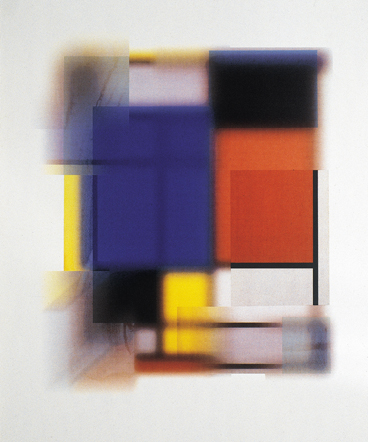
Hideki Kimura (born 1948, Kyoto) is a Japanese printmaker and Professor Emeritus of Printmaking at Kyoto City University of Arts (KCUA). His career, spanning more than five decades, has been organized around two distinct projects: a sustained body of monotype prints made by squeegeeing acrylic onto glass — a technique he developed to investigate translucence and opacity — and the founding of MAXI GRAPHICA, the artists' group that organizes much of the contemporary print activity in the Kansai region.
Kimura completed his postgraduate studies in Western painting at KCUA in 1974 and began collecting major competition recognitions: in his graduation year he received the National Museum of Modern Art Kyoto Award at the 9th Tokyo International Print Biennale; in 1976 he won the Acquisition Prize at the 5th British International Print Biennale and a Medal Prize at the 6th Krakow International Print Biennale; in 1977 he received the Print Art Prize at the 1st Japan Contemporary Print Grand Exhibition; and in 1980 the Polish Photography Association Prize at the 8th Krakow Biennale. The pattern continued through the 1980s — Bilbao 1982 (Second Place), the 16th Mainichi Contemporary Japanese Art Hyogo Prefectural Museum Prize (1983), the Kyoten Award (1985), the 9th British International Print Biennale National Westminster Bank Prize (1986), and an 11th Krakow Medal Prize (1986).
In 1988 Kimura moved to the United States, where he undertook independent research at the University of Pennsylvania School of Fine Arts. He returned to Japan in 1995 and rejoined KCUA, eventually becoming Professor of Printmaking — a position he held until his retirement in April 2014. The acrylic-on-glass monotype practice he pursued through this period is the technical signature of his mature work: applied acrylic, squeegeed across plate glass, transferred under pressure to paper, and produced as one-of-one impressions in which the painterly gesture and the printed transfer act on each other simultaneously.
Kimura founded MAXI GRAPHICA, an artists' organization based in the Kansai region that runs print shows and educational events. He served as President of the Committee of Art for Print Studies in Japan, and has been active in international print exhibitions as both artist and curator.
His prints are held by the National Museum of Modern Art Tokyo, the National Museum of Modern Art Kyoto, the Museum of Contemporary Art Tokyo, the British Museum (London), the Victoria and Albert Museum (London), the Philadelphia Museum of Art, and the National Museum of Art Warsaw, among others. His exhibition record includes the Tokyo International Print Biennale, the British International Print Biennale (Bradford), the Krakow International Print Biennale (Poland), and the Contemporary Japanese Prints exhibition in Ferrara (Italy).
As Professor Emeritus, Kimura remains active in international printmaking dialogue. He took part in the 2013 touring exhibition Redefining the Multiple: Thirteen Japanese Printmakers, organized with the Bates College Museum of Art and the University of Tennessee, where he served as a co-curator and delivered a keynote lecture.
Key Facts
- Active Period
- 1948
- Nationality
- 🇯🇵Japan
- Movement
- Contemporary Mokuhanga
- Subjects
- Abstract
- Works Indexed
- 3
Frequently Asked Questions
Hideki Kimura (born 1948, Kyoto) is a Japanese printmaker and Professor Emeritus of Printmaking at Kyoto City University of Arts (KCUA). His career, spanning more than five decades, has been organized around two distinct projects: a sustained body of monotype prints made by squeegeeing acrylic onto glass — a technique he developed to investigate translucence and opacity — and the founding of MAXI GRAPHICA, the artists' group that organizes much of the contemporary print activity in the Kansai region.
Hideki Kimura was active born in 1948. They were associated with the Contemporary Mokuhanga movement.
Hideki Kimura's work was shaped by the Contemporary Mokuhanga tradition in Japanese woodblock printmaking. Contemporary Mokuhanga: Contemporary mokuhanga (literally "wood-block print") encompasses artists working from approximately 1970 to the present who continue or reinvent traditional Japanese woodblock printing techniques.
Hideki Kimura's prints frequently feature abstract.