Biography
Makoto Kumagai (born 1968, Kyoto) is a Kyoto-based Japanese artist whose practice spans oil painting, intaglio printmaking, and cast-iron sculpture, organised around an ongoing investigation of memory, place, and the material residue of personal life. Although his primary public output has been painting and sculpture, he has produced two distinct print series — drypoint and collograph editions in 2017 and polymer-print editions in 2018 — with printmaking functioning as a defined sub-channel of his larger studio practice rather than its central medium.
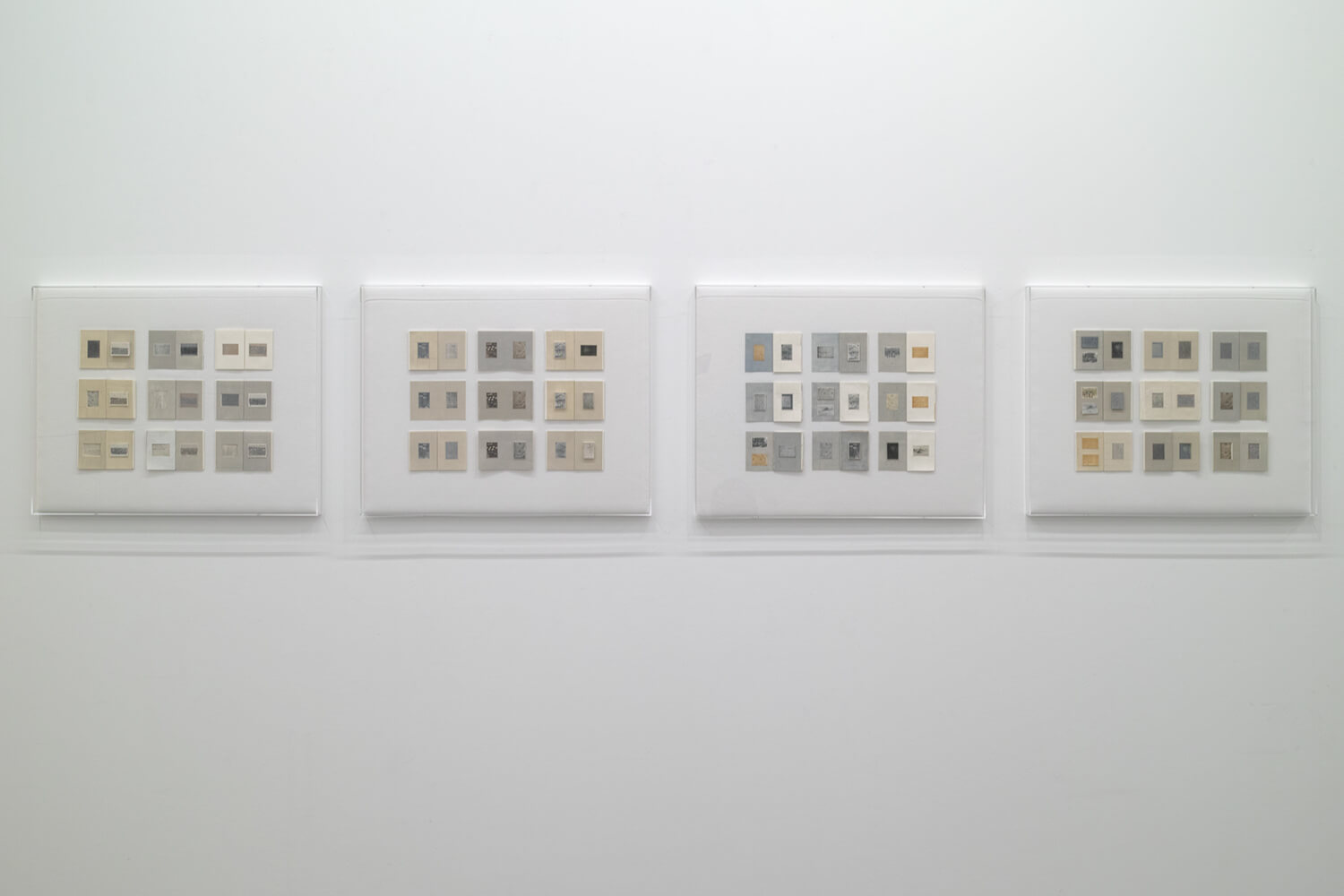
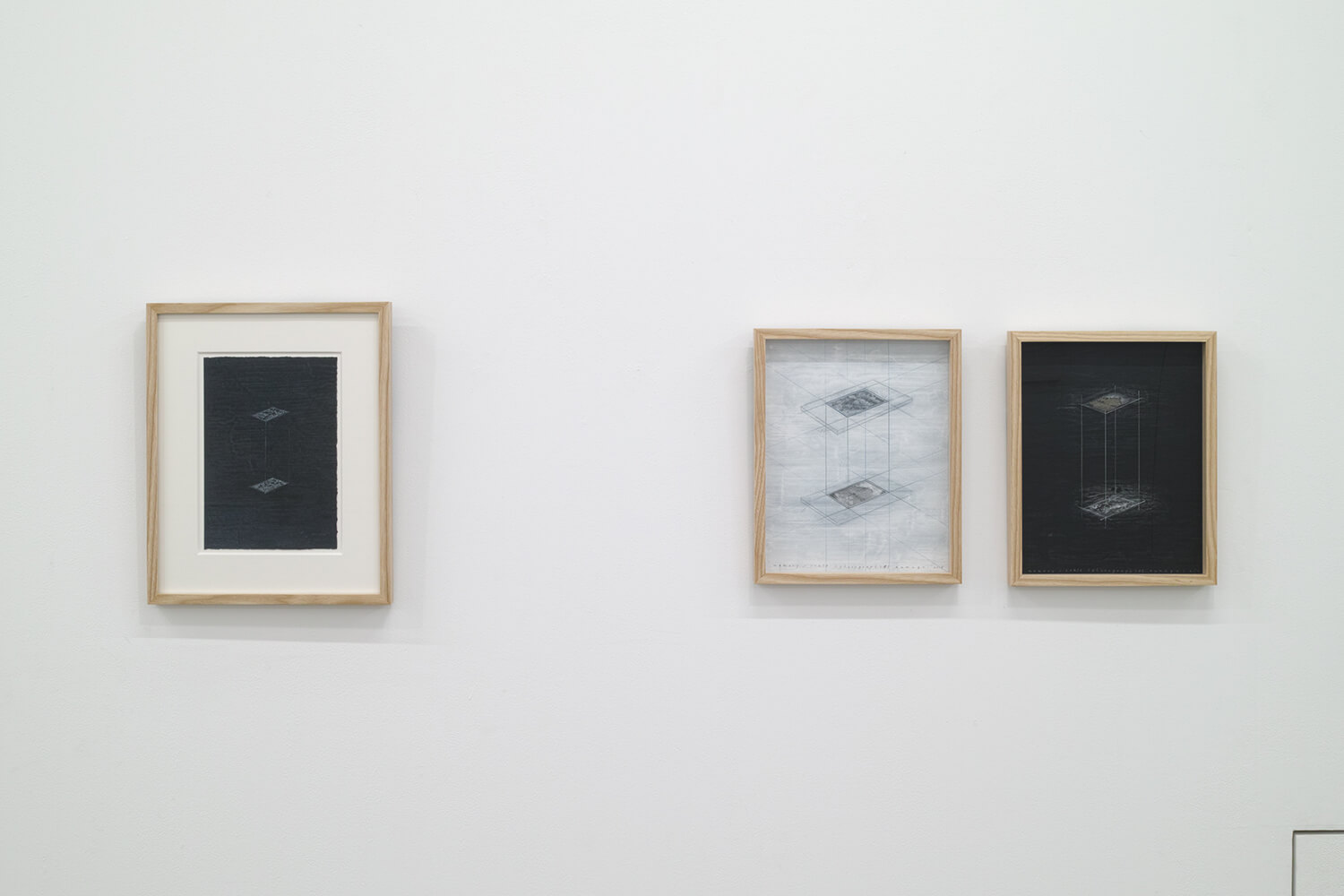
Kumagai completed his graduate studies at Kyoto Seika University Graduate School of Art in 1993 and has lived and worked in Kyoto since. His mature work returns to a set of recurring motifs that read like field-notebook entries — the demolished house, a coat left behind, scale, memory, and light — with 'memory/scale' the central named body of work, realised across multiple numbered editions in different media. The 2017 'memory/scale' drypoint and collograph (205 x 141 mm sheet, 320 x 258 mm framed) and the 2018 'memory/scale 02-05' polymer prints (280 x 395 mm each) translate his oil-painting practice into intaglio language, retaining the artist's interest in surface, scale, and the depiction of demolished domestic architecture.
The 'memory/scale' theme — treated across cast iron, oil, and intaglio — was prompted, by his own account, by the demolition of his childhood home. In his telling, the demolished house, the coat that 'stayed behind,' and notebook entries cast in iron act as exterior witnesses to interior recollection. The print works extend this logic onto paper by treating the plate as an inscription surface for accumulated time.
Kumagai's exhibition history includes solo shows at Gallery Yamaguchi kunst-bau in Osaka and Kaohsiung (Taiwan) in 2018 ('memory/scale'), Gallery Den mym in Kyoto (2016), 'Reminiscent House' at Gallery Yamaguchi (2011), 'The Rising Sun' (2008), and 'Living at the Boundary' (2005). Group participation includes Art Taipei (2017) and the Busan Biennale in Korea (2008).
His works are held in the public collections of The Museum of Kyoto, Hyogo Prefectural Museum of Art, Machida City Museum of Graphic Arts, and Kyoto Seika University. The Machida City Museum of Graphic Arts holding is particularly important for situating his print output: Machida is one of Japan's principal print-specialist museums, and inclusion in its collection establishes his identity as a working printmaker rather than only a painter who occasionally produces editions.
Within the contemporary Japanese scene, Kumagai sits adjacent to but distinct from the more visible Kyoto Seika print-graduate cohort whose practice is focused on print as principal medium. His Gallery Yamaguchi kunst-bau representation in Osaka has carried his print, painting, and sculpture editions to collectors interested in mature thematic continuity rather than single-medium specialisation. The 2017-2018 print editions represent a resumption of intaglio practice after a long focus on oil painting and cast-iron sculpture.
Key Facts
- Active Period
- 1968
- Nationality
- 🇯🇵Japan
- Movement
- Contemporary Mokuhanga
- Works Indexed
- 2
Frequently Asked Questions
Makoto Kumagai (born 1968, Kyoto) is a Kyoto-based Japanese artist whose practice spans oil painting, intaglio printmaking, and cast-iron sculpture, organised around an ongoing investigation of memory, place, and the material residue of personal life. Although his primary public output has been painting and sculpture, he has produced two distinct print series — drypoint and collograph editions in 2017 and polymer-print editions in 2018 — with printmaking functioning as a defined sub-channel of his larger studio practice rather than its central medium.
Makoto Kumagai was active born in 1968. They were associated with the Contemporary Mokuhanga movement.
Makoto Kumagai's work was shaped by the Contemporary Mokuhanga tradition in Japanese woodblock printmaking. Contemporary Mokuhanga: Contemporary mokuhanga (literally "wood-block print") encompasses artists working from approximately 1970 to the present who continue or reinvent traditional Japanese woodblock printing techniques.