Biography
Yukari Maeda (born 1981, Kumamoto Prefecture) is a Japanese printmaker whose copper-plate intaglio practice has produced one of the more thematically focused bodies of contemporary intaglio to emerge from the Kyushu region. She completed graduate studies at the Kumamoto University Graduate School of Education in 2006 and trained under printmakers Tomoaki Hamada and Koji Higashi, settling into a sustained practice in etching, aquatint, and collagraph — the latter a technique that combines additive collage elements with the etched plate to produce textured tonal effects.
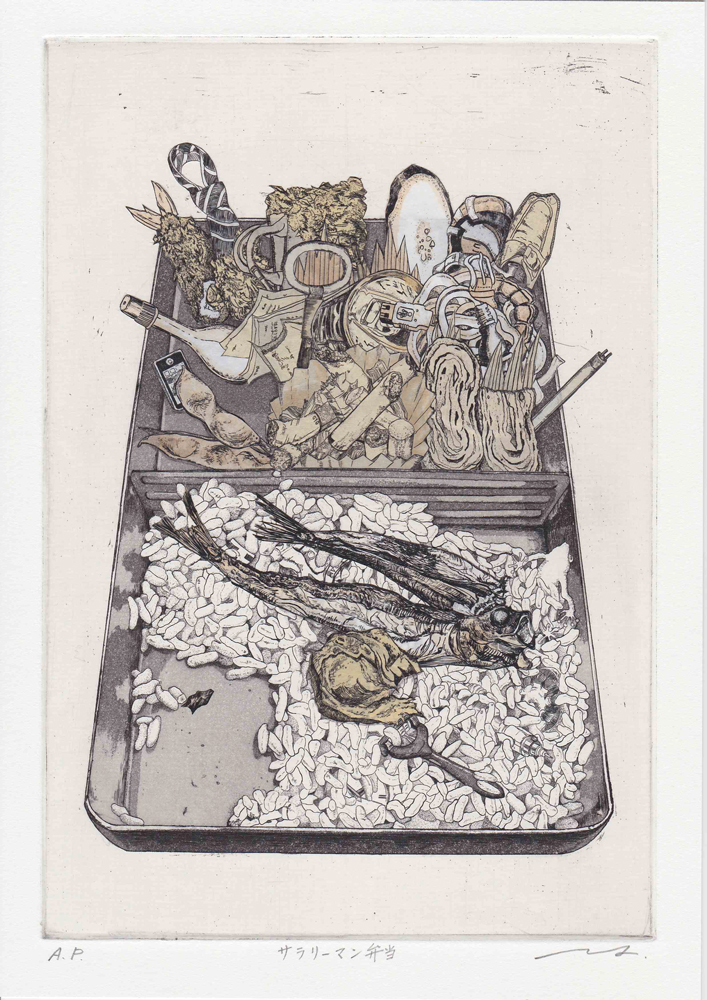
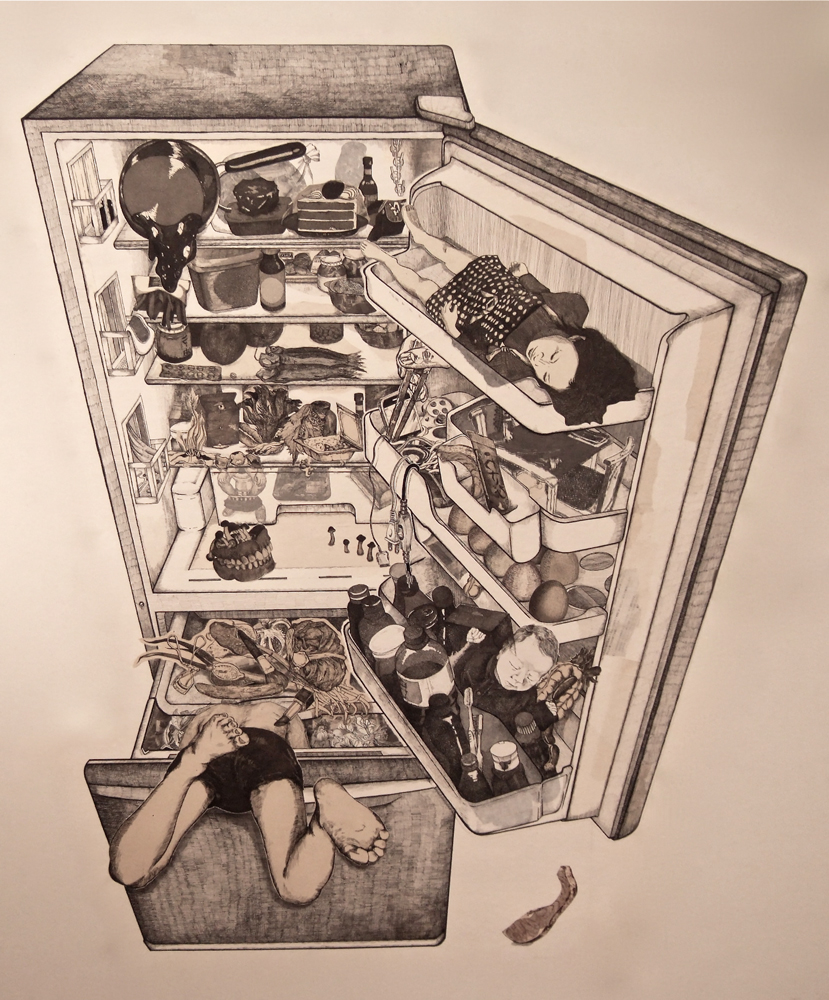
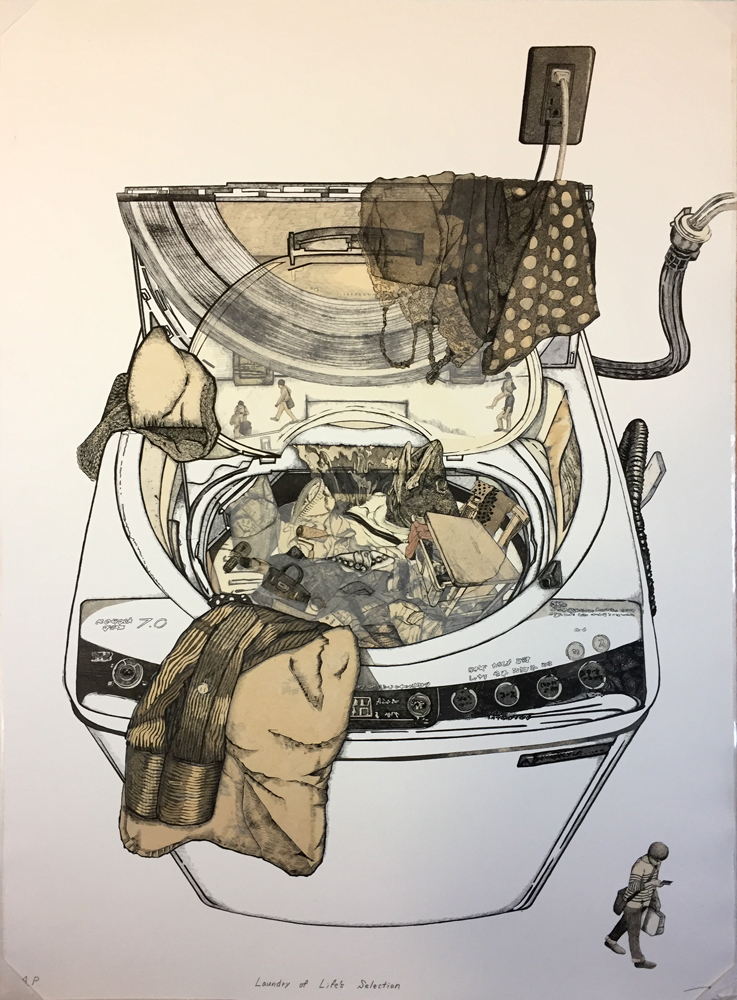
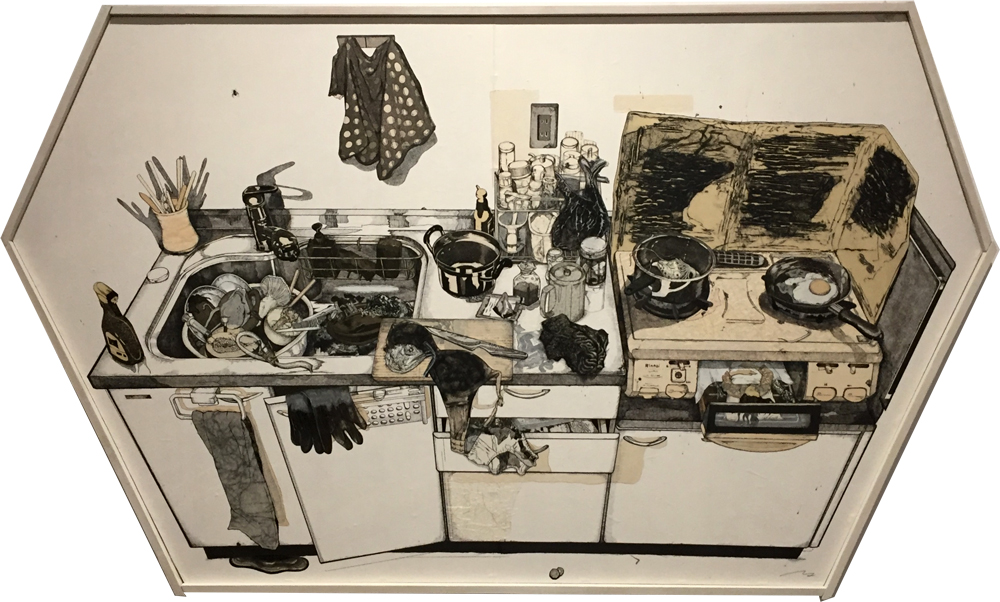
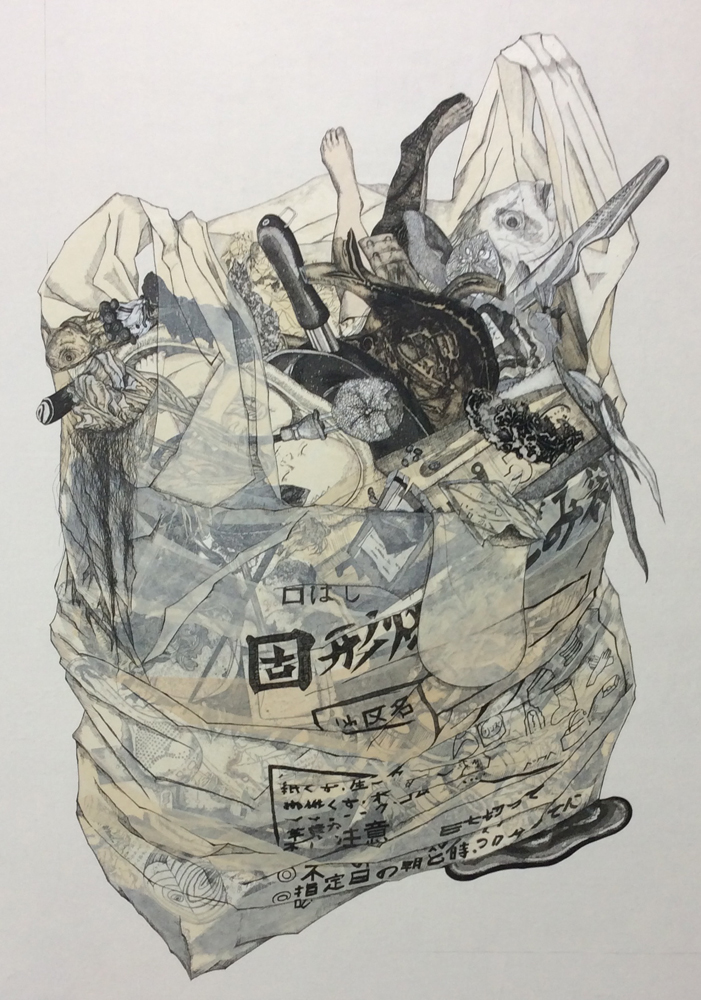
Maeda's central thematic concern, made explicit in her PATinKyoto entry, is "life and death within daily living" — the way ordinary domestic acts of cooking, cleaning, dressing, and feeding family members carry the weight of mortality and consumption. Her best-known series Bento from the Wife (Sarari-man Bentō) treats lunch boxes prepared for husbands as both ordinary domestic ritual and quiet meditation on time. The Apartment Life, Proofs of My Life (2014), Laundry of Life's Selection, and Kitchen File extend the same vocabulary across a domestic interior register that recalls Azumi Takeda's small-room intaglios but with a stronger emphasis on the texture of household objects rendered through the collagraph plate.
Her competition record is sustained: Encouragement Prize at the 2005 Madokapia Print Biennial (Fukuoka); selected for the FEI Print Award (Yokohama, 2012); Nishi Nippon Newspaper Prize at the Seminario Print Exhibition (Nagasaki, 2014); selected for the Kokuten exhibition at the National Art Center Tokyo (2014); Excellent Prize at the 5th Yamamoto Kanae Print Grand Prix (Nagano, 2015); finalist at the Awagami International Miniature Print Exhibition (Tokushima, 2015); selected for the FACE Exhibition 2016 (Tokyo); Encouragement Prize at the Okashi no Kobai Art Award (Kumamoto, 2020). Most recently her 2024 work Unseen Reality (89 × 58 cm, etching, aquatint, and collagraph) was selected as Print No. 088 in the 68th CWAJ Print Show in Tokyo and sold during that show — a marker of growing recognition among Tokyo's contemporary print collectors.
Maeda continues to be based in Kumamoto Prefecture and is one of the few Kyushu-based printmakers to maintain a national exhibition profile. Her teachers Tomoaki Hamada (Hamada Tomoaki) and Koji Higashi (Higashi Kōji) are both senior Kumamoto-area printmakers, situating her within a regional intaglio lineage that runs largely in parallel to the Kyoto–Tokyo Geidai academic axis. Her work is held in the Kumamoto Prefectural Museum of Art and in private collections through the CWAJ Print Show and PATinKyoto Triennale.
Within contemporary Japanese intaglio Maeda represents a quietly accumulating presence: technically conservative (she works exclusively with copper plate, etching, aquatint, and collagraph rather than experimenting with photogravure or digital plates), thematically focused on domestic interior, and produced at a sustained pace from a regional base. Her selection for the CWAJ Print Show — typically dominated by Tokyo-Kanto and Kansai printmakers — is a measure of her standing in the wider Japanese print field.
Key Facts
- Active Period
- 1981
- Nationality
- 🇯🇵Japan
- Movement
- Contemporary Mokuhanga
- Subjects
- Still LifeDaily Life
- Works Indexed
- 4
Frequently Asked Questions
Yukari Maeda (born 1981, Kumamoto Prefecture) is a Japanese printmaker whose copper-plate intaglio practice has produced one of the more thematically focused bodies of contemporary intaglio to emerge from the Kyushu region. She completed graduate studies at the Kumamoto University Graduate School of Education in 2006 and trained under printmakers Tomoaki Hamada and Koji Higashi, settling into a sustained practice in etching, aquatint, and collagraph — the latter a technique that combines additive collage elements with the etched plate to produce textured tonal effects.
Yukari Maeda was active born in 1981. They were associated with the Contemporary Mokuhanga movement.
Yukari Maeda's work was shaped by the Contemporary Mokuhanga tradition in Japanese woodblock printmaking. Contemporary Mokuhanga: Contemporary mokuhanga (literally "wood-block print") encompasses artists working from approximately 1970 to the present who continue or reinvent traditional Japanese woodblock printing techniques.
Yukari Maeda's prints frequently feature still life, daily life.