Biography
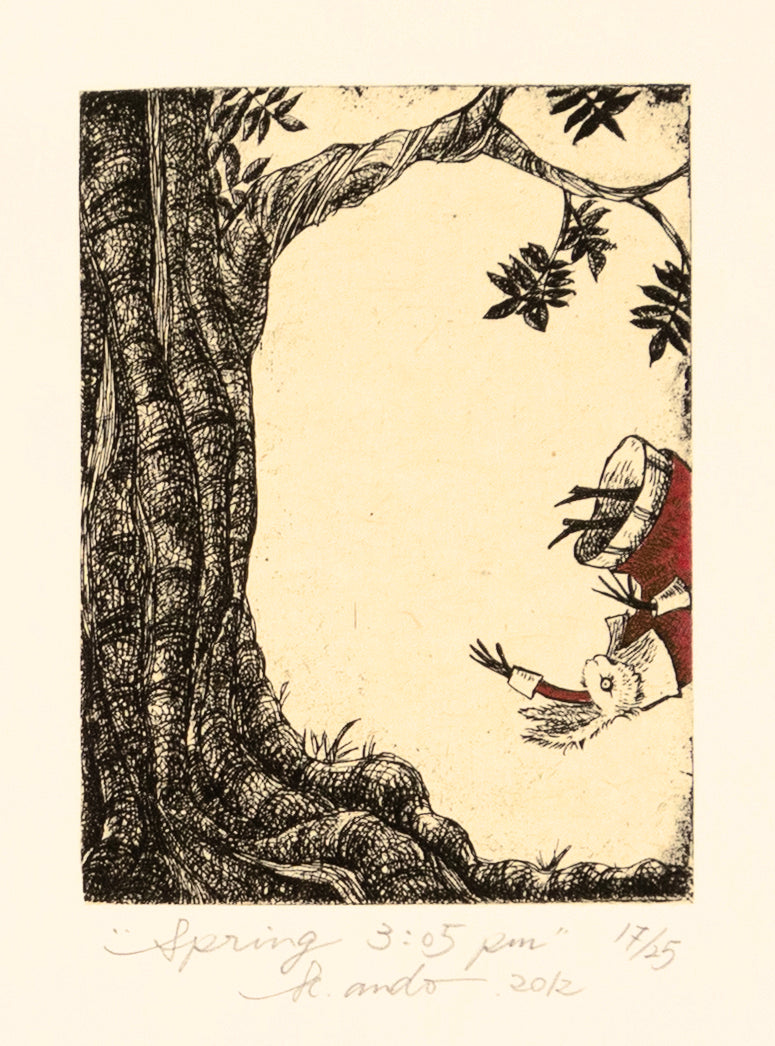
Mariko Ando (born 1969) is a Japanese-Canadian printmaker and illustrator known for hand-coloured etchings with chine collé that combine the visual codes of Western European intaglio with the picture-book sensibility she developed during a long career in Japanese illustration. Her prints have been described as a 'sinister storybook' world: solitary girls in elaborate dresses, owls, hares, fish, foxes, butterflies, and household objects coexist in lightly threatening domestic interiors and dreamscapes that draw on Edwardian children's-book illustration, surrealism, and the macabre humour of nineteenth-century European print traditions.
Ando grew up between Osaka and Nara in western Japan and trained at Shukugawa Gakuin Junior College in the Illustration and Visual Design programme. Before moving to Canada she spent seven years on staff as an illustrator for a magazine publishing company and continued for more than two decades as a freelance illustrator across Japanese editorial, advertising, and book publishing. In 1998 she received a Special Prize at the Artex Contemporary Art Show in Osaka. She moved to Vancouver in 1999 after marrying a Canadian, and it was in Canada that she encountered traditional intaglio printmaking — etching, drypoint, aquatint, and chine collé — and shifted the centre of her practice from drawing and illustration to printmaking on copper plates.
In 2002 she became a member of the Malaspina Printmakers Society on Granville Island in Vancouver, where she has maintained a studio practice ever since. Working from small copper plates, she etches a base image, prints it onto handmade paper, hand-colours each impression with diluted watercolour, and often pastes a second sheet of patterned tissue or chiyogami inside the image area as chine collé. Her editions are small, and each impression is individually signed and numbered. Her image-making vocabulary is consistent across more than two decades of work: a pale-skinned girl with bobbed hair appears repeatedly, joined by anthropomorphic rabbits and birds, household furniture turned into stages, and a recurring cast of insect and floral motifs.
Ando's print awards include an Honourable Mention at the Biennial International Miniature Print Exhibition in Vancouver in 2004, an Honourable Mention at the International Mini Print Competition in Rosario, Argentina, in 2005, and a Third Prize at the Open Print Show at Federation Gallery in Vancouver in 2009. She has held solo exhibitions in Japan, Australia, and Canada, and has exhibited in group shows in the United Kingdom, the United States, Argentina, and Italy alongside her North American outings.
In parallel with her print practice she has continued to work as a children's-book illustrator. Her illustrated titles include Crash of Rhinos, Party of Jays (Annick Press, 2006) and Cheetah Cubs and Beetle Grubs (Annick Press, 2007), the hand-bound limited-edition Two Lovers on a Bench (Heavenly Monkey, 2009), The Elves and the Shoemaker (ECC ESL School, Japan, 2010), The Princess Dolls by Ellen Schwartz (Tradewind Books, 2018) — winner of the 2019 Vine Award — and Peggy's Impossible Tale by Sylvia McNicoll (Tradewind Books, 2021), which won the 2023 Chocolate Lily Award.
Her prints are carried by Liss Gallery in Toronto and ZoneOne Arts in Australia, and have also been shown by print dealers in Seattle. Recurring titles in her body of work include Spring 3:05pm, The Silent Spectators, Owl in the Velvet Woods, Mind the Feathers, Everlasting Love, Scent of Secret, Nonexistent Letter, A Little Red Bird, and Day Dreamer, alongside her ongoing Bunny, Fish & Bird, and Alphabet series — all hand-coloured etchings with chine collé produced in small editions. She lives and works in Vancouver, with her studio at Malaspina Printmakers on Granville Island.
Key Facts
- Active Period
- 1969
- Nationality
- 🇨🇦Canada
- Movement
- Contemporary Mokuhanga
- Works Indexed
- 16
Frequently Asked Questions
Mariko Ando (born 1969) is a Japanese-Canadian printmaker and illustrator known for hand-coloured etchings with chine collé that combine the visual codes of Western European intaglio with the picture-book sensibility she developed during a long career in Japanese illustration. Her prints have been described as a 'sinister storybook' world: solitary girls in elaborate dresses, owls, hares, fish, foxes, butterflies, and household objects coexist in lightly threatening domestic interiors and dreamscapes that draw on Edwardian children's-book illustration, surrealism, and the macabre humour of nineteenth-century European print traditions.
Mariko Ando was active born in 1969. They were associated with the Contemporary Mokuhanga movement.
Mariko Ando's work was shaped by the Contemporary Mokuhanga tradition in Japanese woodblock printmaking. Contemporary Mokuhanga: Contemporary mokuhanga (literally "wood-block print") encompasses artists working from approximately 1970 to the present who continue or reinvent traditional Japanese woodblock printing techniques.
Mariko Ando's prints frequently feature birds & flowers, nature, literary, summer, night scenes.
Woodblock Prints by Mariko Ando (16)
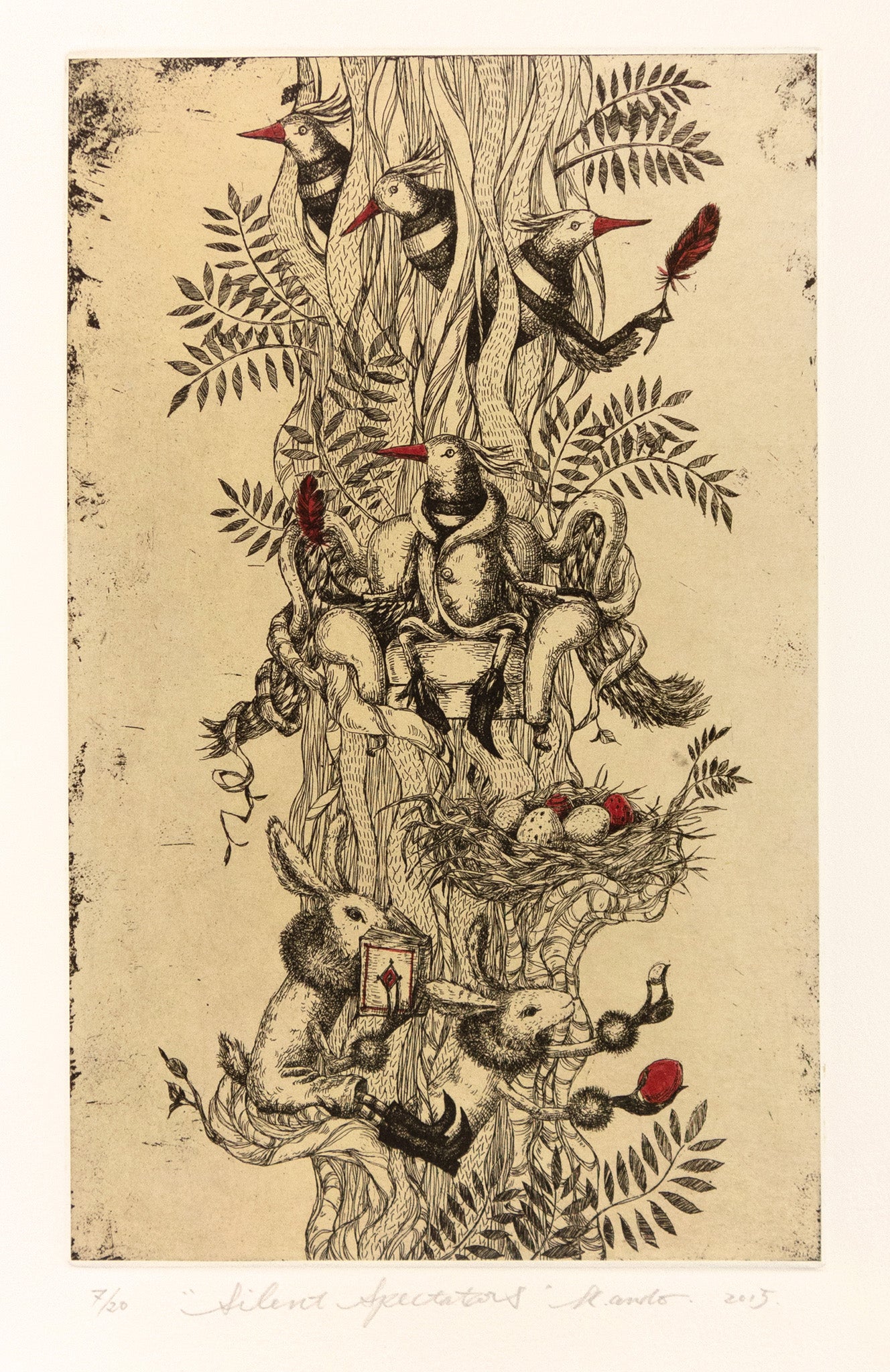
The Silent Spectators
2013
Etching with chine collé and hand coloring
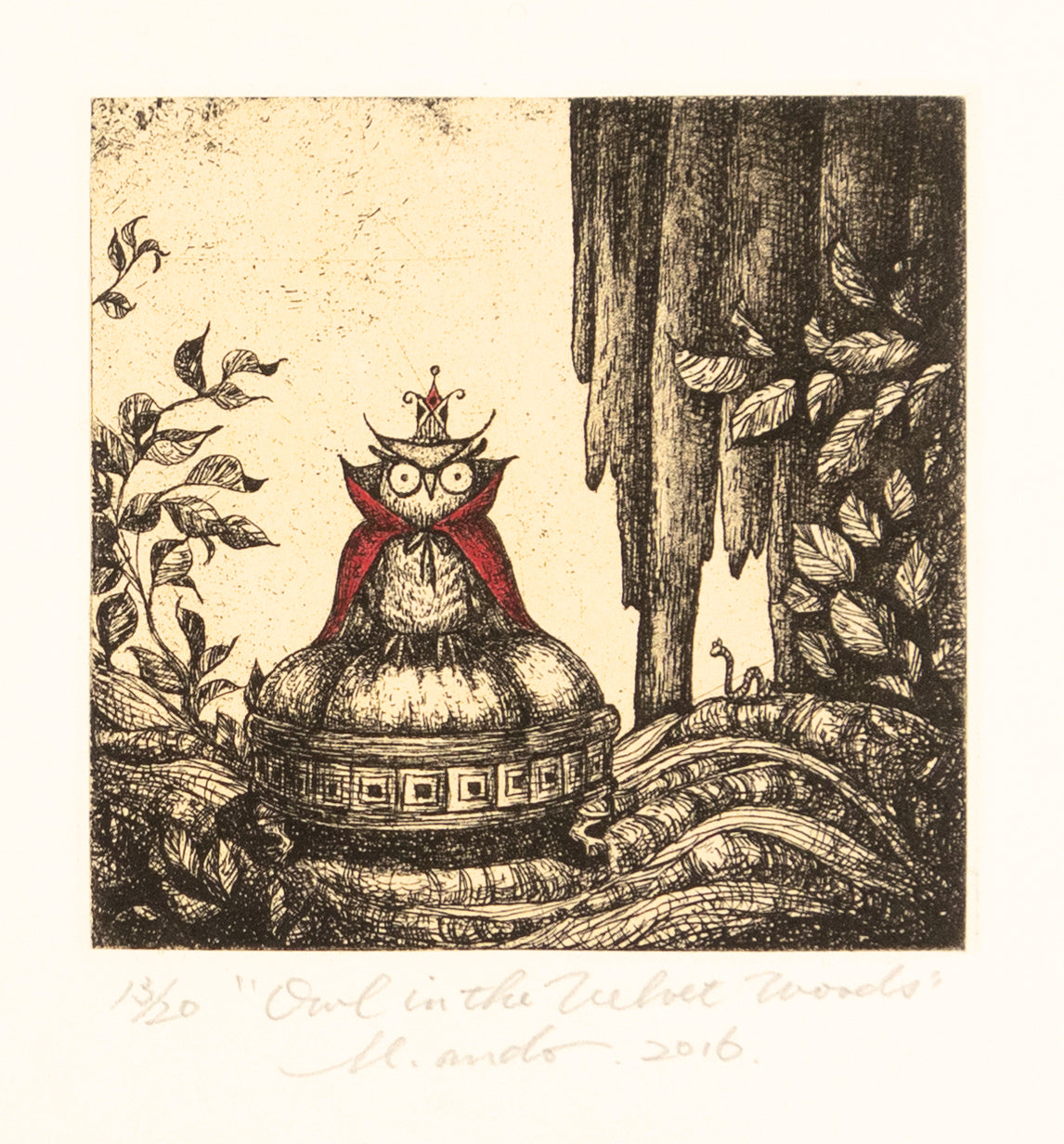
Owl in the Velvet Woods
2016
Etching with chine collé and hand coloring
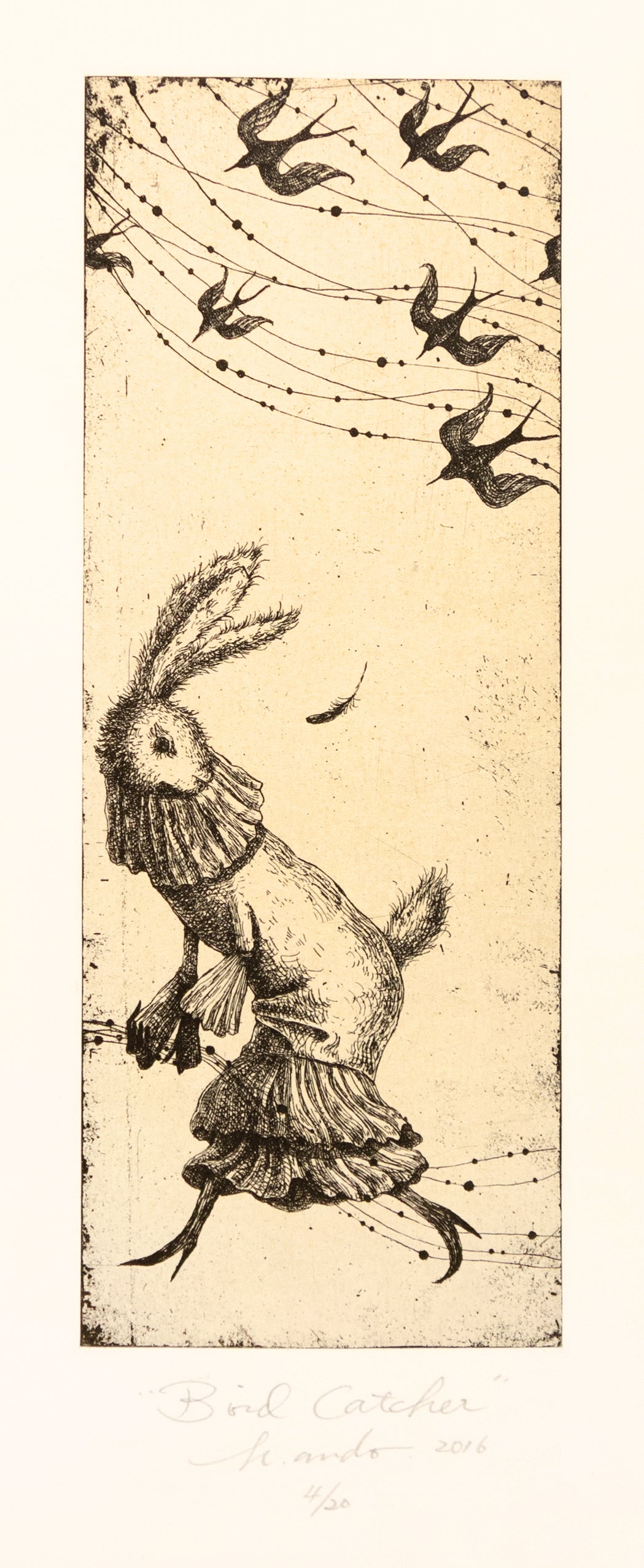
Bird Catcher
Etching with chine collé and hand coloring
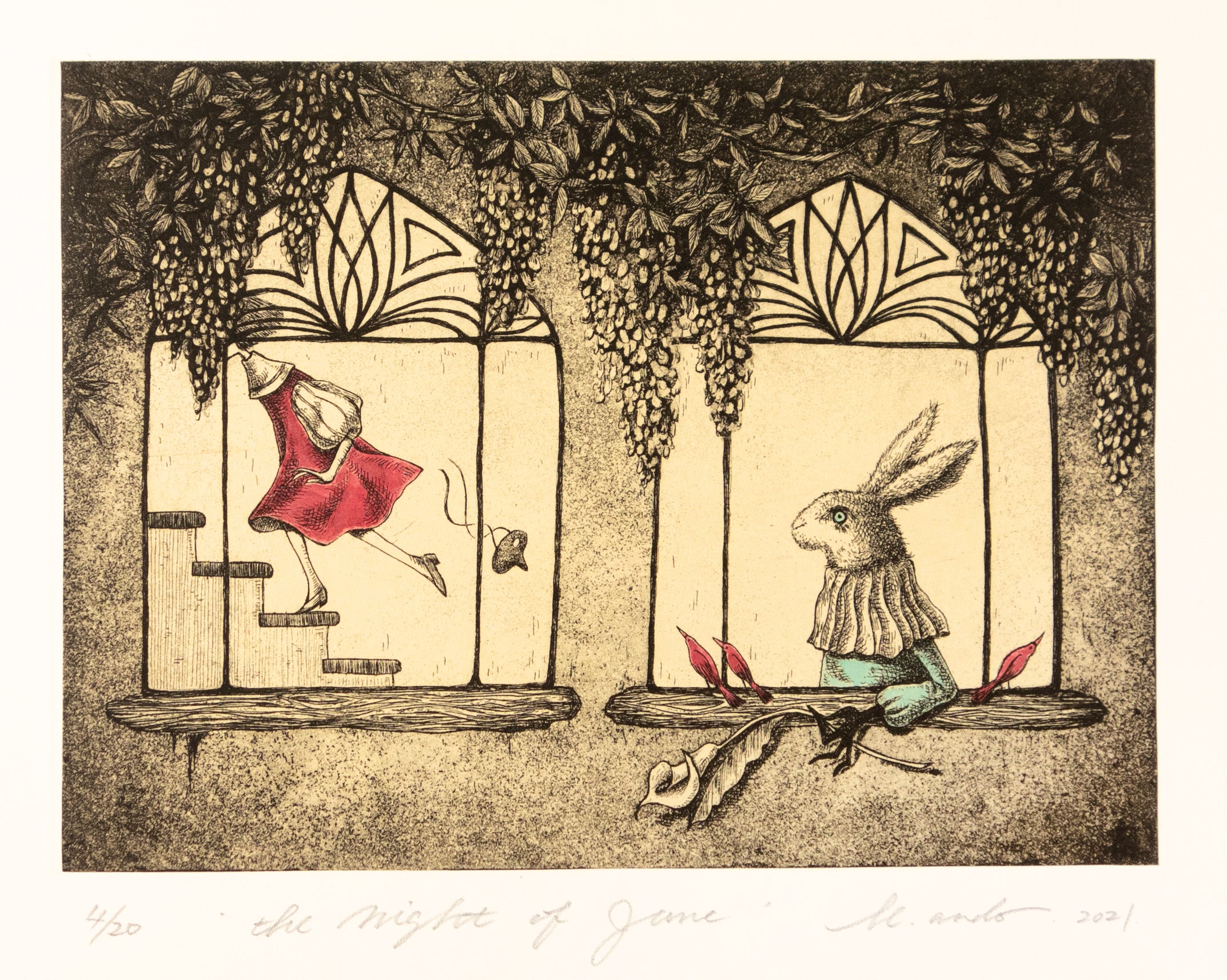
The Night of June
Etching with chine collé and hand coloring
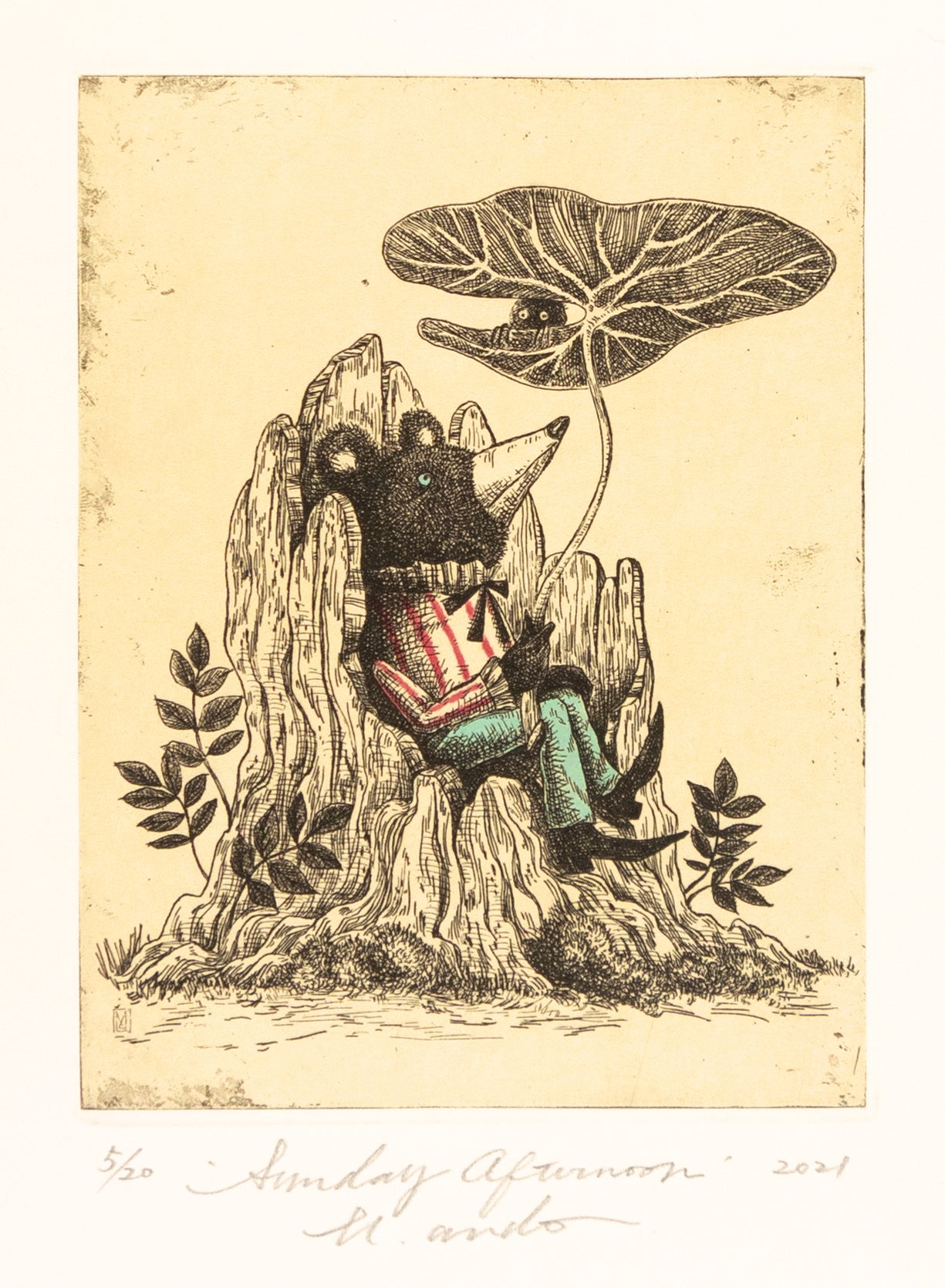
Sunday Afternoon
Etching with chine collé and hand coloring
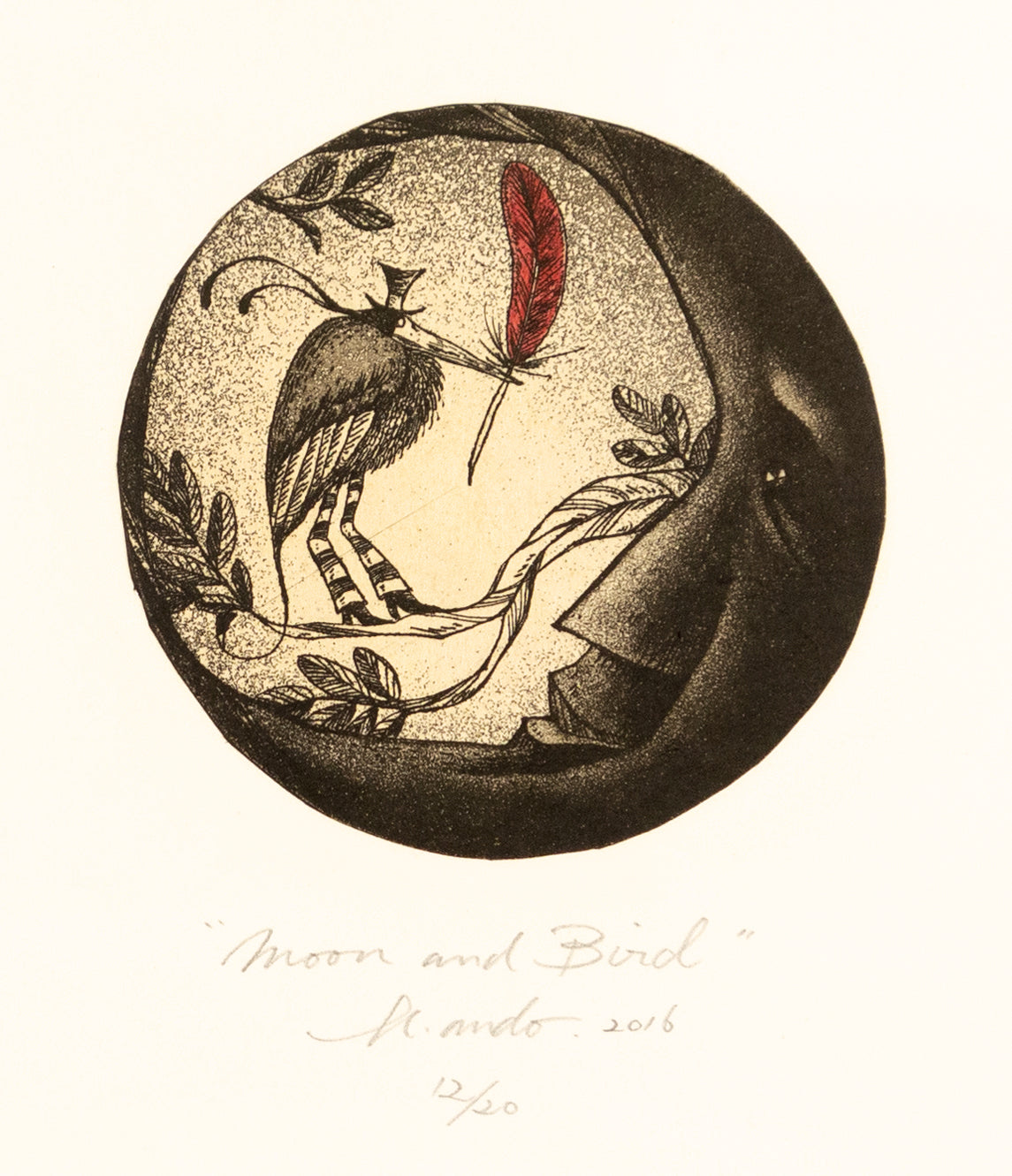
Moon and Bird
Etching with chine collé and hand coloring
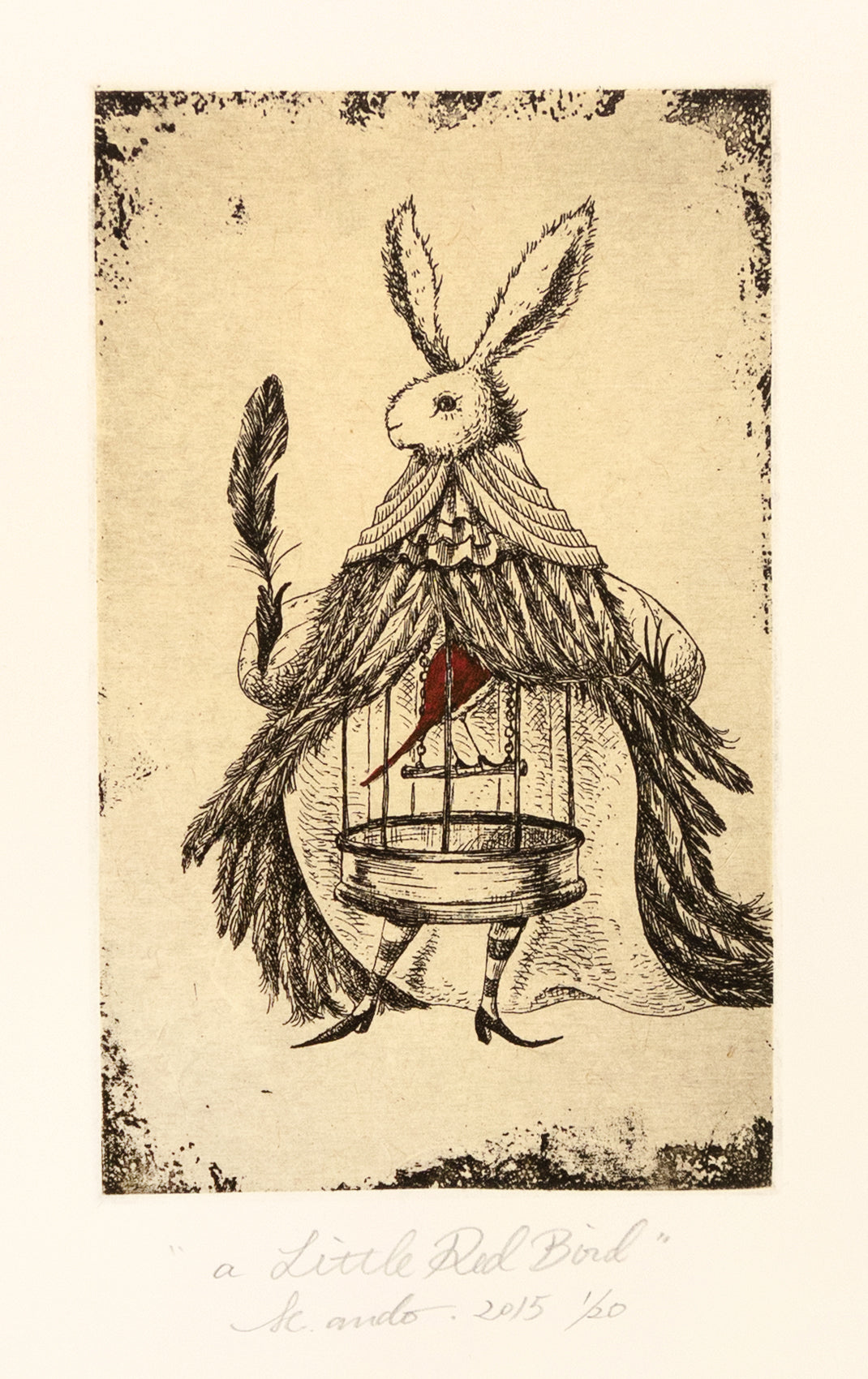
A Little Red Bird
Etching with chine collé and hand coloring
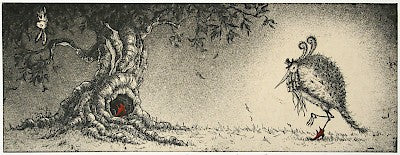
The Voice of a Shoe
Etching with chine collé and hand coloring
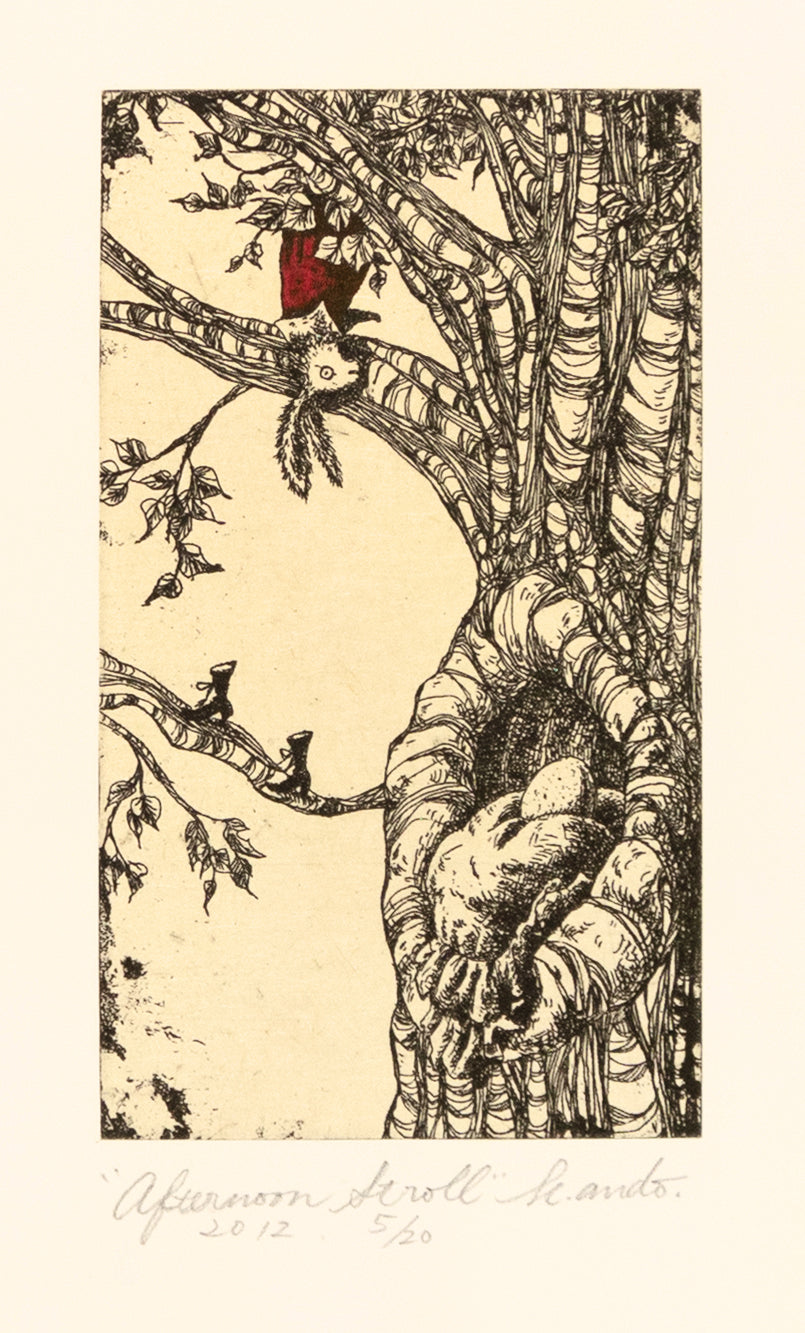
Afternoon Stroll
Etching with chine collé and hand coloring
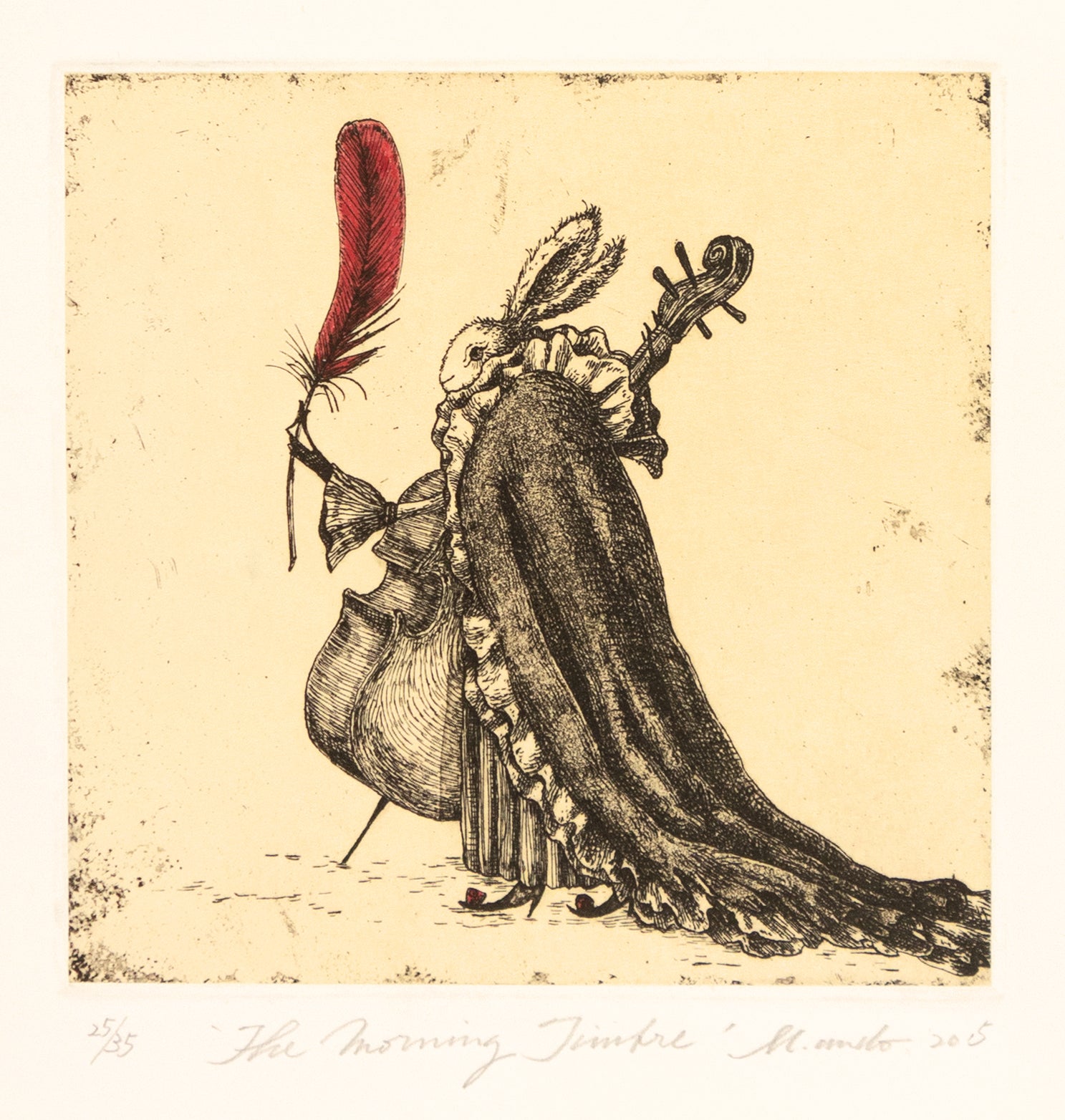
The Morning Timbre
Etching with chine collé and hand coloring
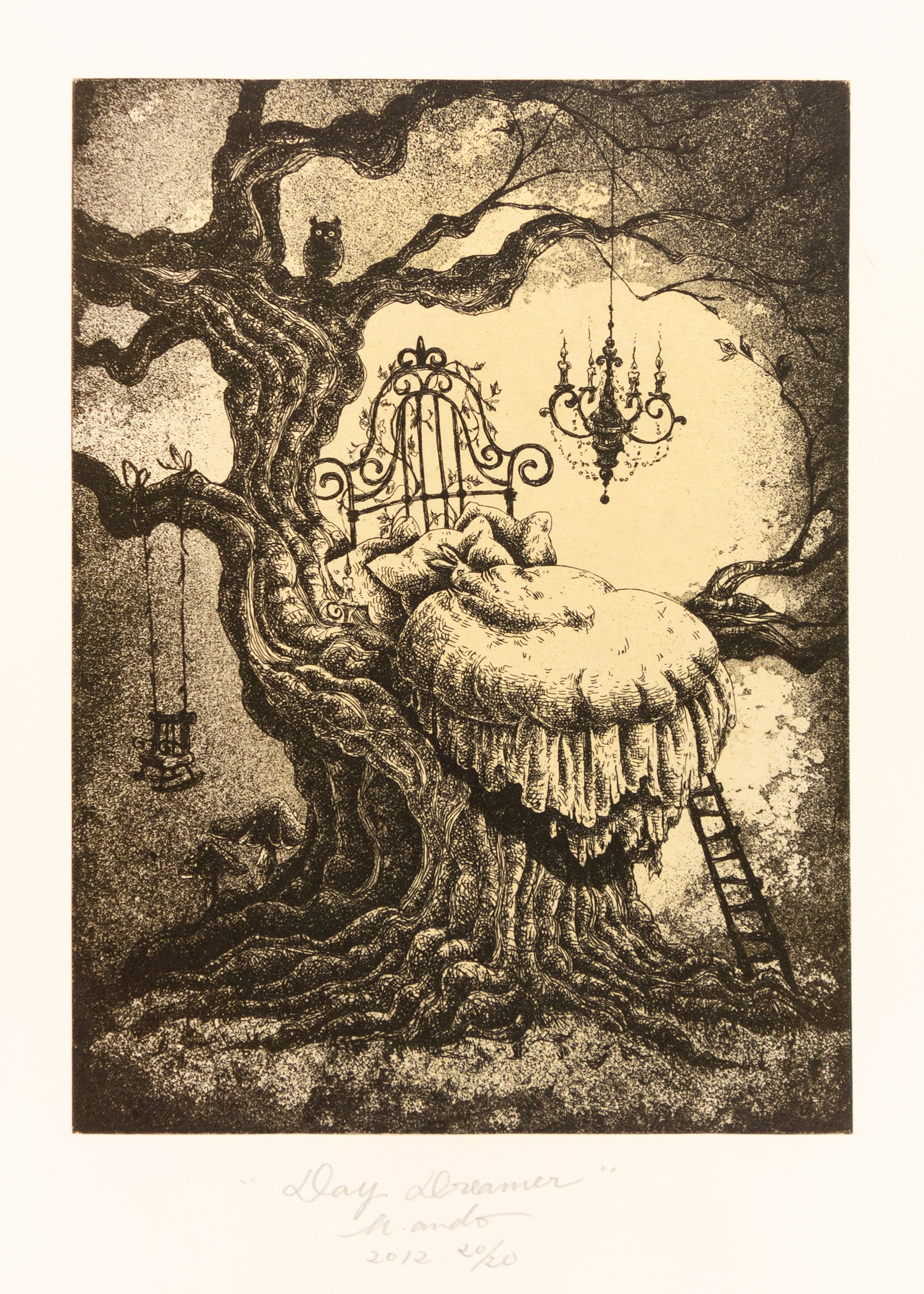
Day Dreamer
Etching with chine collé and hand coloring
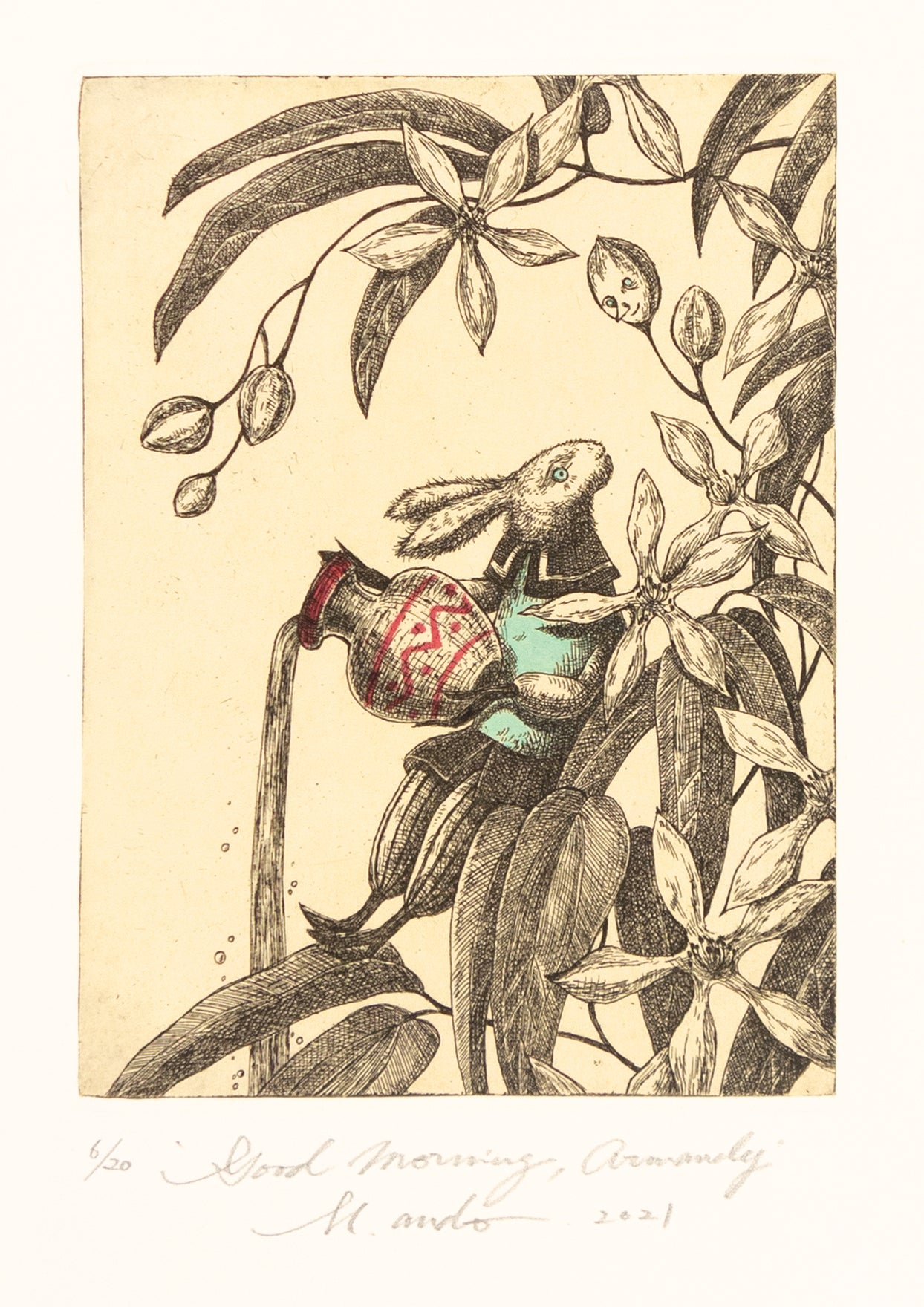
Good Morning, Armandy
Etching with chine collé and hand coloring
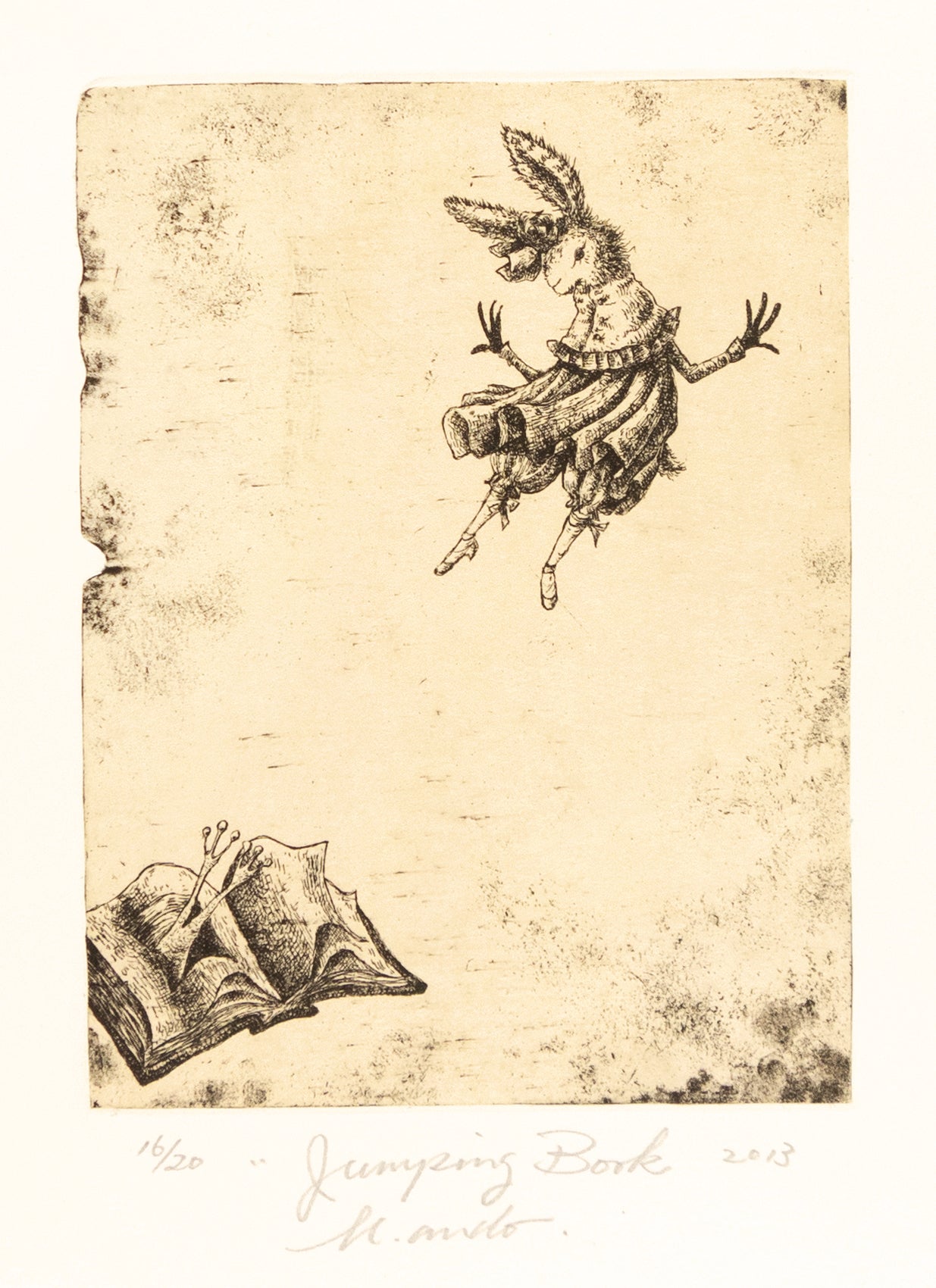
Jumping Book
Etching with chine collé and hand coloring
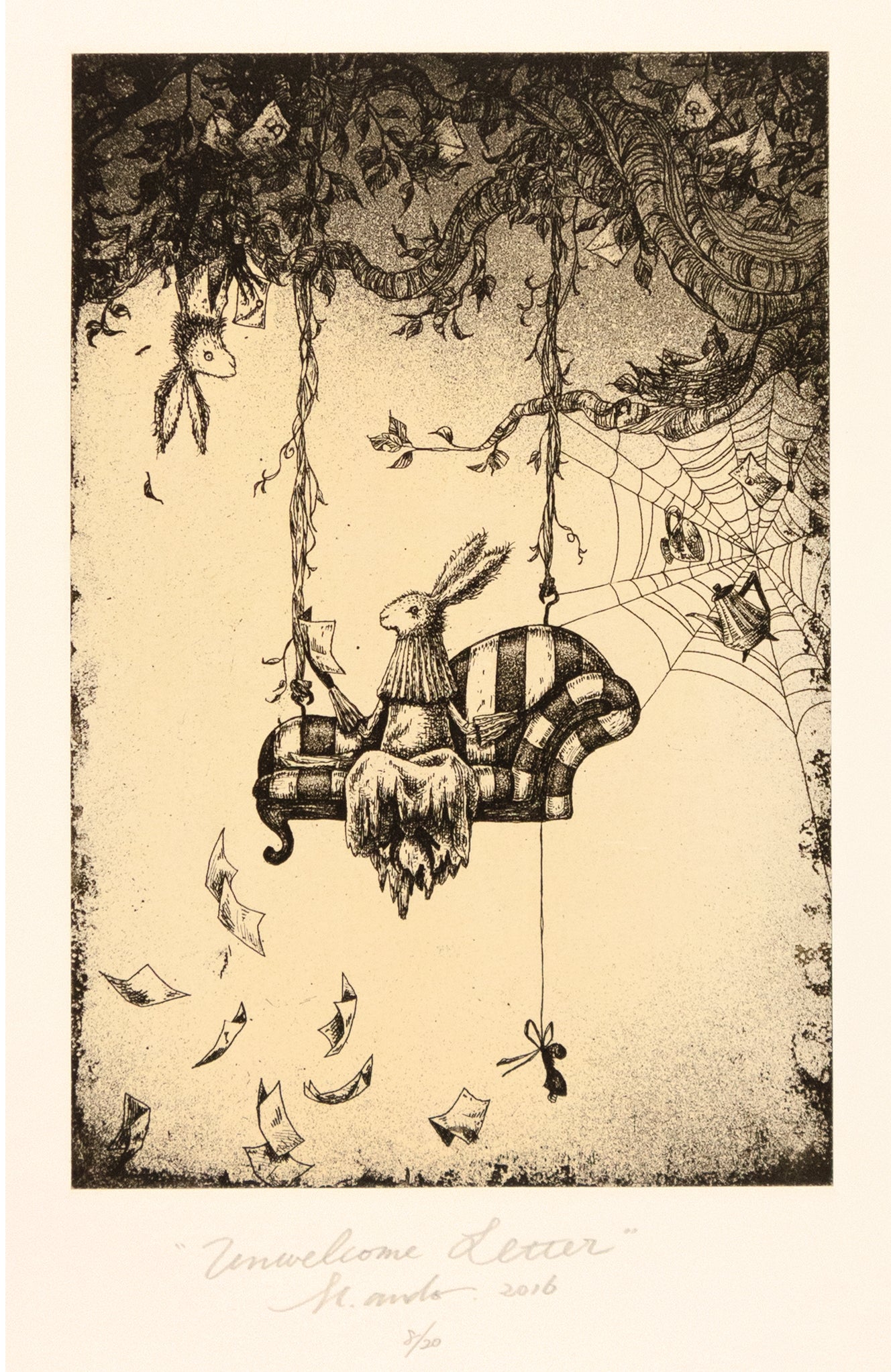
Unwelcome Letters
Etching with chine collé and hand coloring
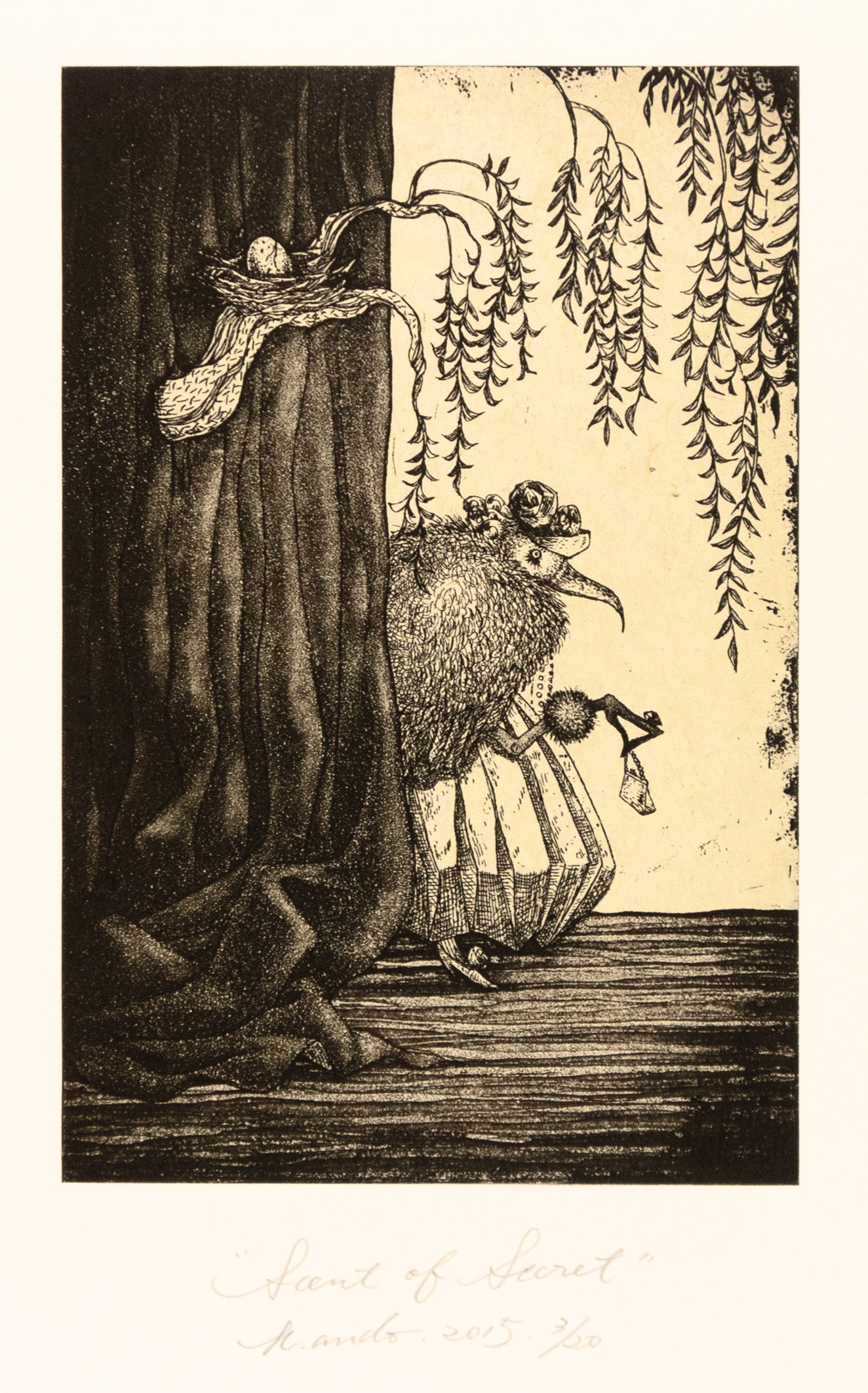
Scent of Secret
Etching with chine collé and hand coloring
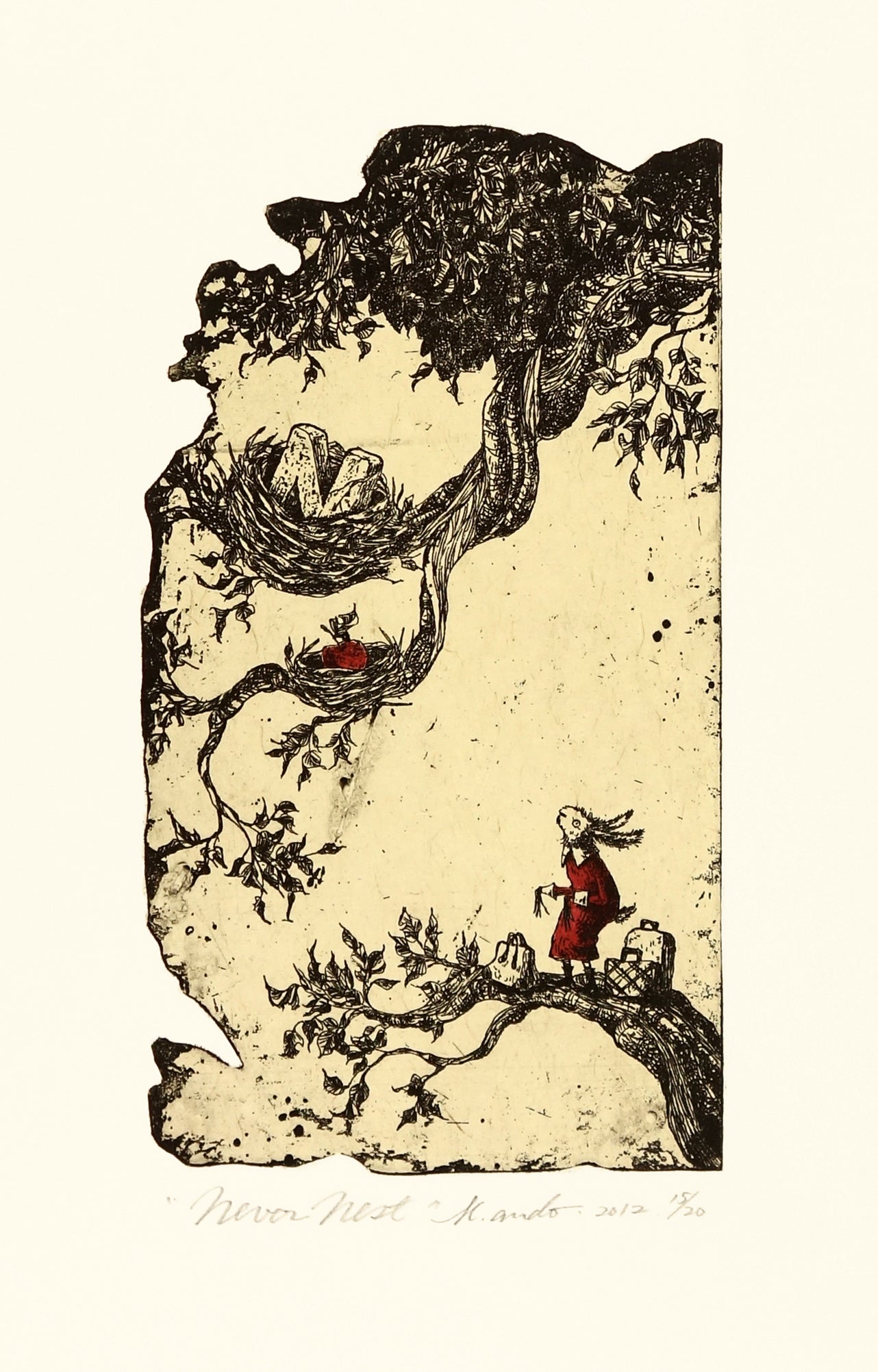
Never Nest
Etching with chine collé and hand coloring