Biography
Matt Brown (born 1960) is an American woodblock print artist who applies traditional Japanese mokuhanga technique to depictions of New England landscapes, creating a distinctive body of work that bridges Eastern printmaking craft and Western landscape subjects. His prints, which depict the harbors, coastlines, forests, fields, and villages of the northeastern United States in the luminous, atmospheric style made possible by water-based woodblock printing, have earned him a devoted following among collectors who appreciate the unexpected marriage of Japanese technique and American subject matter.
Born in 1960, Brown studied art and discovered mokuhanga through his interest in Japanese prints. He recognized that the qualities that make Japanese woodblock printing so effective for depicting atmospheric landscapes — the luminous translucency of water-based pigments, the soft gradations of bokashi, the warm surface quality of washi paper — could be equally compelling when applied to the landscapes of his native New England. He undertook serious study of the traditional techniques, eventually developing sufficient mastery to produce prints of professional quality.
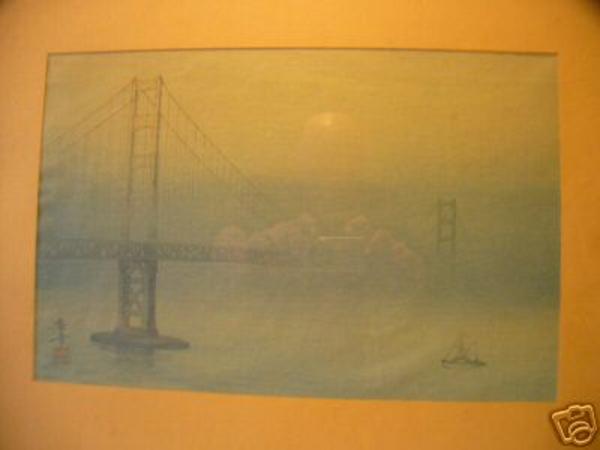
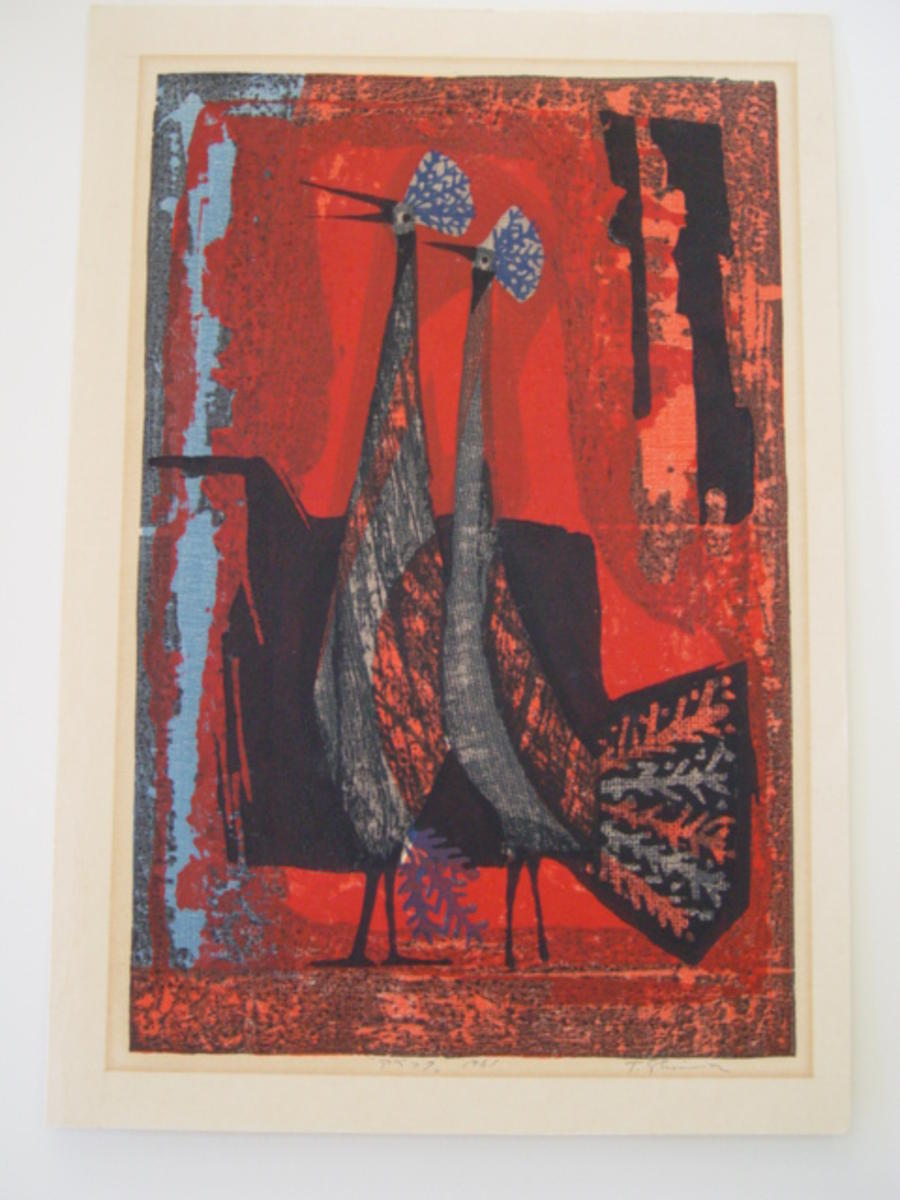
Brown's prints depict the distinctive landscapes of New England — rocky coastlines with lighthouses, quiet harbors filled with boats, autumn forests ablaze with color, snow-covered villages, and the gentle rolling farmland of the Connecticut and Vermont countryside. These quintessentially American subjects are rendered using the full vocabulary of mokuhanga: multiple blocks carved from cherry wood, water-based pigments printed by hand using a baren on washi paper, with bokashi gradations creating atmospheric skies and reflective water surfaces. The effect is both familiar and surprising — recognizably American landscapes imbued with the luminous, contemplative quality associated with Japanese prints.
His most popular subjects include harbor scenes, in which fishing boats and sailing vessels are reflected in calm water under atmospheric skies, and autumn landscapes, where the famous fall foliage of New England is rendered in the rich, translucent colors that mokuhanga makes possible. Snow scenes and coastal views are also recurring themes, each treated with the atmospheric sensitivity that the Japanese woodblock medium encourages.
Brown has exhibited widely in New England and beyond, and his prints are sold through galleries and directly through his studio. He has become an active member of the international mokuhanga community, participating in conferences and exhibitions that connect practitioners from around the world. His work demonstrates that mokuhanga is not bound to Japanese subjects but is a universal medium capable of serving any landscape tradition.
Key Facts
- Active Period
- 1960
- Nationality
- 🇺🇸United States
- Movement
- Contemporary Mokuhanga
- Subjects
- Landscapes
- Works Indexed
- 2
Frequently Asked Questions
Matt Brown (born 1960) is an American woodblock print artist who applies traditional Japanese mokuhanga technique to depictions of New England landscapes, creating a distinctive body of work that bridges Eastern printmaking craft and Western landscape subjects. His prints, which depict the harbors, coastlines, forests, fields, and villages of the northeastern United States in the luminous, atmospheric style made possible by water-based woodblock printing, have earned him a devoted following among collectors who appreciate the unexpected marriage of Japanese technique and American subject matter.
Matt Brown was active born in 1960. They were associated with the Contemporary Mokuhanga movement.
Matt Brown's work was shaped by the Contemporary Mokuhanga tradition in Japanese woodblock printmaking. Contemporary Mokuhanga: Contemporary mokuhanga (literally "wood-block print") encompasses artists working from approximately 1970 to the present who continue or reinvent traditional Japanese woodblock printing techniques.
Matt Brown's prints frequently feature landscapes.
Original prints by Matt Brown can be found in collections including Japanese Art Open Database.