Biography
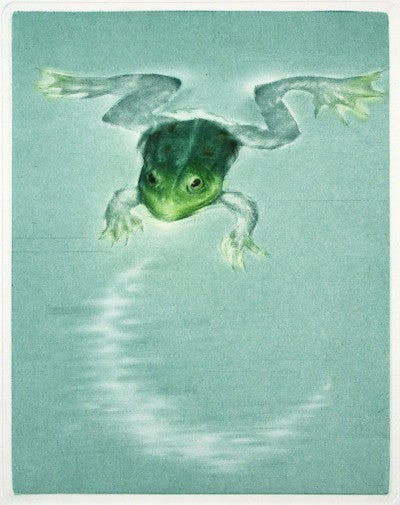
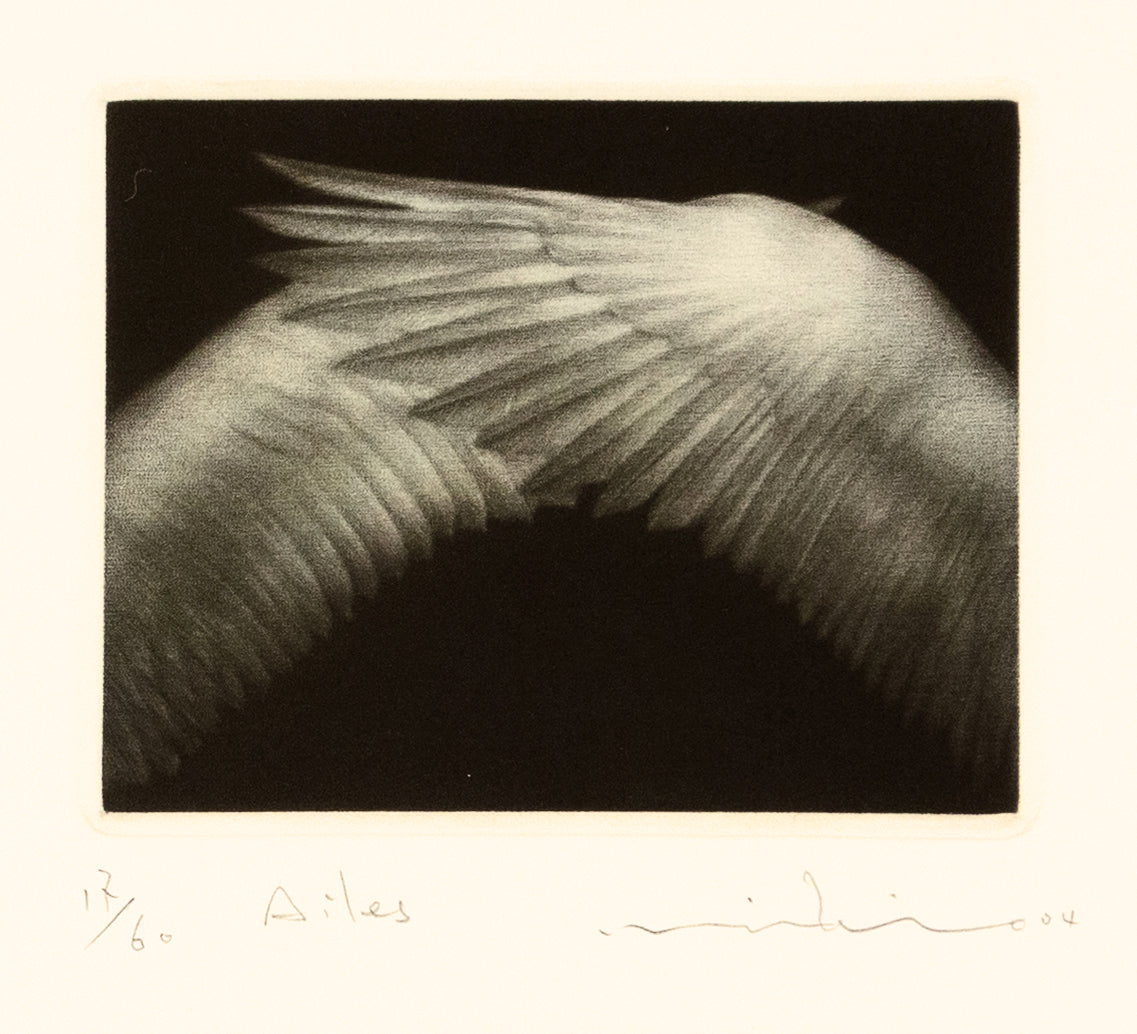
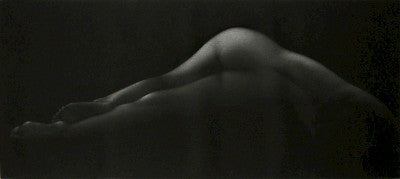
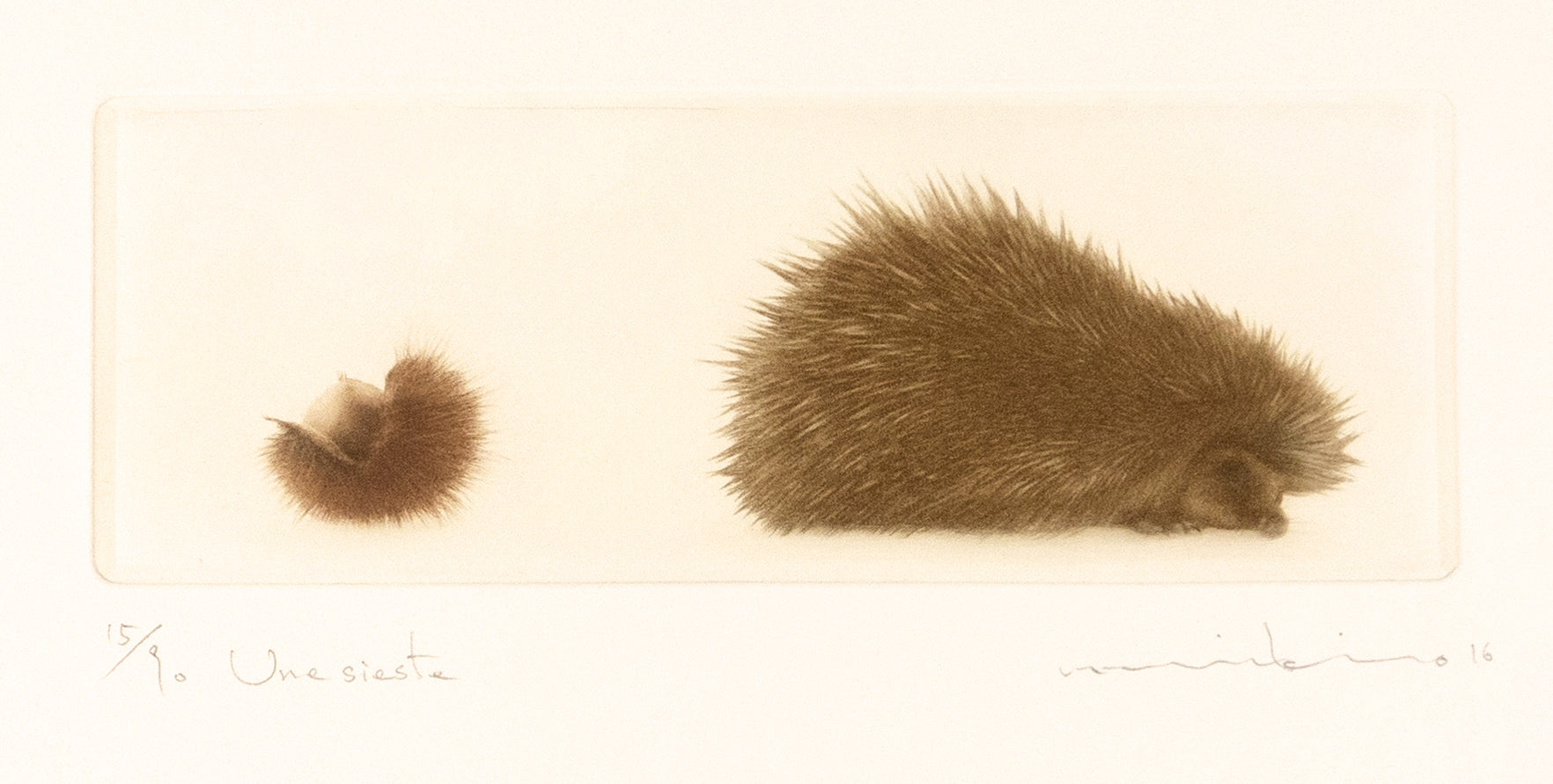
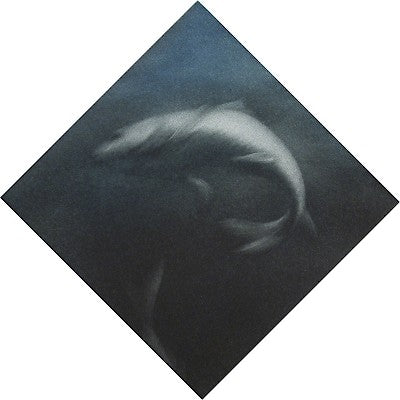
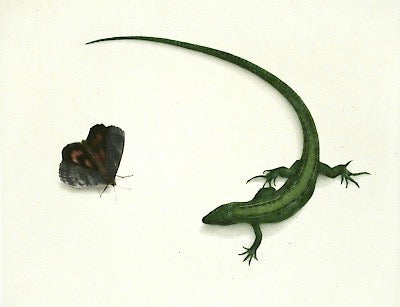
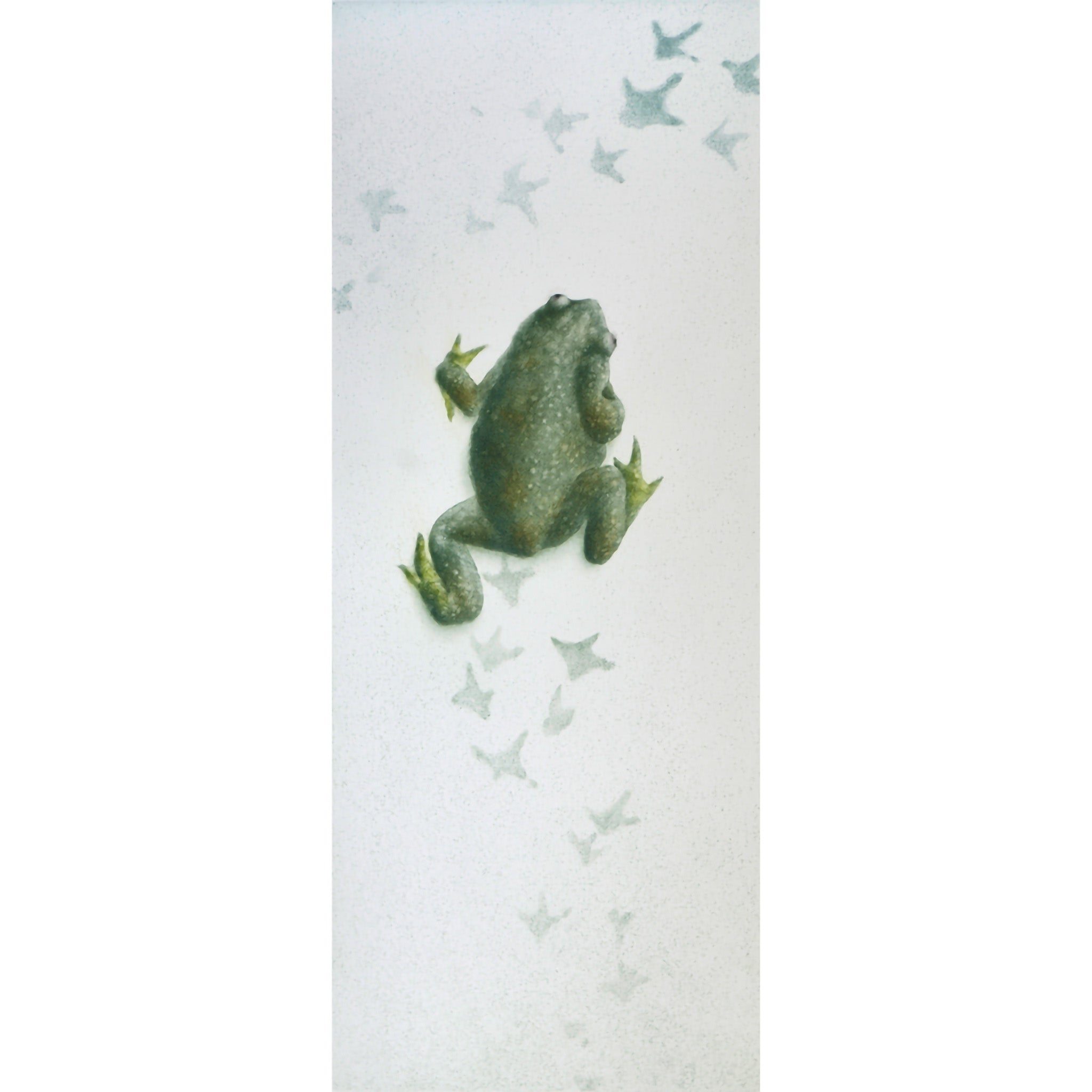
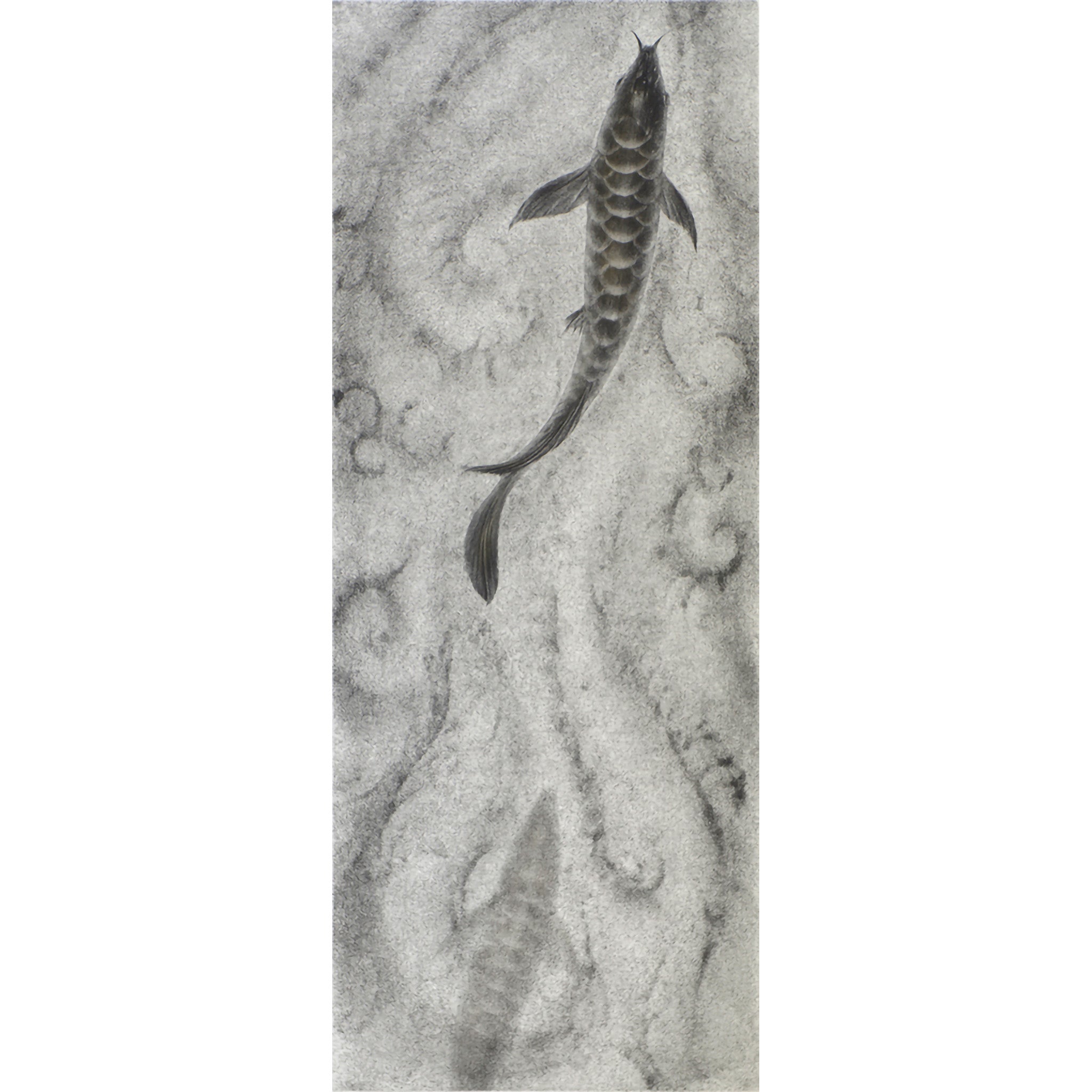
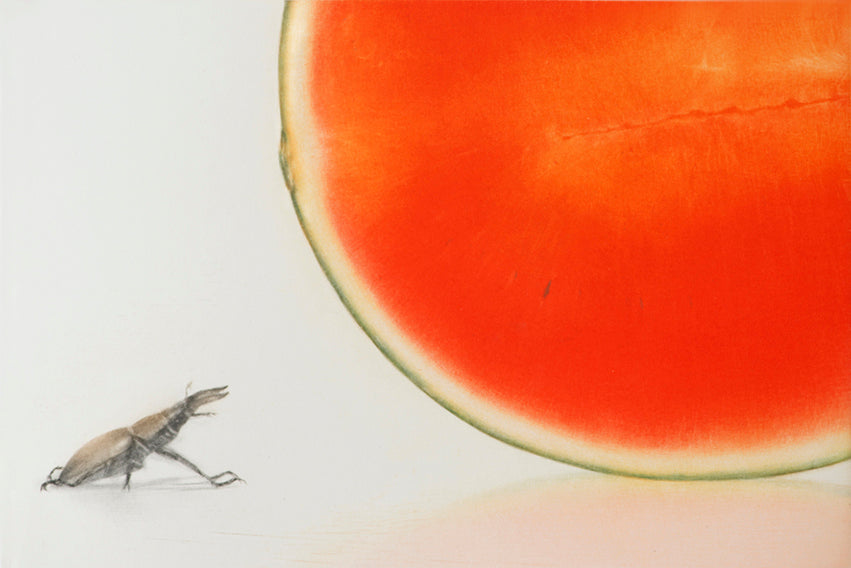
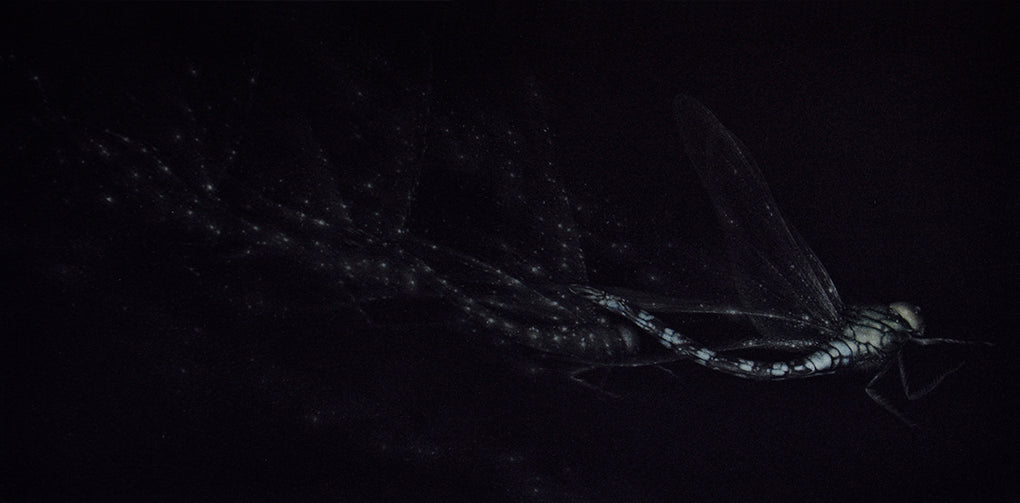
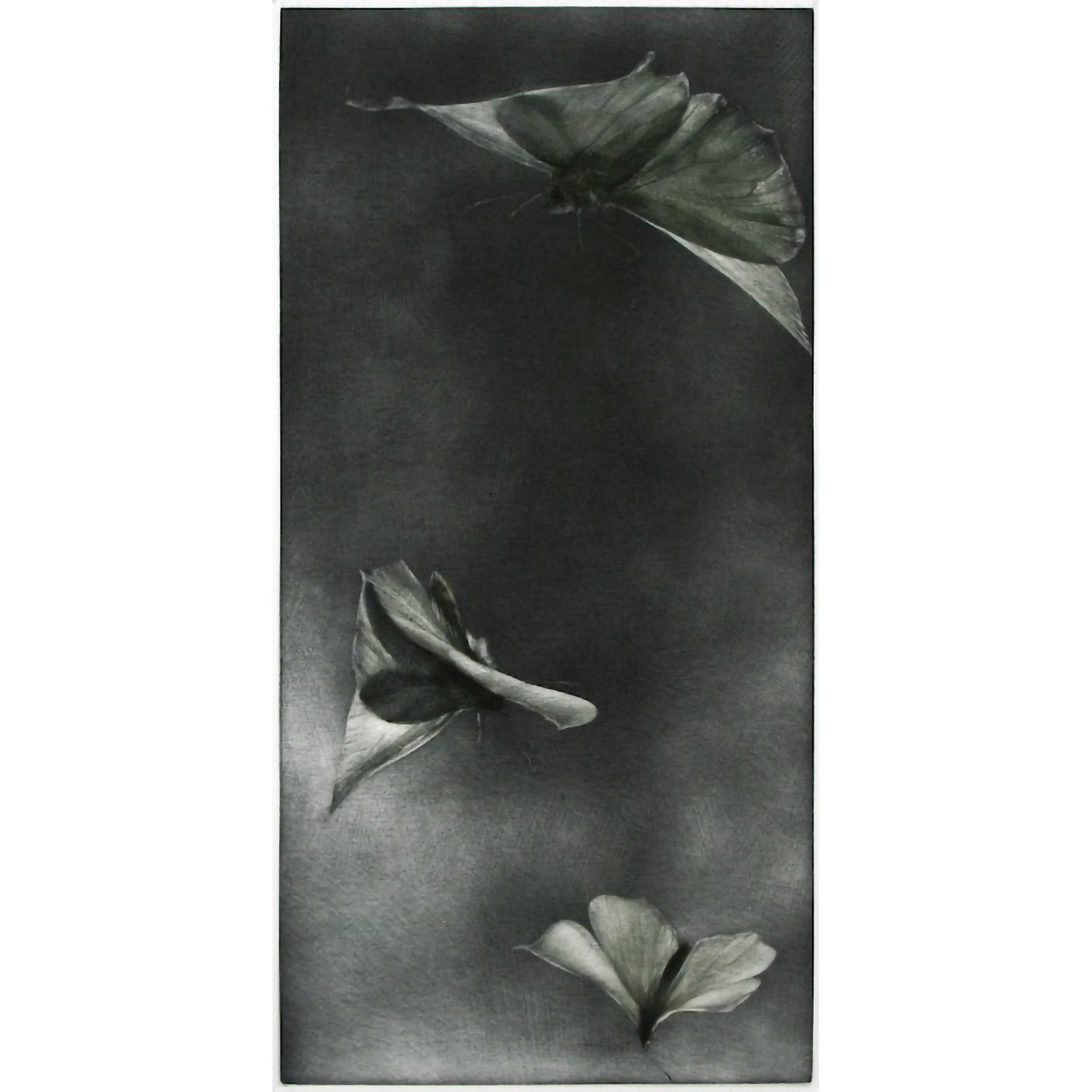
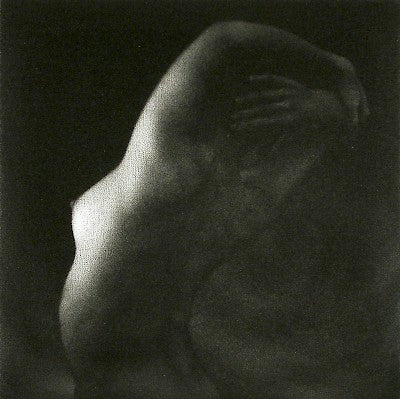
Mikio Watanabe (born 1954, Yokohama) is a Japanese-French printmaker who has worked in mezzotint almost exclusively for more than four decades, making him one of the most consistent practitioners of the technique in contemporary European printmaking. His work is characterised by saturated, velvety blacks scraped from rocked copper plates, against which the female nude — most often his wife and lifelong model Yuriko — emerges in soft, classical light. Since the early 2000s he has gradually extended this vocabulary to natural subjects: birds, butterflies, frogs, plants, and shoreline imagery, often printed in muted single colour or with chine collé.
Watanabe trained as a printmaker at the École des Beaux-Arts in Tokyo, graduating in 1977. That same year he left Japan overland, travelling via the Trans-Siberian Railway to Paris, where he began the formative period of his career. From 1979 to 1981 he studied intaglio printmaking at Atelier 17, the Paris workshop founded by Stanley William Hayter that had been the most influential studio for postwar etching and engraving experimentation in Europe. Working alongside Hayter and the workshop's international community gave him exposure to the full range of intaglio techniques, but by 1981 he had committed his practice to mezzotint — a form rare in twentieth-century printmaking because of the labour required to rock a copper plate to a uniform black tooth before scraping back the image — and he has worked in it almost exclusively ever since.
Settled in France, Watanabe has spent more than three decades dividing his time between a home and studio in Pierric, Brittany, where he raised his family, and a Paris studio that he has operated since 2001. His mezzotints are printed in small signed editions, each hand-signed, titled, and dated in pencil. He has produced more than ninety distinct mezzotint plates, ranging from miniature formats to medium-sized works.
His early black-only nudes give way, in the 2000s and 2010s, to mezzotints printed with single tones of indigo, sepia, deep red, or pale ochre, and to compositions in which botanical and animal subjects share the plate with the figure. His works carry evocative, often single-word French titles and include a number of related series.
Watanabe's awards date from the late 1980s onward and reflect a sustained presence in European print biennials. He won prizes at the Salon de la Gravure Originale in Bayeux, France (1989), and the Miniprint Internacional in Cadaqués, Spain (1992). The Fondation Taylor in Paris awarded him the Kiyoshi Hasegawa Prize in 2007 and the Marie et Léon Navier Prize in 2013. He took second prize at the 29th World Print Triennial in Chamalières, France (2014), and First Prize in Classical Printmaking at Miniprint Kazanlak, Bulgaria (2018).
His work is held in numerous museum collections in France, including the Bibliothèque Nationale in Paris and museums in Caen, Bayeux, and Quimper, as well as the Central Academy of Art in Kuala Lumpur, the New Orleans Museum of Art, the University of Washington, Stanford University, and the University of California, Riverside. In the United States he is shown by galleries including Stone + Press Gallery in New Orleans, The Ren Brown Collection in Bodega Bay, California, and Avalon Gallery, first exhibiting at The Ren Brown Collection in October 2009. He has continued to exhibit regularly in France, Japan, and the United States and remains based in Brittany and Paris.
Key Facts
- Active Period
- 1954
- Nationality
- 🇫🇷France
- Movement
- Contemporary Mokuhanga
- Subjects
- AbstractNatureBirds & Flowers
- Works Indexed
- 12
Frequently Asked Questions
Mikio Watanabe (born 1954, Yokohama) is a Japanese-French printmaker who has worked in mezzotint almost exclusively for more than four decades, making him one of the most consistent practitioners of the technique in contemporary European printmaking. His work is characterised by saturated, velvety blacks scraped from rocked copper plates, against which the female nude — most often his wife and lifelong model Yuriko — emerges in soft, classical light. Since the early 2000s he has gradually extended this vocabulary to natural subjects: birds, butterflies, frogs, plants, and shoreline imagery, often printed in muted single colour or with chine collé.
Mikio Watanabe was active born in 1954. They were associated with the Contemporary Mokuhanga movement.
Mikio Watanabe's work was shaped by the Contemporary Mokuhanga tradition in Japanese woodblock printmaking. Contemporary Mokuhanga: Contemporary mokuhanga (literally "wood-block print") encompasses artists working from approximately 1970 to the present who continue or reinvent traditional Japanese woodblock printing techniques.
Mikio Watanabe's prints frequently feature abstract, nature, birds & flowers.