Biography
Hisaharu Motoda (元田久治, born 1973, Kumamoto Prefecture) is a Japanese lithographer best known for the precise, large-format ruined-cityscape prints he has been producing since the early 2000s. He earned a BFA at Kyushu Sangyo University (1999) and completed a graduate degree in printmaking at Tokyo University of the Arts (Tokyo Geidai) in 2001, later supplemented by government-supported overseas residencies in Australia and the United States.
Motoda's signature subject matter — Tokyo, Sydney, and other major cities depicted as if abandoned and falling slowly back into nature — emerged in 2004 with the Revelation series. The early Revelation lithographs include Cinderella Castle (Tokyo Disneyland) (2004), Kabukichō I and II (the Shinjuku entertainment district, 2004), and The Kaminarimon Gate (Asakusa, 2005). The technical signature is a meticulous lithographic line drawing of the architectural subject combined with overgrown vegetation, broken glass, and slowly returning forest, executed in the disciplined black-and-white tonal range of fine-art lithography.
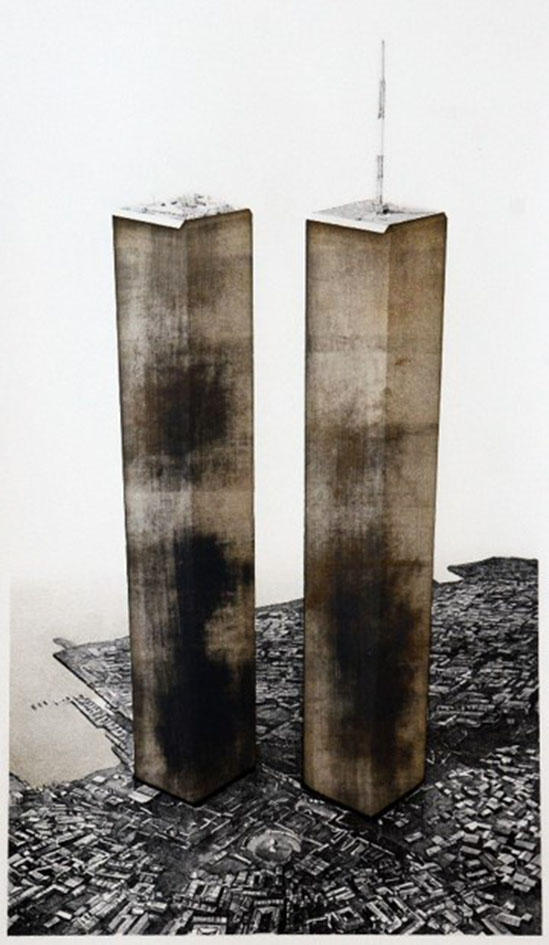
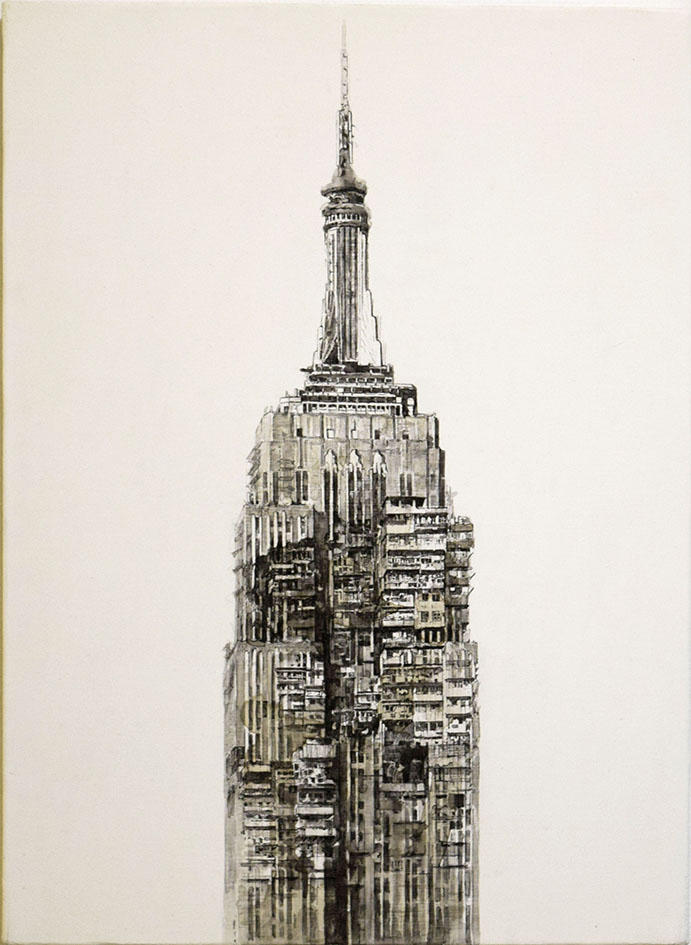
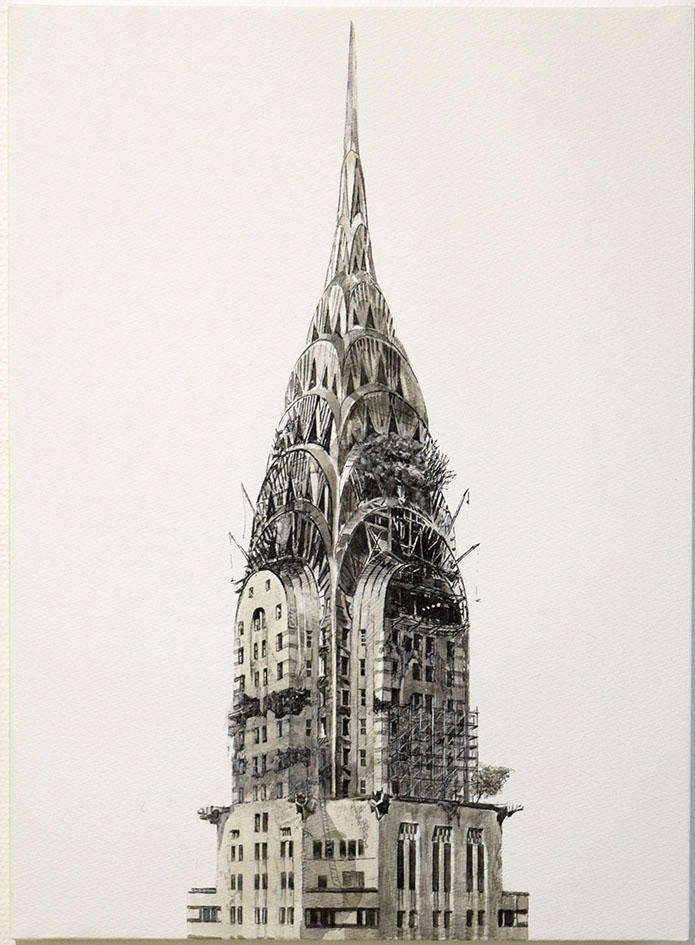
The subsequent Indication series extended the project across the global cityscape — Indication: Shibuya Center Town, Indication: Imperial Palace / Nijubashi, Indication: Opera House, Sydney (2010), and Indication: Statue of Liberty / Odaiba (2013) — and the Foresight series (2013–2017) built on the same visual vocabulary, with works depicting the Eiffel Tower, the Chrysler Building, the Empire State Building, the World Trade Center, the Burj Khalifa, Marina Bay Sands, and the Canton Tower.
Most recently the CARS series (2022) has reframed the same post-apocalyptic vocabulary onto the abandoned automobile. CARS Mercedes Benz GL2, CARS (PAJERO), CARS Manhole, and the monumental CARS WhiteLine 1g — a mixed-media work on panel and linen — demonstrate his continuing extension of the lithographic register into mixed-media collage.
Motoda is represented in Japan by Art Front Gallery (Tokyo). His work has been recognized in international print competitions, including first prize at the International Print Triennial in Kanagawa (2001) and awards at the GYOR International Symposium in Hungary, and it is held in institutional collections including the Honolulu Museum of Art, Tokyo Station Gallery, the Machida City Museum of Graphic Arts, Fuchu Art Museum, the Contemporary Art Museum Kumamoto, RMIT University in Melbourne, and the Mead Art Museum at Amherst College. His work has also been documented by the Japigozzi Collection of contemporary Japanese art and the Kala Art Institute in Berkeley.
Within contemporary Japanese printmaking he is one of the most distinctive lithographers of his generation — a printmaker whose post-apocalyptic urban imagery occupies a recognizable place in the post-2000s Japanese cultural imagination of weathering, decay, and the relationship between artificial structure and returning nature.
Key Facts
- Active Period
- 1973
- Nationality
- 🇯🇵Japan
- Movement
- Contemporary Mokuhanga
- Works Indexed
- 2
Frequently Asked Questions
Hisaharu Motoda (元田久治, born 1973, Kumamoto Prefecture) is a Japanese lithographer best known for the precise, large-format ruined-cityscape prints he has been producing since the early 2000s. He earned a BFA at Kyushu Sangyo University (1999) and completed a graduate degree in printmaking at Tokyo University of the Arts (Tokyo Geidai) in 2001, later supplemented by government-supported overseas residencies in Australia and the United States.
Hisaharu Motoda was active born in 1973. They were associated with the Contemporary Mokuhanga movement.
Hisaharu Motoda's work was shaped by the Contemporary Mokuhanga tradition in Japanese woodblock printmaking. Contemporary Mokuhanga: Contemporary mokuhanga (literally "wood-block print") encompasses artists working from approximately 1970 to the present who continue or reinvent traditional Japanese woodblock printing techniques.