Biography
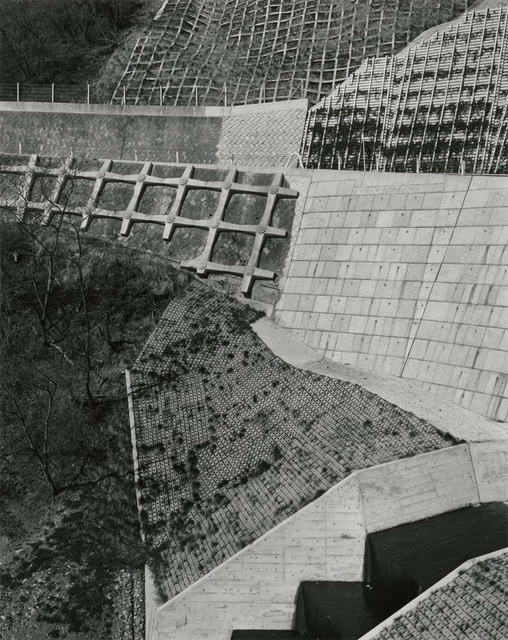
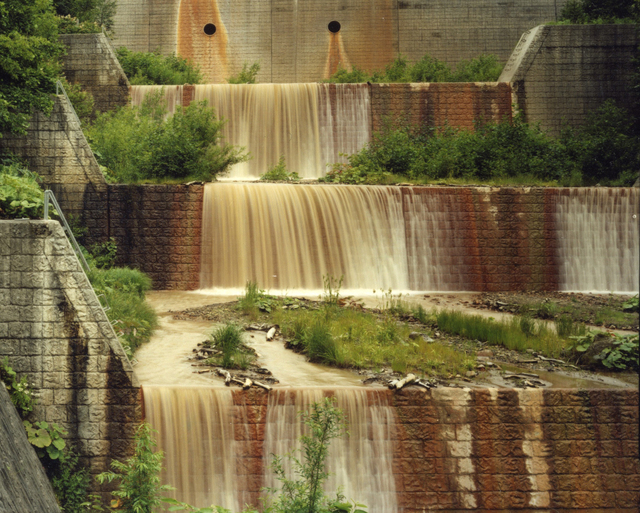
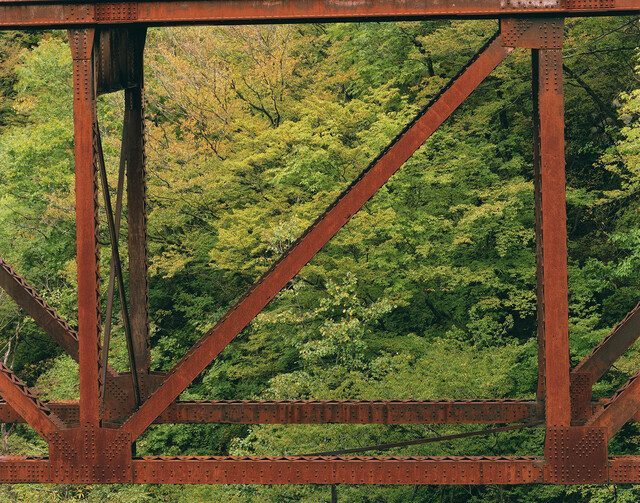
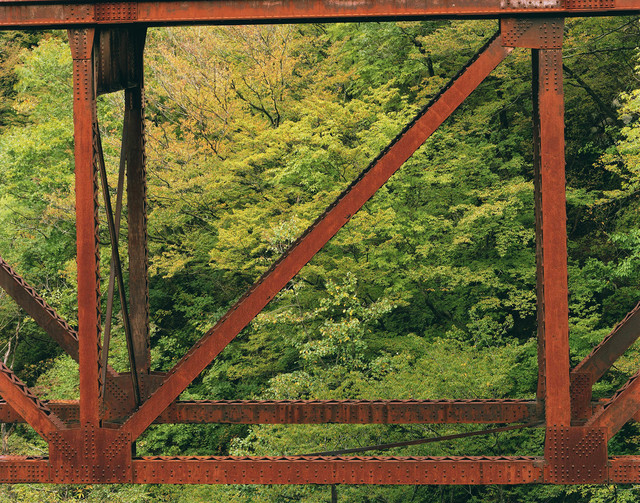
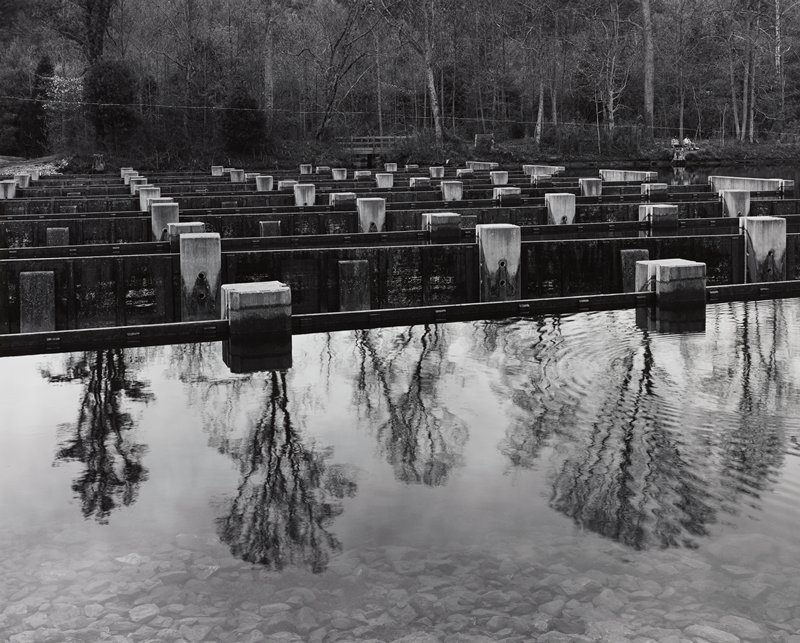
Toshio Shibata (柴田敏雄, born 1949) is a Tokyo-born Japanese artist whose primary medium is large-format photography of civil-engineering infrastructure set in rural Japanese landscapes, and whose appearance in the woodblock-print record derives from his early training as a painter before he settled on photography in the late 1970s. The kanji rendering encountered as 柴田敏夫 in some catalogue records is a transcription variant of the same name; published sources consistently give Tokyo birth in 1949 and the standard rendering 柴田敏雄. He graduated with a B.A. in 1972 and an M.F.A. in 1974 from Tokyo University of the Arts (Tōkyō Geijutsu Daigaku), concentrating primarily on painting. From 1975 to 1977 he held a fellowship from the Belgian Ministry of Education to study at the Royal Academy of Ghent, and it was during this Belgian period that he began to work seriously in photography; he had returned to Japan and made photography the principal medium of his practice by his first solo exhibition in 1979. His mature subject is the encounter between large-scale Japanese civil-engineering structures — concrete erosion-control walls, river-bed reinforcement, dams, road tunnels, expressway viaducts — and the mountain, river, and forest landscapes into which they are inserted. The work is shot with a large-format view camera and has been published in successive monographs from the 1990s onward, among them Landscape, Dam, Type 55, and Still in the Night. In 1992 it was honoured with the seventeenth Kimura Ihei Award, the Asahi Shimbun prize for emerging Japanese photographers that is widely treated as a leading institutional recognition in the field. He has taught photography in Tokyo since 1987. His work is held by the Metropolitan Museum of Art in New York, the Museum of Fine Arts in Houston, the Museum of Contemporary Art in Chicago, the San Francisco Museum of Modern Art, Tate (London), the J. Paul Getty Museum, and the Museum of Modern Art in New York. His inclusion in a Japanese woodblock-print database alongside contemporary mokuhanga practitioners is best understood as a record of his standing as a major Japanese art photographer — trained in the fine arts and collected internationally alongside print artists — rather than of any ongoing woodblock practice. He is not part of the contemporary mokuhanga revival in the technical sense and should be catalogued primarily as a photographer.
Key Facts
- Active Period
- 1949
- Nationality
- 🇯🇵Japan
- Movement
- Contemporary Mokuhanga
- Works Indexed
- 5
Frequently Asked Questions
Toshio Shibata (柴田敏雄, born 1949) is a Tokyo-born Japanese artist whose primary medium is large-format photography of civil-engineering infrastructure set in rural Japanese landscapes, and whose appearance in the woodblock-print record derives from his early training as a painter before he settled on photography in the late 1970s. The kanji rendering encountered as 柴田敏夫 in some catalogue records is a transcription variant of the same name; published sources consistently give Tokyo birth in 1949 and the standard rendering 柴田敏雄. He graduated with a B.A. in 1972 and an M.F.A. in 1974 from Tokyo University of the Arts (Tōkyō Geijutsu Daigaku), concentrating primarily on painting. From 1975 to 1977 he held a fellowship from the Belgian Ministry of Education to study at the Royal Academy of Ghent, and it was during this Belgian period that he began to work seriously in photography; he had returned to Japan and made photography the principal medium of his practice by his first solo exhibition in 1979. His mature subject is the encounter between large-scale Japanese civil-engineering structures — concrete erosion-control walls, river-bed reinforcement, dams, road tunnels, expressway viaducts — and the mountain, river, and forest landscapes into which they are inserted. The work is shot with a large-format view camera and has been published in successive monographs from the 1990s onward, among them Landscape, Dam, Type 55, and Still in the Night. In 1992 it was honoured with the seventeenth Kimura Ihei Award, the Asahi Shimbun prize for emerging Japanese photographers that is widely treated as a leading institutional recognition in the field. He has taught photography in Tokyo since 1987. His work is held by the Metropolitan Museum of Art in New York, the Museum of Fine Arts in Houston, the Museum of Contemporary Art in Chicago, the San Francisco Museum of Modern Art, Tate (London), the J. Paul Getty Museum, and the Museum of Modern Art in New York. His inclusion in a Japanese woodblock-print database alongside contemporary mokuhanga practitioners is best understood as a record of his standing as a major Japanese art photographer — trained in the fine arts and collected internationally alongside print artists — rather than of any ongoing woodblock practice. He is not part of the contemporary mokuhanga revival in the technical sense and should be catalogued primarily as a photographer.
Shibata Toshio was active born in 1949. They were associated with the Contemporary Mokuhanga movement.
Shibata Toshio's work was shaped by the Contemporary Mokuhanga tradition in Japanese woodblock printmaking. Contemporary Mokuhanga: Contemporary mokuhanga (literally "wood-block print") encompasses artists working from approximately 1970 to the present who continue or reinvent traditional Japanese woodblock printing techniques.