
Biography
Sugiura Kazutoshi (杉浦和俊, 1938–2024) was a Kyoto-trained contemporary Japanese printmaker celebrated for highly refined silkscreen prints in which botanical motifs — most often peonies, irises, and other seasonal flowers drawn from the classical Japanese repertoire — are set against burnished gold-leaf grounds. His mature work belongs less to the sōsaku-hanga woodblock lineage than to the postwar Kyoto current that sought to renew nihonga (traditional Japanese painting) sensibilities through modern print media, and his prints are held by both Japanese and international museums as an example of that synthesis. Sugiura was born in 1938 and grew up in Kyoto in the aftermath of the war, drawn to the city's deeply rooted craft and art traditions. He enrolled at the Kyoto Municipal College of Fine Arts (now Kyoto City University of Arts), one of the principal centers of nihonga study in Japan, and graduated in 1963; his coursework combined silkscreen printing with the study of nihonga painting and its surface conventions, the dual training that would define his subsequent practice.
After graduating, Sugiura undertook sustained research into historical Japanese painting technique. From 1967 he spent five years at the Kyoto National Museum studying classical methods, and from 1968 he undertook a four-year program in restoration, with a particular focus on traditional gold-grounding (haku-oki) and the mounting techniques used in screen and scroll painting — a course of training more often associated with conservators than with print artists. The hybrid technique he developed out of this study is unusual in the contemporary print field: he first applies sheets of gold leaf to handmade Japanese washi paper, building the metallic ground in the manner of a folding-screen panel; he then prints the floral image on top of the gold using silkscreen, which gives him fine control over line weight and color saturation; finally he often abrades the surface with silk cloth dipped in lithographic ink and patinates the gold with subtle tonal washes, producing a softened, jewel-like effect that avoids the harshness of pure metallic shine. Because the gold ground resists the ink, each impression carries its own mottling of surface color, giving prints from a single edition a degree of individuality unusual in the silkscreen medium. The results combine the iconography of nihonga (single flowering branches, seasonal vignettes, neutral compositional space) with the clarity and editioning possibilities of modern silkscreen — a position closer to the postwar Kyoto modernists than to either the sōsaku-hanga woodblock tradition or the strictly conceptual experimental print movement of his generation.
His work drew international attention: the International Graphic Art Society in New York commissioned him to produce a silkscreen edition for its subscribers, and his prints subsequently entered major American and British collections, with documented holdings at the Brooklyn Museum, the Museum of Modern Art in New York, the Art Institute of Chicago, and the British Museum. In the United States he has been represented by Ronin Gallery in New York, which has shown his floral prints in an exhibition titled 'Sugiura: A Flower for Your Mother.' He died in 2024. Within the broader contemporary print field, Sugiura is best understood not as a sōsaku-hanga or strictly modernist abstract printmaker but as a representative of a quieter, technically meticulous Kyoto current that has used the gold-leaf ground — long associated with Momoyama-period screen painting — to keep certain visual conventions of pre-modern Japanese art alive within an internationally circulating print idiom.
Key Facts
- Active Period
- 1938–2024
- Nationality
- 🇯🇵Japan
- Movement
- Contemporary Mokuhanga
- Works Indexed
- 80
Frequently Asked Questions
Sugiura Kazutoshi (杉浦和俊, 1938–2024) was a Kyoto-trained contemporary Japanese printmaker celebrated for highly refined silkscreen prints in which botanical motifs — most often peonies, irises, and other seasonal flowers drawn from the classical Japanese repertoire — are set against burnished gold-leaf grounds. His mature work belongs less to the sōsaku-hanga woodblock lineage than to the postwar Kyoto current that sought to renew nihonga (traditional Japanese painting) sensibilities through modern print media, and his prints are held by both Japanese and international museums as an example of that synthesis. Sugiura was born in 1938 and grew up in Kyoto in the aftermath of the war, drawn to the city's deeply rooted craft and art traditions. He enrolled at the Kyoto Municipal College of Fine Arts (now Kyoto City University of Arts), one of the principal centers of nihonga study in Japan, and graduated in 1963; his coursework combined silkscreen printing with the study of nihonga painting and its surface conventions, the dual training that would define his subsequent practice.
Sugiura Kazutoshi was active from 1938 to 2024. They were associated with the Contemporary Mokuhanga movement.
Sugiura Kazutoshi's work was shaped by the Contemporary Mokuhanga tradition in Japanese woodblock printmaking. Contemporary Mokuhanga: Contemporary mokuhanga (literally "wood-block print") encompasses artists working from approximately 1970 to the present who continue or reinvent traditional Japanese woodblock printing techniques.
Sugiura Kazutoshi's prints frequently feature birds & flowers, still life, abstract, animals, pagodas, autumn foliage.
Original prints by Sugiura Kazutoshi can be found in collections including Art Institute of Chicago, robynbuntin, Japanese Art Open Database, Ohmi Gallery.
Woodblock Prints by Sugiura Kazutoshi (80)
Bellflower #4
n.d.
Color woodblock print
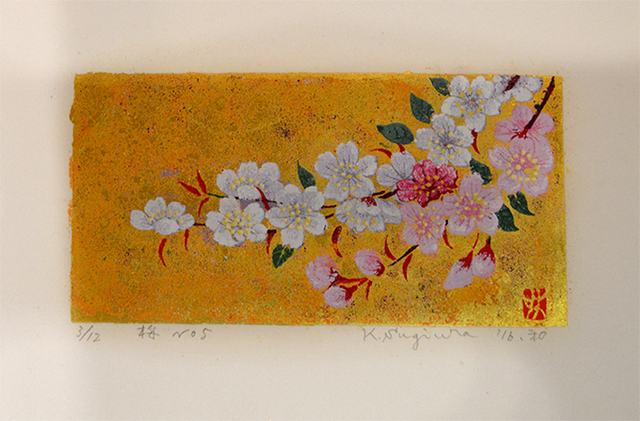
Cherry Blossoms. No 5
2016
Silkscreen

Japanese Apricot Blossoms No.4 2
Mokuhanga (Japanese woodblock)

Poppy No.-10
Mokuhanga (Japanese woodblock)
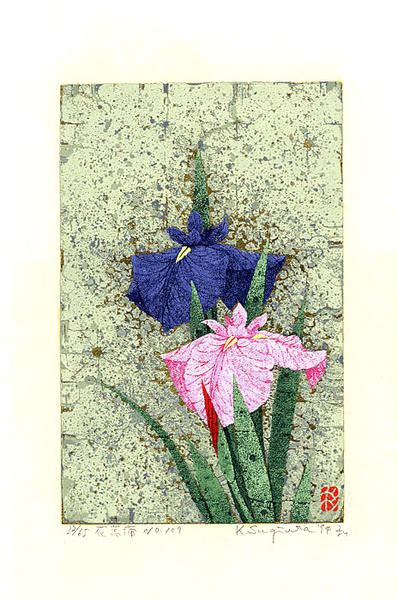
Iris No 109 — 花菖蒲 No 109
Woodblock print
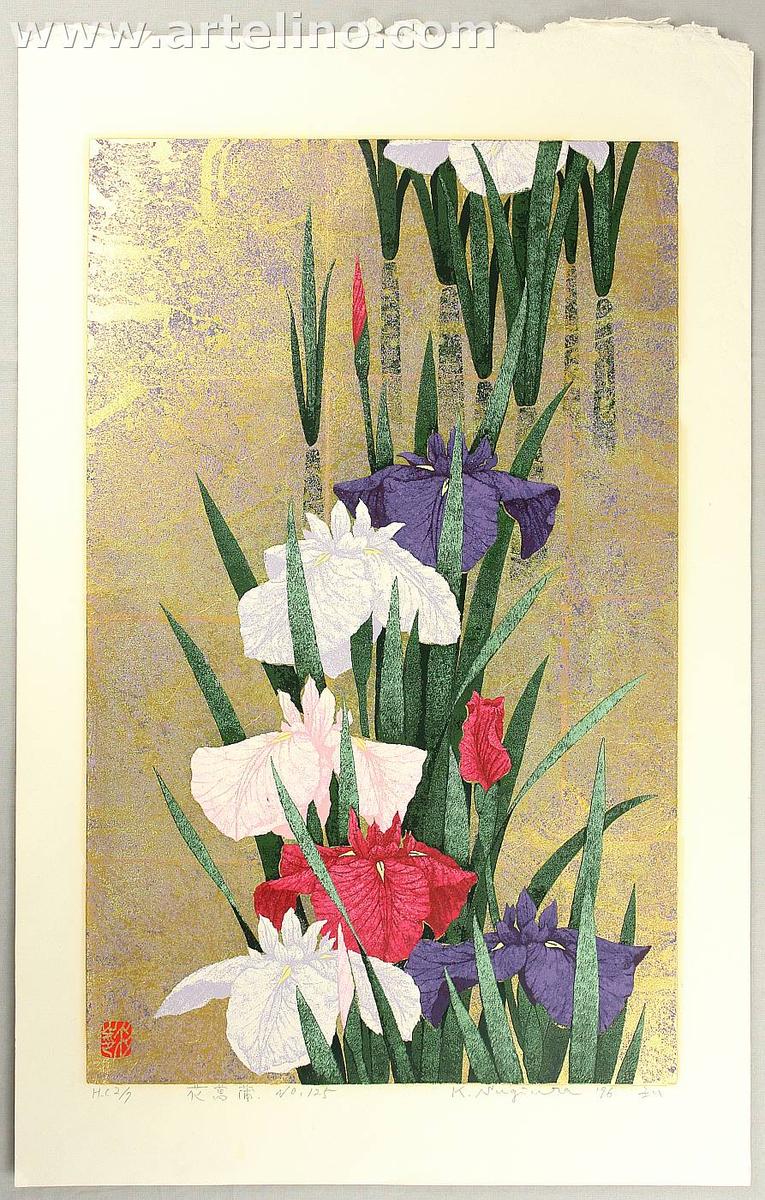
Iris No 125 — 花菖蒲 No 125
Woodblock print
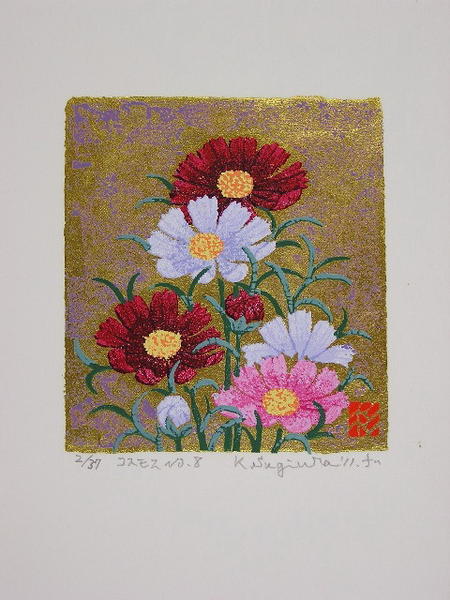
Cosmos No 8
Woodblock print
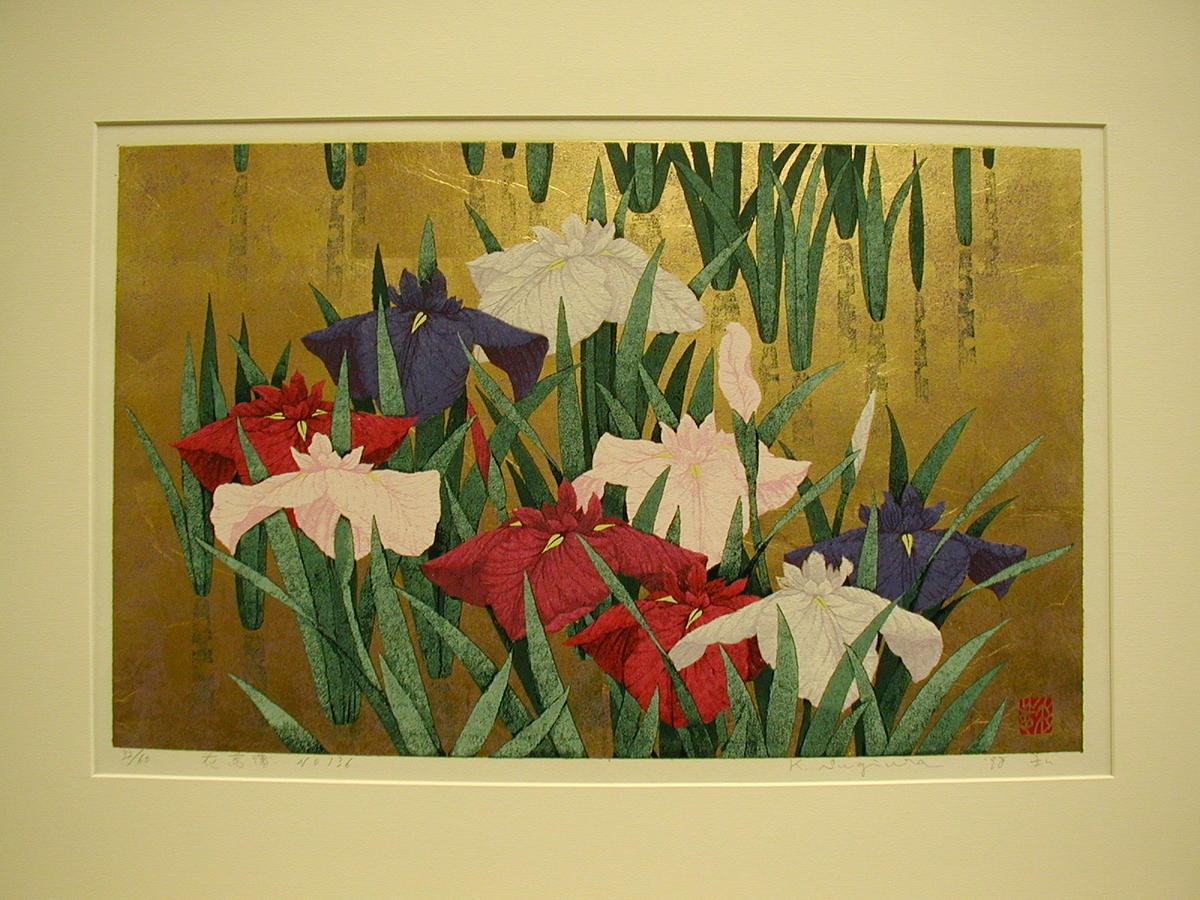
Iris No 136 — 花菖蒲 No 136
Woodblock print
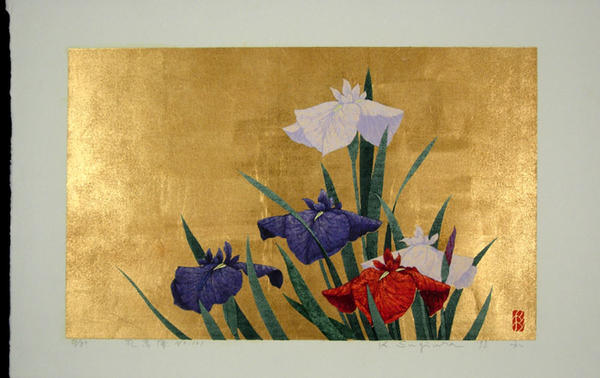
Iris No 101 — 花菖蒲 No 101
Woodblock print
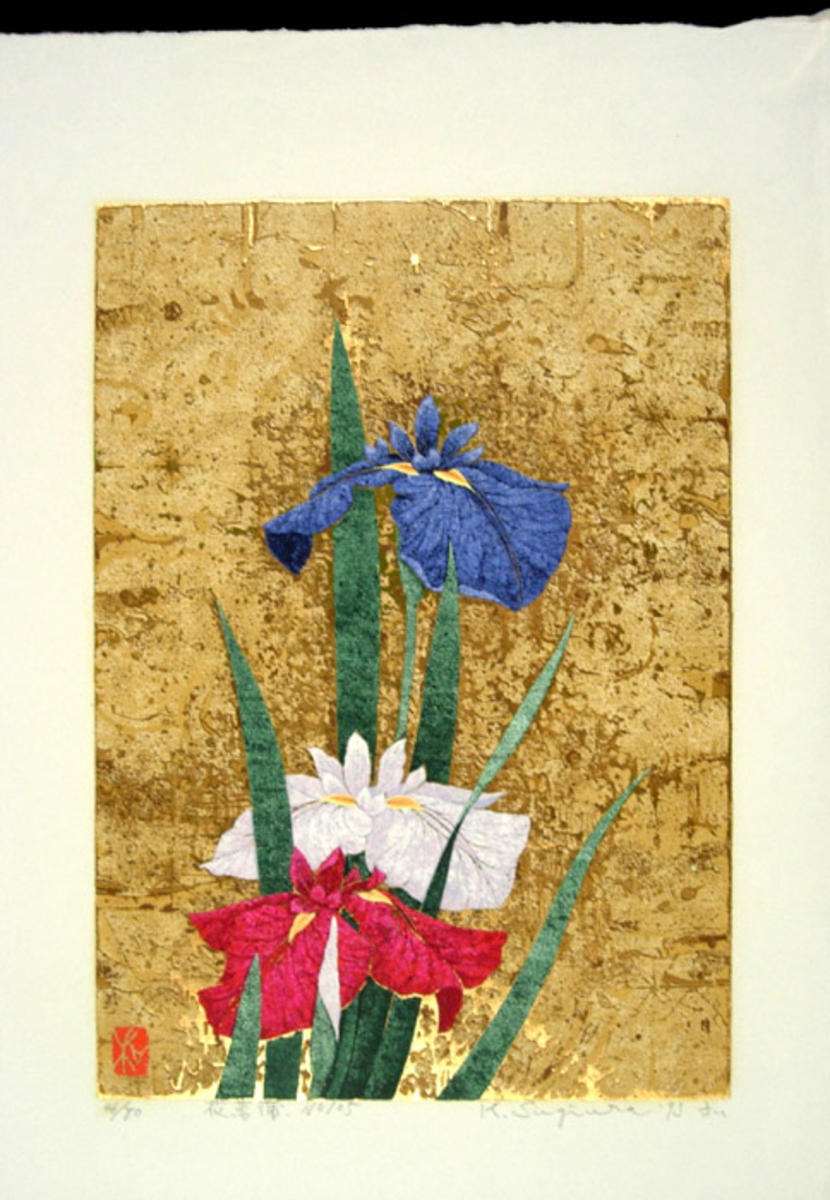
Iris No 105 — 花菖蒲 No 105
Woodblock print
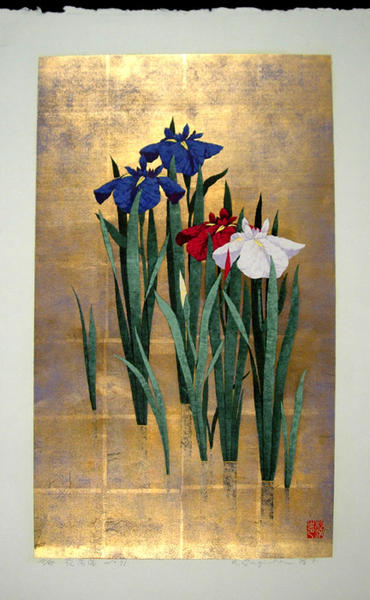
Iris No 71 — 花菖蒲 No 71
Woodblock print
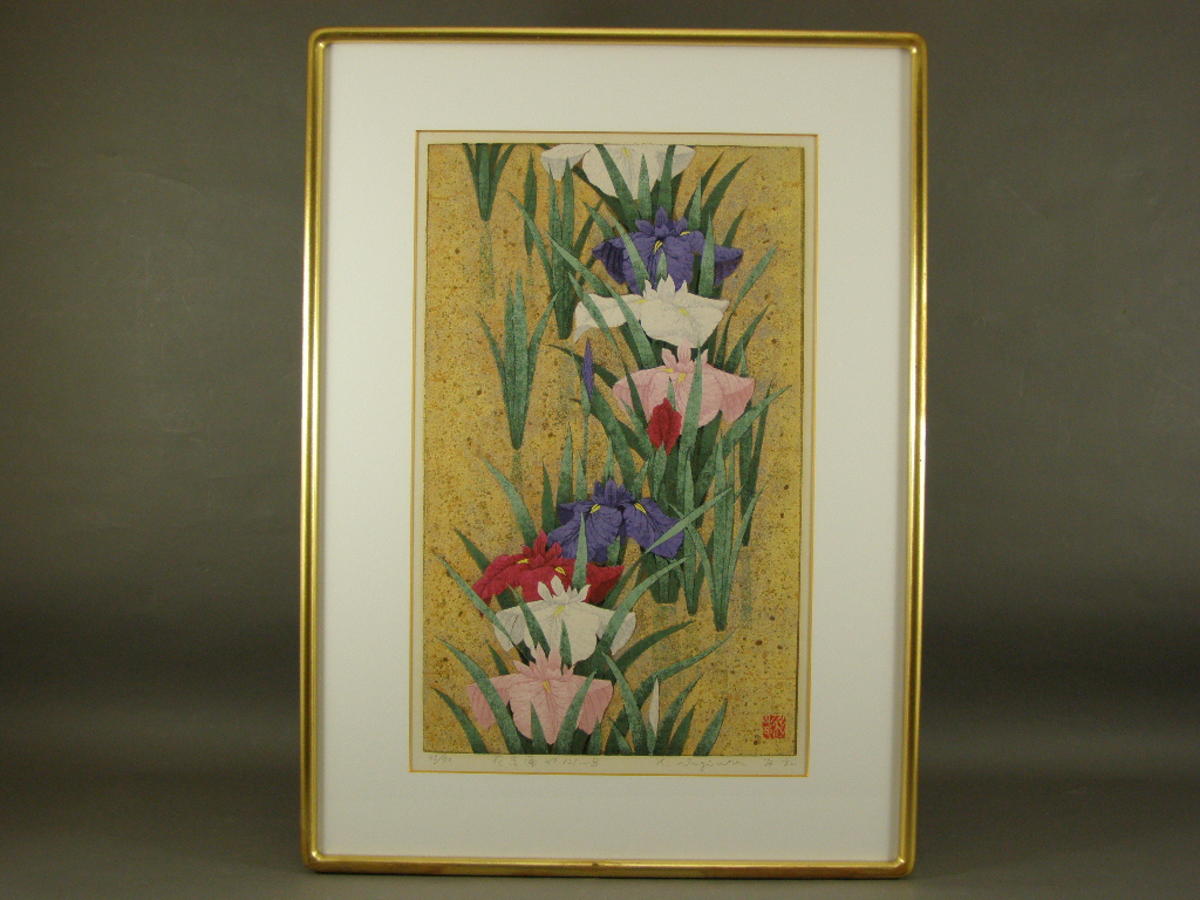
Iris No 121 B — 花菖蒲 No 121
Woodblock print
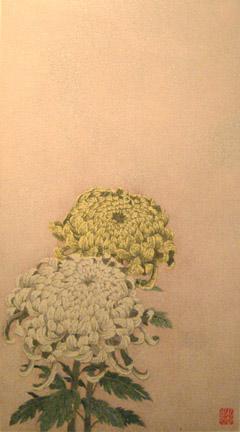
Chrysanthemums #3
Woodblock print
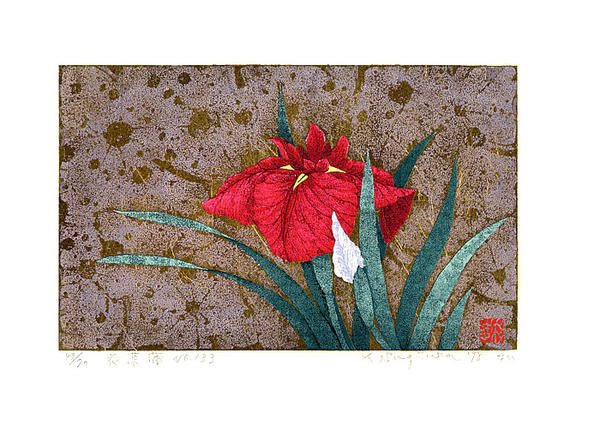
Iris No 133 — 花菖蒲 No 133
Woodblock print

Peony No. 30
Mokuhanga (Japanese woodblock)
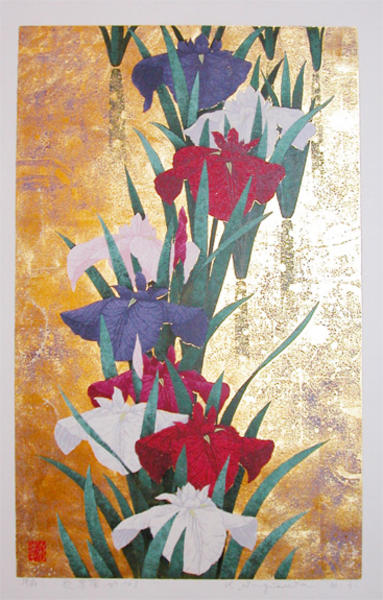
Iris No 143 — 花菖蒲 No 143
Woodblock print
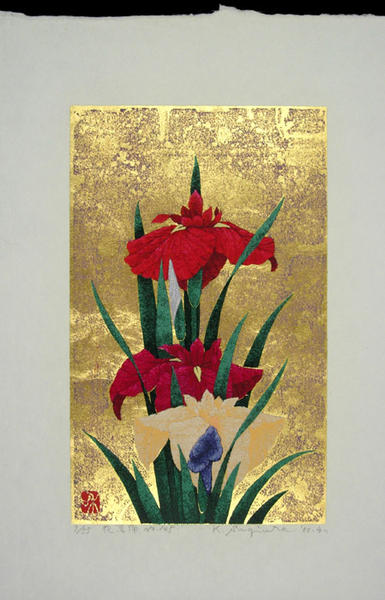
Iris No 145 — 花菖蒲 No 145
Woodblock print
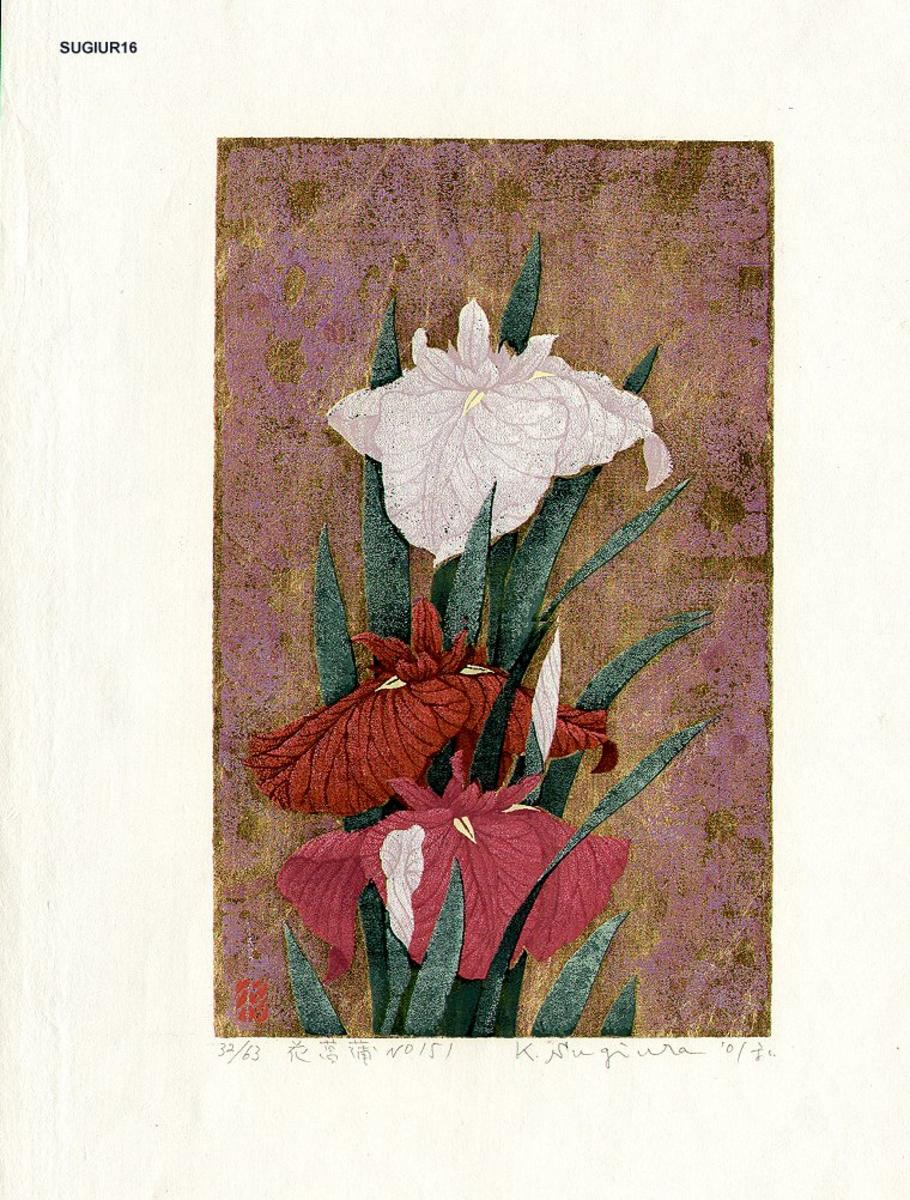
Iris No 151 — 花菖蒲 No 151
Woodblock print
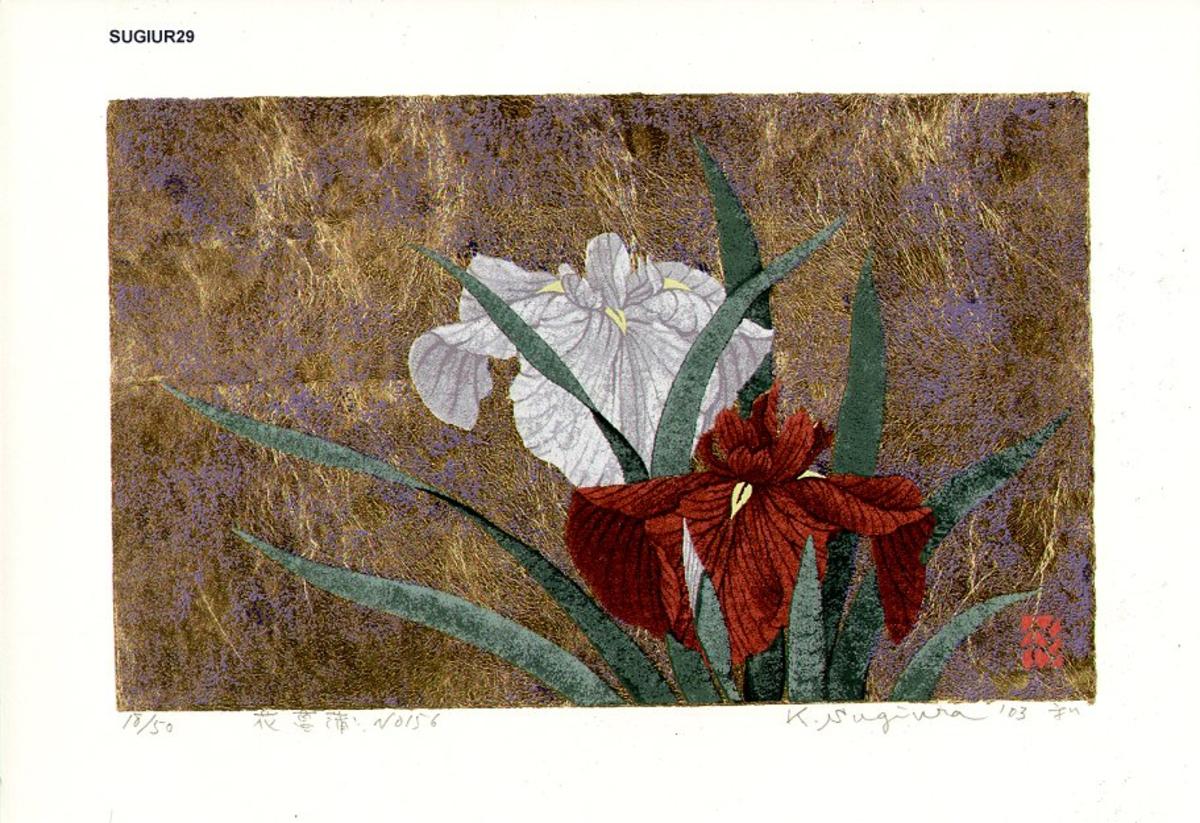
Iris No 156 — 花菖蒲 No 156
Woodblock print
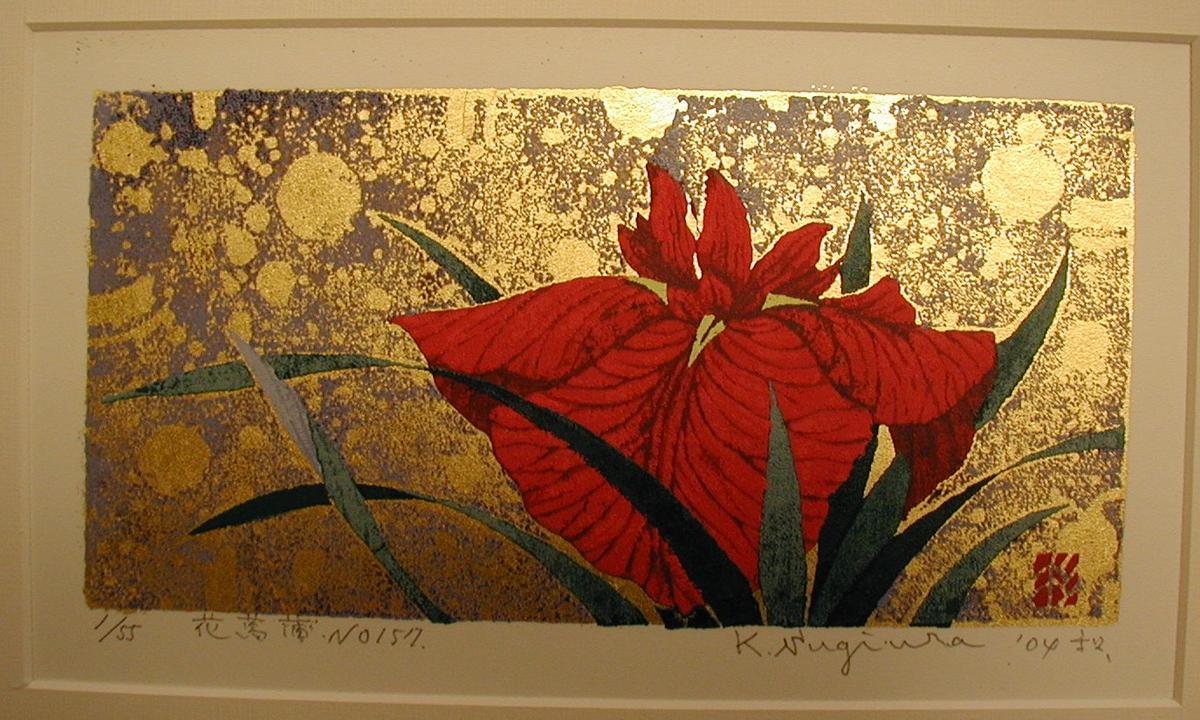
Iris No 157 — 花菖蒲 No 157
Woodblock print
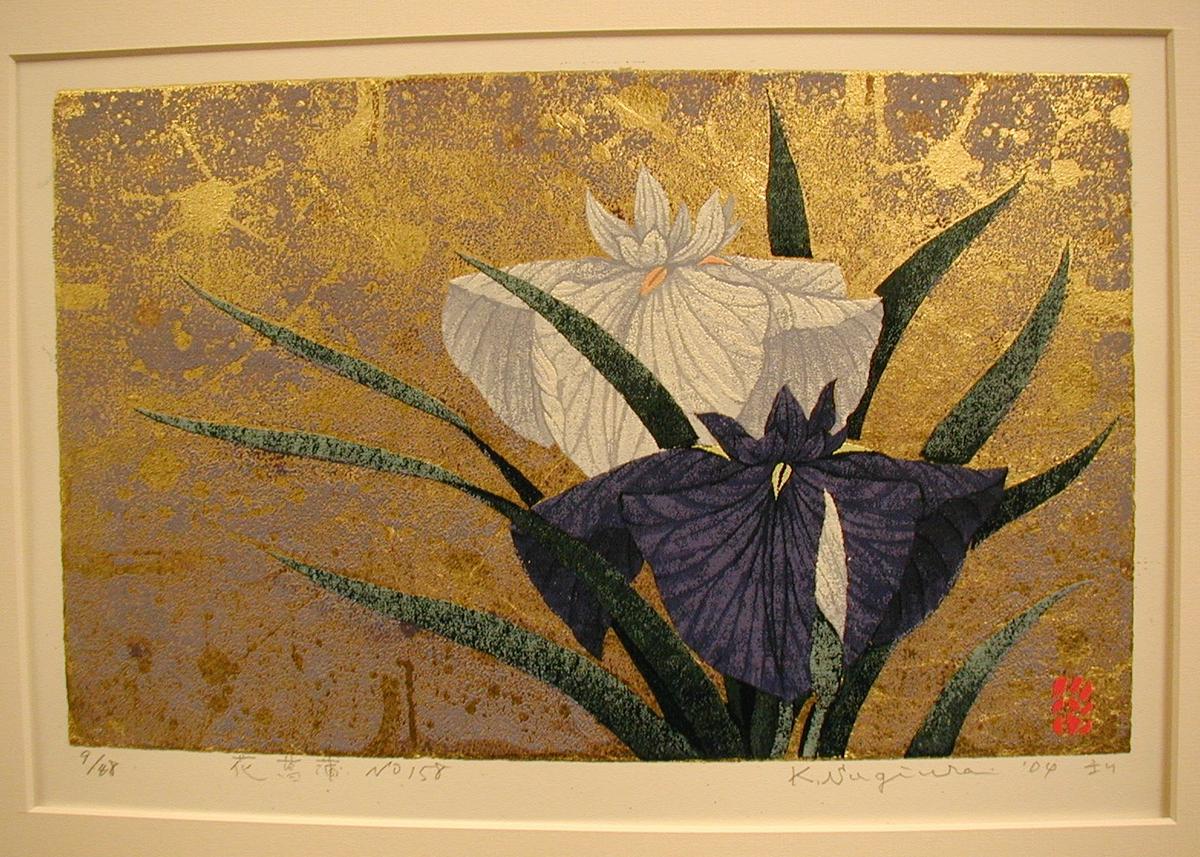
Iris No 158 — 花菖蒲 No 158
Woodblock print
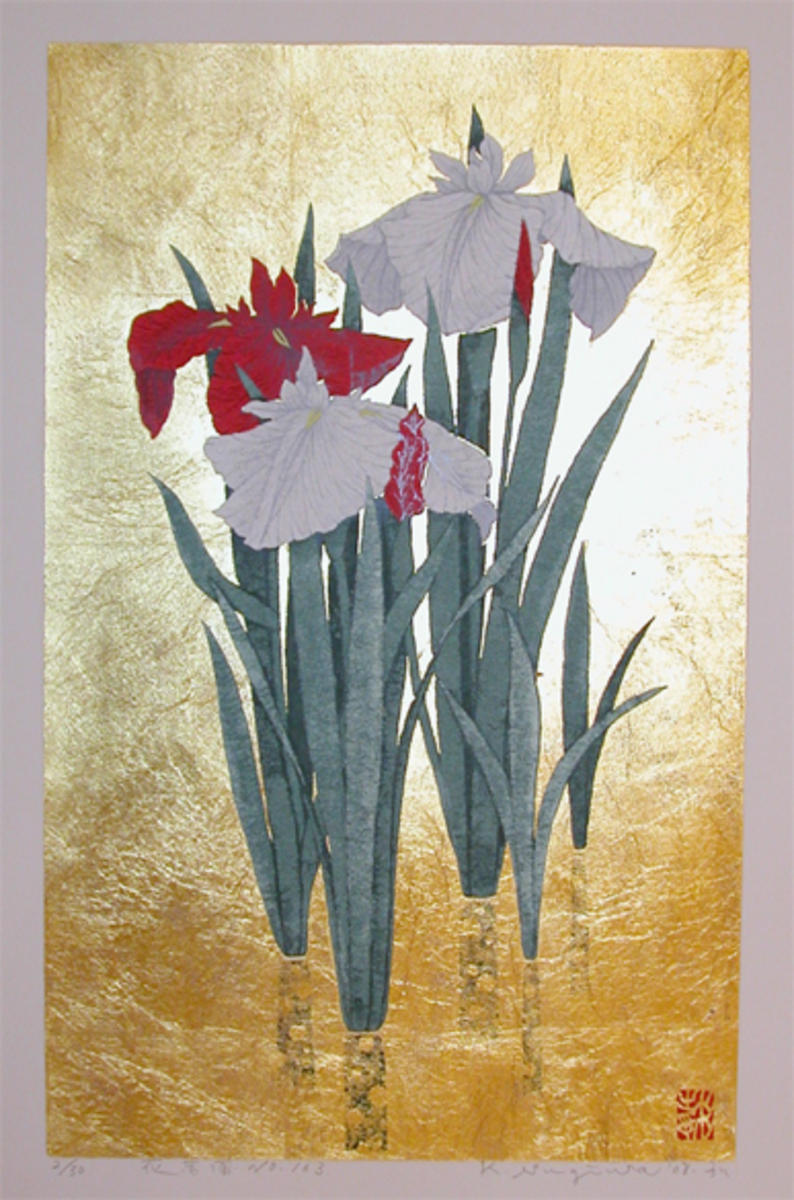
Iris No 163 — 花菖蒲 No 163
Woodblock print

Iris No. 161
Mokuhanga (Japanese woodblock)

Cosmos No. 8
Mokuhanga (Japanese woodblock)