Biography
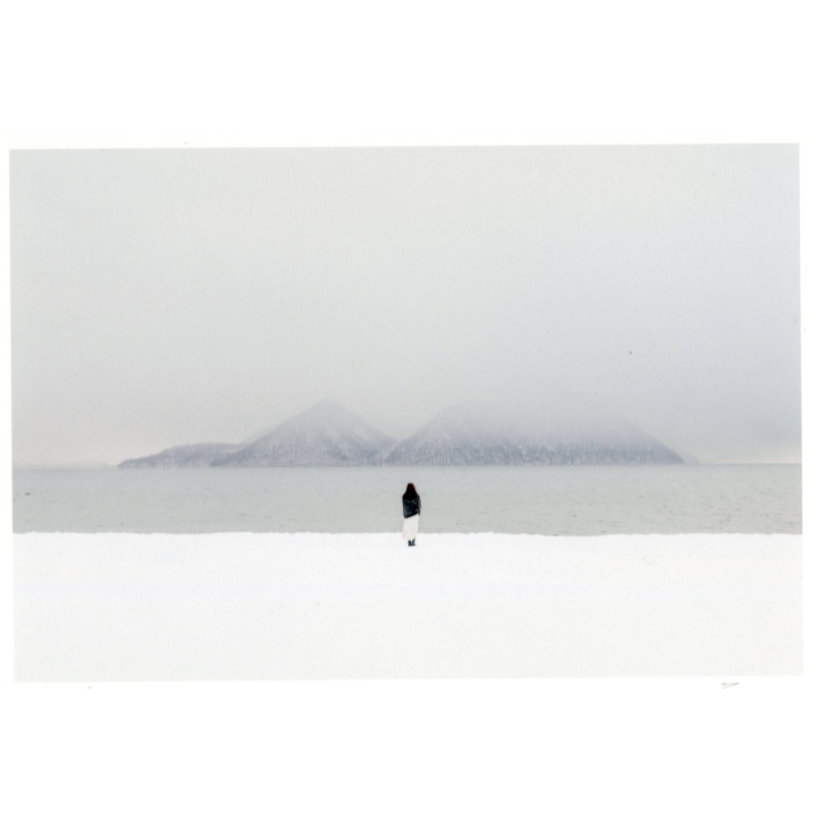
Uwe Langmann is a German fine art photographer born in 1985 whose minimalist, meditative images of landscape have drawn international acclaim for their striking resemblance to traditional Japanese ink painting and their exploration of Zen Buddhist concepts of emptiness. While he works primarily in photography rather than traditional woodblock printing, his aesthetic sensibility is deeply rooted in Japanese visual traditions, making his participation in the Awagami International Miniature Print Exhibition a natural extension of his cross-cultural artistic dialogue.
Langmann began his artistic career as a director of short and documentary films. After screening a short film at the 2009 Cannes Film Festival, he pivoted to photography, using landscape shots originally taken for a planned feature film as the foundation for a new artistic direction. By 2010 he had committed himself fully to the medium.
His artistic practice centers on the technique of long exposure, which he employs not merely as a technical device but as a philosophical tool for revealing what lies beyond the instantaneous snapshot. By extending exposure times, non-stationary elements — waves, clouds, foliage in wind — blur or disappear entirely, leaving compositions of profound stillness that he compares to classical Japanese sumi-e ink paintings. His images are predominantly monochromatic, featuring vast expanses of near-white space in which sparingly arranged subjects emerge with quiet clarity.
The concept of emptiness (mu) from Zen Buddhism plays a decisive role in his work. Similar to the principle in Japanese aesthetics where negative space is as meaningful as the depicted subject, Langmann's photographs invite contemplation through what is absent as much as what is present. He often waits extended periods for ideal atmospheric conditions, treating time itself as a compositional material.
Langmann's work has been recognized with numerous international awards. In 2013 he was named Photographer of the Year at the OneEyeland Awards and took the Gold Award as Grand Winner at the Black & White Zebra Awards. In 2017 he received a Gold Award at the Moscow International Photography Awards and a Silver Award at the Px3 Prix de la Photographie Paris. In 2025 he received the Awagami Factory Prize at the Awagami International Miniature Print Exhibition for 'Embrace,' a giclée print that brought his meditative aesthetic into the context of the miniature print tradition.
He is represented by Flow Fine Art in Leverkusen, Germany, and his solo and group exhibitions span galleries across Germany, Europe, and the United States.
Key Facts
- Active Period
- 1985
- Nationality
- 🇩🇪Germany
- Movement
- Contemporary Mokuhanga
- Subjects
- Landscapes
- Works Indexed
- 1
Frequently Asked Questions
Uwe Langmann is a German fine art photographer born in 1985 whose minimalist, meditative images of landscape have drawn international acclaim for their striking resemblance to traditional Japanese ink painting and their exploration of Zen Buddhist concepts of emptiness. While he works primarily in photography rather than traditional woodblock printing, his aesthetic sensibility is deeply rooted in Japanese visual traditions, making his participation in the Awagami International Miniature Print Exhibition a natural extension of his cross-cultural artistic dialogue.
Uwe Langmann was active born in 1985. They were associated with the Contemporary Mokuhanga movement.
Uwe Langmann's work was shaped by the Contemporary Mokuhanga tradition in Japanese woodblock printmaking. Contemporary Mokuhanga: Contemporary mokuhanga (literally "wood-block print") encompasses artists working from approximately 1970 to the present who continue or reinvent traditional Japanese woodblock printing techniques.
Uwe Langmann's prints frequently feature landscapes.