Biography
Kurumi Wakaki (born 1985, Hokkaido) is a Japanese printmaker whose performance-inflected practice combines traditional intaglio and frottage techniques with money, everyday materials, and the artist's own body as printing surfaces. She graduated from Kyoto City University of Arts (KCUA) with a B.F.A. in Printmaking in 2008 and continues to live and work in Kyoto, where she has built a reputation as one of the most distinctive performance-print figures of her generation.
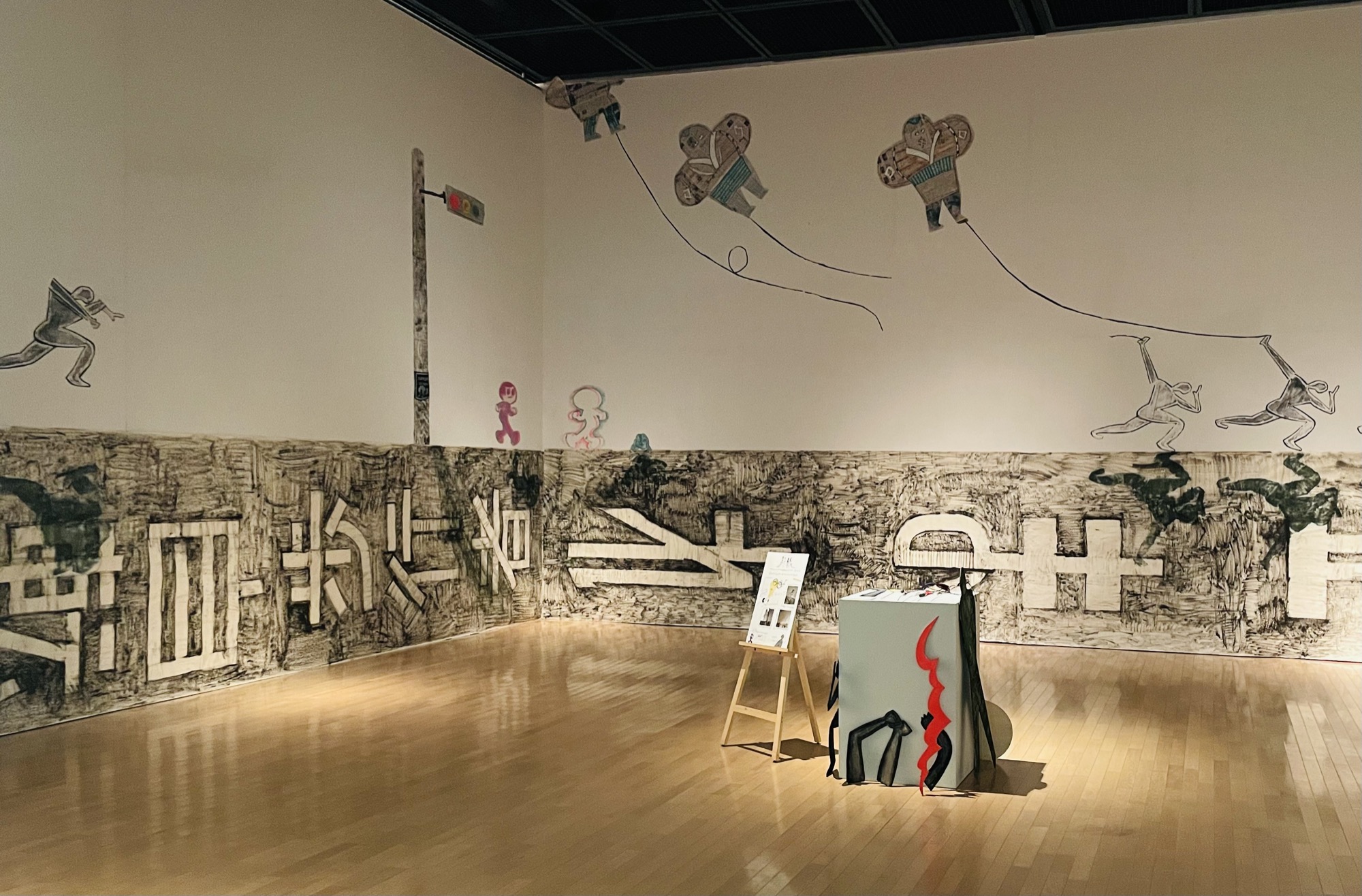
Wakaki's central conceptual question is — in her own framing — “what can become a printing plate?” Her practice tests the question literally: she has used Japanese yen banknotes as the source for printed images that probe the relationship between currency and identity, and she has used her own body, including her shaved scalp, as a printing surface. She works across an unusually wide range of unconventional materials and objects, treating almost any surface as a potential matrix. The 12th Taro Okamoto Award for Contemporary Art recognized this line of work in 2009, when she received its top prize, the Taro Okamoto Award, early in her career.
A distinctive feature of her practice is its commitment to extreme productive tempo. In 2013, for the project “Kurumi Wakaki's Production Dojo” at the Zenzō Sakamoto Museum of Art in Kumamoto Prefecture, she made new work publicly and continuously, with visitors invited to watch the process. That same year she received the grand prize at Rokko Meets Art (2013), and in 2021 she was given the Kyoto City Art Newcomer Award. Recent solo exhibitions include “Jack and the Bean Fungus — Wakaki Kurumi Woodblock Print Exhibition” at Art Zone Kaguraoka (Kyoto, 2021), which extended her vocabulary of unconventional plate-materials into a fungal-organic register.
Academic attention to her banknote work has been formalized in a University of Victoria thesis, “The Art of Money: Wakaki Kurumi's Deconstruction of the Yen,” which examines how her currency pieces deconstruct the imagery and meaning of the yen. Her work is held in the Japigozzi Collection, Jean Pigozzi's major collection of contemporary Japanese art. In 2025 she was among the seventeen artists selected for the 4th PATinKyoto Print Art Triennale at the Kyoto City KYOCERA Museum of Art (April–May 2025), recommended by Aoki Kanae, senior curator at the Wakayama Prefectural Museum of Modern Art.
Wakaki is one of a small group of younger Japanese printmakers whose work has been collected outside the standard print circuits — by contemporary-art collectors rather than print specialists — and who treats printmaking as a performance and conceptual practice rather than as an editioned-print discipline. Her output combines a traditional Kyoto print-school education with a deeply unorthodox approach to plate-making that has attracted both academic and curatorial attention.
Key Facts
- Active Period
- 1985
- Nationality
- 🇯🇵Japan
- Movement
- Contemporary Mokuhanga
- Subjects
- Transportation
- Works Indexed
- 1
Frequently Asked Questions
Kurumi Wakaki (born 1985, Hokkaido) is a Japanese printmaker whose performance-inflected practice combines traditional intaglio and frottage techniques with money, everyday materials, and the artist's own body as printing surfaces. She graduated from Kyoto City University of Arts (KCUA) with a B.F.A. in Printmaking in 2008 and continues to live and work in Kyoto, where she has built a reputation as one of the most distinctive performance-print figures of her generation.
Kurumi Wakaki was active born in 1985. They were associated with the Contemporary Mokuhanga movement.
Kurumi Wakaki's work was shaped by the Contemporary Mokuhanga tradition in Japanese woodblock printmaking. Contemporary Mokuhanga: Contemporary mokuhanga (literally "wood-block print") encompasses artists working from approximately 1970 to the present who continue or reinvent traditional Japanese woodblock printing techniques.
Kurumi Wakaki's prints frequently feature transportation.