Biography
Wayne Crothers (born 1961) is an Australian printmaker, curator, and Asian-art specialist whose career has bridged the Australian and Japanese print communities for more than three decades. He completed a degree in Art and Design at Victoria College in 1982 and then spent eighteen years working primarily in Japan, completing a Master of Arts in Printmaking at Tama Art University, Tokyo, in 1996.
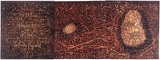
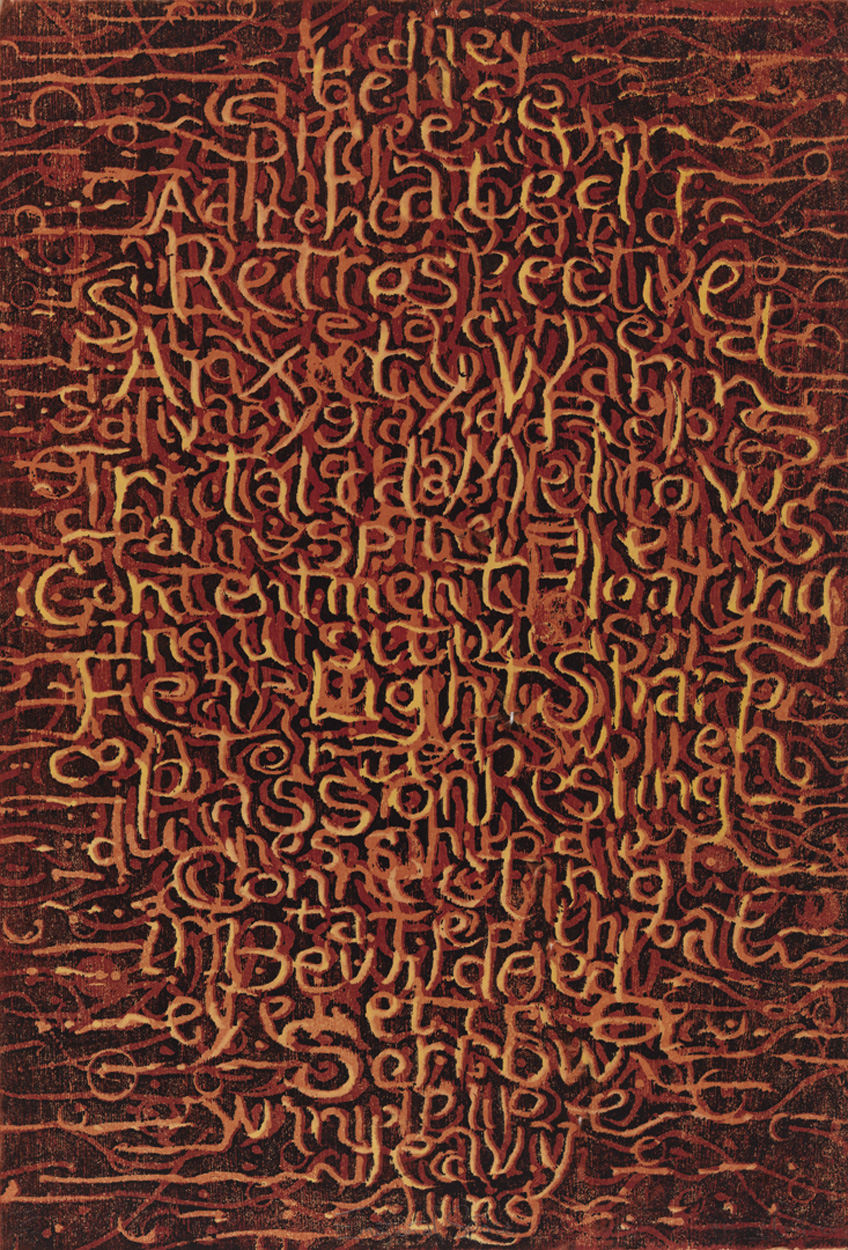
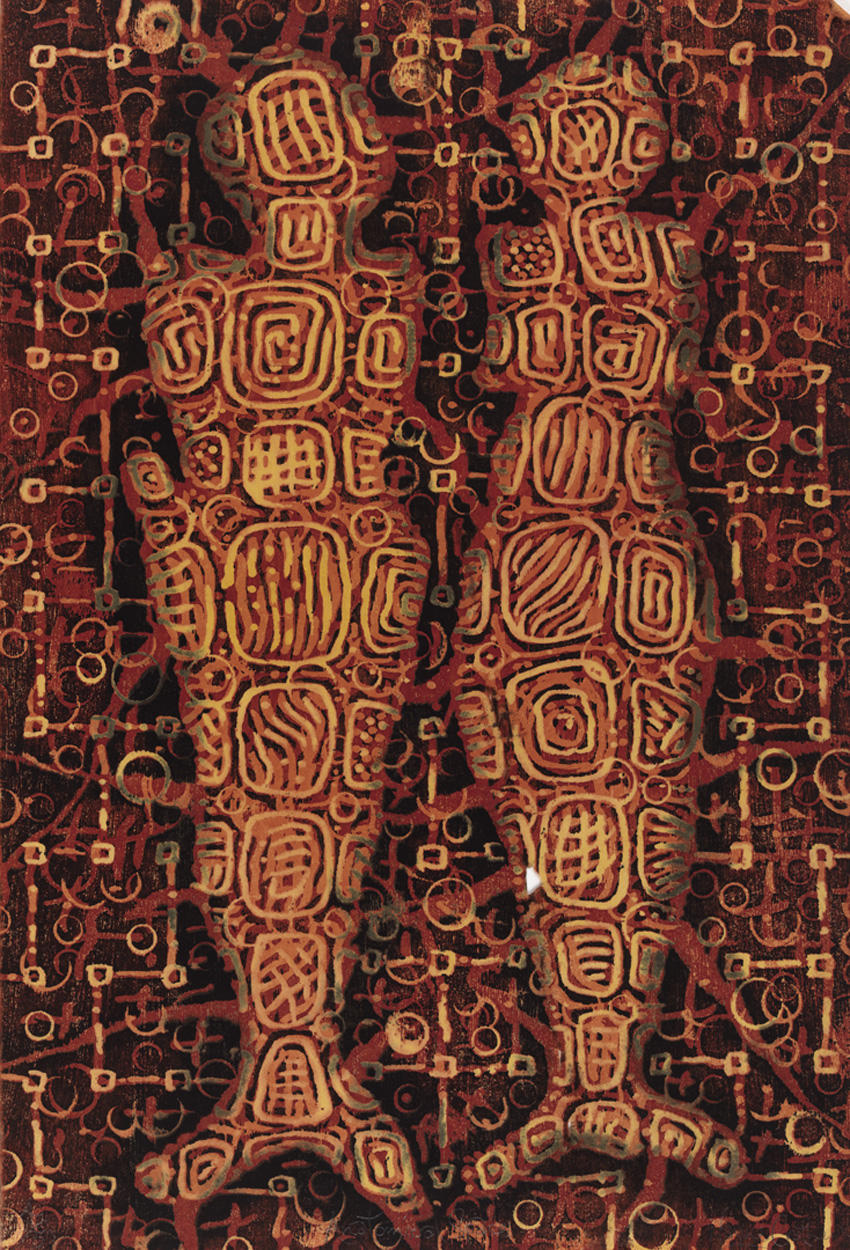
During his Tokyo years Crothers established his studio practice in reductive woodcut and water-based mokuhanga, working in colour woodcut editions of small to medium size. Among his early prints, Anatomical Space and Emotional Space — both 2000 reductive woodcuts in editions of fifty — were acquired by the Pennsylvania Academy of the Fine Arts (PAFA) and reflect his characteristic vocabulary at the turn of the 2000s: stylised figural and anatomical imagery printed in flat colour fields, with abstract structuring elements that contain or fragment the body. The Perplexity of Place (1997), a colour woodcut held by the National Gallery of Australia, dates from these early years and reflects his sustained engagement with the woodblock print.
From 2001 to 2005 Crothers held a lecturer position at Musashino Art University in Tokyo, teaching printmaking. He has additionally taught and lectured as a visiting artist at the Australian National University (Canberra), Sydney College of the Arts, the Sichuan Fine Arts Institute (Chongqing), and Lafayette College's Experimental Printmaking Institute (Pennsylvania). The Lafayette EPI residency in 2017 produced a body of collaborative prints made with that institute's master printers.
In 2009 Crothers returned permanently to Australia to take up the position of Curator of Asian Art at the National Gallery of Victoria (NGV) in Melbourne, where he has worked since, later as Senior Curator of Asian Art. His curatorial portfolio at NGV includes the exhibitions Hokusai (2017), Terracotta Warriors: Guardians of Immortality (2019), Cai Guo-Qiang: The Transient Landscape (2019), and Japanese Modernism (2020), all of which have framed Asian art for the broad NGV public and have been accompanied by substantial scholarly catalogues. He has continued to lecture publicly on Japanese printmaking, including for the Asian Arts Society of Australia.
Crothers's own practice is characterised by an aesthetic that combines the discipline of Japanese reductive woodblock with motifs drawn from social and ecological observation, often returning to figural and natural-form subjects whose abstract treatment is intended to provoke reflection on the relationship between human bodies and place. The body of public prints catalogued at the National Gallery of Australia, the Pennsylvania Academy of the Fine Arts, and through the Australian Prints + Printmaking national database is small but well documented, reflecting a career that has increasingly favoured curatorial and pedagogical contributions over high-volume studio output.
He is among the relatively few Australian–Japanese printmakers of his generation whose practice has remained materially attached to the woodblock since the early 1990s, and his bilingual mediation between the Japanese, Australian, and American print communities has had a structural effect on Asian-art programming in Australia.
Key Facts
- Active Period
- 1961
- Nationality
- 🇦🇺Australia
- Movement
- Contemporary Mokuhanga
- Works Indexed
- 3
Frequently Asked Questions
Wayne Crothers (born 1961) is an Australian printmaker, curator, and Asian-art specialist whose career has bridged the Australian and Japanese print communities for more than three decades. He completed a degree in Art and Design at Victoria College in 1982 and then spent eighteen years working primarily in Japan, completing a Master of Arts in Printmaking at Tama Art University, Tokyo, in 1996.
Wayne Crothers was active born in 1961. They were associated with the Contemporary Mokuhanga movement.
Wayne Crothers's work was shaped by the Contemporary Mokuhanga tradition in Japanese woodblock printmaking. Contemporary Mokuhanga: Contemporary mokuhanga (literally "wood-block print") encompasses artists working from approximately 1970 to the present who continue or reinvent traditional Japanese woodblock printing techniques.