Biography
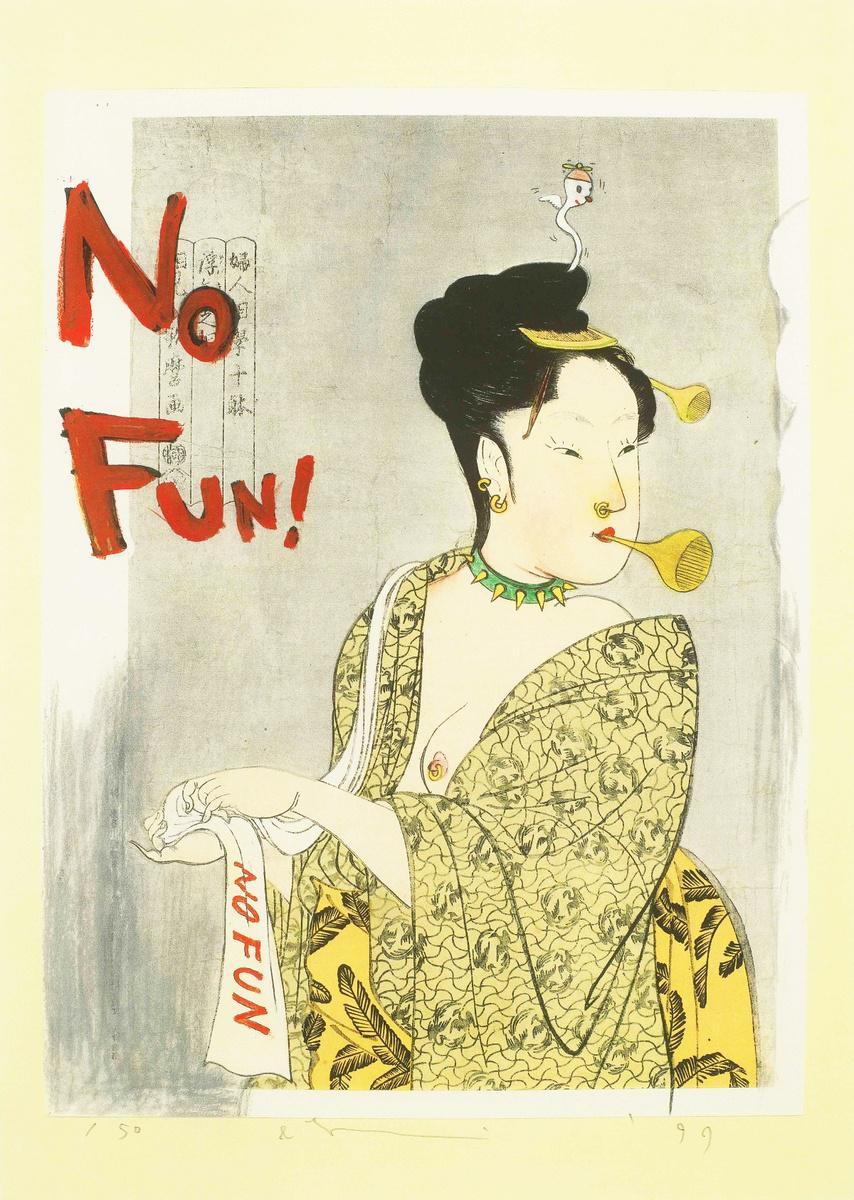
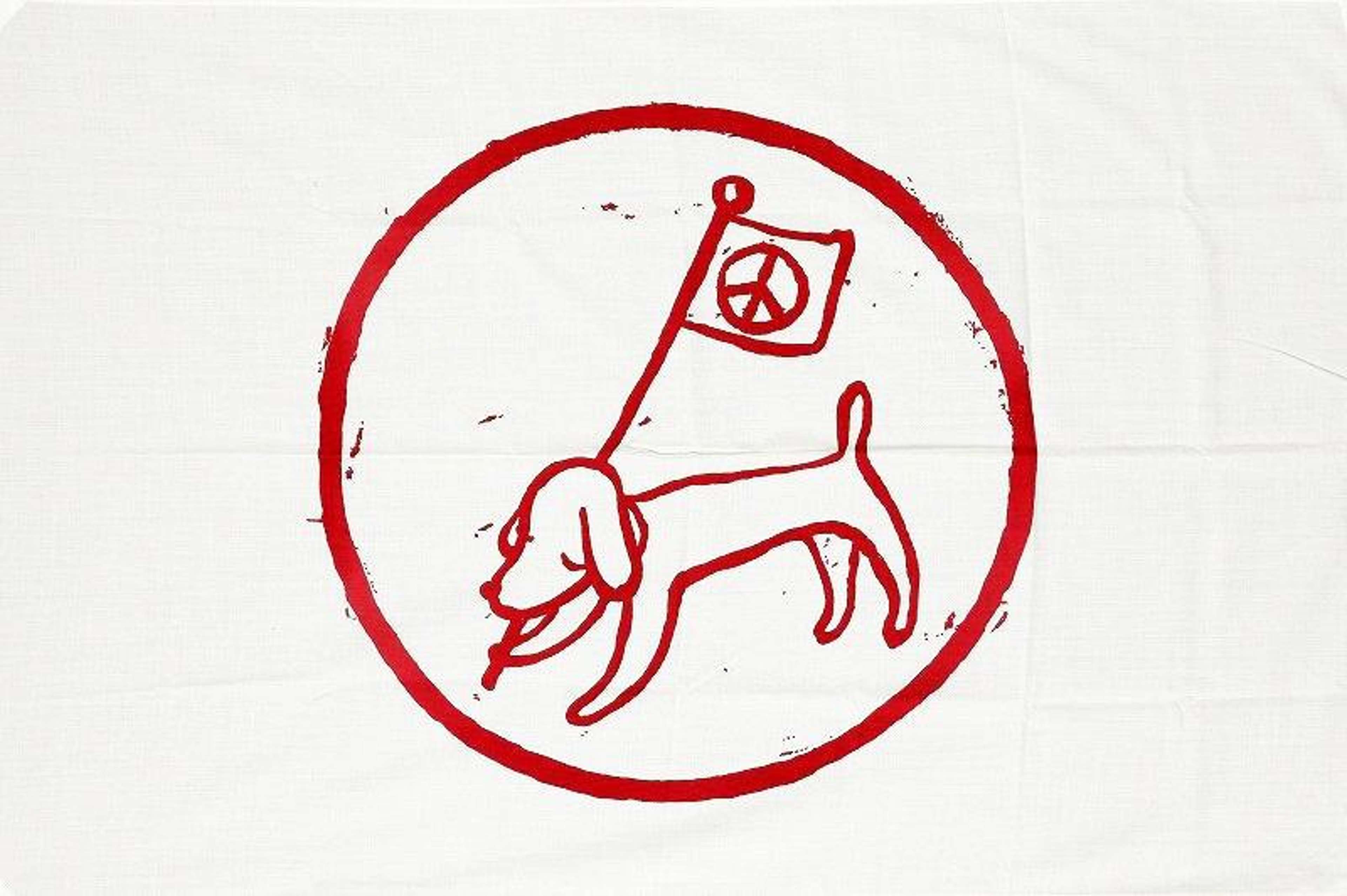
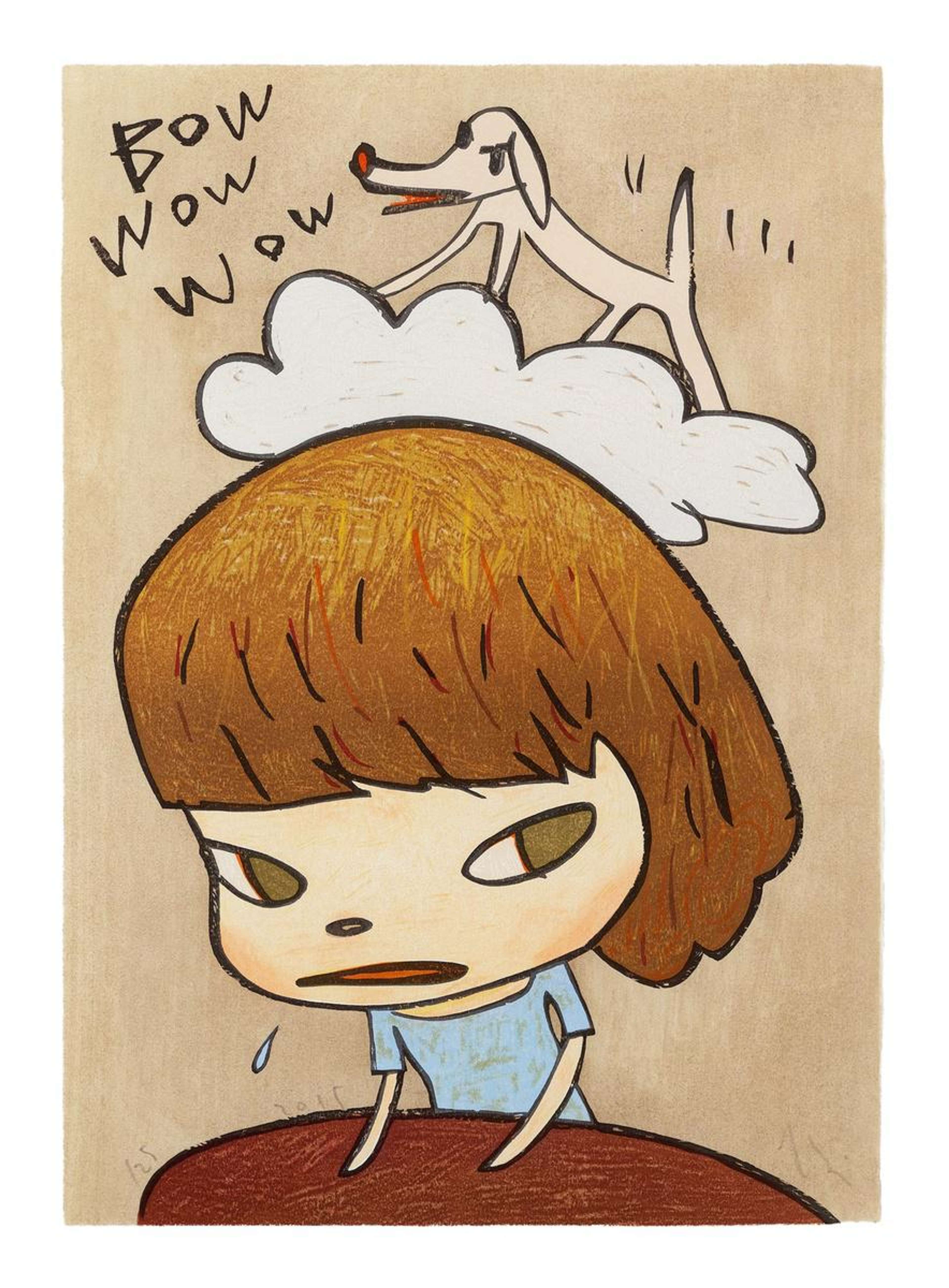
Yoshitomo Nara (奈良美智, b. 5 December 1959, Hirosaki, Aomori Prefecture) is one of the most internationally visible Japanese artists of the post-1990 generation. His mature work consists of large-eyed solitary children — frequently a girl, sometimes a dog — set against monochrome or graphically simple grounds, painted in a vocabulary that combines Western punk-rock graphic culture with the delicate ink-line tradition of mid-century Japanese ehon (picture books). The figures are at once sweet and faintly menacing, and they have become one of the most-recognised graphic signatures of the late twentieth and early twenty-first century.
Nara was born and raised in Hirosaki, in the snowy Tohoku region of northern Japan, and the rural Tohoku landscape and folk-culture imagery remain visible throughout his work. He earned a BFA (1985) and an MFA (1987) in painting at Aichi University of the Arts in Nagakute, then moved to Germany in 1988 to study at the Kunstakademie Düsseldorf under A. R. Penck, earning the Meisterschüler distinction in 1993. The German period was decisive: Penck's painterly, drawing-based practice, the proximity to the Düsseldorf art scene, and Nara's own embrace of European punk and indie rock culture combined to produce the distinctive graphic vocabulary he subsequently carried back to Japan, where he repatriated in 2000 after several years based in Cologne.
Nara is frequently associated with the wave of Japanese Neo-Pop artists linked to Takashi Murakami and his Superflat sensibility — work that mobilises Japanese graphic-culture sources (manga, anime, kawaii, ukiyo-e) for a global art-world audience — though he remains a distinct figure who has often resisted the label. Where Murakami works with explicit otaku reference and bright multi-colour palettes, Nara restricts himself to a single-figure motif against simple grounds, working in muted earth tones with occasional accents of vivid red or blue. His touring solo exhibition 'I Don't Mind, If You Forget Me' opened at the Yokohama Museum of Art in 2001, and international recognition followed through major shows including 'Nobody's Fool' at the Asia Society in New York (2010–11) and a full retrospective at the Los Angeles County Museum of Art (2021–22).
Printmaking is a substantial and continuously expanding part of Nara's practice. Since the late 1990s he has worked across screenprint, lithograph, intaglio (etching, drypoint), and — most distinctively — traditional ukiyo-e woodblock printing (mokuhanga), collaborating with the master printer Yasu Shibata through Pace Prints to render his contemporary cartoon-derived figures using water-based pigments and handmade washi paper.
Nara's work is held in major public collections, including the Museum of Modern Art in New York and the Los Angeles County Museum of Art, among many other international institutions, and his prints circulate through galleries including Pace, Blum (formerly Blum & Poe), and Stephen Friedman. He continues to live and work in Nasushiobara, in Tochigi Prefecture.
Within contemporary Japanese art Nara represents one of the principal axes of the post-1990 generation: a Tohoku-born, German-trained painter whose graphic vocabulary translates fluidly into editioned print form, and whose ukiyo-e woodblock collaborations with a master Japanese printer mark one of the more significant recent reinvestments in the traditional mokuhanga workshop tradition.
Key Facts
- Active Period
- 1959
- Nationality
- 🇯🇵Japan
- Movement
- Contemporary Mokuhanga
- Subjects
- Children
- Works Indexed
- 5
Frequently Asked Questions
Yoshitomo Nara (奈良美智, b. 5 December 1959, Hirosaki, Aomori Prefecture) is one of the most internationally visible Japanese artists of the post-1990 generation. His mature work consists of large-eyed solitary children — frequently a girl, sometimes a dog — set against monochrome or graphically simple grounds, painted in a vocabulary that combines Western punk-rock graphic culture with the delicate ink-line tradition of mid-century Japanese ehon (picture books). The figures are at once sweet and faintly menacing, and they have become one of the most-recognised graphic signatures of the late twentieth and early twenty-first century.
Yoshitomo Nara was active born in 1959. They were associated with the Contemporary Mokuhanga movement.
Yoshitomo Nara's work was shaped by the Contemporary Mokuhanga tradition in Japanese woodblock printmaking. Contemporary Mokuhanga: Contemporary mokuhanga (literally "wood-block print") encompasses artists working from approximately 1970 to the present who continue or reinvent traditional Japanese woodblock printing techniques.
Yoshitomo Nara's prints frequently feature children.