
Yūzō Saeki
佐伯祐三
1898–1928
Japan
Biography
Saeki Yūzō (佐伯祐三, 1898-1928) was the most original Japanese yōga (Western-style) painter of the École de Paris generation and, despite a career that lasted only six years, one of the founding figures of modern Japanese oil painting. His tight, nervous, almost calligraphic renderings of Parisian shop fronts, kiosks, hoardings and back-street churches — produced in two brief residencies in France between 1924 and his death from tuberculosis in 1928 at the age of thirty — fundamentally reshaped the Taishō and early Shōwa imagination of Europe and gave Japanese modernism a model of painting that was at once cosmopolitan and unmistakably his own. The Nakanoshima Museum of Art in Osaka, which holds the city's institutional collection of his work assembled over decades, preserves one of the largest single holdings of any twentieth-century Japanese painter — around fifty paintings and drawings — and recurrent retrospectives at venues from Osaka to Tokyo have steadily expanded his reputation in the decades since his death.
Saeki was born on 28 April 1898 at Kōtoku-ji, a Buddhist temple in the village of Nakatsu in the Nishinari district on the northern edge of Osaka (now part of Kita-ku), the second son of the temple's resident priest. The early surroundings of incense, sutra chant and hanging temple lanterns would re-emerge — transposed onto the painted hoardings, cinema posters and advertising columns of Paris — as one of the most distinctive features of his mature painting, and the calligraphic rhythm of temple script appears to underlie the bold flourishes of black lettering that became his signature device. He attended Kitano Middle School in Osaka, where his interest in Western painting began with the Impressionist manner of Kuroda Seiki, and around 1917 he moved to Koishikawa in Tokyo, enrolling first at the Kawabata Painting School. In 1918 he was admitted to the Western painting department of the Tokyo School of Fine Arts (now Tokyo University of the Arts), where he studied under Fujishima Takeji — the leading Meiji-era yōga master and one of the most cosmopolitan of the painters who had returned from European study — graduating in 1923. In 1921 he married a fellow art student, Ikeda Yoneko, herself a painter who exhibited at the Nika exhibition; their daughter Yachiko was born in 1923.
In 1924 Saeki sailed for France with his wife and infant daughter to disembark in Paris and enrol at the Académie de la Grande Chaumière in Montparnasse. He quickly absorbed the post-war ferment of the École de Paris — the circle of Japanese expatriates around Foujita in particular. The defining moment of his first Paris stay came in the summer of 1924, when the painter Satomi Katsuzō introduced him to Maurice de Vlaminck at the latter's house in Auvers-sur-Oise. Saeki brought one of his recent canvases, painted in the smoother, plein-air manner he had inherited from the Tokyo school. Vlaminck's response was famously brutal: the painting was 'académique' — academic — and as long as Saeki painted in that voice he would never be a painter. The verdict, delivered with the brusqueness for which Vlaminck was famed, devastated Saeki on the spot and then liberated him; he returned to Paris determined to abandon the modulated tonal painting of his training and to forge a manner more direct, more linear and more responsive to the immediate physical surface of the world around him. The transformation is visible in the self-portraits and street scenes he painted in the months after the Auvers encounter — looser, more contoured, and palpably more confident than the canvas he had shown Vlaminck.
In 1925 Saeki produced the first cycle of paintings that would define his reputation. Working obsessively in the 14th, 15th and 19th arrondissements — Montparnasse, Vaugirard, the streets around the Rue du Château — he painted the back streets, gate posts, shop fronts and small parish churches of working-class Paris with a directness and a denseness of paint that owed something to Vlaminck, something to Maurice Utrillo, something to the late Van Gogh and a great deal to a sensibility that was already, by 1925, recognisably his own. The mid-1925 canvases — among them Notre-Dame, Cordonnerie (Shoemaker's), Gate with Advertisements and other views of the 15th arrondissement — are at once topographically exact and pictorially abstract: walls and signs are flattened into hard, thinly inscribed rectangles, the lettering of shop signs and advertisements is set down with a brush-handed certainty that approaches calligraphy, and the colour is held to a restrained palette of greys, browns, pale ochres and the occasional vermilion or cobalt. Two of his works were accepted at the 1925 Salon d'Automne, a recognition that opened the door to the wider Paris art world.
Family concerns and his increasingly precarious health forced Saeki to return to Japan in January 1926. Back in Japan he co-founded the 1930-nen Kyōkai (Society of 1930) with Satomi Katsuzō, Maeda Kanji and other Paris veterans, an exhibition society dedicated to the new École de Paris-influenced yōga, and won the Nika Prize at the thirteenth Nikaten in the autumn of 1926. During this interval he also painted a group of Japanese subjects — suburban Tokyo landscapes and street scenes — remarkable for what they reveal of the way the Paris cycle had reshaped his eye: even bamboo groves and pond reflections are rendered with the dry, contoured stroke and the inscribed, almost graphic surface he had developed in Paris. Tokyo, however, did not satisfy him. In August 1927, oppressed by the suburb and separated from the boulevards and small parish churches that he had come to need, he set out again — this time overland via the Trans-Siberian railway — and was back in Paris by the autumn of 1927.
The second Paris period, from October 1927 to August 1928, is the moment of Saeki's mature, fully personal painting. Café Tabac, Gas Lamp and Advertisements, the Café Restaurant series, the Russian Girl portrait, the great Postman bust, and the late churches and religious subjects painted during a country stay outside Paris in the summer of 1928 combine an almost Japanese economy of contour, an Utrillo-derived sensitivity to plaster and zinc and lettered wall, and a brush-handed bravura that is entirely Saeki's own. The lettering on hoardings, posters, café signs and advertising columns is laid down with the certainty of calligraphy; whole compositions become surfaces of script, the painter who had grown up in a temple turning a Paris café front into an act of writing. Saeki worked outside in cold and wet weather throughout the winter and spring; the tuberculosis he had contracted years earlier accelerated, and by March 1928 he was largely bedridden. The progressive illness, combined with the strain of nearly four years of continuous painting at the pitch of his Paris production, brought on an acute mental breakdown in the summer of 1928. He was admitted to the Ville-Évrard psychiatric hospital in the Paris suburbs and died there on 16 August 1928, less than four months after his thirtieth birthday. His remains were later returned to Japan.
The posthumous reception of Saeki's painting was almost immediate. His widow, Yoneko — herself a painter — brought back to Japan the canvases that had remained in his Paris studio and helped organise the first memorial exhibitions of his work, and the 1930-nen Kyōkai continued to show his paintings in Tokyo through the 1930s. Postwar retrospectives in Osaka and Tokyo gradually consolidated his reputation. His work is now held by major Japanese museums, but the largest single holding belongs to the city of Osaka: the long-planned Nakanoshima Museum of Art, which finally opened in 2022, holds around fifty works by Saeki and mounted a major retrospective devoted to him in 2023. Outside Japan his paintings are held in modest numbers, but his reputation has begun to travel: the Nakanoshima exhibition and a steady stream of retrospectives have brought him to a wider audience as one of the most distinctive figures of the inter-war École de Paris and as the painter who, perhaps more than any other Japanese artist of his generation, turned the streets of Paris into an act of writing.
Key Facts
- Active Period
- 1898–1928
- Nationality
- 🇯🇵Japan
- Subjects
- Winter
- Works Indexed
- 12
Frequently Asked Questions
Saeki Yūzō (佐伯祐三, 1898-1928) was the most original Japanese yōga (Western-style) painter of the École de Paris generation and, despite a career that lasted only six years, one of the founding figures of modern Japanese oil painting. His tight, nervous, almost calligraphic renderings of Parisian shop fronts, kiosks, hoardings and back-street churches — produced in two brief residencies in France between 1924 and his death from tuberculosis in 1928 at the age of thirty — fundamentally reshaped the Taishō and early Shōwa imagination of Europe and gave Japanese modernism a model of painting that was at once cosmopolitan and unmistakably his own. The Nakanoshima Museum of Art in Osaka, which holds the city's institutional collection of his work assembled over decades, preserves one of the largest single holdings of any twentieth-century Japanese painter — around fifty paintings and drawings — and recurrent retrospectives at venues from Osaka to Tokyo have steadily expanded his reputation in the decades since his death.
Yūzō Saeki was active from 1898 to 1928.
Yūzō Saeki's prints frequently feature winter.
Original prints by Yūzō Saeki can be found in collections including Private collection (1978 memorial exhibition catalogue), The Museum of Modern Art, Wakayama, Ishibashi Museum of Art, Kurume, Nakanoshima Museum of Art, Osaka.
Woodblock Prints by Yūzō Saeki (12)
Self-Portrait, a Standing Posture
立てる自画像
1924
Oil on canvas
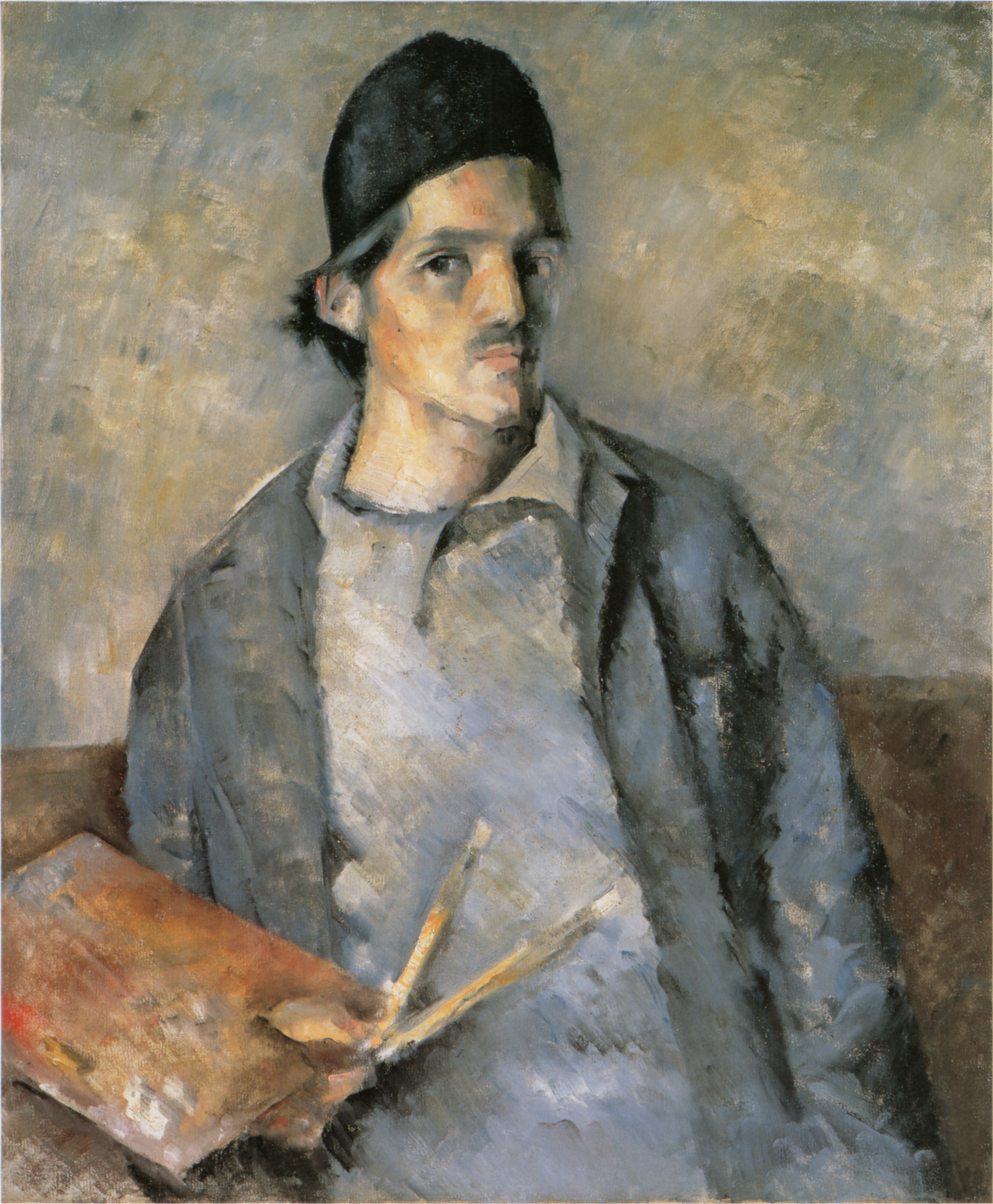
Self-Portrait with a Palette
パレットを持つ自画像
1924
Oil on canvas

Footpath of Rue du Château
リュ・デュ・シャトーの歩道
1925
Oil on canvas

Cordonnerie (Shoemaker's)
靴屋(コルドヌリ)
1925
Oil on canvas

15th Arrondissement of Paris
パリ15区街
1925
Oil on canvas

Notre-Dame
ノートル・ダム寺院
1925
Oil on canvas

Rue Brancion
リュ・ブランシオン
1925
Oil on canvas

Snow Scene in Paris
パリ雪景
1925
Oil on canvas

Gate with Advertisements
広告のある門
1925
Oil on canvas

Gas Lamp and Advertisements
ガス灯と広告
1927
Oil on canvas

Café Tabac
カフェ・タバ
1927
Oil on canvas

Postman (Bust)
郵便配達夫(半身)
1928
Oil on canvas