
Kyoto Kinkakuji-ji
- Medium:
- Mokuhanga (Japanese woodblock)
- Image courtesy of
- Saru Gallery
Description
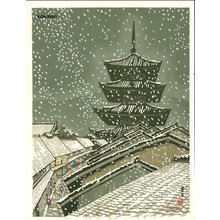
The title refers to Kinkaku-ji, the Temple of the Golden Pavilion in northern Kyoto, whose three-tiered reliquary hall is sheathed in gold leaf and reflected in the surrounding Kyōko-chi pond. The pavilion is among the more frequently depicted buildings in modern Japanese printmaking, treated by Hasui, Yoshida Hiroshi, and others before the postwar generation. A mid-twentieth-century mokuhanga rendering would likely set the structure against the pond reflection, using bokashi gradation across water and sky and a yellow-orange or metallic flat for the gilded surfaces, with carved keyblock detail in the railings, finial phoenix, and roof eaves. The current building dates from a 1955 reconstruction following the 1950 arson, so any postwar print depicts the rebuilt pavilion. Within Konishi Seiichiro's attributed body of work, the print belongs to his Kyoto group alongside the Ginkaku-ji and Kyoto house subjects, indicating engagement with the standard Kyoto temple itinerary that supplied subjects to printmakers serving both domestic and tourist markets in the postwar decades.
More Prints by Konishi Seiichiro


Frequently Asked Questions
Kyoto Kinkakuji-ji was created by Konishi Seiichiro (小西誠一郎).