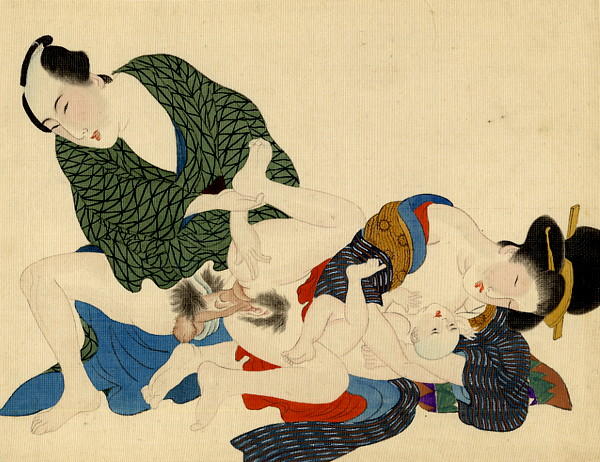
Shunga 2
- Medium:
- Woodblock print
- Source:
- Japanese Art Open Database
- Image courtesy of
- Japanese Art Open Database
Description
Shunga (春画, spring pictures) constitute a recognized category of Japanese woodblock print production that ran from the early Edo period through the Meiji era. These prints depicted erotic subjects and were produced by artists across all major schools, typically in small-format albums (ehon) or as individual sheets. Shuntei's shunga, numbered as part of a sequence, would follow conventions of the genre: intimate interior settings, richly patterned textile on partially undressed figures, and the characteristic compression of pictorial space that heightens physical presence. Late-Meiji shunga prints often retained the elaborate kimono rendering and detailed textile pattern work that distinguished quality commercial woodblock printing, while depicting subjects outside the sanctioned public print trade.
More Prints by Miyagawa Shuntei
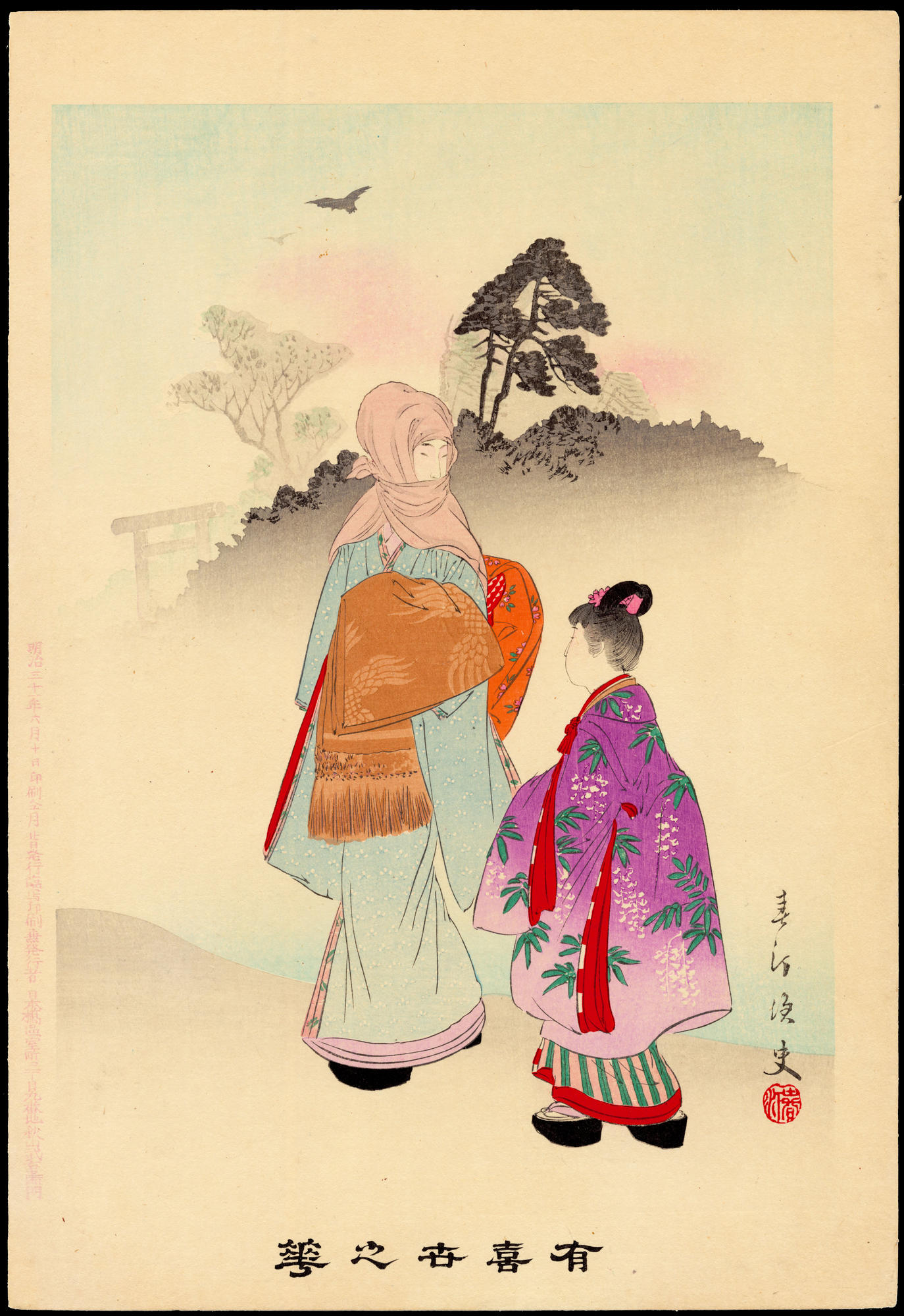
"Hatsumode (A Visit to a Shrine on New Year's Day) (1)"
Woodblock print

Autumn Flowers — 秋草
Not set
Woodblock print
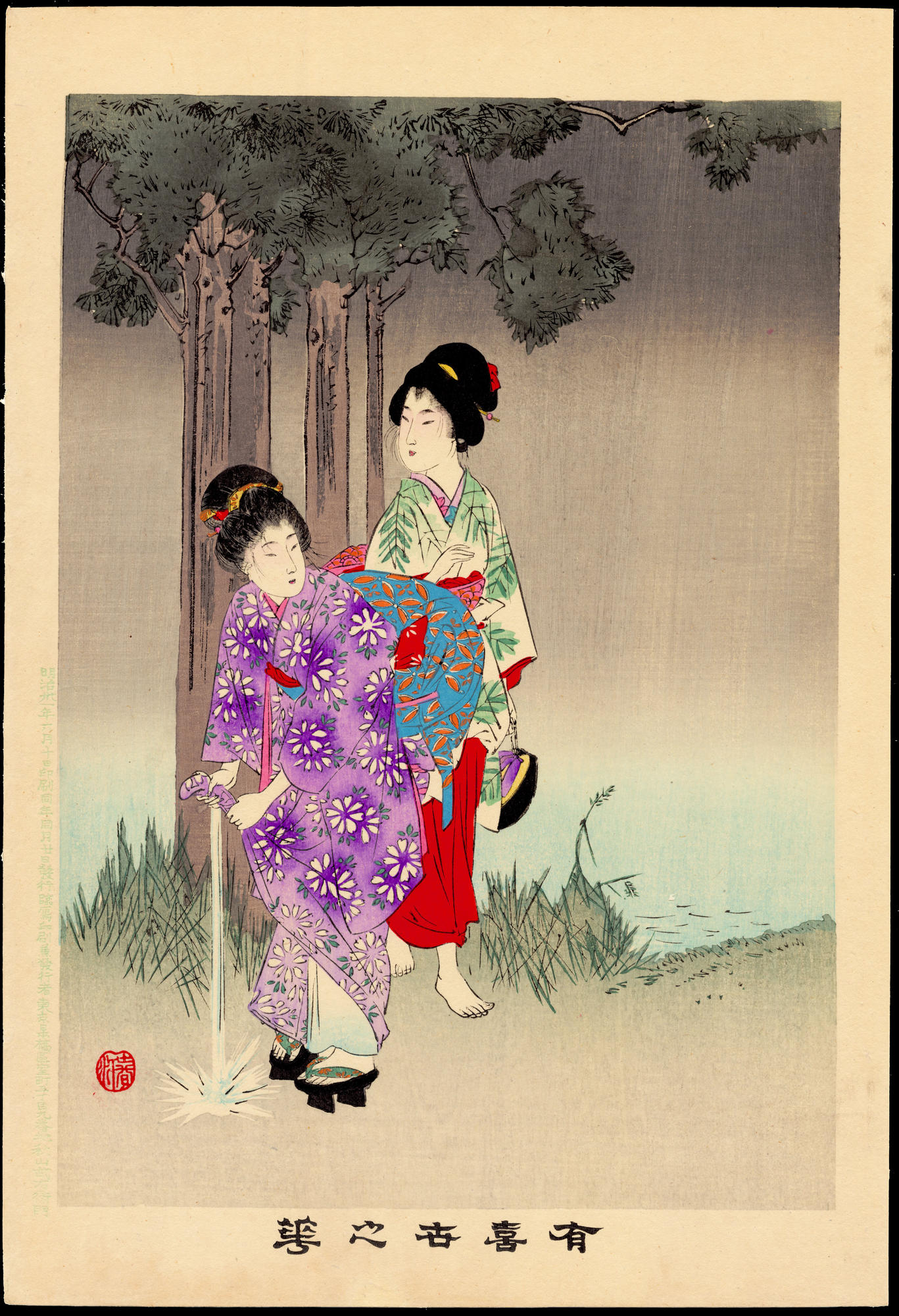
Wading in a River - 風呂や (1)
Woodblock print

Triptych: Village of Cherry Blossoms, from the series Esteemed Towns and Villages (Tôsei furaku tsû), Meiji period, 1897
Meiji period, 1868-1912
Woodblock print
Frequently Asked Questions
Shunga 2 was created by Miyagawa Shuntei (宮川春汀).