
Hana dan
by Ray Morimura
- Medium:
- Mokuhanga (Japanese woodblock)
- Image courtesy of
- Hanga Ten
Description
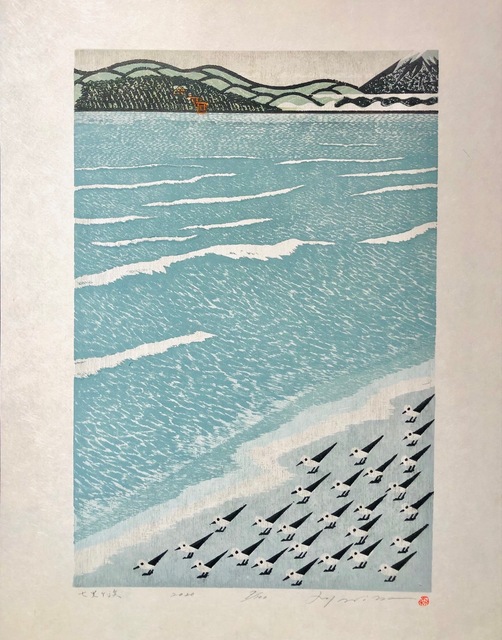
Hana-dan literally translates as 'flower step' or 'flower platform' and typically refers to a tiered arrangement of seasonal flowers, often encountered in garden displays or shrine festivals. The subject moves Morimura away from architectural motifs toward an explicitly decorative one, allowing him to exploit the strengths of mokuhanga in registering flat fields of saturated color. The composition likely organizes blossoms — perhaps tsutsuji (azalea), botan (peony), or chrysanthemum — as concentrated mosaic-like patches set against a contrasting dark or neutral ground, with individual petals indicated through carved keyblock outlines and overlaid color blocks. Such floral compositions echo the kachō-e (bird-and-flower picture) tradition while setting aside its narrative or symbolic accents in favor of pattern. The print exemplifies Morimura's tendency to abstract botanical subjects into rhythmic, near-textile arrangements rather than naturalistic studies, a hallmark of his graphic style. It is printed by hand on washi using water-based pigments and baren, in the contemporary mokuhanga manner.
More Prints by Ray Morimura


Frequently Asked Questions
Hana dan was created by Ray Morimura (森村玲).