
House of Minoru
- Medium:
- Mokuhanga (Japanese woodblock)
- Image courtesy of
- Saru Gallery
Description
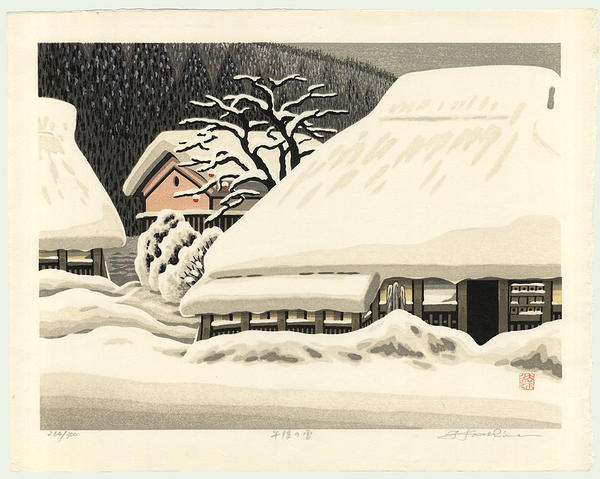
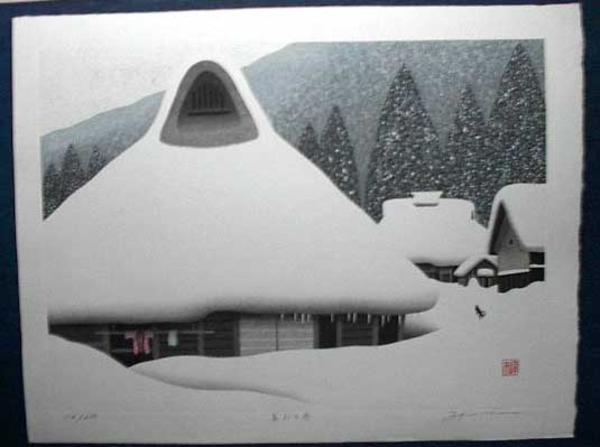
House of Minoru depicts a single traditional Japanese dwelling, likely rendered as the focal point of a quiet rural composition. Kawashima's mokuhanga approach to architectural subjects typically isolates a kominka or thatched farmhouse within a larger landscape setting, using the soft tonal gradations achievable only through water-based pigments printed onto absorbent washi. The grain of the woodblock often remains visible in flat color fields, lending texture to roof tiles, plastered walls, and surrounding earth. Bokashi gradations are commonly employed in the sky and ground planes to suggest atmosphere and time of day without resorting to outlined shading. As a print referencing a specific named dwelling, the work belongs to a tradition of meisho-e adapted for the modern era — recording particular places rather than generic landscapes. It reflects Kawashima's sustained interest in vernacular Japanese architecture set within the countryside, a recurring subject across his body of work since the postwar mokuhanga revival.
More Prints by Tatsuo Kawashima


Frequently Asked Questions
House of Minoru was created by Tatsuo Kawashima (川島達雄).