Kanazawa (金沢)
4 prints by 2 artists
About Kanazawa
Kanazawa is a city on the Sea of Japan coast of central Honshu, the principal city of Ishikawa Prefecture in the Hokuriku region. The city developed across the late sixteenth century as the castle town of the Maeda clan, who governed the wealthy Kaga domain from 1583 through the Meiji Restoration as the largest non-Tokugawa-related daimyo holding in Japan, with stipend at roughly one million koku of rice and accordingly enormous resources for cultural patronage. The Maeda investment in cultural sophistication produced one of the largest concentrations of provincial cultural patronage in early modern Japan, with notable craft traditions in lacquer including Wajima-nuri and Kaga maki-e, ceramics including Kutani-yaki, textile dyeing including Kaga yuzen, and gold leaf production for which Kanazawa supplied approximately ninety-eight percent of Japan's total output by the modern period, and with significant Noh, Kyogen, and tea-ceremony traditions sustained by the daimyo court. The principal monuments include Kanazawa Castle, partly preserved within an urban park with the Ishikawamon gate, the Hishi yagura, and the Gojikken nagaya storehouse rebuilt and accessible; the great strolling garden of Kenrokuen adjacent to the castle, founded in stages from the seventeenth century by successive Maeda lords as the family's outer garden and one of the three most famous gardens in Japan (the Nihon Sankei-en, alongside Kairakuen in Mito and Korakuen in Okayama); the historic samurai district of Nagamachi with its earthen walls and stone-lined drainage canals; the eastern teahouse district of Higashi Chaya with its wooden machiya facades; and the smaller western and Kazue-machi chaya districts. The city largely escaped destruction during the firebombing campaigns of 1944-1945 and preserves a substantial historic urban fabric, including some of the largest surviving samurai and merchant districts of any provincial city in Japan. For Japanese printmaking Kanazawa appears in late Edo meisho prints of the Kaga domain and the Hokuriku region, with Utagawa Hiroshige treating Kaga Province in his Famous Views of the Sixty-Odd Provinces, and Hasegawa Sadanobu producing Kansai-region sheets that include the surrounding Hokuriku coast. The city figures more prominently in the shin-hanga revival. Kawase Hasui produced Kanazawa subjects in his extensive travel-based print practice, including snow views of the Kenrokuen garden and the surrounding districts and twilight views of the chaya districts, and Yoshida Hiroshi, Tsuchiya Koitsu, and the sosaku-hanga artists of the postwar period including Tokuriki Tomikichiro and Saito Kiyoshi included the city and the surrounding region in their bodies of work. Sosaku-hanga artist Kasamatsu Shiro and other postwar artists treated the city's gardens, castles, and chaya districts in seasonal compositions. The visual character of Kanazawa in prints is built on the castle walls and turrets against the surrounding moats and stone embankments, the curving paths and stone lanterns of Kenrokuen with its seasonal blossoms and the distinctive snow protection ropes called yukitsuri that suspend pine branches against winter snowfall, the wooden facades and dark-stained timbers of the chaya districts and the samurai house quarters, and the local seasonal phenomena of heavy winter snowfall and the diffused Sea of Japan light. Contemporary Kanazawa is reached by the Hokuriku Shinkansen from Tokyo in approximately two and a half hours and is among the principal regional destinations for travelers seeking preserved Edo-period and early modern urban landscapes outside the large metropolitan centers, with the 21st Century Museum of Contemporary Art, the Kenrokuen garden, the castle park, and the chaya districts forming the principal contemporary visitor circuit.
Prints Depicting Kanazawa (4)

Nagare Pleasure Quarter, Kanazawa (Kanazawa Nagare no kuruwa), from the series Souvenirs of Travel, First Series (Tabi miyage dai isshū)
1920
Color woodblock print
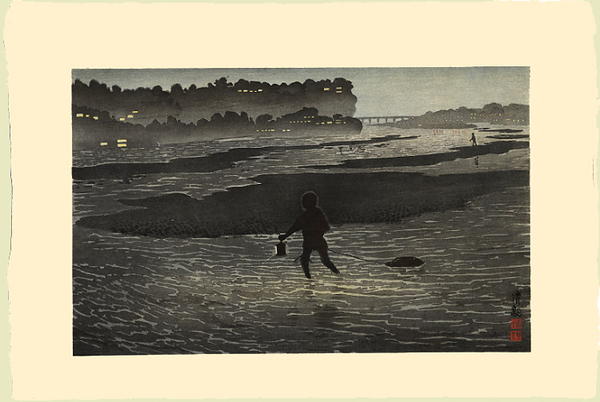
Night fishing at Kanazawa in Kaga Province — 加賀金沢犀川夜の漁火
Woodblock print

Shimohonda-machi, Kanazawa, from the series "Souvenirs of Travel, Second Series (Tabi miyage dai nishu)"
1921
Color woodblock print; oban

The Asano River in Kanazawa (Kanazawa Asanogawa), from the series "Souvenirs of Travel, Second Series (Tabi miyage dai nishu)"
1920
Color woodblock print; oban
Artists Who Depicted Kanazawa (2)

Frequently Asked Questions
Kanazawa is a city on the Sea of Japan coast of central Honshu, the principal city of Ishikawa Prefecture in the Hokuriku region. The city developed across the late sixteenth century as the castle town of the Maeda clan, who governed the wealthy Kaga domain from 1583 through the Meiji Restoration as the largest non-Tokugawa-related daimyo holding in Japan, with stipend at roughly one million koku of rice and accordingly enormous resources for cultural patronage. The Maeda investment in cultural sophistication produced one of the largest concentrations of provincial cultural patronage in early modern Japan, with notable craft traditions in lacquer including Wajima-nuri and Kaga maki-e, ceramics including Kutani-yaki, textile dyeing including Kaga yuzen, and gold leaf production for which Kanazawa supplied approximately ninety-eight percent of Japan's total output by the modern period, and with significant Noh, Kyogen, and tea-ceremony traditions sustained by the daimyo court. The principal monuments include Kanazawa Castle, partly preserved within an urban park with the Ishikawamon gate, the Hishi yagura, and the Gojikken nagaya storehouse rebuilt and accessible; the great strolling garden of Kenrokuen adjacent to the castle, founded in stages from the seventeenth century by successive Maeda lords as the family's outer garden and one of the three most famous gardens in Japan (the Nihon Sankei-en, alongside Kairakuen in Mito and Korakuen in Okayama); the historic samurai district of Nagamachi with its earthen walls and stone-lined drainage canals; the eastern teahouse district of Higashi Chaya with its wooden machiya facades; and the smaller western and Kazue-machi chaya districts. The city largely escaped destruction during the firebombing campaigns of 1944-1945 and preserves a substantial historic urban fabric, including some of the largest surviving samurai and merchant districts of any provincial city in Japan. For Japanese printmaking Kanazawa appears in late Edo meisho prints of the Kaga domain and the Hokuriku region, with Utagawa Hiroshige treating Kaga Province in his Famous Views of the Sixty-Odd Provinces, and Hasegawa Sadanobu producing Kansai-region sheets that include the surrounding Hokuriku coast. The city figures more prominently in the shin-hanga revival. Kawase Hasui produced Kanazawa subjects in his extensive travel-based print practice, including snow views of the Kenrokuen garden and the surrounding districts and twilight views of the chaya districts, and Yoshida Hiroshi, Tsuchiya Koitsu, and the sosaku-hanga artists of the postwar period including Tokuriki Tomikichiro and Saito Kiyoshi included the city and the surrounding region in their bodies of work. Sosaku-hanga artist Kasamatsu Shiro and other postwar artists treated the city's gardens, castles, and chaya districts in seasonal compositions. The visual character of Kanazawa in prints is built on the castle walls and turrets against the surrounding moats and stone embankments, the curving paths and stone lanterns of Kenrokuen with its seasonal blossoms and the distinctive snow protection ropes called yukitsuri that suspend pine branches against winter snowfall, the wooden facades and dark-stained timbers of the chaya districts and the samurai house quarters, and the local seasonal phenomena of heavy winter snowfall and the diffused Sea of Japan light. Contemporary Kanazawa is reached by the Hokuriku Shinkansen from Tokyo in approximately two and a half hours and is among the principal regional destinations for travelers seeking preserved Edo-period and early modern urban landscapes outside the large metropolitan centers, with the 21st Century Museum of Contemporary Art, the Kenrokuen garden, the castle park, and the chaya districts forming the principal contemporary visitor circuit.
Hanga catalogues 4 prints depicting Kanazawa (金沢), by 2 different artists.
Kawase Hasui and Kobayashi Kiyochika are among the 2 artists who depicted Kanazawa in our collection.
Want to rate prints from Kanazawa?
Sign up to start rating