Sagano (嵯峨野)
1 print by 1 artist
About Sagano
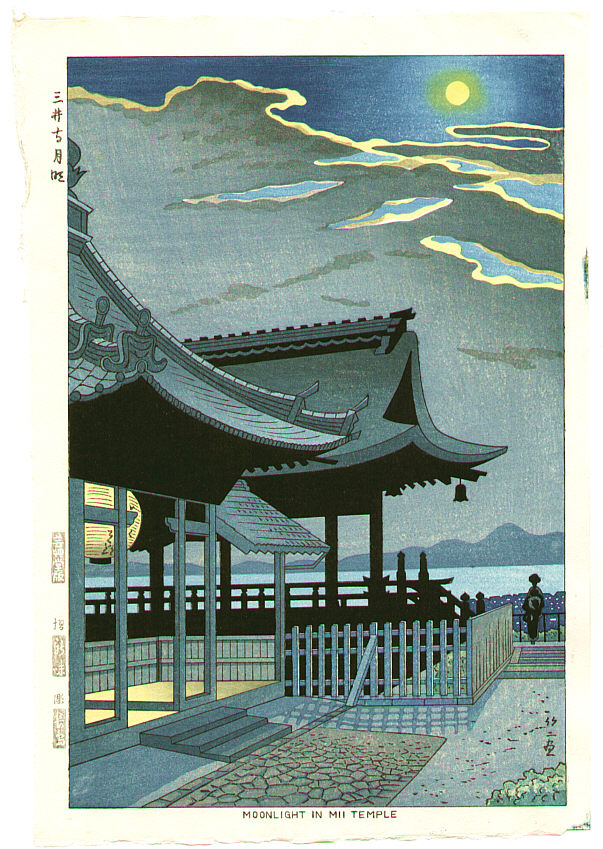
Sagano is a rural district in the western foothills of Kyoto, in present-day Ukyo Ward, lying north and west of Arashiyama and the Katsura River. The area was developed across the Heian period as the location of aristocratic villas and Buddhist temples, with the principal monuments including the Daikaku-ji temple, originally a Heian-era imperial detached palace built by Emperor Saga in 814 and converted to a Shingon Buddhist temple in 876 with the artificial Osawa-no-Ike pond as one of the oldest surviving Heian-period landscape gardens in Japan; the Tenryu-ji Zen monastery on the southern edge of the district founded in 1339; the Nison-in with its elegant garden; the Jojakko-ji on the slopes above the bamboo grove; the small Gio-ji thatched-roof temple; and the Adashino Nenbutsu-ji at the western edge of the district, the latter containing approximately eight thousand small Buddhist statues collected from neglected graves across Kyoto and arranged in commemoration of the dead. The Saga-Toriimoto Preservation District protects a portion of the old approach to Adashino Nenbutsu-ji with surviving wooden machiya facades. The district is celebrated for its bamboo grove, the principal path through which (the Sagano Chikurin no Komichi) has become one of the most photographed sites of Kyoto, for the seasonal foliage of the surrounding hills, and for the rural temple landscape that has preserved more of the pre-modern character of the area than the more developed districts within the city center. The Hozugawa river, called the Katsura on its lower reaches, flows out of the Sagano district through Arashiyama and toward the city. For Japanese printmaking Sagano appears in the meisho-e tradition as part of the Kyoto western-foothill geography. Utagawa Hiroshige treated the district in his Famous Views of Kyoto issued around 1834, with views of the bamboo and the temple precincts, and Edo-period printed guidebooks to Kyoto including the Miyako Meisho Zue of 1780 included Sagano in their itineraries with detailed illustrations. Hasegawa Sadanobu and Kansai-region artists produced additional Sagano subjects. The shin-hanga revival brought a sustained engagement, with Kawase Hasui producing views of the temple precincts and the rural landscape including the Saga torii gate, and Yoshida Hiroshi, Tsuchiya Koitsu, and Asano Takeji contributing further compositions. Tokuriki Tomikichiro, working from Kyoto, included Sagano subjects in his Kyoto-centered creative-print series across multiple decades, and the Kyoto sosaku-hanga circle of the postwar period including Asada Benji treated the bamboo grove and the surrounding rural landscape as a recurrent motif. The visual character of Sagano in prints is built on the dense vertical green of the bamboo, the small temple roofs emerging from the surrounding foliage, the path of the railway and the road through the western hills, the small thatched-roof farmhouses of the surrounding rural settlements, the small wooden bridges over the irrigation canals, and the seasonal phenomena of cherry blossom in early spring, autumn maple in mid-November, and rural snow in winter. The bamboo grove in particular generates a distinctive compositional register of vertical green stripes with diffused light filtering through, a visual quality the printmakers exploited especially in the shin-hanga period. Contemporary visitors find Sagano connected to Arashiyama by a continuous walking circuit through the bamboo grove and the surrounding temples, with the Sagano Romantic Train (Sagano Torokko) providing a scenic railway route through the Hozugawa valley between Arashiyama and Kameoka and the boat descent down the Hozugawa offering a reverse route.
Prints Depicting Sagano (1)

Artists Who Depicted Sagano (1)
Frequently Asked Questions
Sagano is a rural district in the western foothills of Kyoto, in present-day Ukyo Ward, lying north and west of Arashiyama and the Katsura River. The area was developed across the Heian period as the location of aristocratic villas and Buddhist temples, with the principal monuments including the Daikaku-ji temple, originally a Heian-era imperial detached palace built by Emperor Saga in 814 and converted to a Shingon Buddhist temple in 876 with the artificial Osawa-no-Ike pond as one of the oldest surviving Heian-period landscape gardens in Japan; the Tenryu-ji Zen monastery on the southern edge of the district founded in 1339; the Nison-in with its elegant garden; the Jojakko-ji on the slopes above the bamboo grove; the small Gio-ji thatched-roof temple; and the Adashino Nenbutsu-ji at the western edge of the district, the latter containing approximately eight thousand small Buddhist statues collected from neglected graves across Kyoto and arranged in commemoration of the dead. The Saga-Toriimoto Preservation District protects a portion of the old approach to Adashino Nenbutsu-ji with surviving wooden machiya facades. The district is celebrated for its bamboo grove, the principal path through which (the Sagano Chikurin no Komichi) has become one of the most photographed sites of Kyoto, for the seasonal foliage of the surrounding hills, and for the rural temple landscape that has preserved more of the pre-modern character of the area than the more developed districts within the city center. The Hozugawa river, called the Katsura on its lower reaches, flows out of the Sagano district through Arashiyama and toward the city. For Japanese printmaking Sagano appears in the meisho-e tradition as part of the Kyoto western-foothill geography. Utagawa Hiroshige treated the district in his Famous Views of Kyoto issued around 1834, with views of the bamboo and the temple precincts, and Edo-period printed guidebooks to Kyoto including the Miyako Meisho Zue of 1780 included Sagano in their itineraries with detailed illustrations. Hasegawa Sadanobu and Kansai-region artists produced additional Sagano subjects. The shin-hanga revival brought a sustained engagement, with Kawase Hasui producing views of the temple precincts and the rural landscape including the Saga torii gate, and Yoshida Hiroshi, Tsuchiya Koitsu, and Asano Takeji contributing further compositions. Tokuriki Tomikichiro, working from Kyoto, included Sagano subjects in his Kyoto-centered creative-print series across multiple decades, and the Kyoto sosaku-hanga circle of the postwar period including Asada Benji treated the bamboo grove and the surrounding rural landscape as a recurrent motif. The visual character of Sagano in prints is built on the dense vertical green of the bamboo, the small temple roofs emerging from the surrounding foliage, the path of the railway and the road through the western hills, the small thatched-roof farmhouses of the surrounding rural settlements, the small wooden bridges over the irrigation canals, and the seasonal phenomena of cherry blossom in early spring, autumn maple in mid-November, and rural snow in winter. The bamboo grove in particular generates a distinctive compositional register of vertical green stripes with diffused light filtering through, a visual quality the printmakers exploited especially in the shin-hanga period. Contemporary visitors find Sagano connected to Arashiyama by a continuous walking circuit through the bamboo grove and the surrounding temples, with the Sagano Romantic Train (Sagano Torokko) providing a scenic railway route through the Hozugawa valley between Arashiyama and Kameoka and the boat descent down the Hozugawa offering a reverse route.
Hanga catalogues 1 print depicting Sagano (嵯峨野), by 1 artist.
Takeji Asano is among the 1 artist who depicted Sagano in our collection.
Want to rate prints from Sagano?
Sign up to start rating