One Hundred Views of the East
About This Series
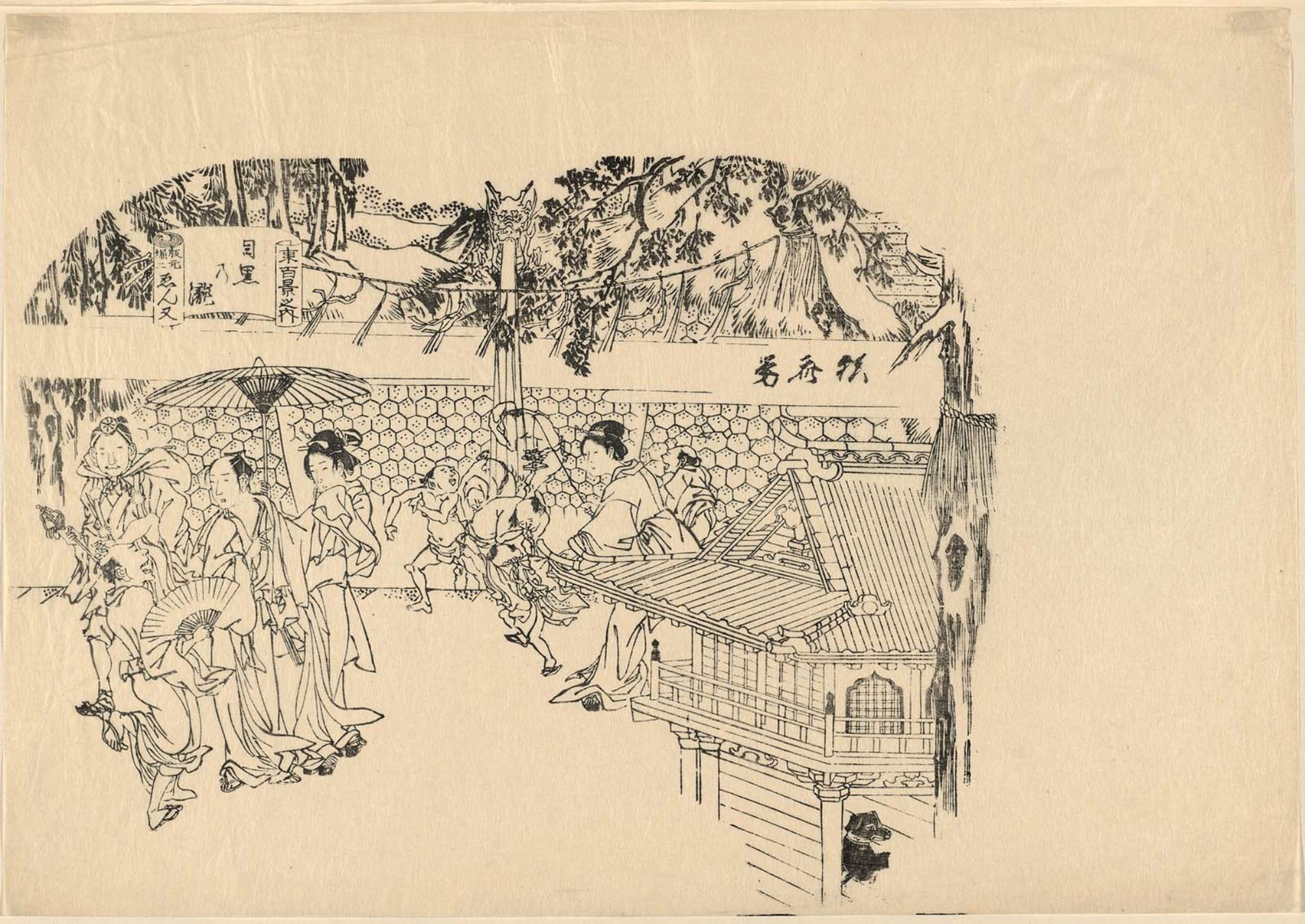
Kawanabe Kyosai's "One Hundred Views of the East" (Toto meisho hyakkei, or in some sources Azuma hyakkei) belongs to the meisho-e topographical tradition that flourished in ukiyo-e from the early nineteenth century onward, in which an artist gathered one hundred views of a single city or region into a numbered series for the popular print market. The format had been most influentially established by Utagawa Hiroshige's "One Hundred Famous Views of Edo" of 1856-1858, and Kyosai's contribution stands in the immediate aftermath of Hiroshige's series, recording the same city through the eyes of an artist whose training and temperament were quite different from those of the great Edo topographer. The surviving impressions show Kyosai's characteristic bold composition and fluent brushwork applied to recognizable Edo and early Tokyo locations, with the framing devices and atmospheric effects of the Hiroshige tradition reworked in the looser, more painterly mode that his Kano training and his ukiyo-e apprenticeship under Kuniyoshi had combined to produce. Only a small number of sheets from the series are currently recorded in Western cataloguing, and the question of whether Kyosai completed the full one hundred designs or only a partial set remains open; the prints that survive are consistent with a publication date in the late 1860s or early 1870s, when the meisho-e tradition was being adapted to the rapidly changing visual landscape of post-Restoration Tokyo. The series is best read alongside Kyosai's other late-Edo and early Meiji engagements with established ukiyo-e formats, in which he reworked Edo print conventions for the new Meiji audience. Examples are held in the British Museum and in the principal Japanese Kyosai collections.
Prints in This Series (1)
Complete series — all 1 prints catalogued.
Frequently Asked Questions
Kawanabe Kyosai's "One Hundred Views of the East" (Toto meisho hyakkei, or in some sources Azuma hyakkei) belongs to the meisho-e topographical tradition that flourished in ukiyo-e from the early nineteenth century onward, in which an artist gathered one hundred views of a single city or region into a numbered series for the popular print market. The format had been most influentially established by Utagawa Hiroshige's "One Hundred Famous Views of Edo" of 1856-1858, and Kyosai's contribution stands in the immediate aftermath of Hiroshige's series, recording the same city through the eyes of an artist whose training and temperament were quite different from those of the great Edo topographer. The surviving impressions show Kyosai's characteristic bold composition and fluent brushwork applied to recognizable Edo and early Tokyo locations, with the framing devices and atmospheric effects of the Hiroshige tradition reworked in the looser, more painterly mode that his Kano training and his ukiyo-e apprenticeship under Kuniyoshi had combined to produce. Only a small number of sheets from the series are currently recorded in Western cataloguing, and the question of whether Kyosai completed the full one hundred designs or only a partial set remains open; the prints that survive are consistent with a publication date in the late 1860s or early 1870s, when the meisho-e tradition was being adapted to the rapidly changing visual landscape of post-Restoration Tokyo. The series is best read alongside Kyosai's other late-Edo and early Meiji engagements with established ukiyo-e formats, in which he reworked Edo print conventions for the new Meiji audience. Examples are held in the British Museum and in the principal Japanese Kyosai collections.
The One Hundred Views of the East series contains 1 prints, created by Kawanabe Kyosai.
The One Hundred Views of the East series was created by Kawanabe Kyosai (河鍋暁斎).
We currently have 1 of 1 known prints from the One Hundred Views of the East series indexed in our collection. Browse them all on this page.
Want to rate prints from One Hundred Views of the East?
Sign up to start rating