Beauties Matched with Flowers
About This Series
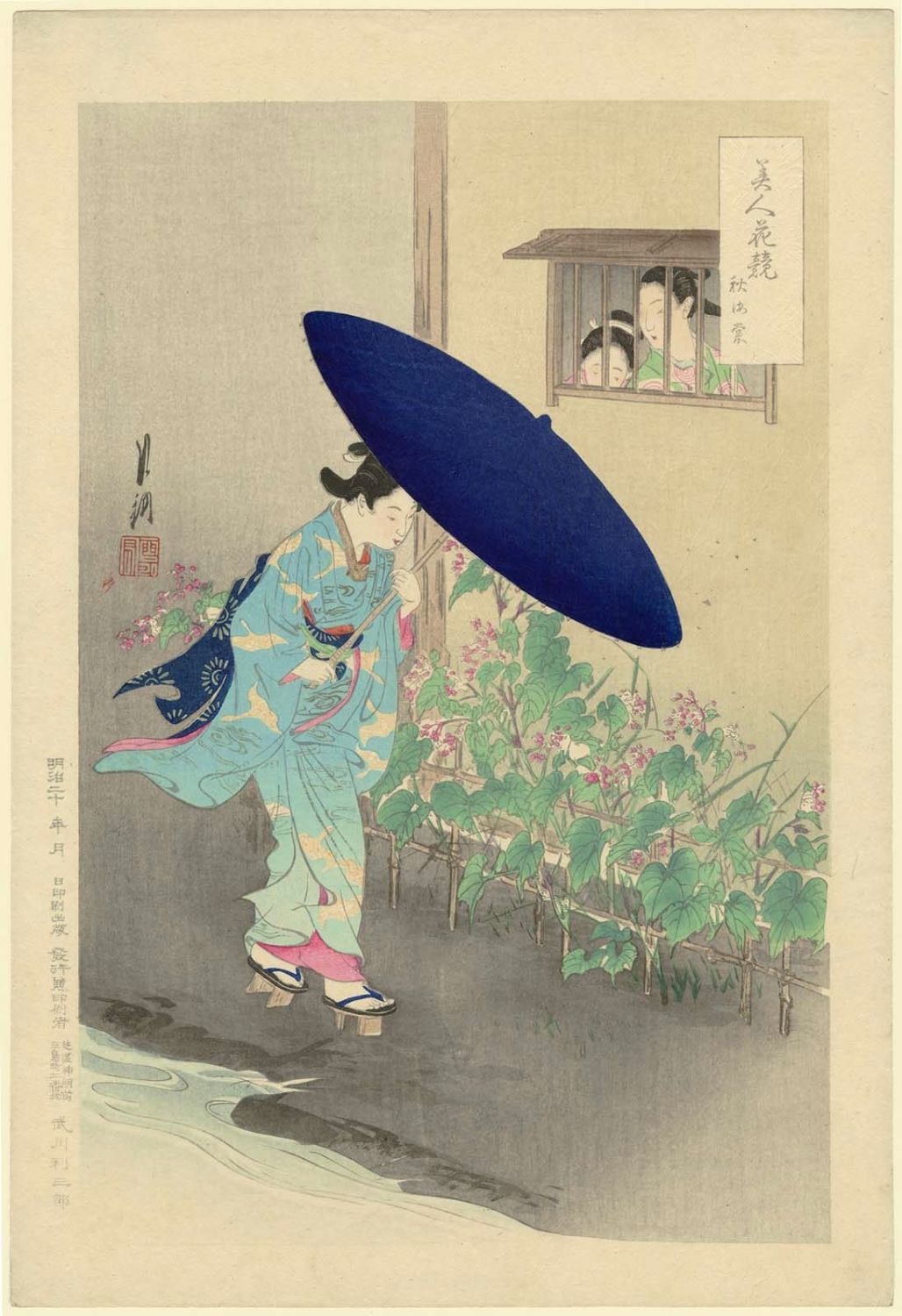
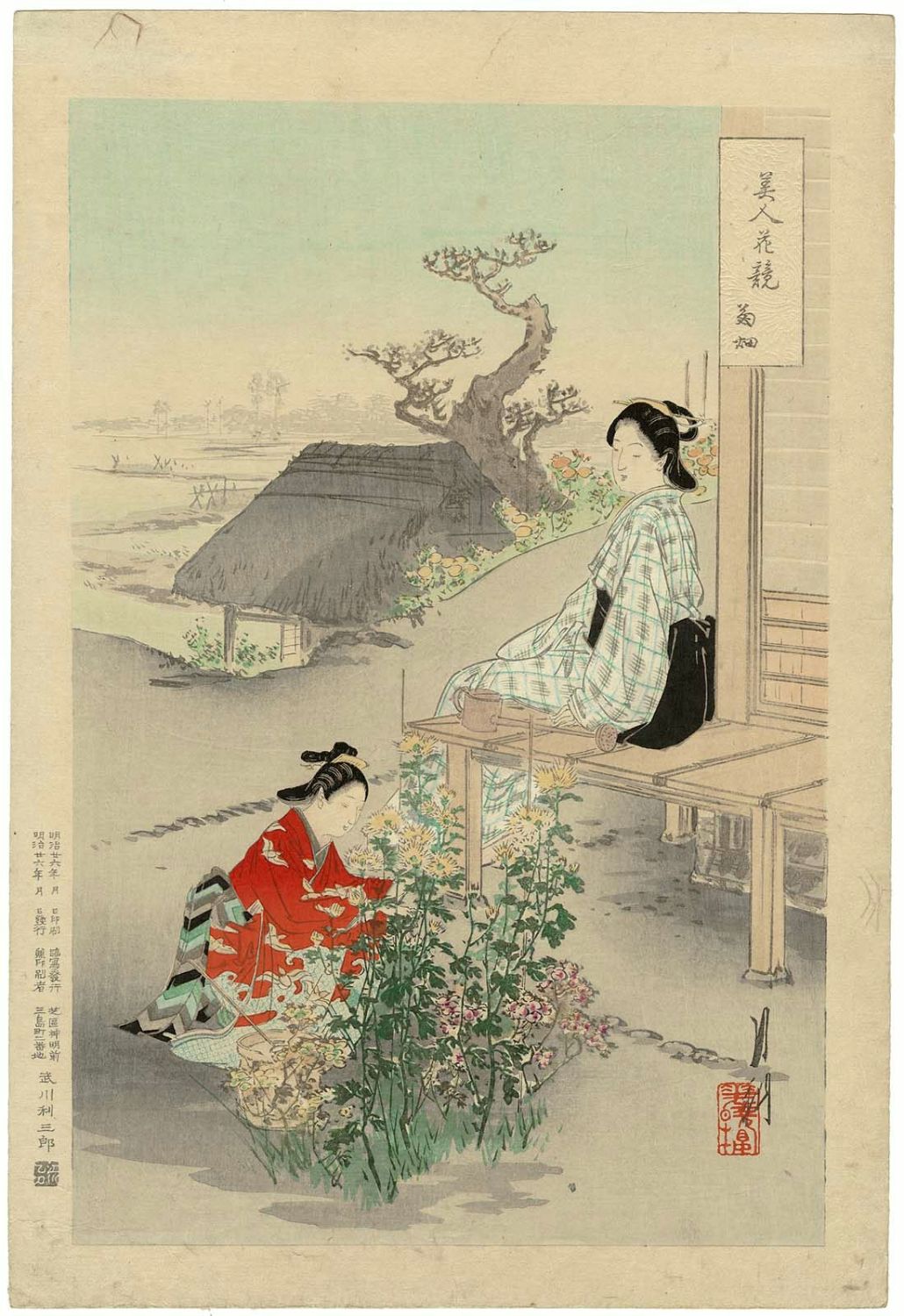
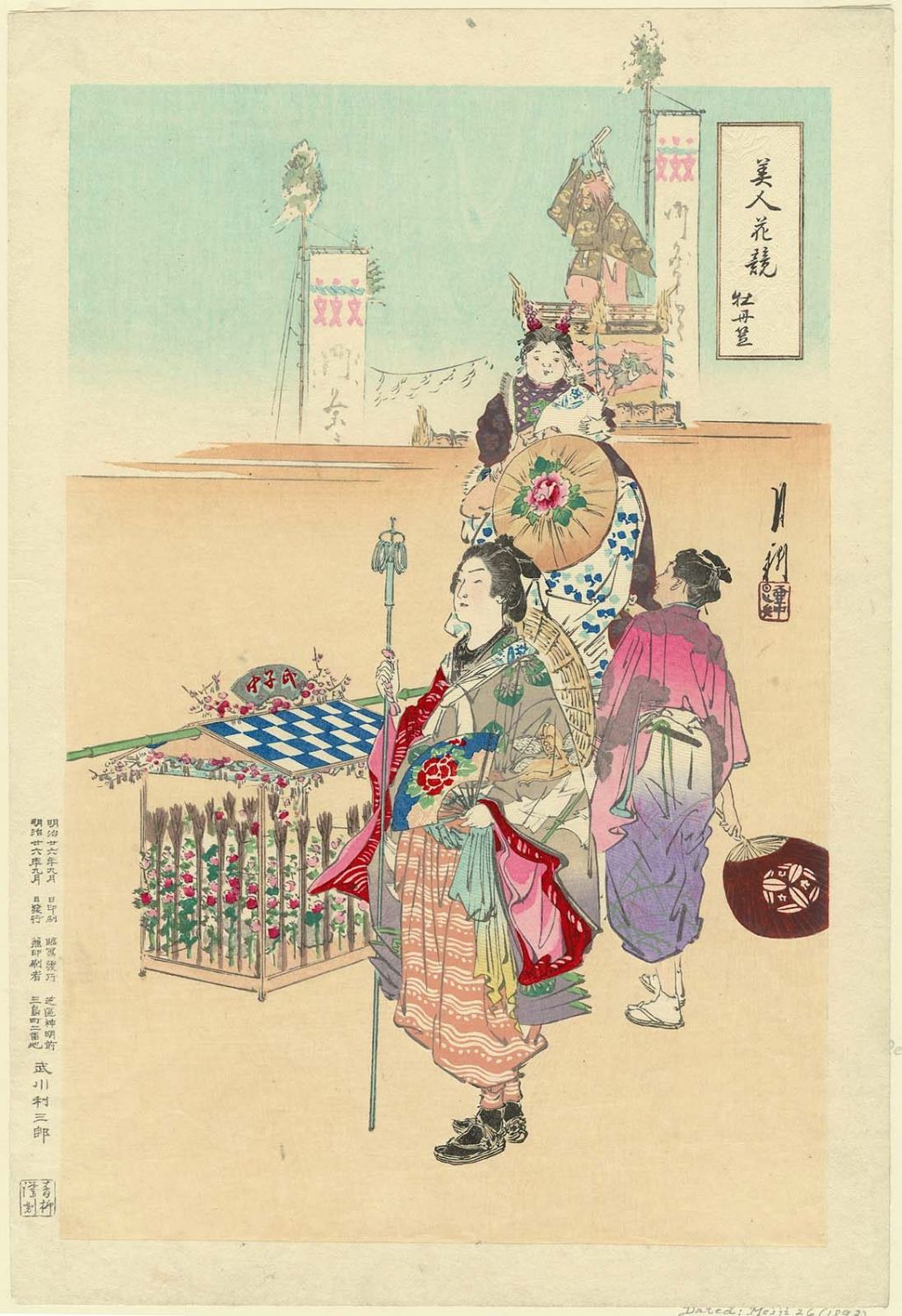
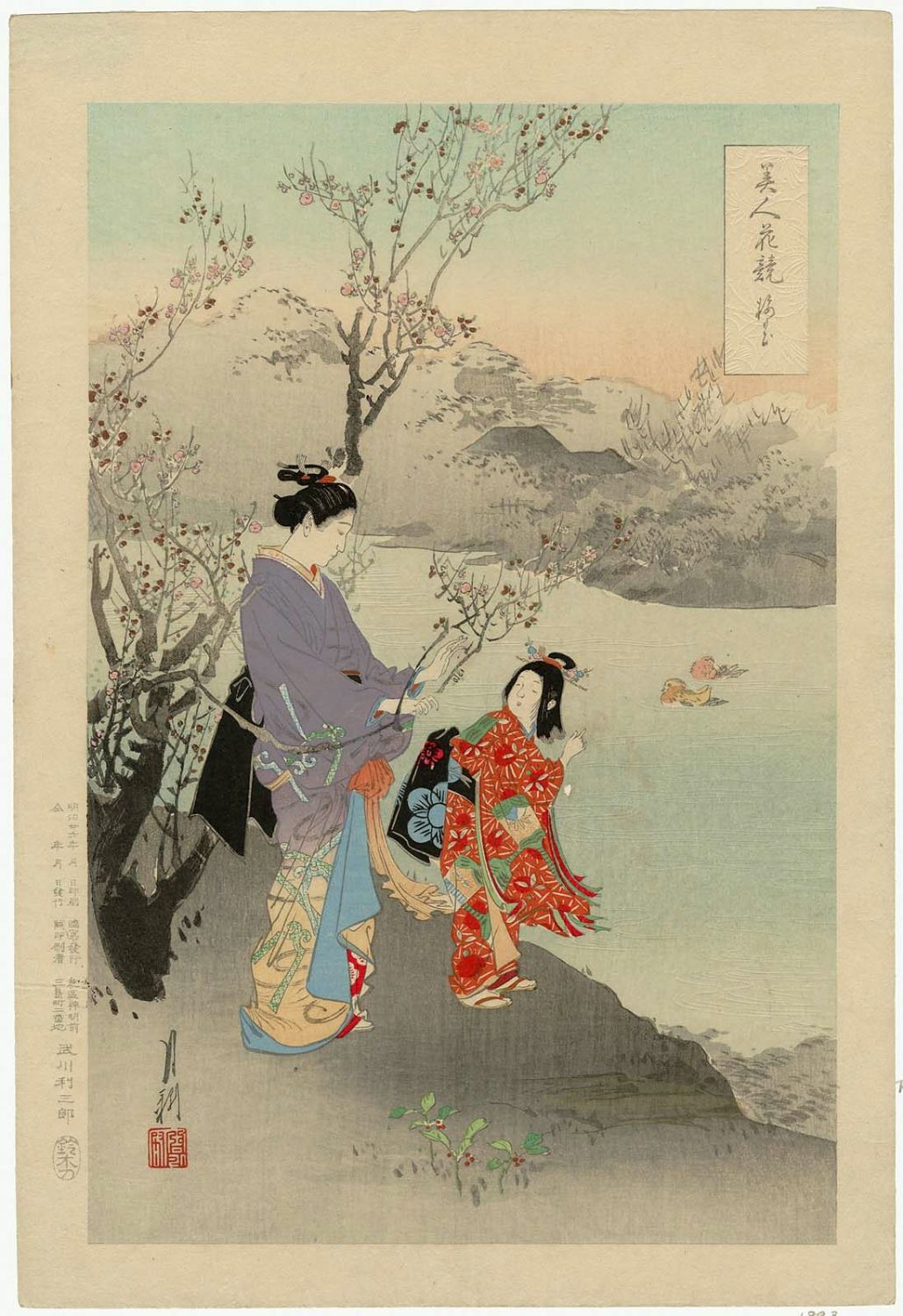
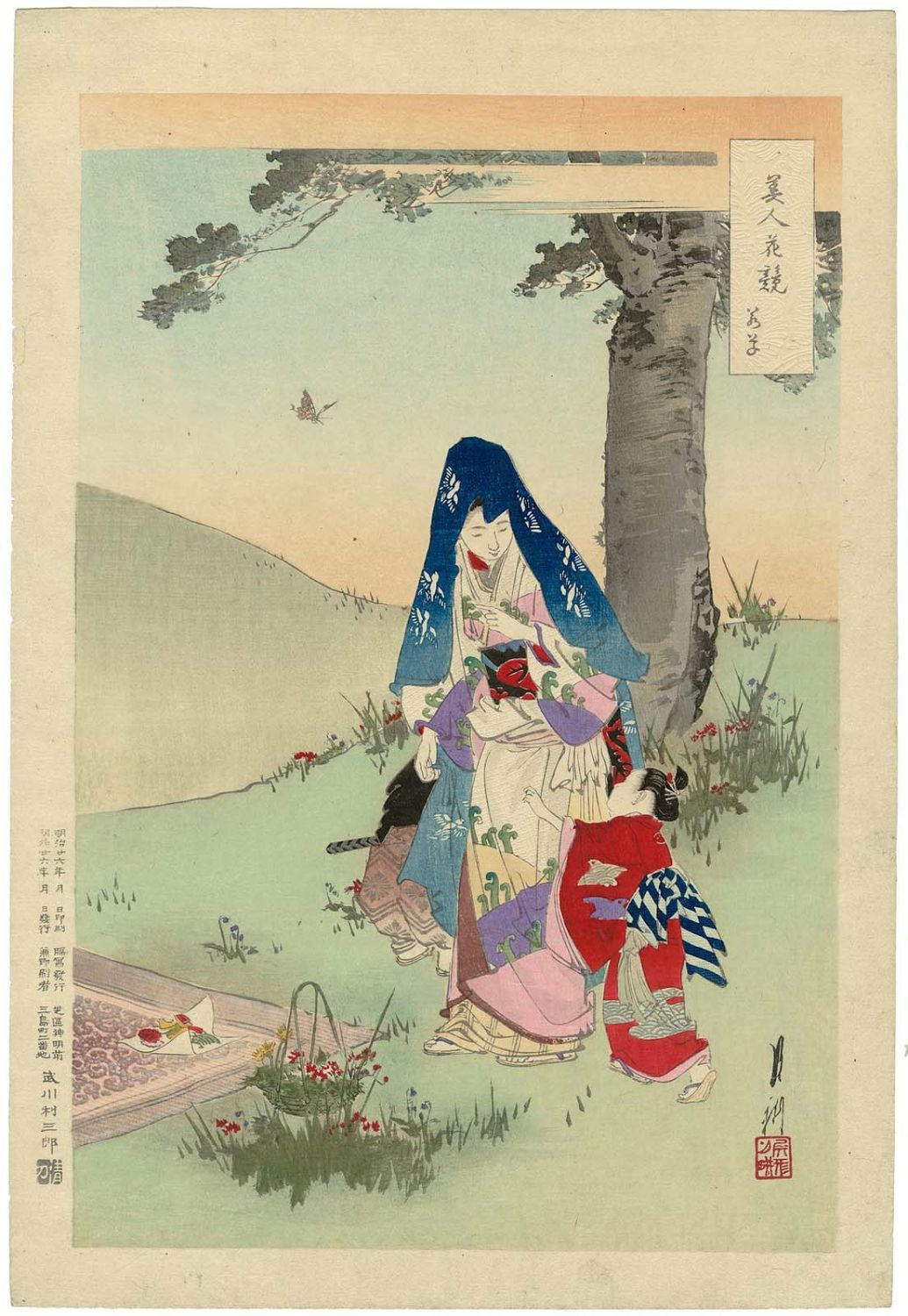
Ogata Gekko's Beauties Matched with Flowers (Bijin awase hana zukushi, in the most plausible reading of the title group) belongs to the bijin-ga production through which the artist contributed to the late-nineteenth-century revival of the comparative beauty roster as a vehicle for the post-Edo woodblock. The series is generally placed in the late 1880s and 1890s, the decade in which Gekko's collaboration with publishers including Matsuki Heikichi and Sasaki Toyokichi produced his most ambitious bijin work, and it follows the long-established convention by which each woman is matched with a flower whose seasonal and symbolic associations supply the parallel for her character or station. The conceit had a substantial Edo-period genealogy running through the bijin awase compilations of Utamaro and his contemporaries, and Gekko's series adapts it to the Meiji moment by pairing his elegant elongated figures, drawn in a manner that combines the nihonga training of his early career with the ukiyo-e bijin tradition, with seasonal flowers ranging across the calendar from plum and cherry through chrysanthemum and camellia. The sheets are issued in oban tate-e format with the production values typical of the deluxe Meiji print, employing graduated color, fine textile patterning, and occasional use of metallic pigments, and each carries a cartouche identifying both the figure and the flower. The series can be read simultaneously as a survey of the seasonal calendar and as a meditation on the relation between feminine beauty and natural reference that had been the founding conceit of the Japanese poetic tradition. Impressions are catalogued among the Gekko holdings of the Museum of Fine Arts Boston, the British Museum, the Tokyo National Museum, and the Honolulu Museum of Art.
Prints in This Series (5)
Complete series — all 2 prints catalogued.
Frequently Asked Questions
Ogata Gekko's Beauties Matched with Flowers (Bijin awase hana zukushi, in the most plausible reading of the title group) belongs to the bijin-ga production through which the artist contributed to the late-nineteenth-century revival of the comparative beauty roster as a vehicle for the post-Edo woodblock. The series is generally placed in the late 1880s and 1890s, the decade in which Gekko's collaboration with publishers including Matsuki Heikichi and Sasaki Toyokichi produced his most ambitious bijin work, and it follows the long-established convention by which each woman is matched with a flower whose seasonal and symbolic associations supply the parallel for her character or station. The conceit had a substantial Edo-period genealogy running through the bijin awase compilations of Utamaro and his contemporaries, and Gekko's series adapts it to the Meiji moment by pairing his elegant elongated figures, drawn in a manner that combines the nihonga training of his early career with the ukiyo-e bijin tradition, with seasonal flowers ranging across the calendar from plum and cherry through chrysanthemum and camellia. The sheets are issued in oban tate-e format with the production values typical of the deluxe Meiji print, employing graduated color, fine textile patterning, and occasional use of metallic pigments, and each carries a cartouche identifying both the figure and the flower. The series can be read simultaneously as a survey of the seasonal calendar and as a meditation on the relation between feminine beauty and natural reference that had been the founding conceit of the Japanese poetic tradition. Impressions are catalogued among the Gekko holdings of the Museum of Fine Arts Boston, the British Museum, the Tokyo National Museum, and the Honolulu Museum of Art.
The Beauties Matched with Flowers series contains 2 prints, created by Ogata Gekko.
The Beauties Matched with Flowers series was created by Ogata Gekko (尾形月耕).
We currently have 5 of 2 known prints from the Beauties Matched with Flowers series indexed in our collection. Browse them all on this page.
Want to rate prints from Beauties Matched with Flowers?
Sign up to start rating