
Biography
Akira Kurosaki (黒崎彰, 1937–2019) was one of the most distinctive figures in Japan's postwar creative-print (sōsaku-hanga) and modern mokuhanga movement. He was born on 10 January 1937 in Dalian (Dairen), in Japanese-occupied Manchuria; after the Second World War his family returned to Japan. In 1956 he entered the Kyoto Institute of Technology, where he studied in the Department of Design and took his degree in 1962. He developed an interest in ukiyo-e prints and their techniques while at college and began producing woodblock prints in 1965, work that from the outset explored the tension between Japanese aesthetic restraint and a Western modernist impulse toward abstraction.
Kurosaki developed a highly personal visual vocabulary that ranged from semi-abstract and surreal imagery to bold, hard-edged geometric forms — rectangles, arcs, and intersecting planes — printed in saturated, sometimes almost fluorescent color. His prints deployed precise color fields built up through many successive printing passes, and the results vibrated with optical intensity, the pigments seeming to glow against one another in ways that recalled stained glass or Color Field painting, yet the visible grain of the woodblock and the deliberate registration of each layer remained unmistakably rooted in mokuhanga technique.
Through the 1960s and 1970s Kurosaki exhibited at the major international print biennials that served as proving grounds for contemporary printmaking, among them Tokyo, Ljubljana, Kraków, Maastricht, and Paris. Early recognition came with the Kokugakai Association's Newcomer Award in 1967, and he went on to win prizes at the Tokyo International Print Biennial and the Kraków International Print Biennial, among other honors. These competitions brought his work to Western collectors and curators who recognized in it a synthesis of Japanese craft and postwar abstraction.
Kurosaki was also a dedicated educator and writer on printmaking. In 1987 he became a professor at Kyoto Seika University, where he headed the printmaking program and established a department of papermaking, mentoring a generation of younger printmakers before attaining emeritus status in 2008. He authored a number of books on woodblock printing, and his study of traditional Japanese printmaking techniques informed his own practice and helped frame mokuhanga as a living tradition rather than a historical curiosity.
Across his career Kurosaki moved fluidly between abstraction and figuration and between the woodblock and other print media, including silkscreen and lithography, and he remained active as a printmaker into his final years; he died in 2019 at the age of eighty-two. His works are held in major public collections, including the British Museum, the Victoria and Albert Museum, the Museum of Modern Art in New York, and the National Museum of Modern Art, Tokyo, among many others.
Key Facts
- Active Period
- 1937–2019
- Nationality
- 🇯🇵Japan
- Movement
- Sōsaku-hanga
- Works Indexed
- 38
Frequently Asked Questions
Akira Kurosaki (黒崎彰, 1937–2019) was one of the most distinctive figures in Japan's postwar creative-print (sōsaku-hanga) and modern mokuhanga movement. He was born on 10 January 1937 in Dalian (Dairen), in Japanese-occupied Manchuria; after the Second World War his family returned to Japan. In 1956 he entered the Kyoto Institute of Technology, where he studied in the Department of Design and took his degree in 1962. He developed an interest in ukiyo-e prints and their techniques while at college and began producing woodblock prints in 1965, work that from the outset explored the tension between Japanese aesthetic restraint and a Western modernist impulse toward abstraction.
Akira Kurosaki was active from 1937 to 2019. They were associated with the Sōsaku-hanga movement.
Akira Kurosaki's work was shaped by the Sōsaku-hanga tradition in Japanese woodblock printmaking. Sōsaku-hanga: ## What is sōsaku-hanga? Sōsaku-hanga (創作版画, "creative prints") was a twentieth-century Japanese print movement defined by a single commitment: the artist must design, carve, and print every work alone.
Akira Kurosaki's prints frequently feature abstract, landscapes, figures, night scenes, interiors, warriors.
Original prints by Akira Kurosaki can be found in collections including British Museum, Harvard Art Museum, Harvard Art Museums, robynbuntin.
Woodblock Prints by Akira Kurosaki (38)
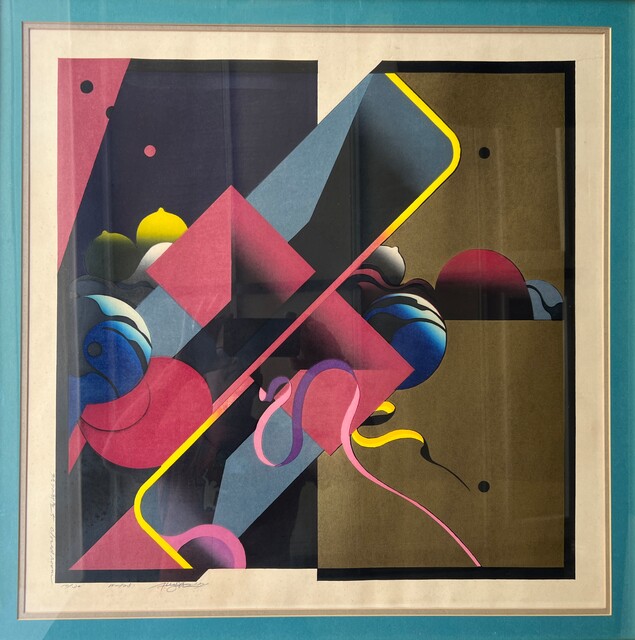
Closed Room #5
1971
Original Color Woodblock Print
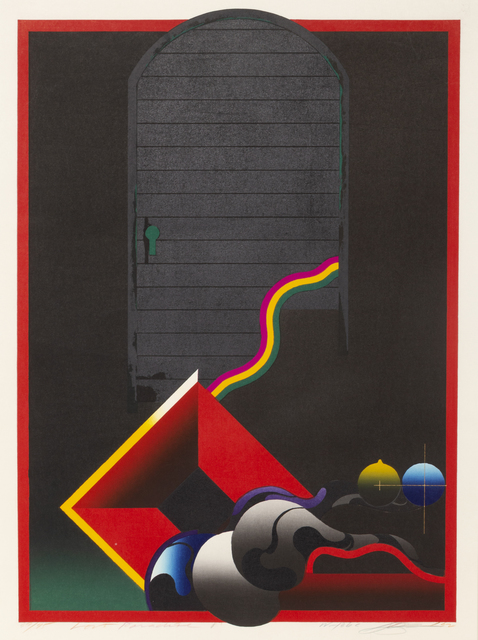
Lost Paradise 8
1972
Color Woodblock
Lost Paradise 4
1972

Secret Codes 6
Woodblock print
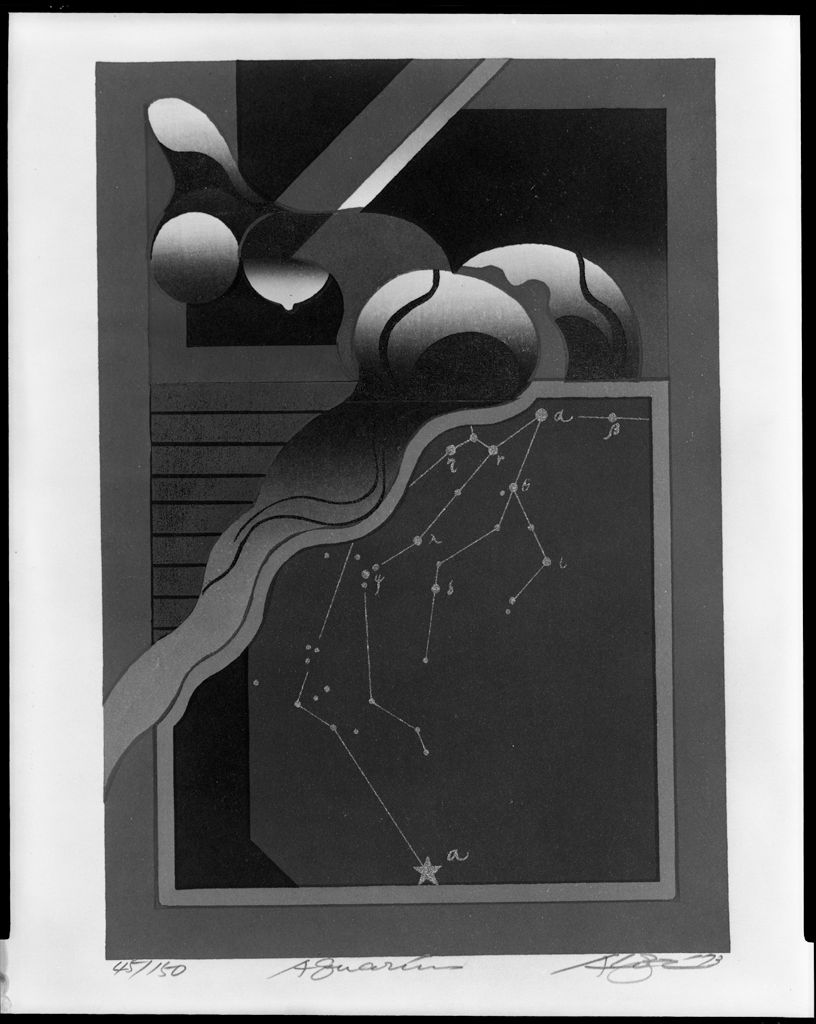
Zodiac Series - Sagittarius
Woodblock print

Imperial Palace
Woodblock print
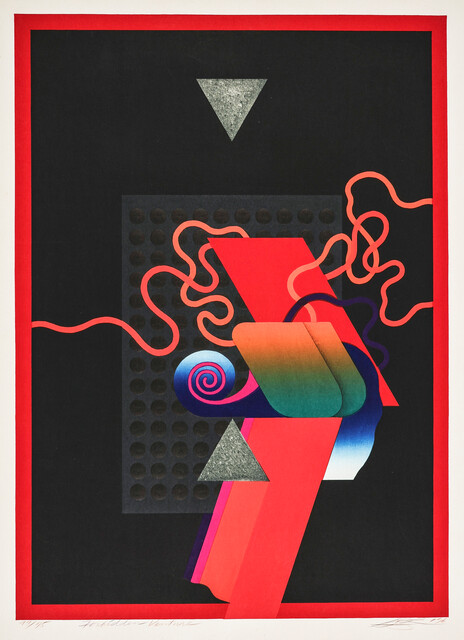
Forbidden Venture
1976
Color woodblock

Camouflaged World 2
Woodblock print
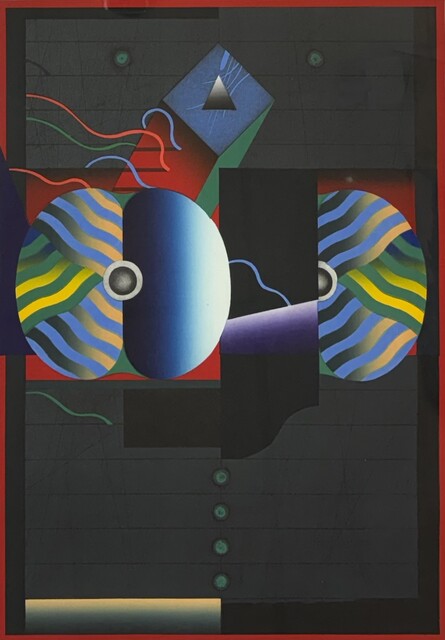
Meisaiei B
1978
Woodblock

Traces of Time
Woodblock print

Paper Museum, Oji (One Hundred Views of Tokyo, Message to the 21st Century 東京百景 21世紀へのメッセジ)
1989-99
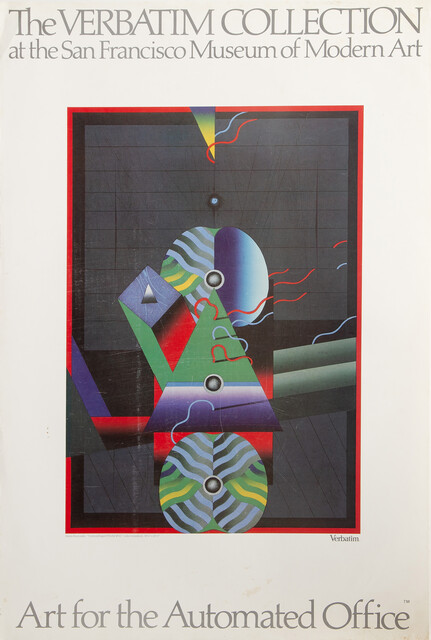
The Verbatim Collection Exhibition Poster
Poster
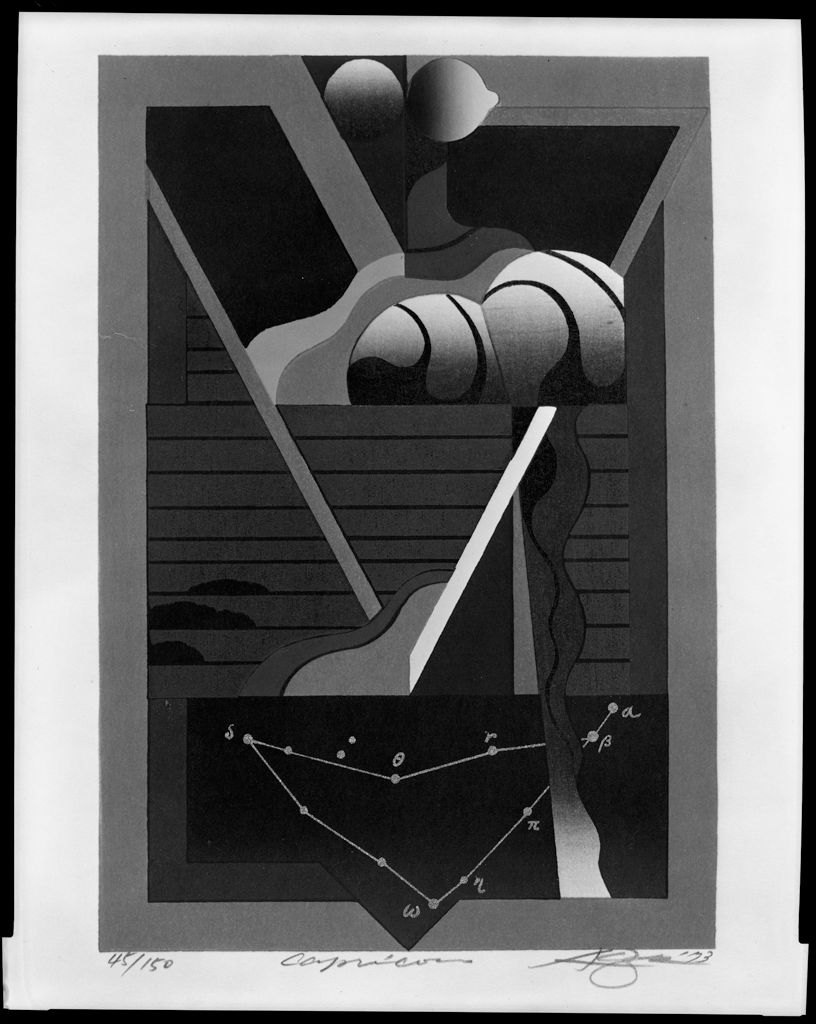
Capricorn, from the Zodiac Series, Shôwa period, circa 1973
Woodblock print
Capricorn, from the Zodiac Series
Woodblock print
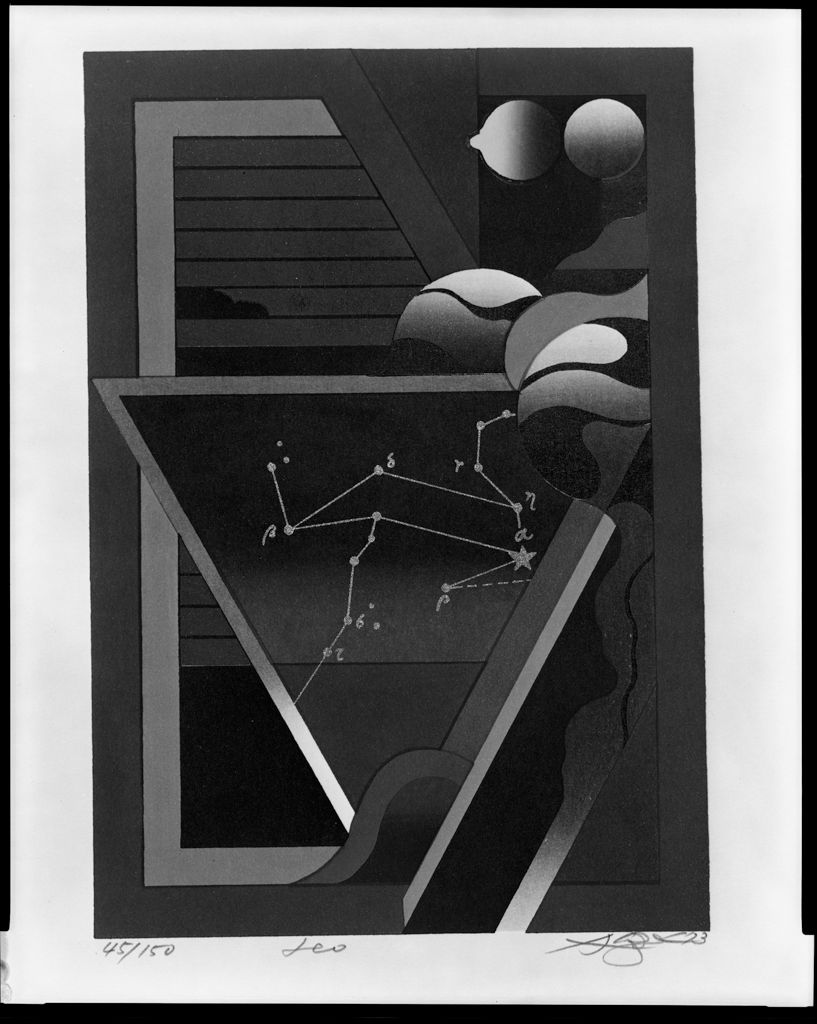
Leo, from the Zodiac Series
Woodblock print
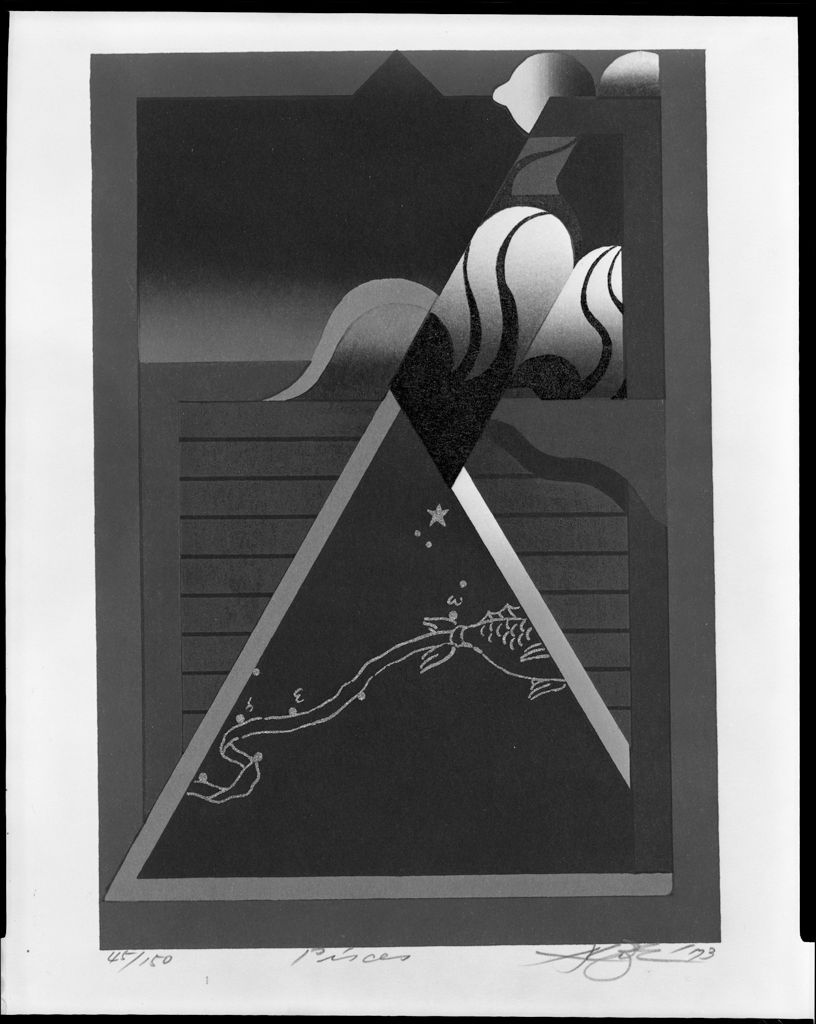
Pisces, from the Zodiac Series
Woodblock print
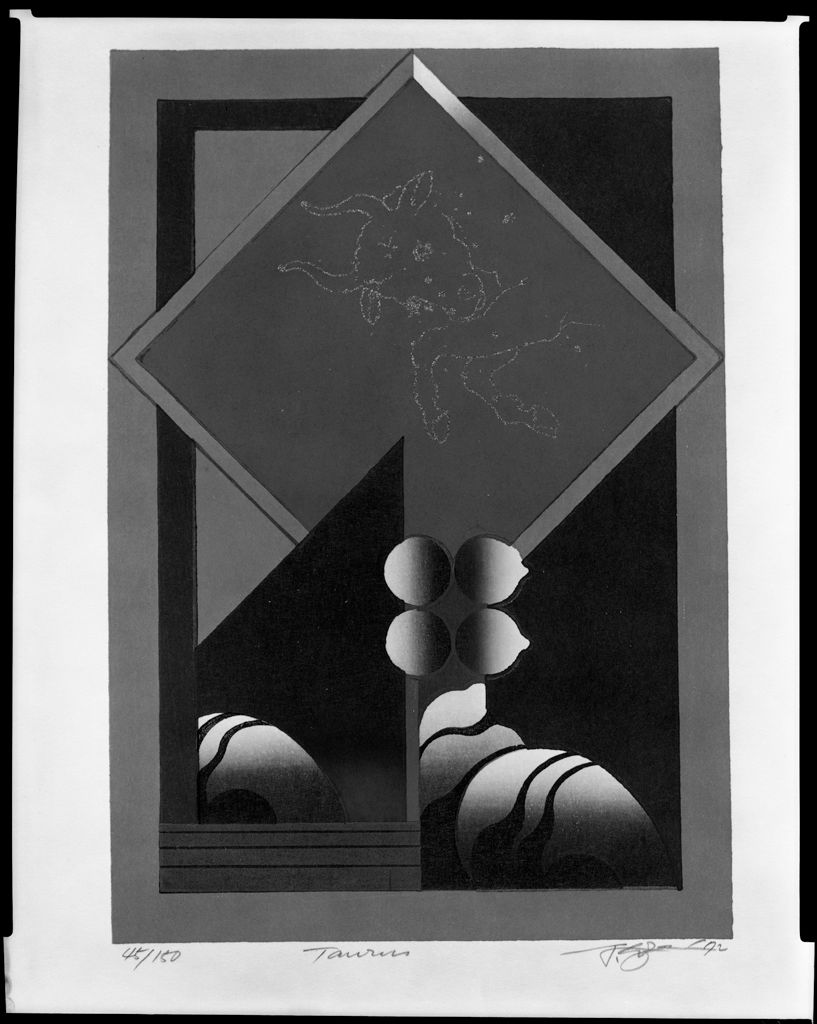
Taurus, from the Zodiac Series
Woodblock print
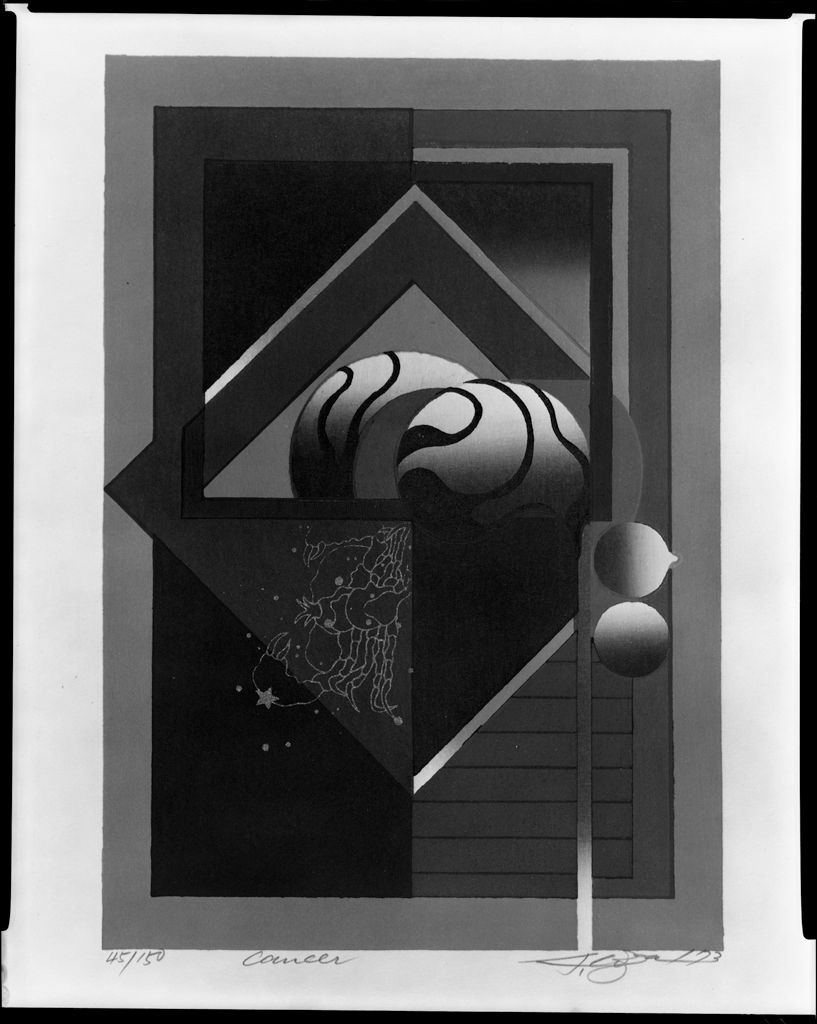
Cancer, from the Zodiac Series, Shôwa period, circa 1973
Woodblock print
Leo, from the Zodiac Series, Shôwa period, circa 1973
Woodblock print
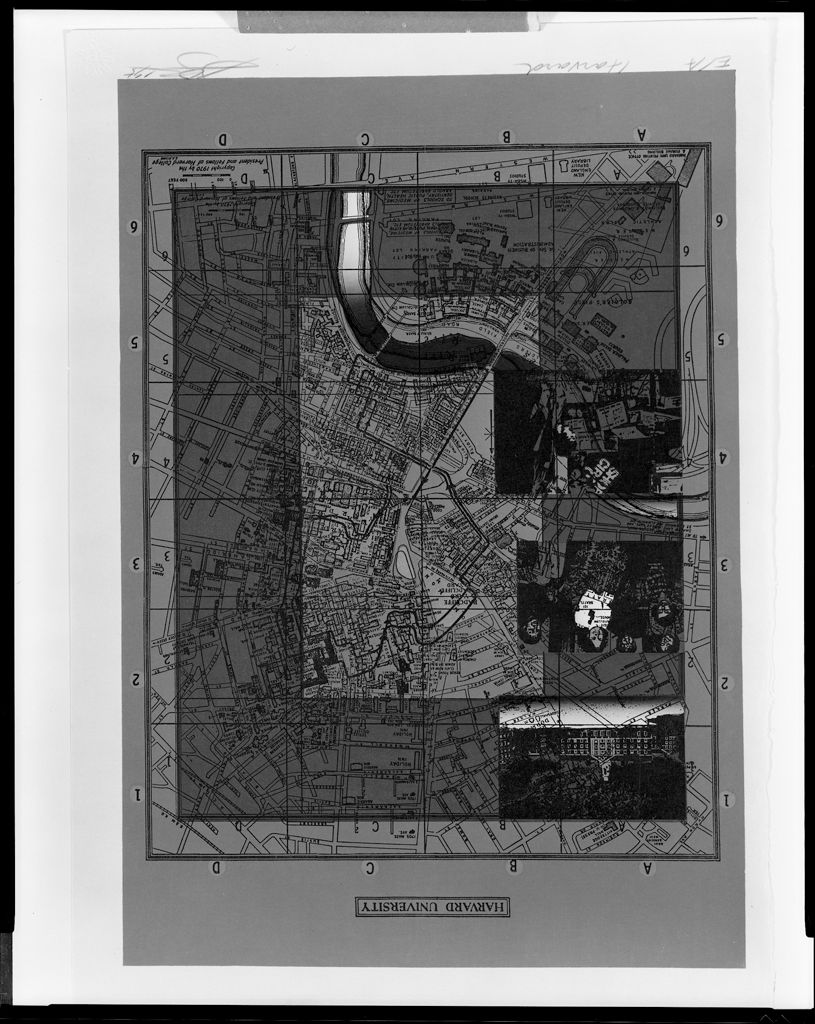
Harvard University, Shôwa period, 1975
Woodblock print
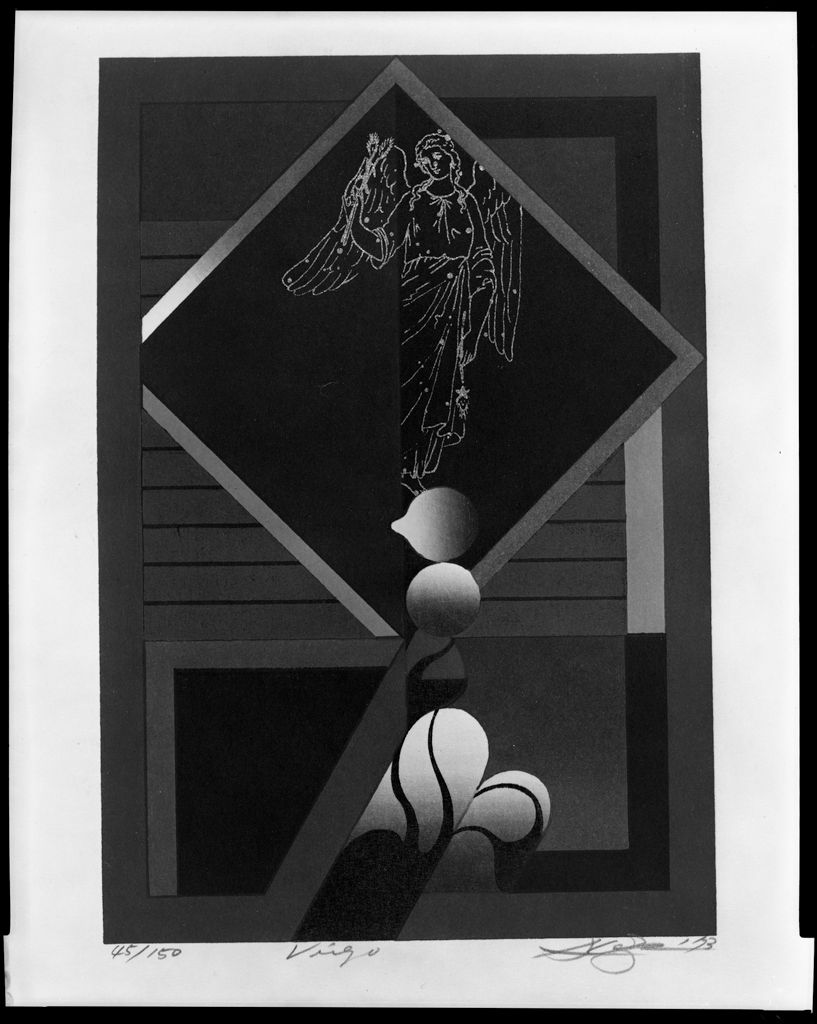
Virgo, from the Zodiac Series, Shôwa period, circa 1973
Woodblock print
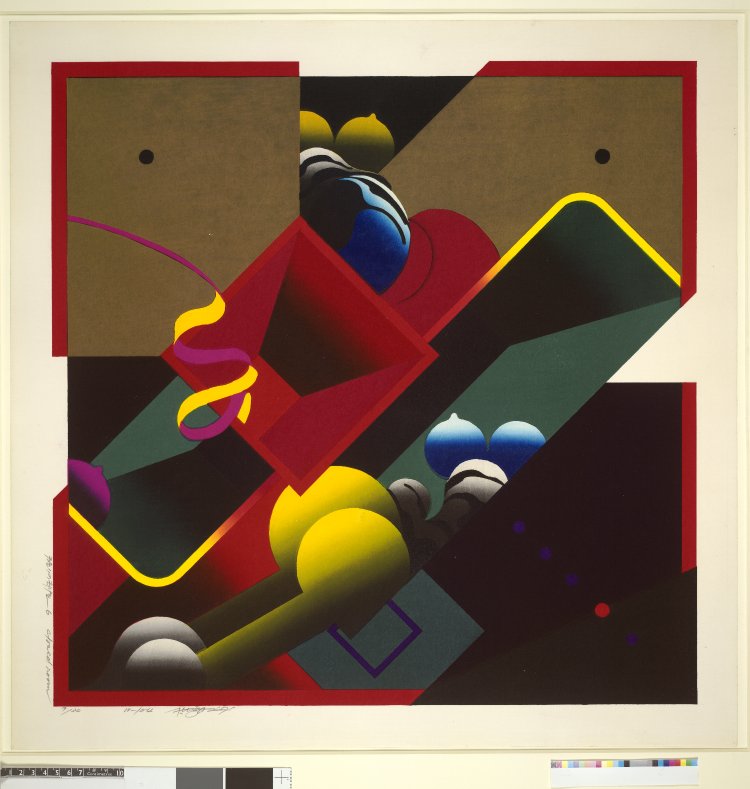
Closed Room W-124
Woodblock print
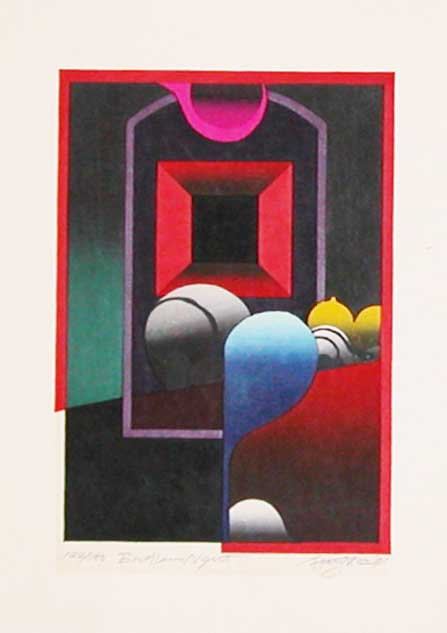
Endless Night
Woodblock print
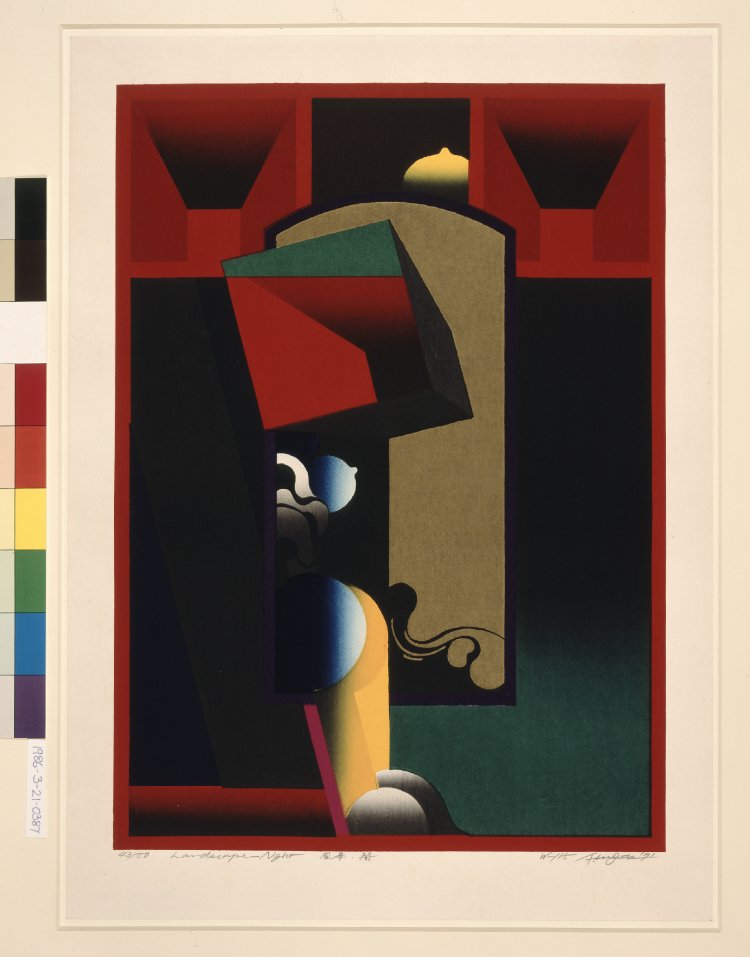
Fukei Yami W-115 (Landscape-Night W-115)
Woodblock print