Biography
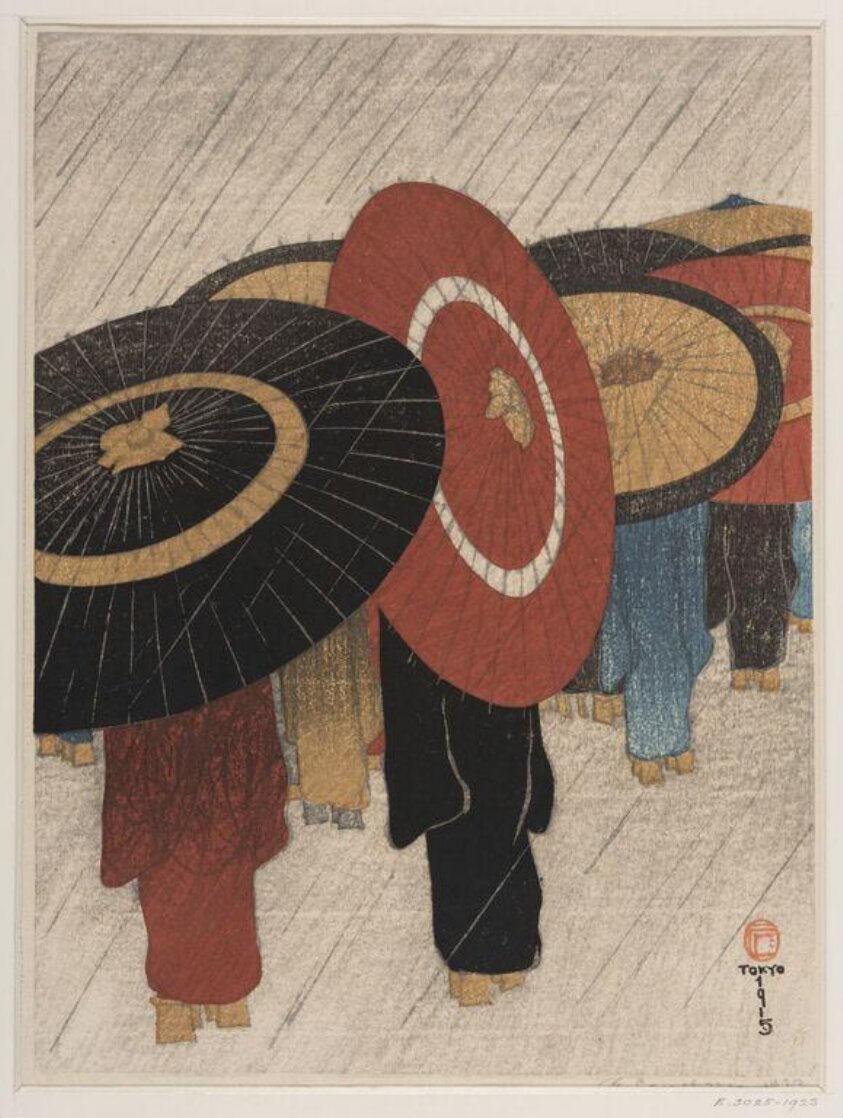
Fritz Capelari was an Austrian painter and printmaker who holds a distinctive and important place in the history of Japanese woodblock prints as one of the very first Western artists to produce shin-hanga. Born as Friedrich Capelari in 1884 in the Austro-Hungarian Empire, he was a cosmopolitan artist whose fascination with Japan led him to create a body of woodblock prints that represent some of the earliest publications in the shin-hanga movement, produced by the legendary publisher Watanabe Shozaburo alongside the work of another Western pioneer, Charles W. Bartlett.
Capelari received his artistic training in Vienna, one of the great cultural capitals of Europe, during a period of extraordinary creative ferment. The early twentieth century in Vienna was the era of the Secession movement, Gustav Klimt, Egon Schiele, and a broader cultural atmosphere that valued experimentation, cross-cultural exchange, and the synthesis of decorative and fine arts. This environment, with its openness to non-Western aesthetic traditions and its emphasis on the unity of art and craft, provided an ideal background for an artist who would later engage deeply with the Japanese printmaking tradition. Capelari studied at the Academy of Fine Arts Vienna, where he developed skills in painting, drawing, and graphic arts.
Capelari's life took a transformative turn when he traveled to Japan, first visiting in 1911 and returning for a more extended stay beginning in 1915. Japan in this period was a fascinating destination for European artists and intellectuals, and Capelari was captivated by the country's landscapes, culture, and people. He traveled widely within Japan, sketching and painting the scenes that would later become the basis for his woodblock print designs. His European eye found endless fascination in the temples, gardens, bustling streets, graceful women in kimono, and dramatic natural scenery of Japan, and he brought to his observations a sophisticated understanding of composition, color, and light that reflected his European training.
It was during his time in Japan that Capelari met Watanabe Shozaburo, the visionary publisher who was in the process of launching what would become the shin-hanga movement. Watanabe recognized in Capelari an artist whose European sensibility could bring a fresh perspective to the traditional Japanese woodblock print medium. In 1915, Watanabe began publishing Capelari's designs as woodblock prints, employing skilled carvers and printers to translate the Austrian artist's watercolor designs into the traditional medium. These prints were among the very earliest publications in Watanabe's shin-hanga program, predating or coinciding with the publisher's work with Japanese artists who would later become the stars of the movement, such as Hashiguchi Goyo and Ito Shinsui.
Capelari's shin-hanga prints depict a range of Japanese subjects, including portraits of women, landscapes, temple and shrine scenes, and views of daily life. His approach to these subjects reflects his European training in ways that distinguish his prints from those of his Japanese contemporaries. His use of light and shadow tends to be more dramatic and atmospheric than is typical of traditional Japanese printmaking, creating a sense of depth and three-dimensionality that gives his images a distinctive quality. His compositional sense, while clearly influenced by Japanese aesthetics, also shows the influence of European painting traditions, particularly in his handling of perspective and spatial relationships.
Key Facts
- Active Period
- 1884–1950
- Nationality
- 🇦🇹Austria
- Movement
- Shin-hanga
Frequently Asked Questions
Fritz Capelari was an Austrian painter and printmaker who holds a distinctive and important place in the history of Japanese woodblock prints as one of the very first Western artists to produce shin-hanga. Born as Friedrich Capelari in 1884 in the Austro-Hungarian Empire, he was a cosmopolitan artist whose fascination with Japan led him to create a body of woodblock prints that represent some of the earliest publications in the shin-hanga movement, produced by the legendary publisher Watanabe Shozaburo alongside the work of another Western pioneer, Charles W. Bartlett.
Fritz Capelari was active from 1884 to 1950. They were associated with the Shin-hanga movement.
Fritz Capelari's work was shaped by the Shin-hanga tradition in Japanese woodblock printmaking. Shin-hanga: ## What is Shin-hanga? Shin-hanga (新版画), literally "new prints," is the early twentieth-century revival of the collaborative Japanese woodblock workshop, organized between roughly 1915 and 1960 by the Tokyo publisher Watanabe Shōzaburō (1885–1962) and a handful of competing houses.
Fritz Capelari's prints frequently feature seascapes, landscapes, bijin-ga, boats & ships, rain, animals.
Original prints by Fritz Capelari can be found in collections including Art of Japan, ukiyo-e.org, Victoria and Albert Museum, Japanese Art Open Database.
Western artist, early Watanabe publisher, historical interest. Based on 946 sales of comparable artist.