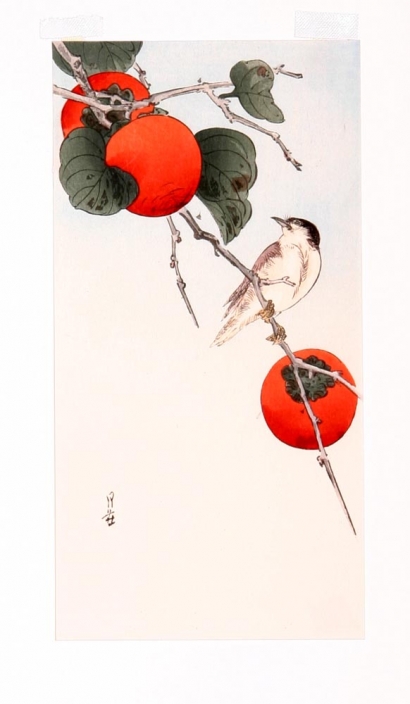
Biography
Gesso Yoshimoto (吉本月荘, 1881–1936) devoted his relatively brief career to kacho-e — the bird-and-flower genre that stretches back through centuries of Japanese painting — translating its refined sensibility into the modern shin-hanga woodblock format. Working during the Taisho and early Showa periods, he produced delicate studies of birds perched on flowering branches, insects hovering over blossoms, and the quiet seasonal transitions of the Japanese garden, all rendered with the atmospheric printing techniques that defined shin-hanga at its best.
Born in 1881, Yoshimoto is thought to have trained in traditional Japanese-style (nihonga) painting before turning to woodblock print design — a background inferred from the assurance of his compositions rather than from documented record, since very little about his life survives. His publisher connections placed him within the collaborative shin-hanga system, where professional carvers and printers translated his brush designs into multicolor prints using bokashi gradation, karazuri blind embossing, and gofun shell-white pigment to achieve the luminous surfaces his subjects demanded. His compositions tend toward intimate scale — a single kingfisher diving toward a stream, a pair of sparrows sheltering among bamboo, peonies heavy with morning dew — favoring close observation over sweeping panorama.
Yoshimoto occupied a secondary position within the shin-hanga kacho-e hierarchy. Ohara Koson dominated the genre commercially with his prolific output for multiple publishers, and Koho Shoda brought a painterly delicacy that earned critical praise. Yoshimoto's contribution was more circumscribed: fewer designs, a narrower range of subjects, and less international distribution. Yet his surviving prints display a genuine attentiveness to the posture and movement of birds, the curl of a leaf, the weight of a flower head bending its stem — the kind of specific natural observation that separates accomplished kacho-e from mere decoration.
He died in 1936 at fifty-five, leaving a modest catalog. His prints appear through Japanese print dealers and in specialist collections, where they appeal to collectors drawn to the quieter, contemplative side of the shin-hanga tradition.
Key Facts
- Active Period
- 1881–1936
- Nationality
- 🇯🇵Japan
- Movement
- Shin-hanga
- Works Indexed
- 10
Frequently Asked Questions
Gesso Yoshimoto (吉本月荘, 1881–1936) devoted his relatively brief career to kacho-e — the bird-and-flower genre that stretches back through centuries of Japanese painting — translating its refined sensibility into the modern shin-hanga woodblock format. Working during the Taisho and early Showa periods, he produced delicate studies of birds perched on flowering branches, insects hovering over blossoms, and the quiet seasonal transitions of the Japanese garden, all rendered with the atmospheric printing techniques that defined shin-hanga at its best.
Gesso Yoshimoto was active from 1881 to 1936. They were associated with the Shin-hanga movement.
Gesso Yoshimoto's work was shaped by the Shin-hanga tradition in Japanese woodblock printmaking. Shin-hanga: ## What is Shin-hanga? Shin-hanga (新版画), literally "new prints," is the early twentieth-century revival of the collaborative Japanese woodblock workshop, organized between roughly 1915 and 1960 by the Tokyo publisher Watanabe Shōzaburō (1885–1962) and a handful of competing houses.
Gesso Yoshimoto's prints frequently feature birds & flowers, trees, snow scenes, animals, still life, seascapes.
Original prints by Gesso Yoshimoto can be found in collections including Japanese Art Open Database, Art Gallery of Greater Victoria, mfa, wbp.
Woodblock Prints by Gesso Yoshimoto (10)
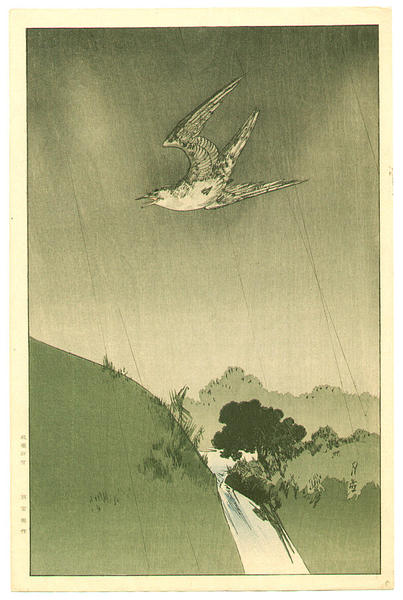
Untitled (gesso-yoshimoto)
Woodblock print
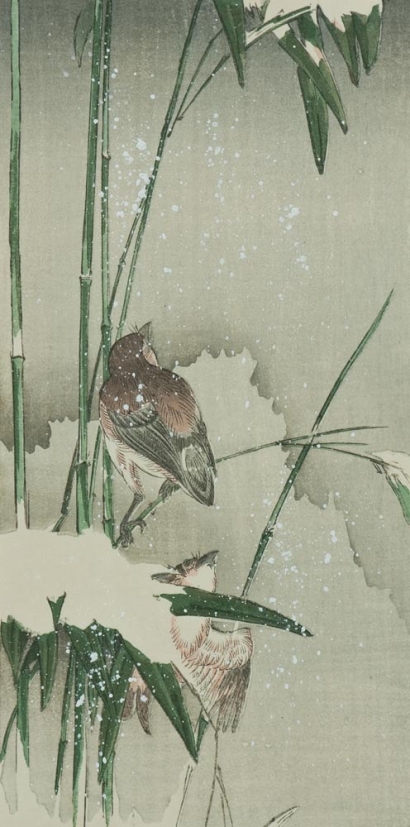
Sparrows and Bamboo
Woodblock print
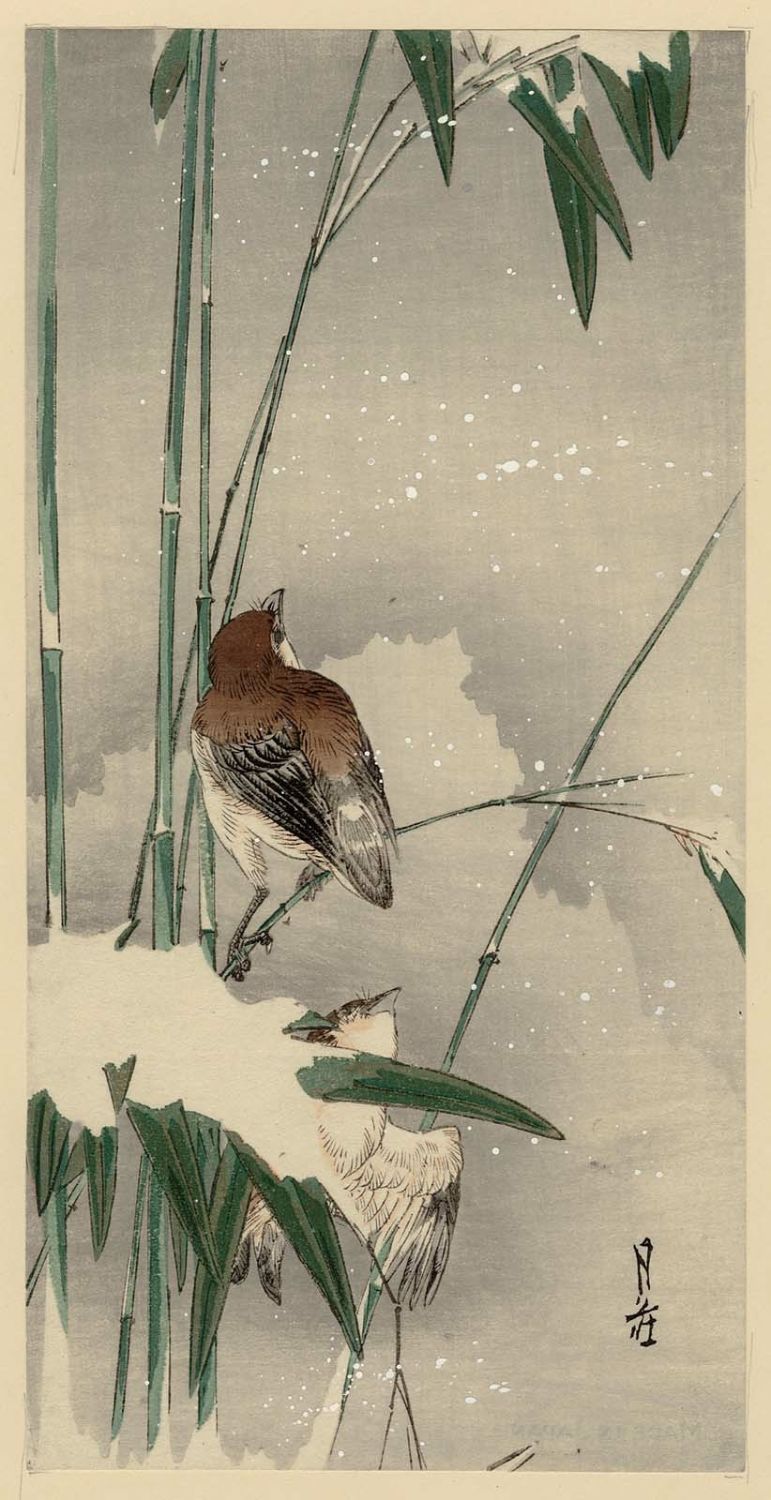
Sparrows and Bamboo in Snow
Woodblock print
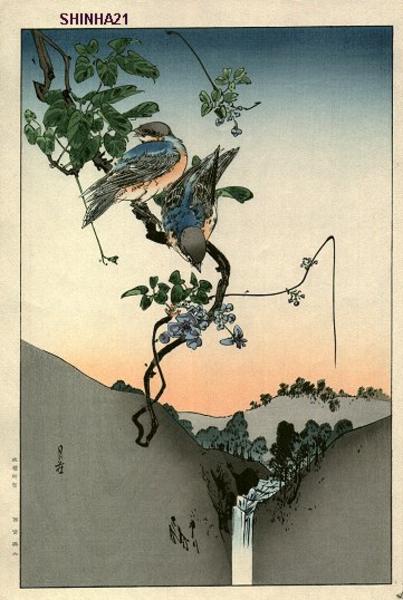
Blue Birds and Akebia
Woodblock print
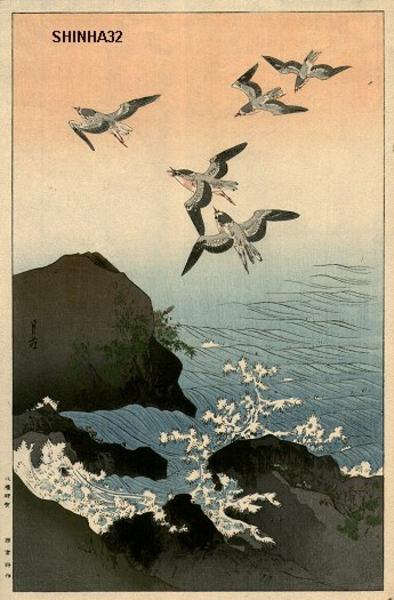
Untitled, Swallows and waves
Woodblock print
Bird and Persimmons
Woodblock print
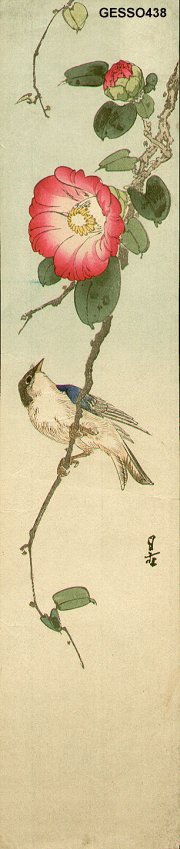
Blue bird
Woodblock print
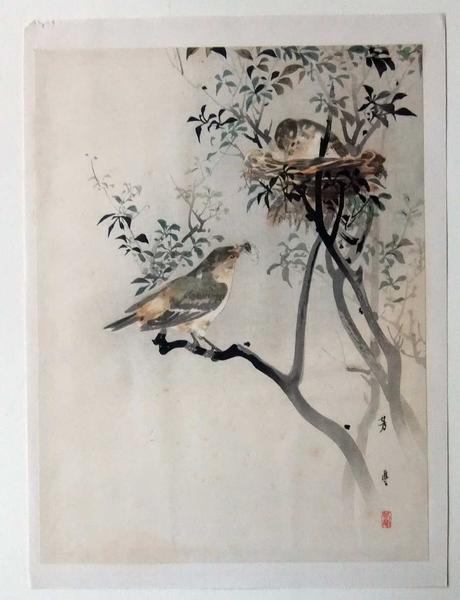
Nesting Sparrows
Woodblock print
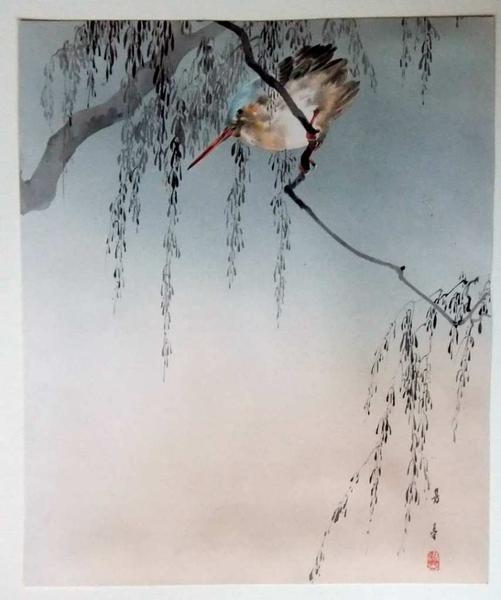
Bird in Tree
Woodblock print
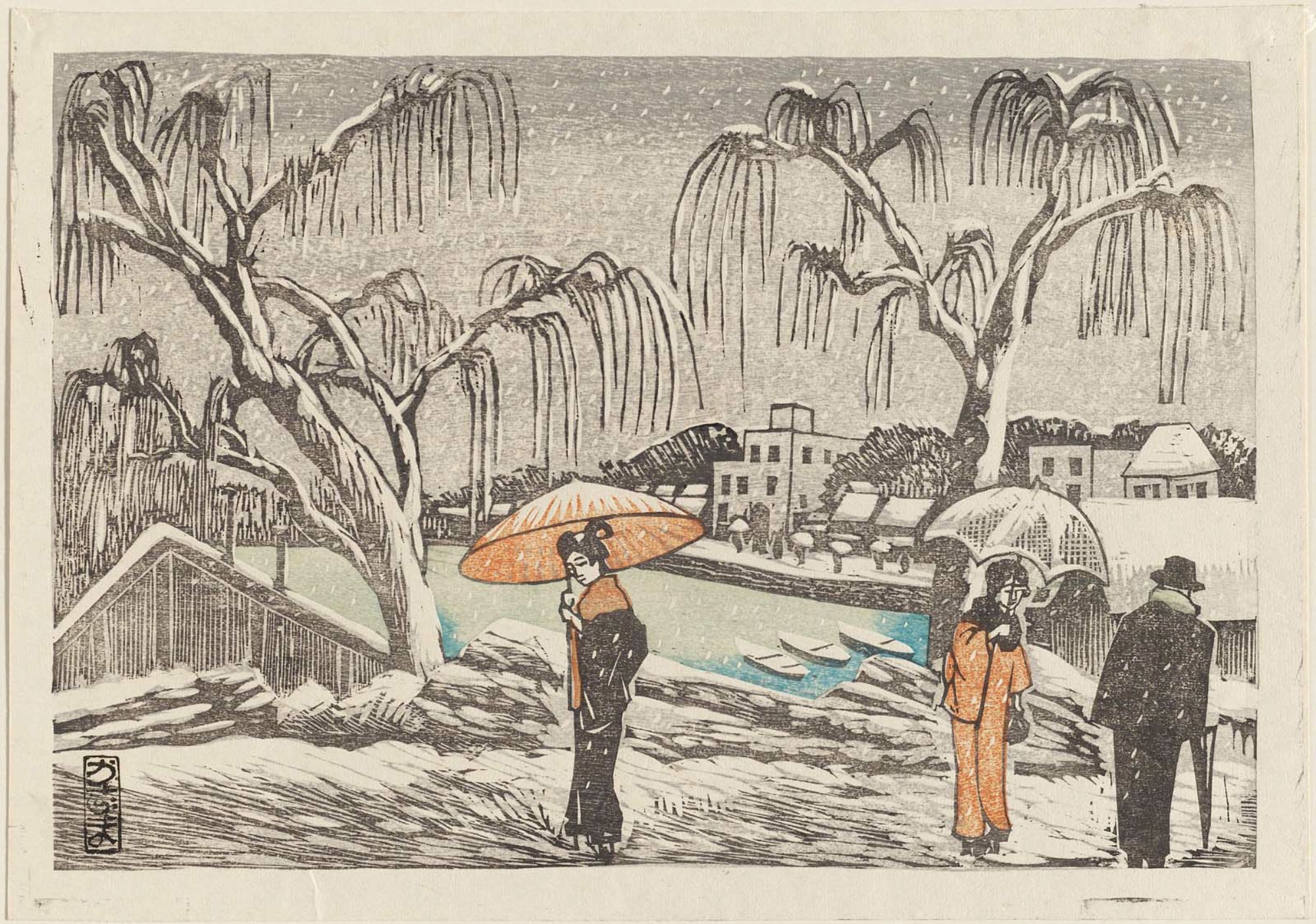
Snow by the Moat (Sotobori no yuki)
Woodblock print