Biography
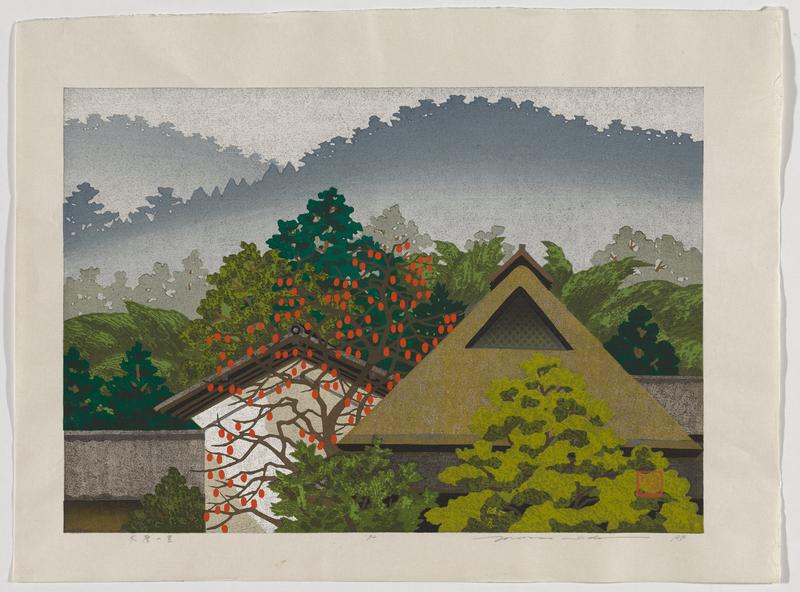
Ido Masao (井堂雅夫, 1945–2016) was a Kyoto-based woodblock print artist who spent four decades recording the ancient capital's temples, gardens, and traditional streetscapes across the four seasons, producing a body of work that functions simultaneously as accomplished mokuhanga and as an invaluable visual archive of a city perpetually negotiating between preservation and change. His snow-covered temple roofs, cherry blossom tunnels along the Philosopher's Path, and moonlit views of Kinkakuji became some of the most widely recognized contemporary images of traditional Kyoto.
Born in 1945 in Beipiao, in what was then Japanese-occupied Manchuria (present-day Liaoning province, China), Ido came to Japan with his family as an infant and spent part of his childhood in Iwate Prefecture before settling in Kyoto as a teenager. He was captivated by the density of historical architecture concentrated within the city's grid — more than two thousand temples and shrines, the machiya townhouses of the old merchant districts, the stroll gardens of imperial villas. He trained in woodblock printmaking and established his own studio in Kyoto, choosing to self-publish rather than work through a commercial publisher. This arrangement gave him complete control over edition quality, subject selection, and distribution, and he built a direct network of galleries and collectors in Japan and abroad that sustained his practice for decades.
Ido's Kyoto work is focused with unusual discipline. He returned again and again to the city and the surrounding Kansai region, revisiting the same temples and garden views across different seasons and weather conditions. His prints of Kinkakuji, Ginkakuji, Kiyomizudera, Nanzenji, Daitokuji, and dozens of lesser-known sites combine precise architectural observation — the curve of a temple roof, the proportions of a torii gate, the pattern of raked gravel in a karesansui garden — with the atmospheric sensitivity to light, moisture, and seasonal color that defines the Japanese landscape print tradition.
Snow scenes were his most celebrated category. Winter views of temple compounds under fresh snowfall — roofs softened to white curves, stone lanterns capped with powder, bamboo groves bending under weight — display his mastery of the restrained palette and tonal subtlety that the best snow prints demand. He printed snow not as blank white space but as a modulated surface of pale blue shadows, warm gray undertones, and the faintest pink where dawn light touches a snow-laden branch. His cherry blossom compositions achieve a comparable delicacy, the translucent petals printed in layered washes of pink and white that suggest the fragility of the blossoms' brief season.
Ido was prolific, publishing hundreds of print designs over his career and maintaining consistent quality across a large catalog. He died in 2016 at seventy-one, leaving a comprehensive pictorial record of traditional Kyoto that grows more valuable as the city itself continues to evolve.
Key Facts
- Active Period
- 1945–2016
- Nationality
- 🇯🇵Japan
- Movement
- Contemporary Mokuhanga
- Works Indexed
- 81
Frequently Asked Questions
Ido Masao (井堂雅夫, 1945–2016) was a Kyoto-based woodblock print artist who spent four decades recording the ancient capital's temples, gardens, and traditional streetscapes across the four seasons, producing a body of work that functions simultaneously as accomplished mokuhanga and as an invaluable visual archive of a city perpetually negotiating between preservation and change. His snow-covered temple roofs, cherry blossom tunnels along the Philosopher's Path, and moonlit views of Kinkakuji became some of the most widely recognized contemporary images of traditional Kyoto.
Ido Masao was active from 1945 to 2016. They were associated with the Contemporary Mokuhanga movement.
Ido Masao's work was shaped by the Contemporary Mokuhanga tradition in Japanese woodblock printmaking. Contemporary Mokuhanga: Contemporary mokuhanga (literally "wood-block print") encompasses artists working from approximately 1970 to the present who continue or reinvent traditional Japanese woodblock printing techniques.
Ido Masao's prints frequently feature temples & shrines, landscapes, castles, rivers & lakes, moonlight, winter.
Original prints by Ido Masao can be found in collections including wbp, Japanese Art Open Database, Ohmi Gallery.
Woodblock Prints by Ido Masao (81)

Kôetsu-ji Kyoto
Mokuhanga (Japanese woodblock)

The Tsutaya restaurant near Toriimoto
Mokuhanga (Japanese woodblock)

Toriimoto in Winter
Mokuhanga (Japanese woodblock)

Shoreview
Mokuhanga (Japanese woodblock)
Hori River, Matsue
Woodblock print
ASA NO KAWA GOSHOKU
Woodblock print
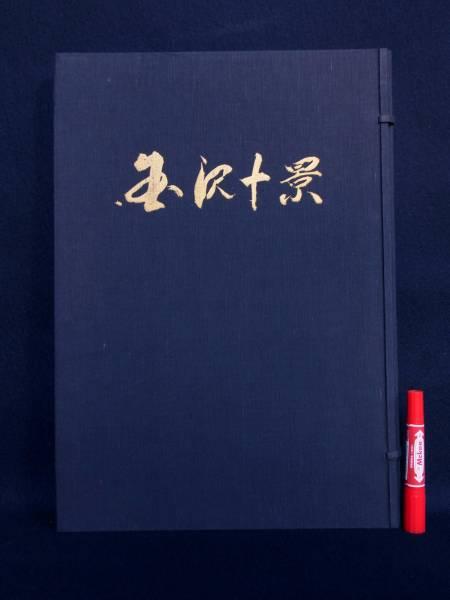
Album
Woodblock print
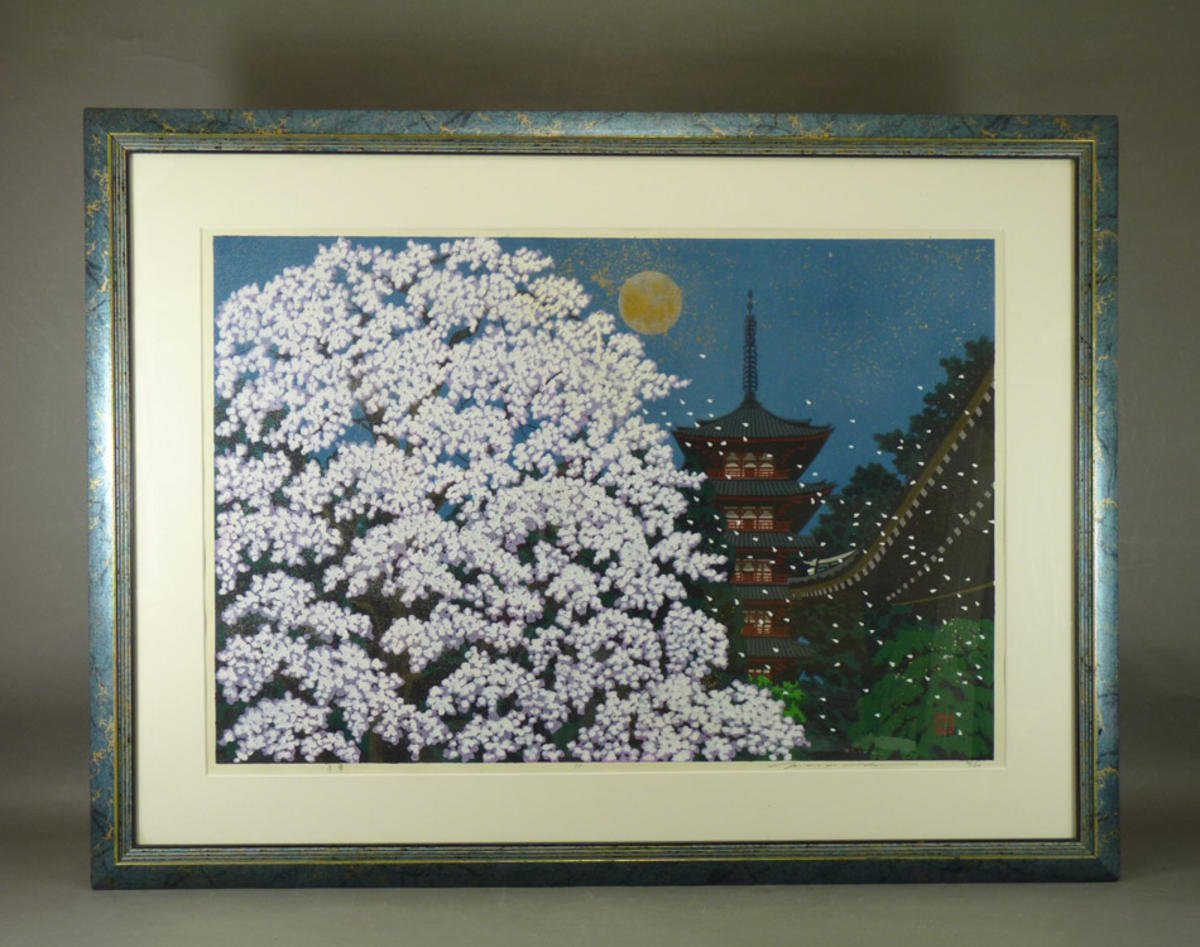
Untitled (ido-masao)
Woodblock print
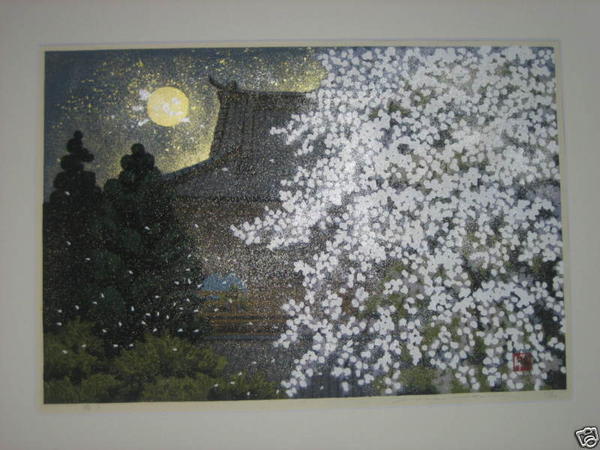
Temple and cherry blossoms on a sunny day
Woodblock print

Shunjitsu
Woodblock print

Blue Fuji
Mokuhanga (Japanese woodblock)

Zen no Niwa
Woodblock print

Seijaku
Woodblock print
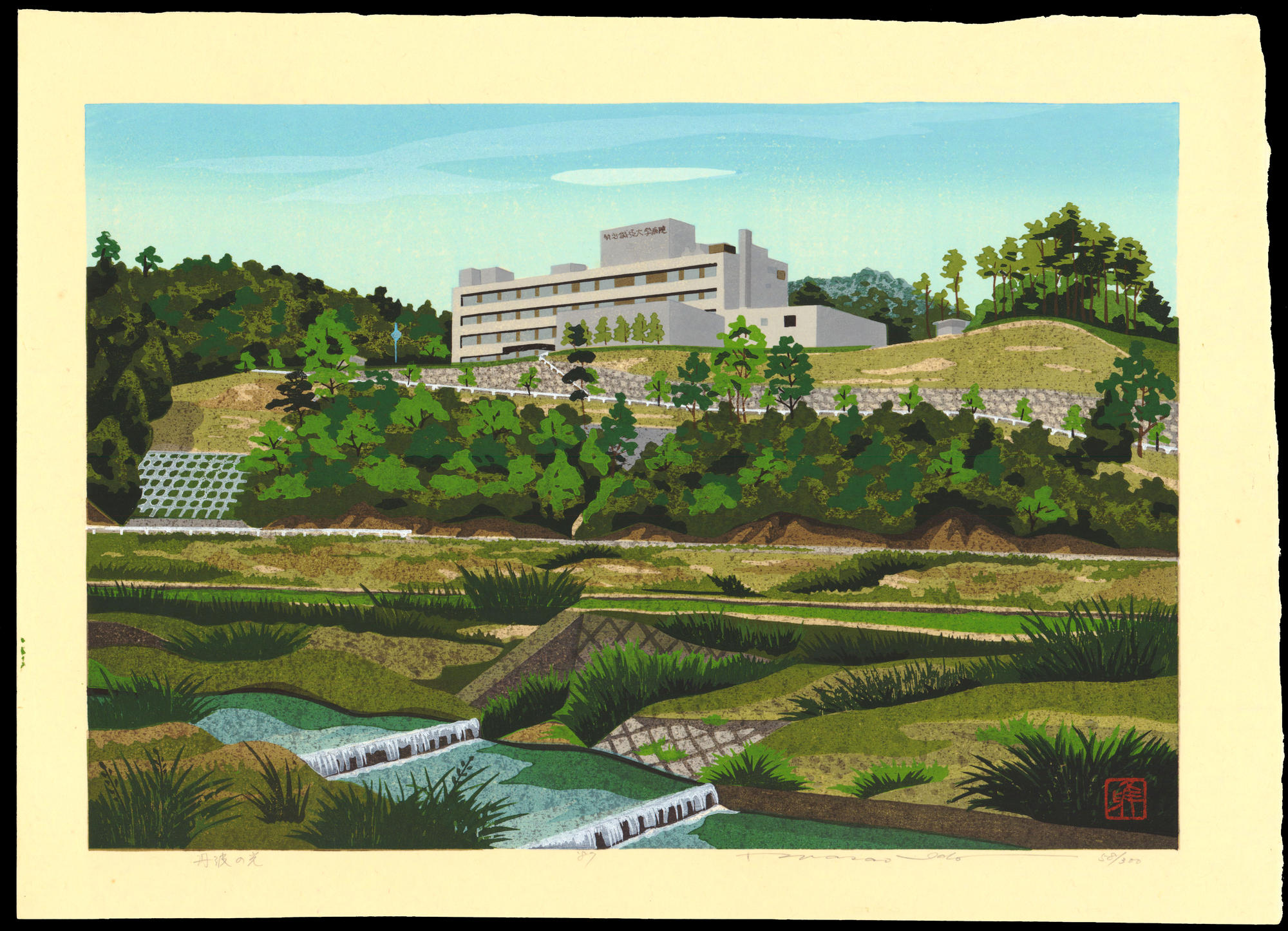
The Glow of Taniwa
Woodblock print
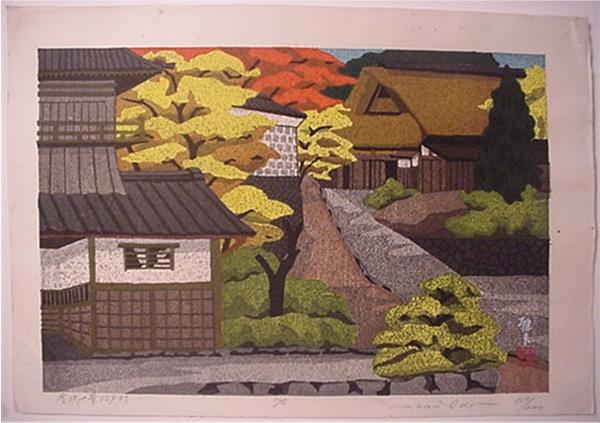
Unknown- traditional Japanese houses amid autumn trees
Woodblock print

Tower of Kibitsu Shrine
Woodblock print
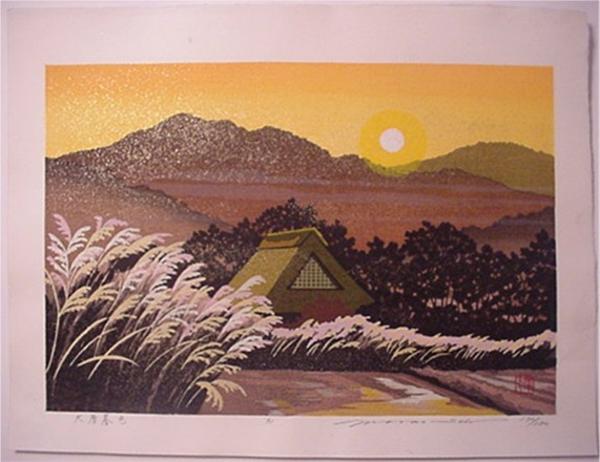
Unknown- Japanese house at sunset
Woodblock print

Shodo Island
Mokuhanga (Japanese woodblock)

Rock garden
Mokuhanga (Japanese woodblock)
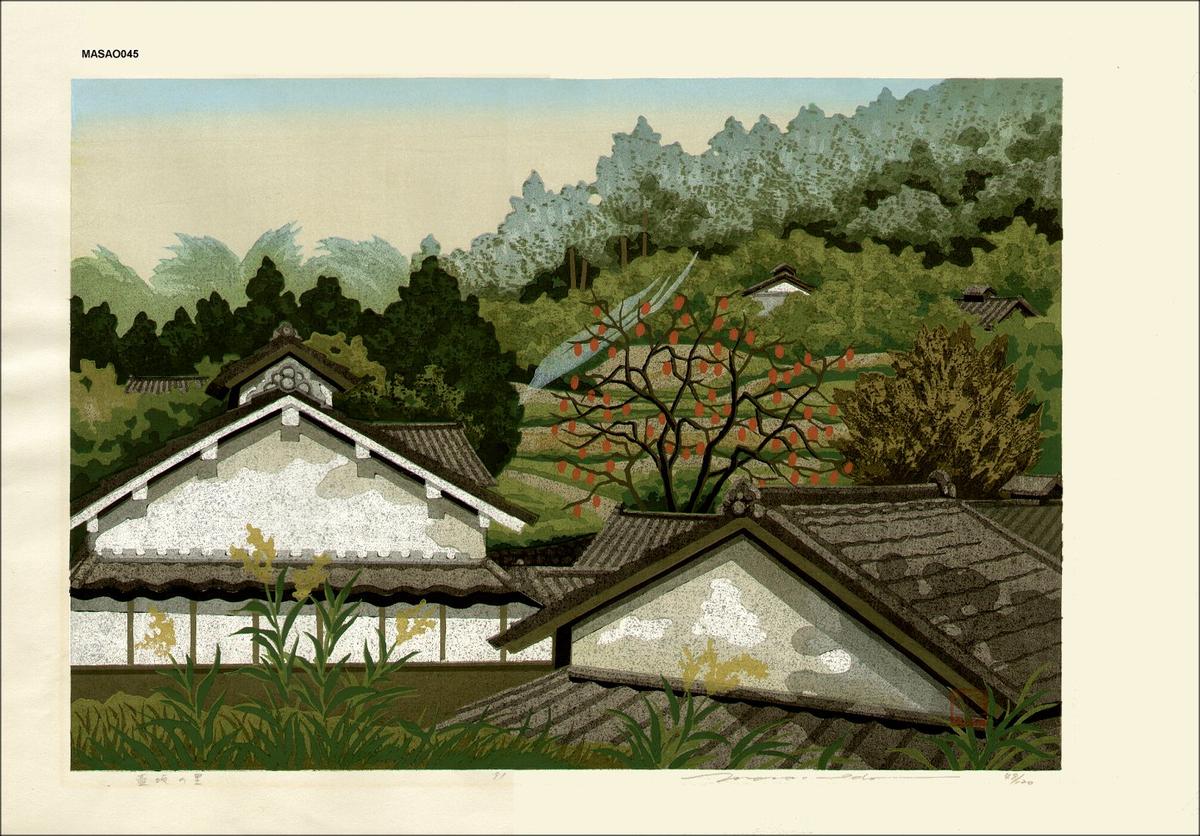
Village Scene in Nara
Woodblock print
Snow, Moon, and Cherries at Kiyomizu
Woodblock print

Pictures of four seasons
Mokuhanga (Japanese woodblock)

Green Temple
Mokuhanga (Japanese woodblock)

The Takase river
Mokuhanga (Japanese woodblock)