Biography
Ishiwata Koitsu (石渡光逸, active 1930s) designed landscape woodblock prints during the mature phase of the shin-hanga movement, producing atmospheric views of Japanese scenery that placed him within the broad lineage of artists working in the tradition of Kawase Hasui and Tsuchiya Koitsu. The coincidence of art names has caused persistent confusion: both Ishiwata and the far more celebrated Tsuchiya used the name Koitsu, written with the identical characters 光逸, though they were unrelated artists with distinct family names and separate careers.
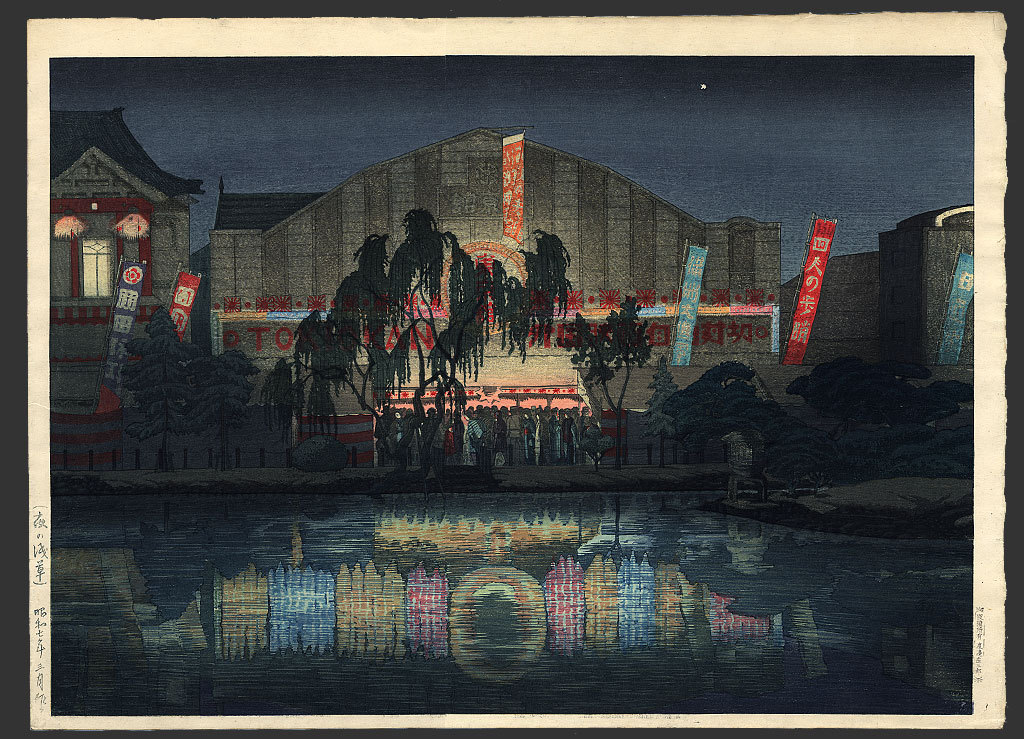
No birth or death dates survive for Ishiwata, and his biographical record is sparse. His active period appears concentrated in the 1930s, when shin-hanga landscape prints reached peak commercial demand among both Japanese and Western collectors. Ishiwata's compositions depict famous scenic views — temple precincts, lakeside vistas, village streets beneath seasonal foliage — rendered with the bokashi gradations and careful tonal orchestration that characterized the movement's collaborative printing process. His work demonstrates a competent command of atmospheric effects, particularly the rendering of rain, mist, and twilight that gave shin-hanga landscapes their distinctive emotional register.
The limited documentation surrounding Ishiwata raises questions that the surviving prints cannot fully answer: which publisher or publishers issued his designs, whether he trained under an established master, and why his output appears to have been confined to a relatively brief period. What can be said is that his landscape prints sit comfortably within the shin-hanga aesthetic — technically accomplished, atmospherically sensitive, and attuned to the movement's central project of capturing the mood of Japanese places through the woodblock medium. Collectors occasionally encounter his prints at auction, where the Ishiwata surname distinguishes them from the substantially more expensive Tsuchiya Koitsu editions.
Key Facts
- Nationality
- 🇯🇵Japan
- Movement
- Shin-hanga
Frequently Asked Questions
Ishiwata Koitsu (石渡光逸, active 1930s) designed landscape woodblock prints during the mature phase of the shin-hanga movement, producing atmospheric views of Japanese scenery that placed him within the broad lineage of artists working in the tradition of Kawase Hasui and Tsuchiya Koitsu. The coincidence of art names has caused persistent confusion: both Ishiwata and the far more celebrated Tsuchiya used the name Koitsu, written with the identical characters 光逸, though they were unrelated artists with distinct family names and separate careers.
Ishiwata Koitsu's work was shaped by the Shin-hanga tradition in Japanese woodblock printmaking. Shin-hanga: ## What is Shin-hanga? Shin-hanga (新版画), literally "new prints," is the early twentieth-century revival of the collaborative Japanese woodblock workshop, organized between roughly 1915 and 1960 by the Tokyo publisher Watanabe Shōzaburō (1885–1962) and a handful of competing houses.
Ishiwata Koitsu's prints frequently feature landscapes, animals, night scenes, snow scenes, rivers & lakes, urban scenes.
Original prints by Ishiwata Koitsu can be found in collections including Japanese Art Open Database, Ohmi Gallery.
Ishiwata Koitsu (1897-1987) was a shin-hanga landscape artist who worked under the influence of Kawase Hasui and published primarily with Watanabe Shozaburo in the 1930s. He is notably rarer at auction than his more famous contemporaries — his prints often used darker, realistic tones that sold less well in the 1930s export market, leading to smaller print runs. Original Watanabe-published prints are rare and command significant collector premiums. Most quality prints sell in the 00-,000 range. Because Ishiwata is less well-known than Tsuchiya Koitsu (despite similar names), his prints are sometimes underpriced by sellers — creating discovery opportunities for informed collectors.