Biography
Furusawa Iwami (古沢岩美, 1912–2000) was a Japanese yōga (Western-style) painter and printmaker whose long career, beginning in the inter-war Tokyo avant-garde and continuing until his death at the end of the twentieth century, traced a distinctive arc from pre-war urban modernism through the trauma of wartime mobilization and captivity to a sustained, surrealist-inflected post-war practice centred on the witness of war. Often described as a pioneer of Japanese Surrealism — and popularly nicknamed "Japan's Dalí" — he is held today by the National Museum of Modern Art, Tokyo (MOMAT), which holds more than twenty of his works, and by the Itabashi Ward Art Museum in Tokyo, which owns the largest single group of his work and mounted a 2007 exhibition, drawn from a family donation, titled "Wild Dance of Color and Lines" (乱舞する色と線). A museum devoted to his work, the Furusawa Iwami Art Museum, opened in Yamanashi Prefecture in 1975, though it later closed. The established Japanese institutional record dates his birth to 5 February 1912.
He was born on 5 February 1912 in the village of Asahi in Miyaki District, Saga Prefecture, on the island of Kyushu — an area that is today part of the city of Tosu. After withdrawing from Kurume Commercial School in 1927 and a period spent in Daegu on the Korean peninsula, then under Japanese rule, he moved to Tokyo in 1928, where he trained at the Hongō Institute under the yōga painter Okada Saburōsuke. His early training placed him within the broadly humanist yōga lineage descending from Kuroda Seiki through Okada, combining European academic figure drawing with the Post-Impressionist and Fauve currents that Japanese painters were then absorbing through translated French publications and returning students.
Settling among the cheap rental ateliers of the Nagasaki Atelier Village in Toshima Ward, he became part of the Ikebukuro Montparnasse (池袋モンパルナス), the loose community of painters, sculptors, and writers that had gathered around the Ikebukuro district of north-west Tokyo from the mid-1920s onward. Named with self-conscious echo of the Paris artists' quarter, Ikebukuro Montparnasse housed at various times Matsumoto Shunsuke, Aimitsu, Tsuruoka Masao, and many other yōga painters who fused European modernist vocabularies with distinctly Japanese subject and feeling. Furusawa's pre-war work emerged from this milieu, exploring Surrealism as one of several avant-garde currents available to Tokyo painters of his generation. In 1938 he took part in founding the Sōki Bijutsu Kyōkai, and in 1939 he was among the founders of the Bijutsu Bunka Kyōkai (Art Culture Association), the avant-garde society led by the surrealist painter Fukuzawa Ichirō.
From 1943 to 1945 he was mobilized into the Imperial Japanese Army and served on the China front during the closing phase of the Second Sino-Japanese War. At the war's end he was captured and held in a prisoner-of-war camp, returning to Japan in 1946. The conditions of that captivity and his direct witness of war's violence in China became the central organizing material of his post-war practice. Few Japanese painters of his generation responded to the war with the sustained iconographic intensity that Furusawa brought to bear over the following decades; his post-war corpus at MOMAT — works dating from 1949 to 1993 — documents a more or less continuous return to the subjects of mass death, hunger, mutilation, and the spectral aftermath of military violence, treated within a personal surrealist vocabulary that drew on Bosch and Goya as much as on the Buddhist iconography of the Six Realms of Rebirth (rokudō).
His printmaking developed in parallel with his painting and produced a large body of work in copper-plate etching, lithography, and woodblock. The etchings form the technical and emotional centre of the graphic work: he took up copperplate practice around 1960, drawing on the European etching tradition — the line work has often been read against Goya's Disasters of War — to produce closely observed, claustrophobically dense images of suffering and metamorphosis. The culminating work of this practice is the Shuragaki (修羅餓鬼) cycle, a sequence of etchings developed over roughly three decades from about 1960 and completed in 1993, issued on its completion as a boxed limited edition. The cycle's title combines the Buddhist terms shura (the asura realm of perpetual warfare) and gaki (the realm of the hungry ghosts), invoking two of the six realms of unenlightened rebirth as a framework for representing the spiritual condition of soldier and civilian alike under industrialized warfare; it is widely understood as the print equivalent of his painted war-witness work.
Furusawa's recognition within Japan was sustained but always partial. He worked across etching, lithography, and colour woodblock through the post-war decades, and his prints and paintings entered public collections including MOMAT and the Itabashi Ward Art Museum, which holds the largest concentration of his work and became closely associated with him through his post-war studio in the Itabashi district. Outside Japan he remains comparatively little known, and the major Western museum print rooms have not collected his graphic work in any depth. He occupies, in the wider picture of twentieth-century Japanese hanga, a position adjacent to but distinct from sōsaku-hanga proper: a yōga-trained painter whose substantial printmaking practice was undertaken from outside the Onchi–Hiratsuka organizational lineage, with intaglio rather than woodblock at its centre, and whose witness of war and post-war suffering aligned him with figures such as Hamada Chimei rather than with the landscape and abstract sōsaku-hanga mainstream of his generation.
Key Facts
- Active Period
- 1912–2000
- Nationality
- 🇯🇵Japan
- Movement
- Sōsaku-hanga
- Subjects
- Birds & Flowers
- Works Indexed
- 3
Frequently Asked Questions
Furusawa Iwami (古沢岩美, 1912–2000) was a Japanese yōga (Western-style) painter and printmaker whose long career, beginning in the inter-war Tokyo avant-garde and continuing until his death at the end of the twentieth century, traced a distinctive arc from pre-war urban modernism through the trauma of wartime mobilization and captivity to a sustained, surrealist-inflected post-war practice centred on the witness of war. Often described as a pioneer of Japanese Surrealism — and popularly nicknamed "Japan's Dalí" — he is held today by the National Museum of Modern Art, Tokyo (MOMAT), which holds more than twenty of his works, and by the Itabashi Ward Art Museum in Tokyo, which owns the largest single group of his work and mounted a 2007 exhibition, drawn from a family donation, titled "Wild Dance of Color and Lines" (乱舞する色と線). A museum devoted to his work, the Furusawa Iwami Art Museum, opened in Yamanashi Prefecture in 1975, though it later closed. The established Japanese institutional record dates his birth to 5 February 1912.
Iwami Furusawa was active from 1912 to 2000. They were associated with the Sōsaku-hanga movement.
Iwami Furusawa's work was shaped by the Sōsaku-hanga tradition in Japanese woodblock printmaking. Sōsaku-hanga: ## What is sōsaku-hanga? Sōsaku-hanga (創作版画, "creative prints") was a twentieth-century Japanese print movement defined by a single commitment: the artist must design, carve, and print every work alone.
Iwami Furusawa's prints frequently feature birds & flowers.
Original prints by Iwami Furusawa can be found in collections including Saru Gallery.
Woodblock Prints by Iwami Furusawa (3)
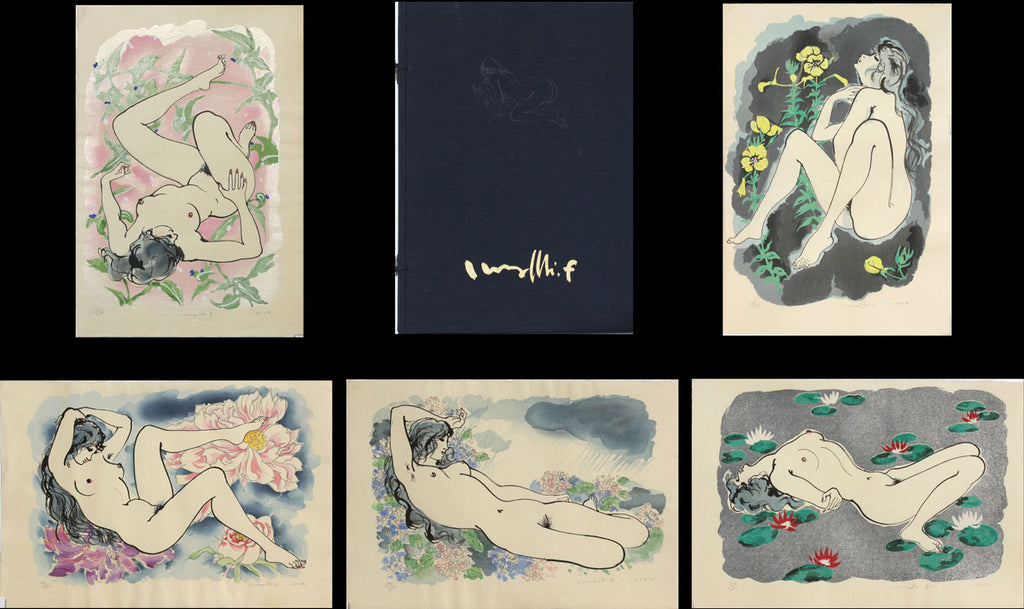
Flowers and Women (Hana to onna)
花と女
1979
Linen portfolio of five woodblock prints on paper; each sheet 51.0 × 35.0 cm; mica and gofun on selected sheets; numbered 192/250

Hungry Demon (Shuragaki)
修羅餓鬼
1993 (cycle developed c. 1963-1993)
Etching on paper; sheet 28.5 × 37.8 cm; numbered 4/50
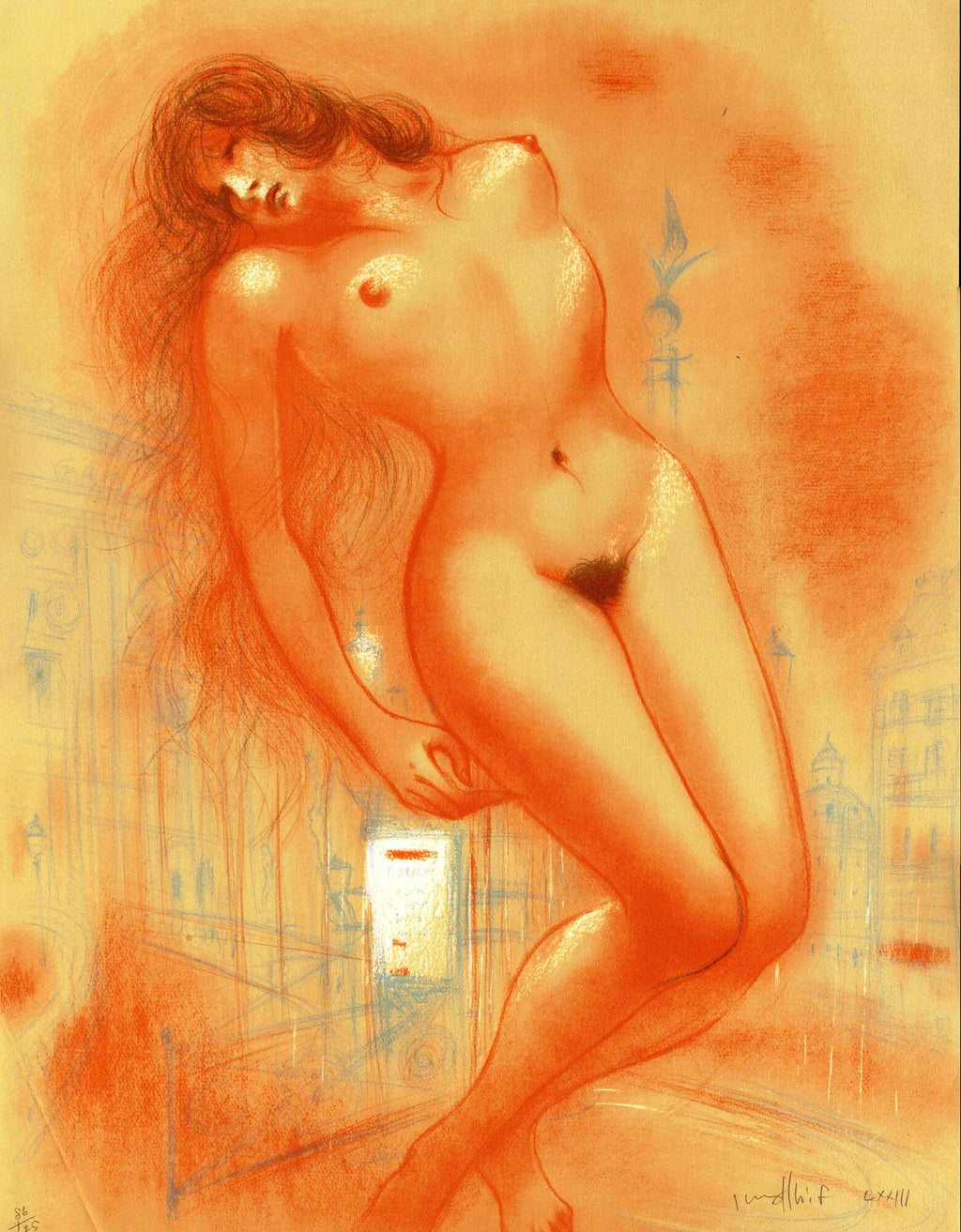
Memories
Late Shōwa, undated
Large lithograph on paper; numbered 86/125