
Biography
Junichi Mibugawa (born 1973, Fukuoka Prefecture) is a contemporary Japanese woodblock printmaker working in the shin-hanga and sōsaku-hanga traditions, best known for tranquil, almost watercolour-like compositions of rural lanes, train stations, woodland clearings, lotus ponds, and seasonal townscapes printed in soft pastel washes. He works with the Kyoto-based publishing house Unsōdō but designs, carves, and prints many of the editions himself — placing him at an unusual intersection of the publisher-led shin-hanga model and the artist-made sōsaku-hanga ethos.
Mibugawa was raised in Fukuoka, on the southern island of Kyushu, and entered the woodblock-print world in 1997 by joining a Kyoto-based publishing studio that specialized in handcrafted woodblock prints. Within that traditional collaborative system he learned the full pipeline of woodblock production — preparing keyblocks, carving lines, registering color blocks, mixing water-based pigments, dampening washi, and pulling impressions by hand using a baren. The Kyoto studios that train apprentices in this manner are among the few institutions still preserving the craft of Edo-period publisher woodblock printing, and Mibugawa's training inside that system has shaped his entire mature output.
His artistic vocabulary is consciously placed in continuity with the early-twentieth-century shin-hanga ("new prints") movement — the work of Kawase Hasui, Yoshida Hiroshi, Hashiguchi Goyō — which combined Edo-period craft methods with newer, atmospheric Western-influenced compositions. Like Hasui he favours uninhabited landscapes: rural roads under autumn light, narrow town alleys past tiled-roof storehouses, distant mountain ridges seen across rice fields. The colour palette is deliberately quiet, using flat washes and soft gradients rather than the saturated separations of Edo-period commercial ukiyo-e. Recurring titles include Spring Breeze in Rice Field, Spring Morning, Early Spring, Autumn Sunshine, Autumn Wind, Clear Autumn Sky, Winter Days, Shade of the Trees, Forest of Fallen Trees, Silence, and Kyoto Train Station. The botanical group of subjects — Iris, Lotus on the Water, Green Apple, Tomatoes — extends the same delicate-pastel approach into still life.
What distinguishes him from a pure shin-hanga craftsman, however, is that he often takes on the design, carving, and printing of his own editions himself, working in the sōsaku-hanga manner where the artist controls the entire production rather than delegating carving and printing to specialists. Editions are typically issued in 100 or 200 prints, hand-signed, stamped, and numbered by the artist. He continues to release new compositions through Unsōdō and through his own studio output.
Mibugawa was selected for the Open Call Exhibition of the 1st International Mokuhanga Conference in 2011, the inaugural edition of the field's premier international gathering, and was selected for the 86th Annual Print Exhibition of the Japan Print Association at the Tokyo Metropolitan Art Museum in 2018. His work circulates internationally through Kyoto Prints (kyotoprints.com), Fuji Arts, and Nippon Prints, and through the Unsōdō publishing house's own distribution channels.
Within the contemporary Japanese woodblock scene Mibugawa is one of the small group of younger printmakers continuing the publisher-collaboration tradition while pulling enough of the production into his own hands that the prints read as personal rather than commercial — a position that has made him one of the more interesting current heirs to the lyrical landscape strain of twentieth-century shin-hanga.
Key Facts
- Active Period
- 1973
- Nationality
- 🇯🇵Japan
- Movement
- Contemporary Mokuhanga
- Subjects
- Landscapes
- Works Indexed
- 13
Frequently Asked Questions
Junichi Mibugawa (born 1973, Fukuoka Prefecture) is a contemporary Japanese woodblock printmaker working in the shin-hanga and sōsaku-hanga traditions, best known for tranquil, almost watercolour-like compositions of rural lanes, train stations, woodland clearings, lotus ponds, and seasonal townscapes printed in soft pastel washes. He works with the Kyoto-based publishing house Unsōdō but designs, carves, and prints many of the editions himself — placing him at an unusual intersection of the publisher-led shin-hanga model and the artist-made sōsaku-hanga ethos.
Junichi Mibugawa was active born in 1973. They were associated with the Contemporary Mokuhanga movement.
Junichi Mibugawa's work was shaped by the Contemporary Mokuhanga tradition in Japanese woodblock printmaking. Contemporary Mokuhanga: Contemporary mokuhanga (literally "wood-block print") encompasses artists working from approximately 1970 to the present who continue or reinvent traditional Japanese woodblock printing techniques.
Junichi Mibugawa's prints frequently feature landscapes.
Woodblock Prints by Junichi Mibugawa (13)
“Kyoto train station”
2021
Mokuhanga (Japanese woodblock)

“Shade of the trees”
2022
Mokuhanga (Japanese woodblock)
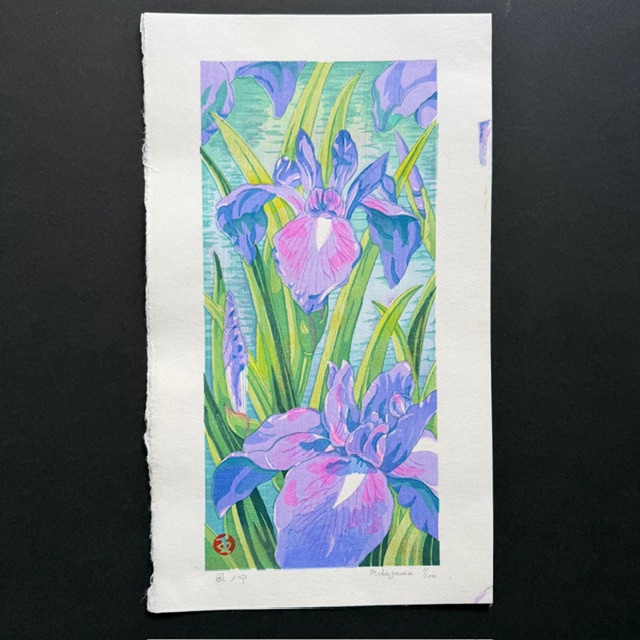
“Iris”
2026
Mokuhanga (Japanese woodblock)

“Spring breeze in rice field”
Mokuhanga (Japanese woodblock)

“Tomatoes”
Mokuhanga (Japanese woodblock)
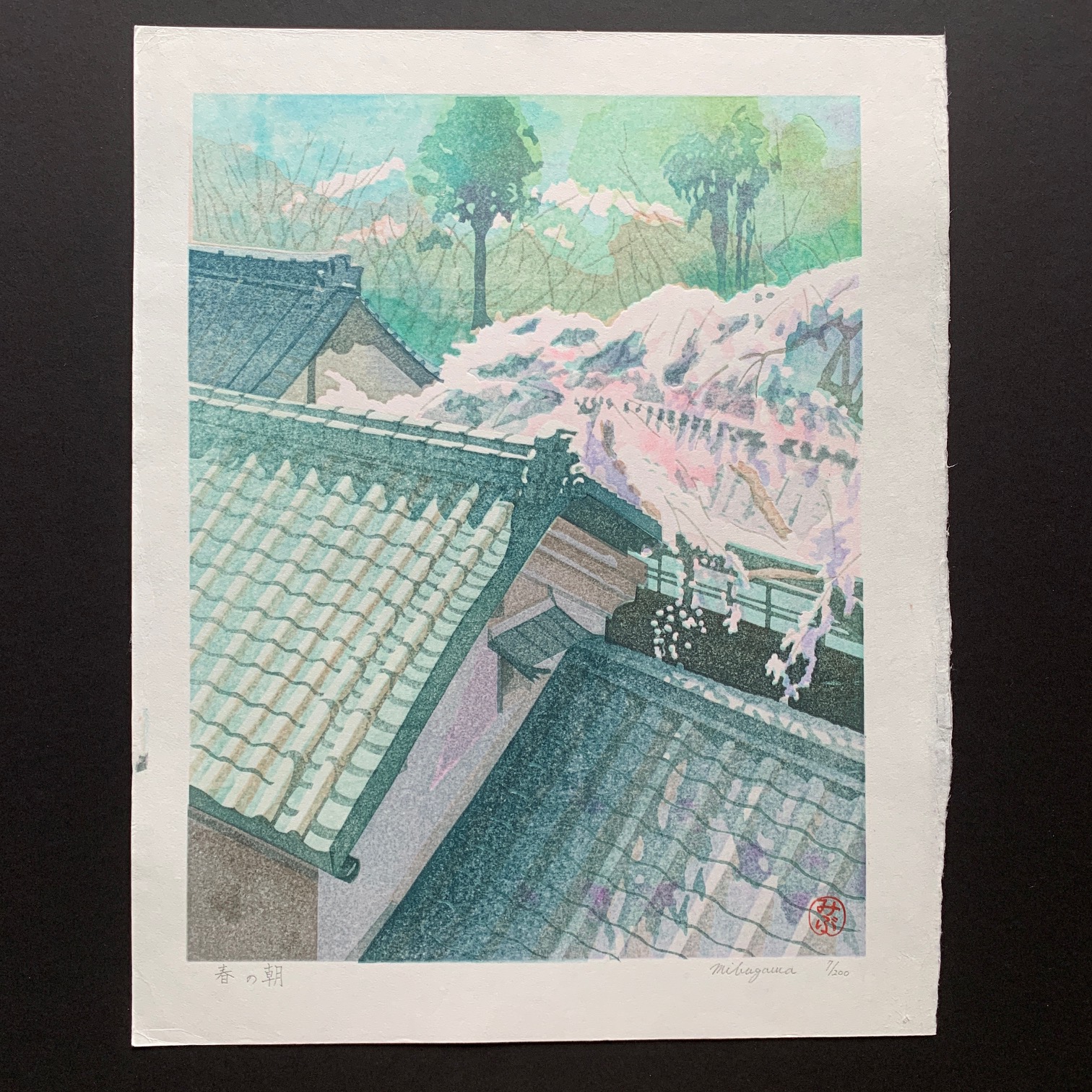
“Spring morning”
Mokuhanga (Japanese woodblock)

“Autumn wind”
Mokuhanga (Japanese woodblock)

“Forest of Fallen Trees”
Mokuhanga (Japanese woodblock)
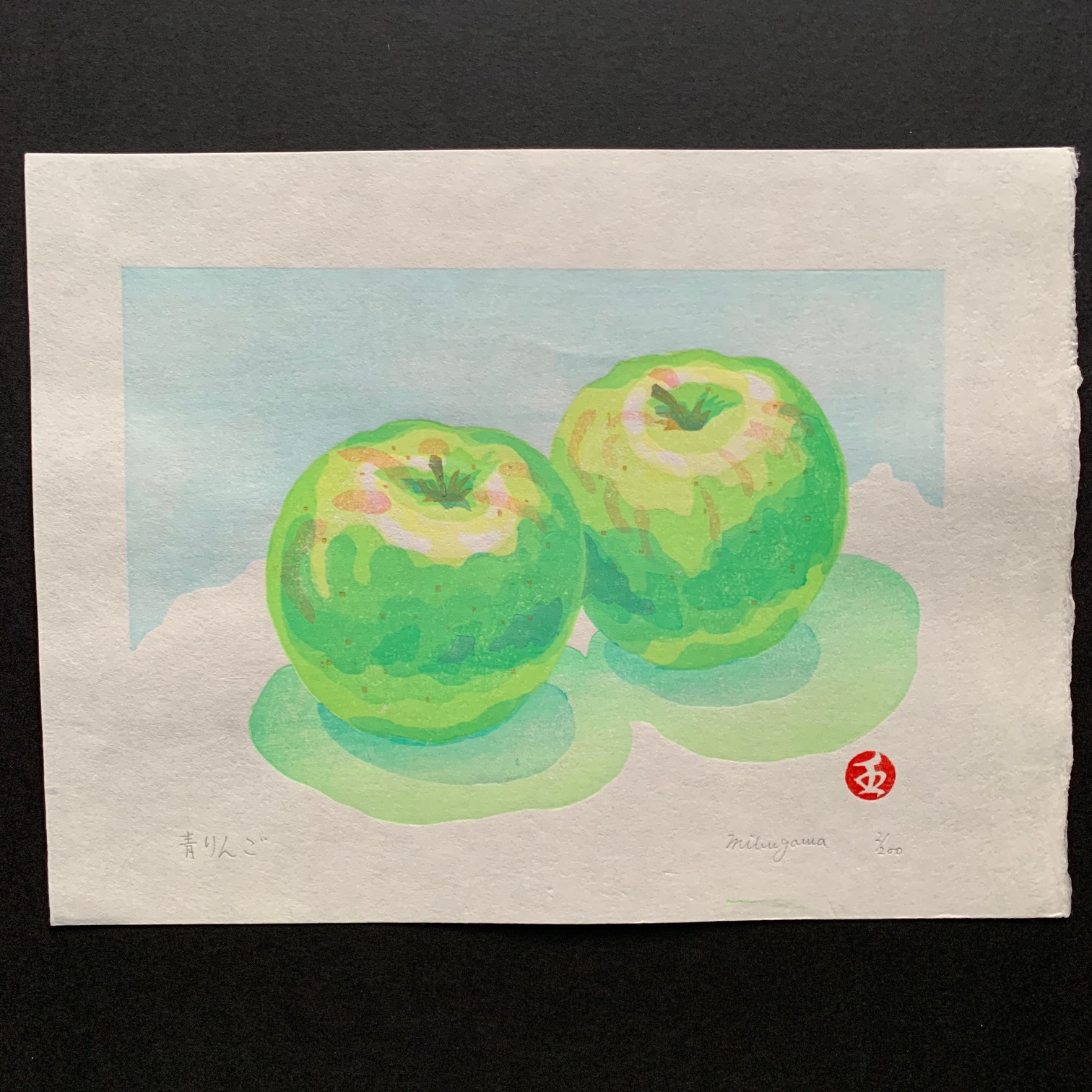
“Green Apple”
Mokuhanga (Japanese woodblock)

“Autumn Sunshine”
Mokuhanga (Japanese woodblock)

“The sent of the wind”
Mokuhanga (Japanese woodblock)

“Clear autumn sky”
Mokuhanga (Japanese woodblock)

“Silence”
Mokuhanga (Japanese woodblock)