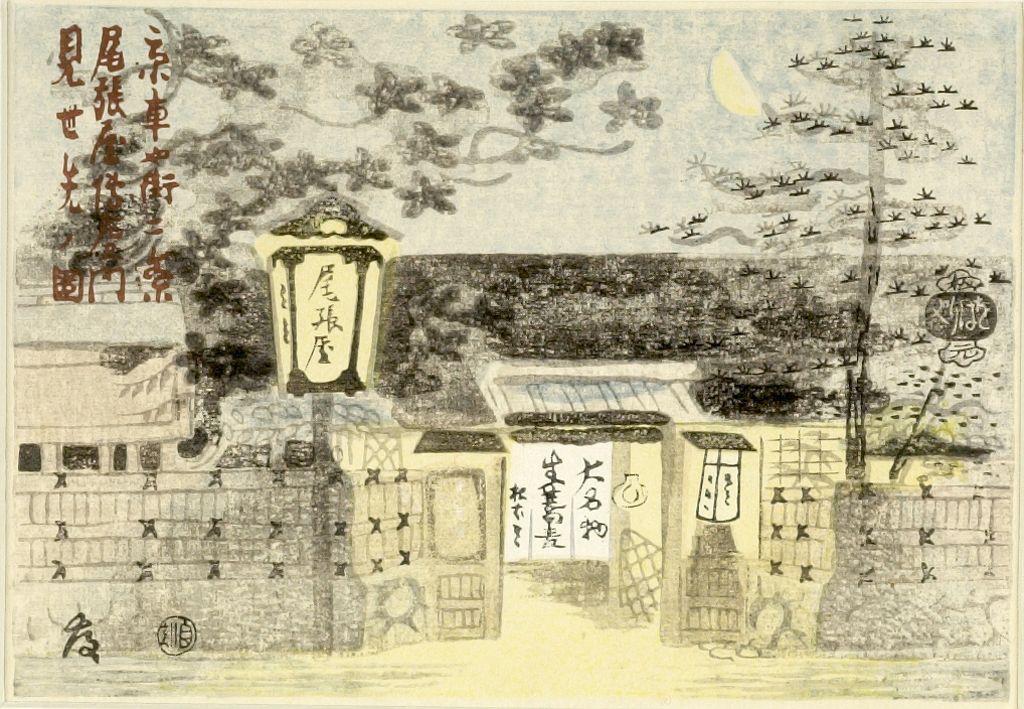
Biography
Kamei Tobei (1901–1977) was a Japanese printmaker associated with the sōsaku-hanga (creative print) movement, active chiefly in Kyoto during the middle decades of the twentieth century. Unlike the collaborative publisher system of shin-hanga, in which a designer's work was carved and printed by separate specialists, the sōsaku-hanga philosophy stressed the artist's direct involvement in designing, carving, and printing his own prints.
Kamei studied at the Kyoto Kaiga Senmon Gakkō (the Kyoto Specialist School of Painting) and became part of the city's circle of creative-print artists. He was a founding member of the Kyoto Sōsaku-Hanga Kyōkai (Kyoto Creative Print Society), established in 1929 to promote the self-drawn, self-carved, self-printed ethos of the movement. Together with the printmakers Tokuriki Tomikichirō and Kotozuka Eiichi, he helped establish a publishing house, Kōrokusha, to produce and sell sōsaku-hanga prints and bring the movement's work to a wider audience.
Much of Kamei's output took the form of small-format woodblock prints depicting scenes in and around Kyoto, including sets such as 'Ten Lovely Sights in Kyoto.' His subjects favored the temples, streets, and seasonal views of the old capital, rendered in the restrained palette and hand-printed textures characteristic of the creative-print approach. In 1953, following an old Japanese artistic custom, he took the name Genbei.
Kamei died in 1977. His prints appear in specialist collections of twentieth-century Japanese creative prints and reward collectors exploring the Kyoto sōsaku-hanga circle alongside its better-known members.
Key Facts
- Active Period
- 1901–1977
- Nationality
- 🇯🇵Japan
- Movement
- Shin-hanga
- Works Indexed
- 40
Frequently Asked Questions
Kamei Tobei (1901–1977) was a Japanese printmaker associated with the sōsaku-hanga (creative print) movement, active chiefly in Kyoto during the middle decades of the twentieth century. Unlike the collaborative publisher system of shin-hanga, in which a designer's work was carved and printed by separate specialists, the sōsaku-hanga philosophy stressed the artist's direct involvement in designing, carving, and printing his own prints.
Kamei Tobei was active from 1901 to 1977. They were associated with the Shin-hanga movement.
Kamei Tobei's work was shaped by the Shin-hanga tradition in Japanese woodblock printmaking. Shin-hanga: ## What is Shin-hanga? Shin-hanga (新版画), literally "new prints," is the early twentieth-century revival of the collaborative Japanese woodblock workshop, organized between roughly 1915 and 1960 by the Tokyo publisher Watanabe Shōzaburō (1885–1962) and a handful of competing houses.
Kamei Tobei's prints frequently feature landscapes, temples & shrines, mountains, castles, summer, architecture.
Original prints by Kamei Tobei can be found in collections including Japanese Art Open Database, ukiyo-e.org, Ohmi Gallery, Harvard Art Museum.