Biography
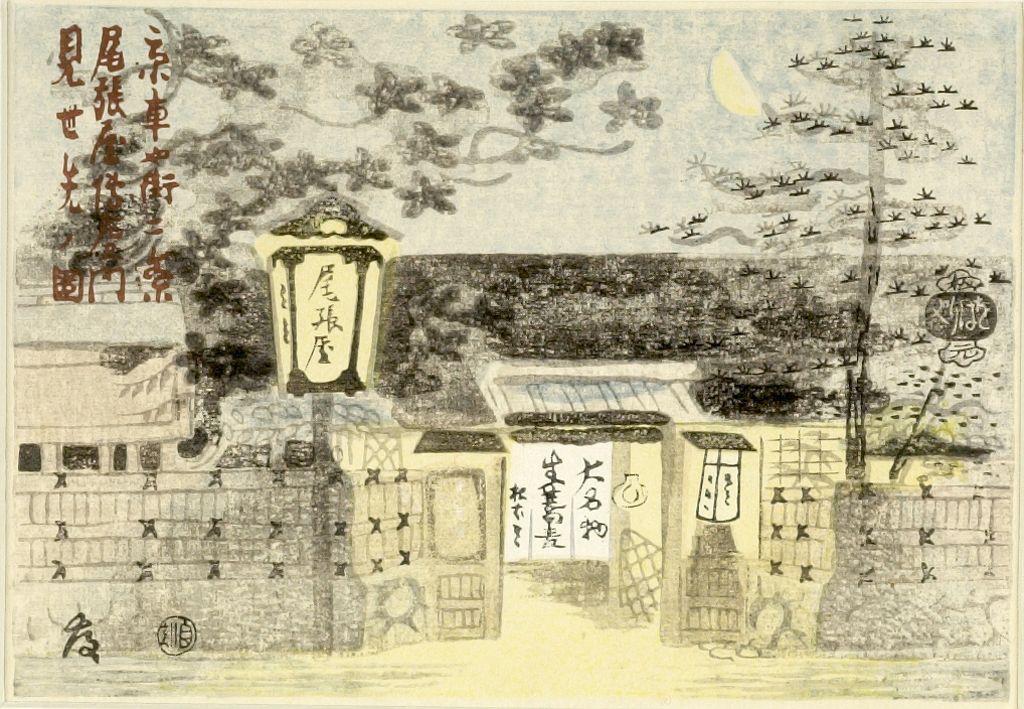
Kamei Tobei (亀井東平, 1901–1977) produced landscape woodblock prints within the shin-hanga tradition during the middle decades of the twentieth century, working as a print designer within the collaborative publisher system that defined the movement's production model.
Born in 1901, Kamei belonged to a generation of shin-hanga landscape artists who came of age after the movement's founding figures — Kawase Hasui, Hiroshi Yoshida, Ito Shinsui — had already established its aesthetic parameters and commercial viability. His career unfolded during the 1930s and 1940s, a period when the demand for shin-hanga landscape prints sustained a substantial cohort of designers beyond the best-known names. Kamei's subjects followed the genre's established template: views of temples, shrines, village streets, and natural scenery throughout Japan, rendered with the atmospheric sensitivity and refined color printing that characterized shin-hanga at its best.
The standard references on shin-hanga provide limited documentation of Kamei's training, publisher relationships, and career trajectory. His output was modest compared to the prolific Hasui, and he did not achieve wide individual recognition during his lifetime. What survives of his work, however, demonstrates competence in the shin-hanga landscape vocabulary — a feel for seasonal atmosphere, a restrained palette suited to the medium's tonal capabilities, and compositions that frame their subjects with the contemplative stillness the genre prized.
Kamei died in 1977 at the age of seventy-six. His prints appear infrequently in the secondary market and are sought by collectors interested in exploring the full depth of the shin-hanga landscape tradition beyond its celebrated headliners.
Key Facts
- Active Period
- 1901–1977
- Nationality
- 🇯🇵Japan
- Movement
- Shin-hanga
Frequently Asked Questions
Kamei Tobei (亀井東平, 1901–1977) produced landscape woodblock prints within the shin-hanga tradition during the middle decades of the twentieth century, working as a print designer within the collaborative publisher system that defined the movement's production model.
Kamei Tobei was active from 1901 to 1977. They were associated with the Shin-hanga movement.
Kamei Tobei's work was shaped by the Shin-hanga tradition in Japanese woodblock printmaking. Shin-hanga: ## What is Shin-hanga? Shin-hanga (新版画), literally "new prints," is the early twentieth-century revival of the collaborative Japanese woodblock workshop, organized between roughly 1915 and 1960 by the Tokyo publisher Watanabe Shōzaburō (1885–1962) and a handful of competing houses.
Kamei Tobei's prints frequently feature landscapes, temples & shrines, mountains, castles, summer, architecture.
Original prints by Kamei Tobei can be found in collections including ukiyo-e.org, Japanese Art Open Database, Ohmi Gallery, Harvard Art Museum.
Kamei Tobei was active during the shin-hanga era and produced woodblock prints in the traditional Japanese aesthetic. Prints from this period benefit from strong collector interest. Prices range from $150 for more common subjects to $5,000 for rare designs in excellent condition. Most prints sell in the $480–$1600 range. Edition and condition are important price factors. The overall shin-hanga market has shown consistent strength.