Biography
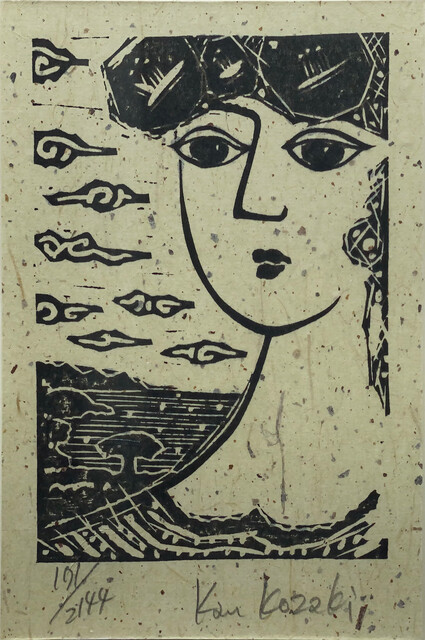
Kan Kozaki is a Japanese woodblock print artist whose work bridges the contemplative traditions of Zen Buddhism and the horrors of modern warfare. Born in 1942 in Kumamoto Prefecture on the island of Kyushu, he graduated from the Pacific School of Art in 1966 and went on to build a career defined by two monumental print series that have earned him wide recognition both in Japan and internationally.
The first is the Gassho series, commissioned in commemoration of the atomic bombings of Hiroshima and Nagasaki. These prints, whose title refers to the Buddhist gesture of pressing the palms together in prayer, established Kozaki as an artist capable of addressing profound historical trauma through the intimate scale and meditative process of woodblock printing. The series made him well known throughout Japan and brought his work to international attention.
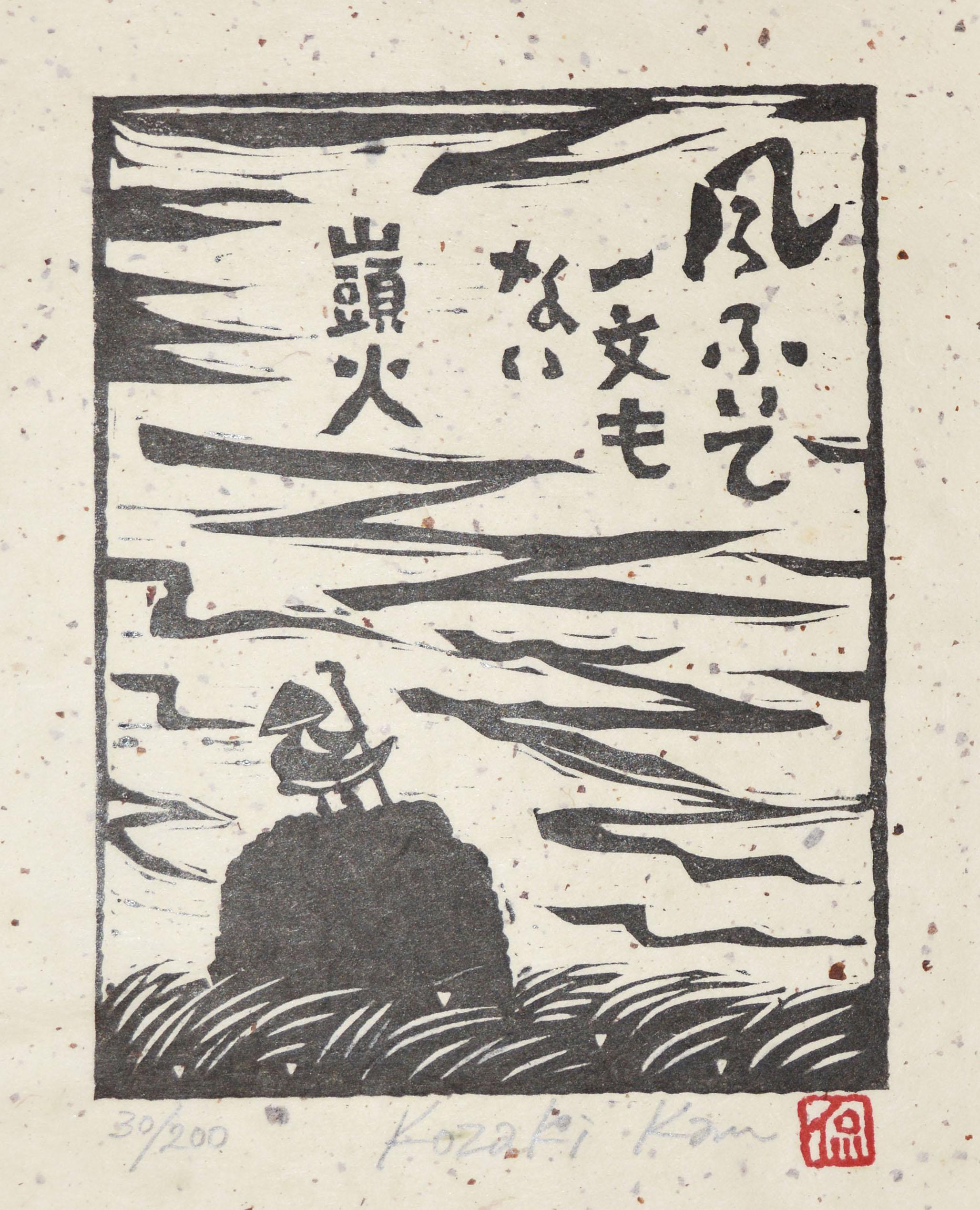
In 1988, Kozaki began his second major body of work, the Santoka series, illustrating the poems of the wandering Buddhist monk Santoka Taneda (1882-1940). Santoka's haiku, written during years of solitary pilgrimage through the Japanese countryside, are celebrated for their radical simplicity and directness. Kozaki's prints capture this spirit, pairing spare visual compositions with the monk's verses in limited editions. The series represents a sustained dialogue between two artistic temperaments separated by decades but united by a commitment to unadorned truth.
Kozaki received the grand prize at the Nichido Exhibition in both 1978 and 1979, and in 1993 he opened Kan Art Gallery, a museum devoted to his work. In 2001, an international solo exhibition of his prints traveled to six cities in Germany and Switzerland. His prints are held in collections in Japan, Europe, and the United States.
Key Facts
- Active Period
- 1942
- Nationality
- 🇯🇵Japan
- Movements
- Contemporary MokuhangaSōsaku-hanga
- Subjects
- LandscapesSpringTrees
- Works Indexed
- 2
Frequently Asked Questions
Kan Kozaki is a Japanese woodblock print artist whose work bridges the contemplative traditions of Zen Buddhism and the horrors of modern warfare. Born in 1942 in Kumamoto Prefecture on the island of Kyushu, he graduated from the Pacific School of Art in 1966 and went on to build a career defined by two monumental print series that have earned him wide recognition both in Japan and internationally.
Kan Kozaki was active born in 1942. They were associated with the Contemporary Mokuhanga and Sōsaku-hanga movements.
Kan Kozaki's work was shaped by the Contemporary Mokuhanga and Sōsaku-hanga traditions in Japanese woodblock printmaking. Contemporary Mokuhanga: Contemporary mokuhanga (literally "wood-block print") encompasses artists working from approximately 1970 to the present who continue or reinvent traditional Japanese woodblock printing techniques. Sōsaku-hanga: ## What is sōsaku-hanga? Sōsaku-hanga (創作版画, "creative prints") was a twentieth-century Japanese print movement defined by a single commitment: the artist must design, carve, and print every work alone.
Kan Kozaki's prints frequently feature landscapes, spring, trees.