Biography
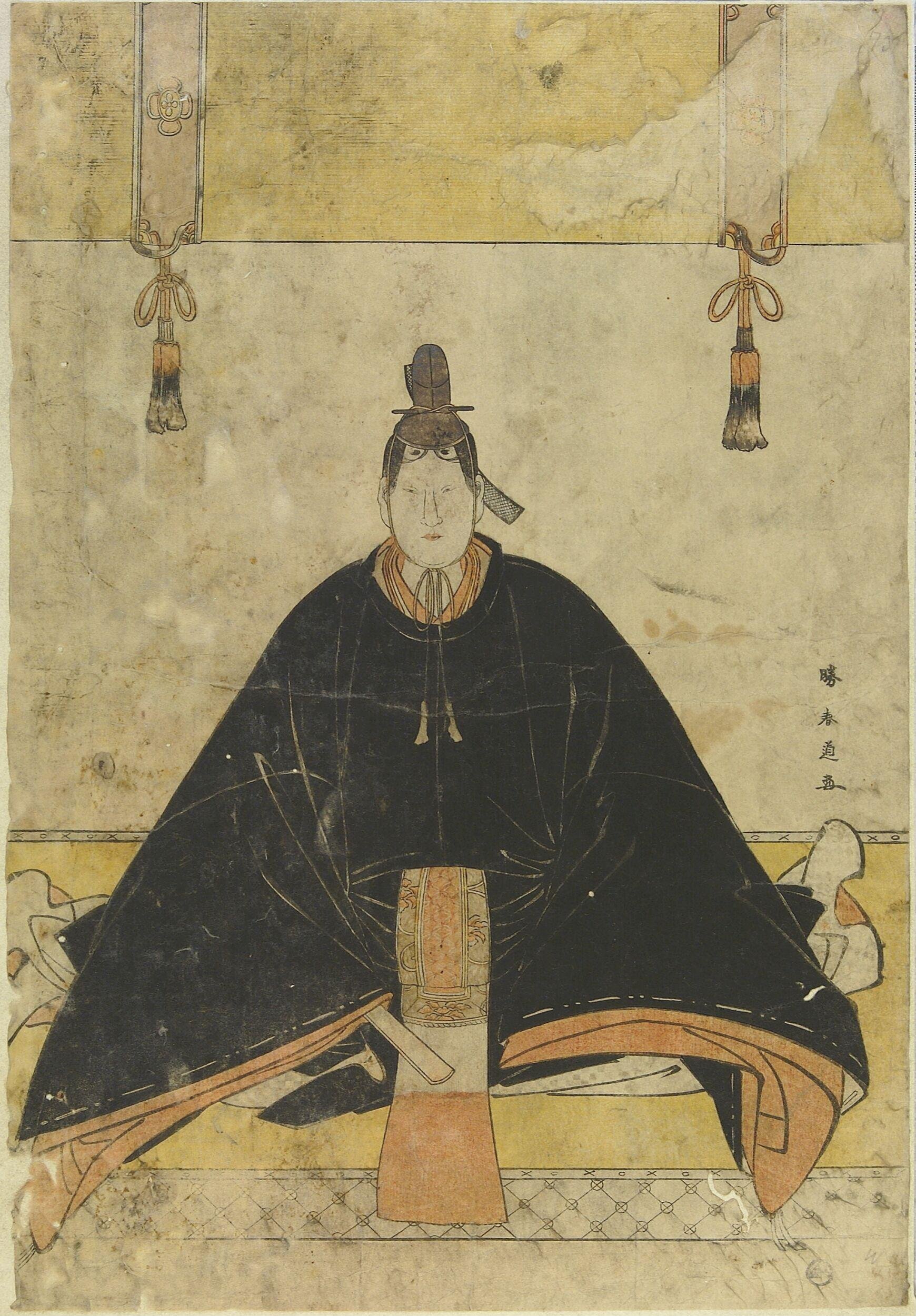
Katsukawa Shundō (勝川春童, active c. 1770s–1790s) was a designer of Edo yakusha-e (kabuki actor prints) within the Katsukawa school, the dominant lineage of late eighteenth-century actor portraiture. A pupil of Katsukawa Shunshō, he worked alongside his better-known senior fellow students Katsukawa Shunkō and Katsukawa Shun'ei during the An'ei and Tenmei eras (1772–1789), the period in which the Katsukawa school established the individualized actor likeness as the standard of Edo woodblock print design. Shundō is a documented but comparatively minor figure within that constellation: he produced a recognizable body of single-sheet actor prints — mostly hosoban (narrow vertical) and diptych compositions — and a small number of illustrated books, but he never achieved the prominence of Shunkō or Shun'ei.
The Katsukawa school had emerged in the late 1760s when Shunshō began designing actor prints with individualized faces rather than the generic, mask-like features of the older Torii lineage. This shift toward likeness-based portraiture transformed the kabuki print into a quasi-documentary record of specific performances and performers. Shundō joined this expanding atelier — known from his use of the Katsukawa surname and the shared first syllable Shun-, by convention indicating a Shunshō student — sometime in the 1770s. His earliest documented prints date to around 1775, placing him among the second wave of Katsukawa designers after Shunkō and roughly contemporaneous with Shun'ei.
Shundō specialized in actor portraits in the hosoban format, the small narrow vertical sheet that had become the Katsukawa school's commercial workhorse. Hosoban prints were less expensive than the larger ōban sheets and were collected in quantity by Edo kabuki fans who wanted to document every notable performance. The format demanded compositional efficiency: a single full-figure actor in costume, with minimal background, identified by face, mon (family crest), and costume detail. Like the other Katsukawa designers, Shundō also produced diptych compositions in which two hosoban sheets combined to form a scene of paired actors — a format suited to the confrontation and romantic-pair scenes of kabuki. His subjects came from the standard An'ei and Tenmei repertoire: Soga plays, history plays, and contemporary domestic dramas.
A characteristic surviving example is Shundō's diptych depicting Nakamura Sukegorō II and Ōtani Hiroji III in a circa 1775 production of Iro moyō aoyagi Soga (Green Willow Soga of Erotic Design), a Soga-mono variant whose New Year staging was a fixed feature of the Edo theatrical year. Another, dated 1789, shows Nakamura Nakazō I as Kudō Suketsune — the principal villain of the Soga monogatari — in a first-month performance at the Nakamura Theater. These prints place Shundō within the Katsukawa house style of his time: clean hosoban draftsmanship, recognizable actor likenesses, and the documentary precision in costume and mon that allowed fans to identify the specific performance commemorated. Shundō also contributed designs to at least one printed book, Oyaji iyahaya gakumon (1779), part of the kibyōshi tradition of An'ei-era popular illustrated books.
Shundō's career appears to have ended in the early 1790s, around the same time that Shunkō suffered the stroke that ended his designing career. Whether Shundō retired, died, or simply ceased producing prints is unclear; the historical record is silent on his later years. Surviving Shundō prints are held by major collections including the Art Institute of Chicago and the British Museum in London. For collectors of Japanese woodblock prints, Shundō represents the substantial second tier of Katsukawa designers whose collective output sustained the school's commercial dominance and made possible the celebrated innovations — the ōkubi-e large-head portraits of the late 1780s and Sharaku's revolutionary 1794 series — that grew directly from the Katsukawa-school visual culture in which Shundō participated.
Key Facts
- Nationality
- 🇯🇵Japan
- Movement
- Ukiyo-e
- Works Indexed
- 1
Frequently Asked Questions
Katsukawa Shundō (勝川春童, active c. 1770s–1790s) was a designer of Edo yakusha-e (kabuki actor prints) within the Katsukawa school, the dominant lineage of late eighteenth-century actor portraiture. A pupil of Katsukawa Shunshō, he worked alongside his better-known senior fellow students Katsukawa Shunkō and Katsukawa Shun'ei during the An'ei and Tenmei eras (1772–1789), the period in which the Katsukawa school established the individualized actor likeness as the standard of Edo woodblock print design. Shundō is a documented but comparatively minor figure within that constellation: he produced a recognizable body of single-sheet actor prints — mostly hosoban (narrow vertical) and diptych compositions — and a small number of illustrated books, but he never achieved the prominence of Shunkō or Shun'ei.
Katsukawa Shundō's work was shaped by the Ukiyo-e tradition in Japanese woodblock printmaking. Ukiyo-e: ## What is ukiyo-e? Ukiyo-e ([浮世絵](/glossary/ukiyo-e)) — literally "pictures of the floating world" — is the Edo-period Japanese print and painting tradition that flourished from roughly 1660 to 1868, depicting the pleasures of urban life in Edo (modern Tokyo): courtesans, kabuki actors, sumo wrestlers, famous landscapes, and seasonal beauties.
Original prints by Katsukawa Shundō can be found in collections including Victoria and Albert Museum.