Kawamura Bunpō
河村文鳳
1779–1821
Japan
Biography
Kawamura Bunpō (河村文鳳, 1779–1821) was a late-Edo Kyoto painter and book illustrator whose printed albums helped carry the observed, brush-trained mode of Kyoto painting into early-nineteenth-century woodblock culture. Born in 1779 in Yamashiro Province (modern Kyoto Prefecture), Bunpō studied under Kishi Ganku, the founder of the Kishi school, and through him absorbed the Maruyama-Shijō manner with its twin commitments to life sketching and a calibrated, brush-trained line. He was remembered as an unusually eclectic artist who drew on many schools to develop a style of his own. By the first decade of the nineteenth century he had become one of the most prolific designers of e-hon (illustrated books) in Kyoto, working with the leading block-cutters and publishers of his city in a sustained program of printed painting manuals and pictorial anthologies that taught this manner to a national audience of amateurs and professionals. His Bunpō gafu (文鳳画譜, Bunpō's Painting Manual), first issued in 1807 and expanded in later series, established the template: single-subject openings — a fisherman in a punt, a man riding through snow, a stand of bamboo, a sparrow on a branch — rendered in two- to four-tone color woodblock that mimics the graded washes and confident outlines of brush practice on paper. The companion Bunpō sansui gafu (文鳳山水画譜, Bunpō's Landscape Painting Manual), published in 1824, extended the same approach to landscape subjects, while Kanga shinan (漢画指南, 1811) addressed the Chinese-influenced literati idiom that ran alongside his Shijō-inflected practice. He also produced topographical picture-albums surveying the famous views of Kyoto. Through this steady stream of e-hon, Bunpō functioned less as a designer of stand-alone hanging-scroll prints than as a teacher in print, codifying an observational manner — the bird that turns its head before flight, the laborer's bent shoulders under a load, the way ink behaves on wet paper — for readers who could not study in a Kyoto atelier. His books were collected and copied throughout the nineteenth century, and his illustrated albums entered European and American collections through the Meiji-era export trade, where they helped shape early Western understanding of Japanese brush practice. Bunpō died in Kyoto in 1821 at the age of 42, his career compressed into roughly two decades but his impact on the late-Edo printed painting manual far larger than that span suggests. He remains a valuable figure for understanding how Kyoto's painting traditions entered mass print culture and how the e-hon medium itself was used to teach a specific way of seeing.
Key Facts
- Active Period
- 1779–1821
- Nationality
- 🇯🇵Japan
- Works Indexed
- 10
Frequently Asked Questions
Kawamura Bunpō (河村文鳳, 1779–1821) was a late-Edo Kyoto painter and book illustrator whose printed albums helped carry the observed, brush-trained mode of Kyoto painting into early-nineteenth-century woodblock culture. Born in 1779 in Yamashiro Province (modern Kyoto Prefecture), Bunpō studied under Kishi Ganku, the founder of the Kishi school, and through him absorbed the Maruyama-Shijō manner with its twin commitments to life sketching and a calibrated, brush-trained line. He was remembered as an unusually eclectic artist who drew on many schools to develop a style of his own. By the first decade of the nineteenth century he had become one of the most prolific designers of e-hon (illustrated books) in Kyoto, working with the leading block-cutters and publishers of his city in a sustained program of printed painting manuals and pictorial anthologies that taught this manner to a national audience of amateurs and professionals. His Bunpō gafu (文鳳画譜, Bunpō's Painting Manual), first issued in 1807 and expanded in later series, established the template: single-subject openings — a fisherman in a punt, a man riding through snow, a stand of bamboo, a sparrow on a branch — rendered in two- to four-tone color woodblock that mimics the graded washes and confident outlines of brush practice on paper. The companion Bunpō sansui gafu (文鳳山水画譜, Bunpō's Landscape Painting Manual), published in 1824, extended the same approach to landscape subjects, while Kanga shinan (漢画指南, 1811) addressed the Chinese-influenced literati idiom that ran alongside his Shijō-inflected practice. He also produced topographical picture-albums surveying the famous views of Kyoto. Through this steady stream of e-hon, Bunpō functioned less as a designer of stand-alone hanging-scroll prints than as a teacher in print, codifying an observational manner — the bird that turns its head before flight, the laborer's bent shoulders under a load, the way ink behaves on wet paper — for readers who could not study in a Kyoto atelier. His books were collected and copied throughout the nineteenth century, and his illustrated albums entered European and American collections through the Meiji-era export trade, where they helped shape early Western understanding of Japanese brush practice. Bunpō died in Kyoto in 1821 at the age of 42, his career compressed into roughly two decades but his impact on the late-Edo printed painting manual far larger than that span suggests. He remains a valuable figure for understanding how Kyoto's painting traditions entered mass print culture and how the e-hon medium itself was used to teach a specific way of seeing.
Kawamura Bunpō was active from 1779 to 1821.
Kawamura Bunpō's prints frequently feature fish, winter, summer.
Original prints by Kawamura Bunpō can be found in collections including British Museum, Museum of Fine Arts, Boston, Chazen Museum of Art, University of Wisconsin-Madison, Art Institute of Chicago.
Woodblock Prints by Kawamura Bunpō (10)
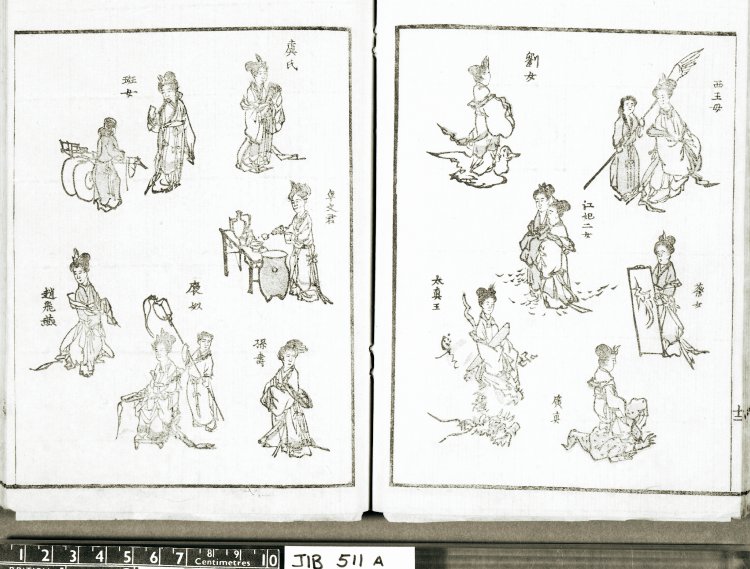
Bunpō kanga 文鳳漢画
文鳳漢画
1803
Woodblock-printed illustrated book
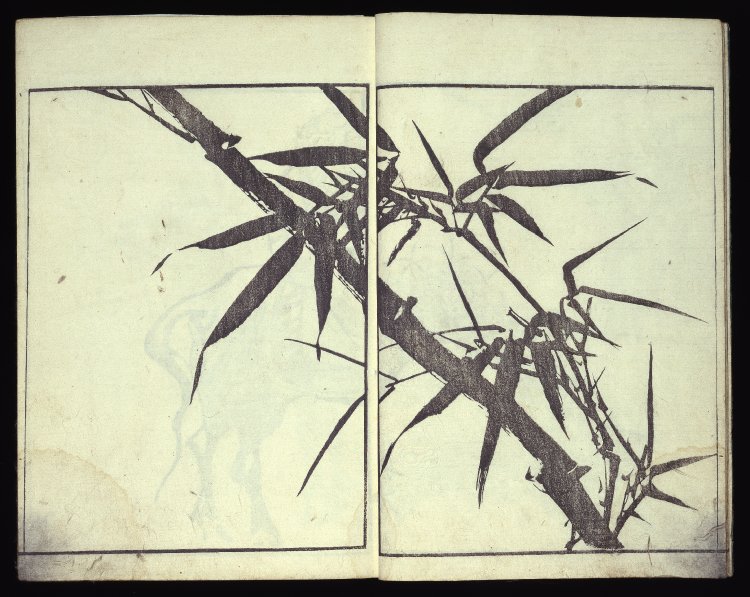
Bunpō gafu 文鳳画譜 (Bunpō's Painting Manual)
文鳳画譜
1807
Color woodblock-printed illustrated book
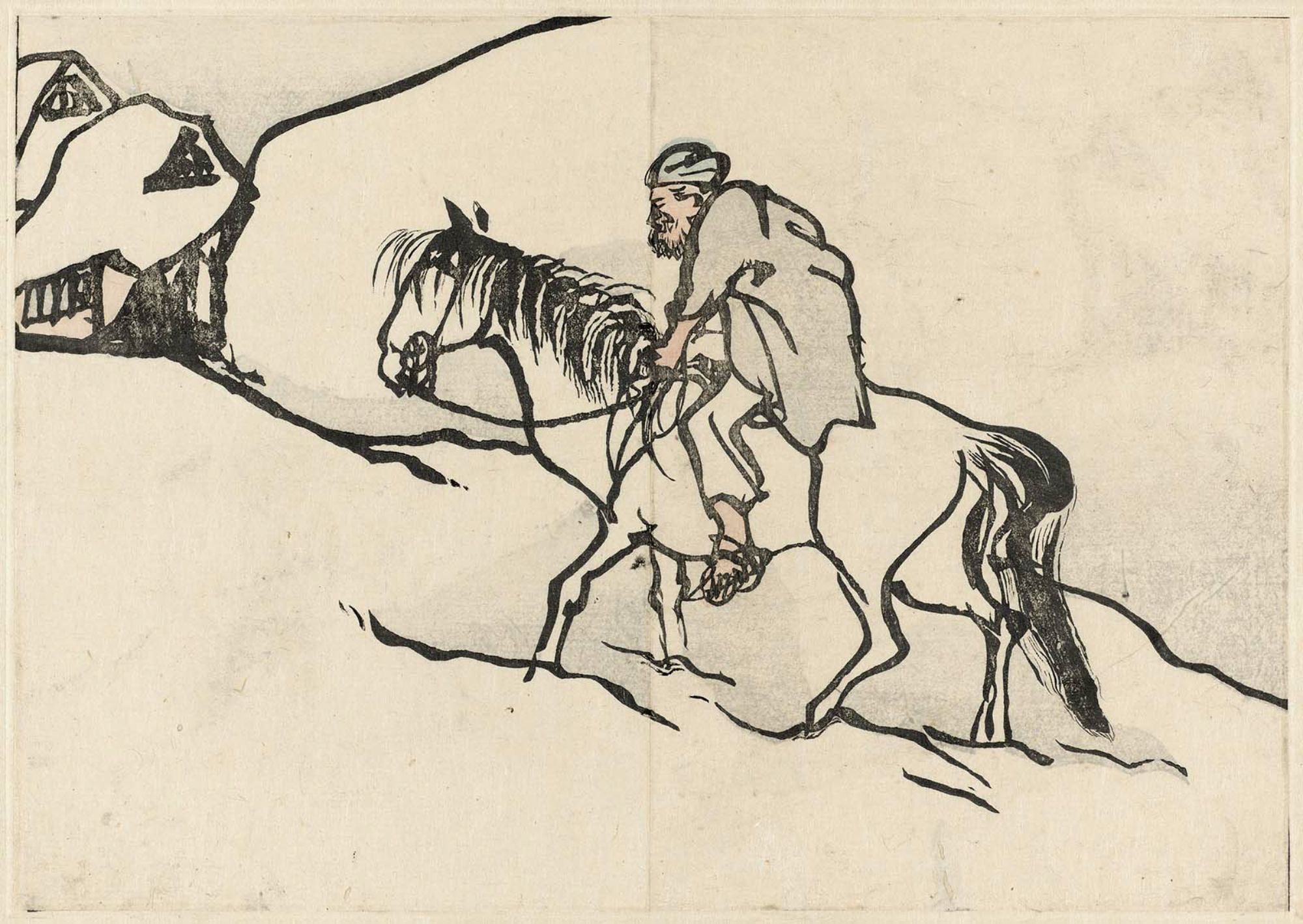
Man Riding Horse in Snow, from Bunpō gafu, vol. 1
1807
Woodblock-printed book illustration
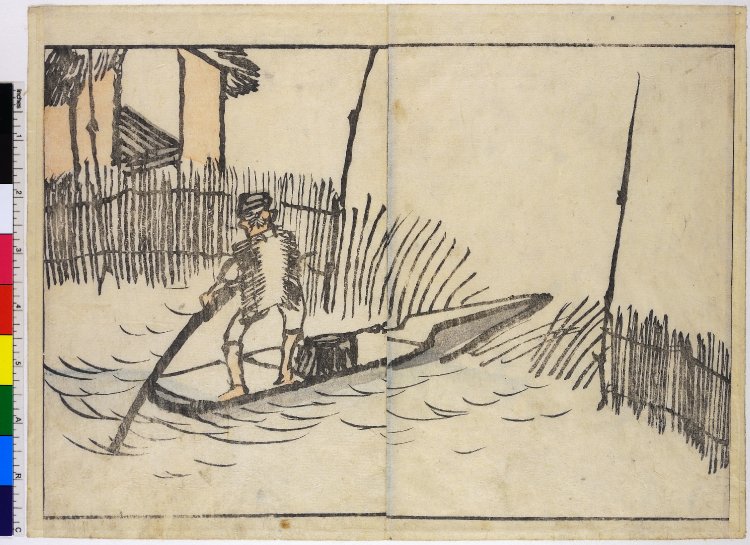
Bunpō gafu, fisherman in punt
文鳳画譜
1807
Four-tone woodblock-printed book illustration
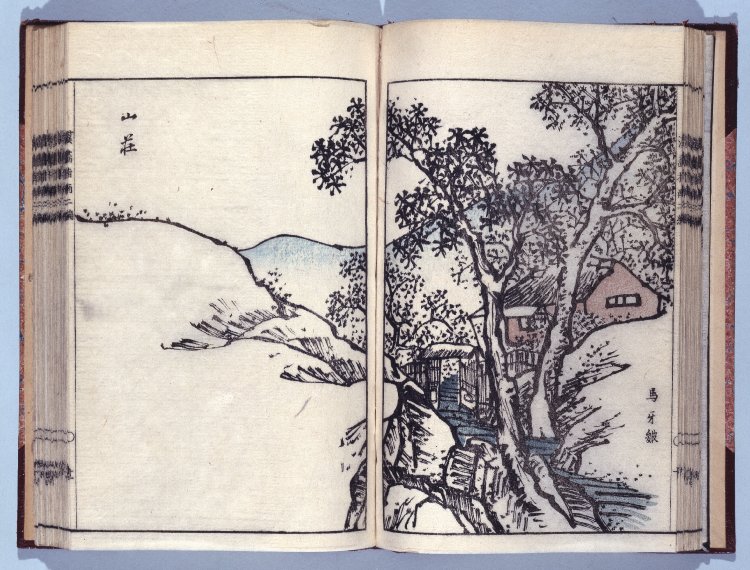
Kanga shinan, nihen 漢画指南二編
漢画指南二編
1811
Woodblock-printed illustrated book
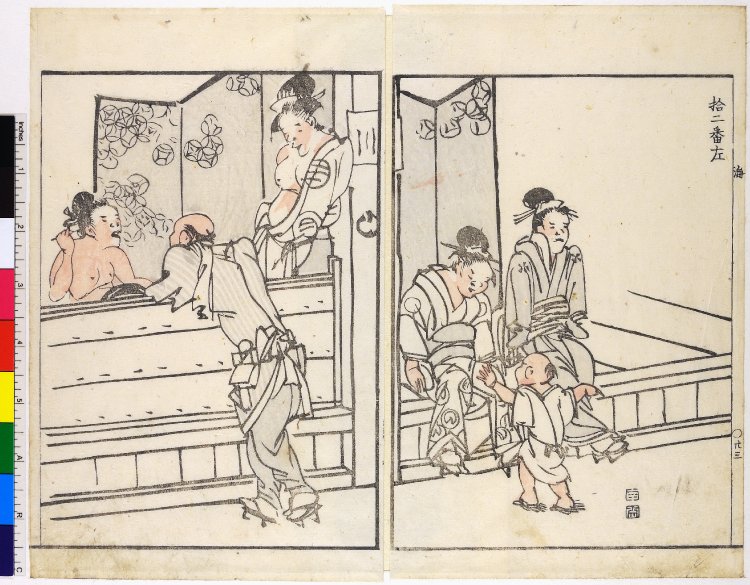
Kaidō soga
1811
Three-tone woodblock print
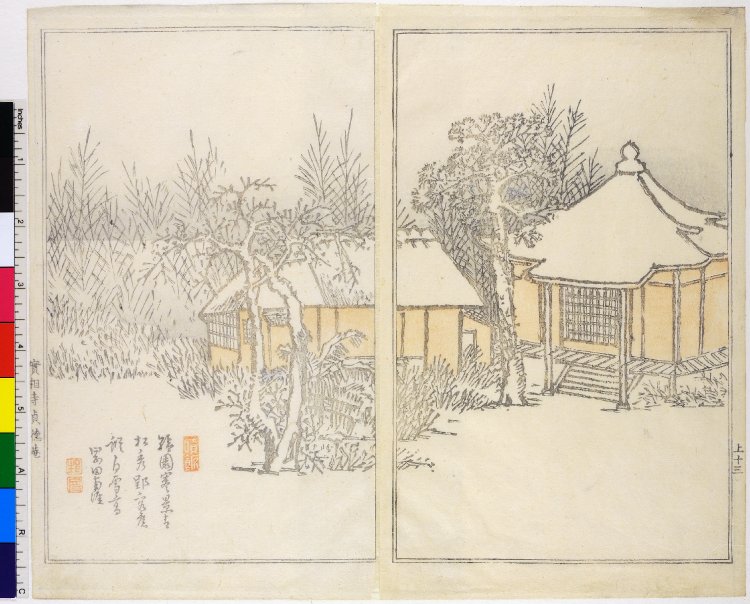
Teito gakei ichiran
1814
Three-tone woodblock print

Kinpaengafu
1820
Woodblock-printed book
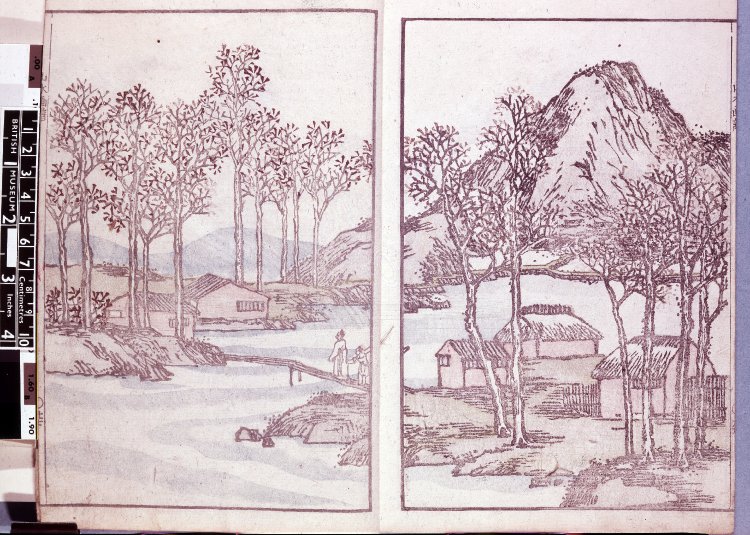
Bunpō sansui gafu 文鳳山水画譜 (Bunpō's Landscape Painting Manual)
文鳳山水画譜
1824
Woodblock-printed illustrated book
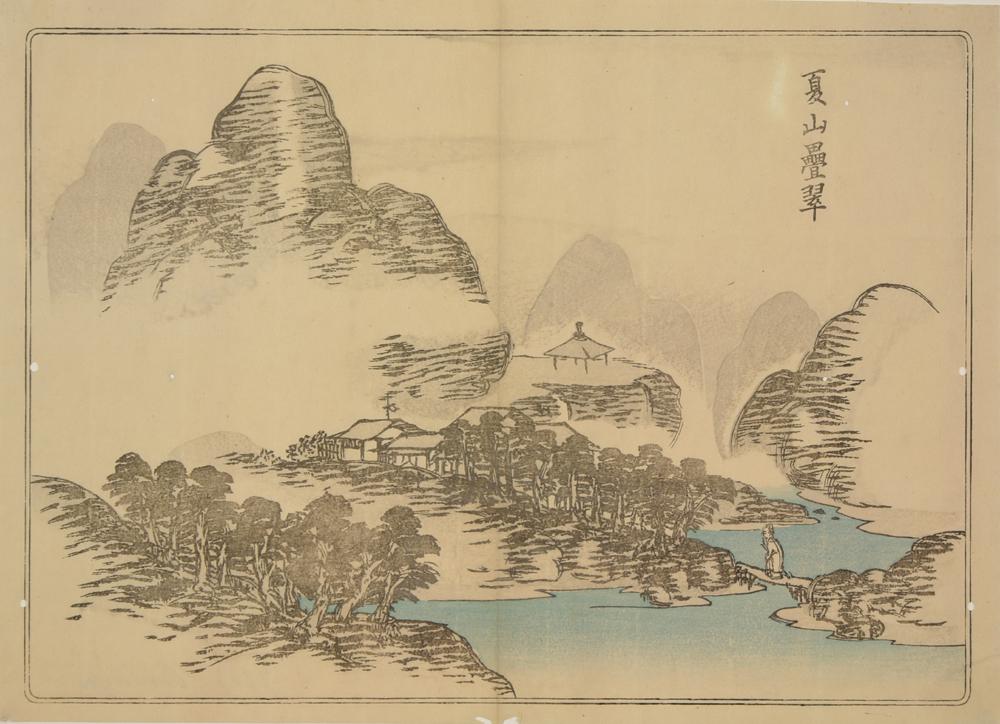
Summer Mountains Carpeted with Green
ca. 1825
Woodblock print