Biography
Kawanabe Kyosai (河鐶暑斎, 1831–1889) was one of the most brilliant, versatile, and unconventional Japanese artists of the nineteenth century — a painter, printmaker, and satirist whose extraordinary technical skill and irreverent imagination produced a body of work that defies easy categorization. Celebrated in his own time as a genius of the brush and condemned as an eccentric provocateur, Kyosai bridged the worlds of traditional Japanese painting and popular woodblock printing with a creative energy that has few parallels in the history of Japanese art.
Born in Koga, Shimosa Province (modern Ibaraki Prefecture), on May 18, 1831, and given the childhood name Shuzaburo, Kyosai showed precocious artistic talent from an early age. A famous anecdote relates that as a young boy he fished a severed human head from a river and took it home to sketch, an early indication of the fearless curiosity about life and death that would characterize his mature work. As a child he entered the studio of Utagawa Kuniyoshi, the great ukiyo-e master of warrior prints, around the age of six, where he absorbed the dynamic compositional techniques and love of the fantastic that would later inform his own printmaking. He then transferred to the studio of Maemura Towa, a painter of the Kano school, beginning a rigorous classical training in ink painting, brushwork, and the study of Chinese and Japanese painting traditions.
This dual education — the popular dynamism of ukiyo-e combined with the disciplined technique of Kano-school painting — gave Kyosai a unique artistic foundation. He became technically one of the most accomplished brush painters in Japan, capable of producing works of astonishing speed and precision. His ability to capture the essence of a subject in a few fluid brushstrokes was legendary, and public painting demonstrations in which he completed large-scale works before live audiences became a celebrated feature of the Tokyo art world.
Kyosai's subject matter was extraordinarily diverse. He was famous above all for his depictions of crows, which he rendered with an intensity and expressive power that elevated these common birds into symbols of wild freedom and dark beauty. His painting “Crow on a Snowy Branch” and related crow subjects are among his most celebrated works. Beyond crows, Kyosai painted and printed landscapes, historical subjects, Buddhist deities, beautiful women, plants and animals, and scenes of daily life, all executed with consummate technical mastery.
His prints are perhaps most celebrated for their depictions of demons, ghosts, and supernatural creatures. Drawing on the rich Japanese tradition of yokai (monsters and spirits), Kyosai created images of hell, demonic revelry, and supernatural encounters that combine genuine eeriness with subversive humor. His “Hell Courtesan” and scenes of demons at play reveal an artist who could find comedy in terror and humanity in the monstrous. These supernatural prints, along with his satirical works depicting social commentary through animal allegories, demonstrate the extraordinary range of his artistic imagination.
Kyosai was also a gifted satirist whose work repeatedly brought him into conflict with the authorities. Early in the Meiji era he was arrested on more than one occasion for producing prints deemed insulting to the new government, and was briefly imprisoned — experiences that only enhanced his reputation as a fearless truth-teller. His “Kyosai Gadan” (Kyosai's Treatise on Painting), published in 1887, is both a manual of painting technique and a witty, idiosyncratic commentary on the art world of his time, revealing his deep knowledge of Japanese and Chinese artistic traditions alongside his irreverent personal philosophy.
Despite his reputation for wild behavior and his well-known love of sake, Kyosai was a disciplined and prolific worker who produced thousands of paintings, prints, drawings, and illustrated books over his career. He worked in virtually every format available to a Japanese artist: hanging scrolls, folding screens, hand scrolls, album leaves, woodblock prints, book illustrations, and even architectural paintings. His versatility was matched by his technical brilliance; whether working in delicate mineral pigments on silk or bold sumi ink on paper, he displayed a mastery of the brush that placed him among the greatest Japanese painters of any era.
Kyosai's influence on Western art was significant. The British architect Josiah Conder became his student in 1881 and later published “Paintings and Studies by Kawanabe Kyosai” (1911), one of the first serious Western studies of a Japanese painter. Kyosai's work was collected by European visitors to Japan and appeared in international exhibitions, contributing to the wave of Japonisme that influenced Impressionist and Post-Impressionist artists in Europe.
Kyosai died on April 26, 1889, at the age of fifty-seven. In the decades following his death, his reputation fluctuated — at times overshadowed by the more easily categorized artists of the Meiji era, at times celebrated by connoisseurs who recognized his singular genius. The twenty-first century has seen a major revival of interest in Kyosai's work, fueled by major exhibitions at the Royal Academy of Arts in London and the Kyosai Memorial Museum in Warabi (established by his descendants), which have confirmed his status as one of the most important Japanese artists of the modern era. His works are held in the British Museum, the Israel Goldman Collection, the Museum of Fine Arts Boston, and numerous Japanese institutions.
Key Facts
- Active Period
- 1831–1889
- Nationality
- 🇯🇵Japan
- Movement
- Meiji/Taishō Prints
- Works Indexed
- 385
Frequently Asked Questions
Kawanabe Kyosai (河鐶暑斎, 1831–1889) was one of the most brilliant, versatile, and unconventional Japanese artists of the nineteenth century — a painter, printmaker, and satirist whose extraordinary technical skill and irreverent imagination produced a body of work that defies easy categorization. Celebrated in his own time as a genius of the brush and condemned as an eccentric provocateur, Kyosai bridged the worlds of traditional Japanese painting and popular woodblock printing with a creative energy that has few parallels in the history of Japanese art.
Kawanabe Kyosai was active from 1831 to 1889. They were associated with the Meiji/Taishō Prints movement.
Kawanabe Kyosai's work was shaped by the Meiji/Taishō Prints tradition in Japanese woodblock printmaking. Meiji/Taishō Prints: Meiji and Taishō era prints (1868–1926) bridge the transition from traditional ukiyo-e to the modern shin-hanga and sosaku-hanga movements.
Kawanabe Kyosai's prints frequently feature figures, abstract, famous places (meisho-e), tōkaidō, travel scenes, daily life.
Original prints by Kawanabe Kyosai can be found in collections including mfa, Museum of Fine Arts Boston, Art Institute of Chicago, Chazen Museum of Art.
Series by Kawanabe Kyosai
One Hundred Wildnesses by Kyôsai
1 print
Of the Twelve Months: the Fifth (Junikagetsu no uchi: gogatsu)
1 print
Drawings for Pleasure by Kyōsai
1 print
One Hundred Views of the East
1 print
Calligraphy and Pictures for the Fifty-three Stations of the Tôkaidô
4 prints
Scenes of Famous Places along the Tôkaidô Road
13 prints
One Hundred Pictures by Kyôsai
5 prints
Kenroku Yamato Kagami
1 print
A Children's Handbook of String Pictures
3 prints
Woodblock Prints by Kawanabe Kyosai (385)
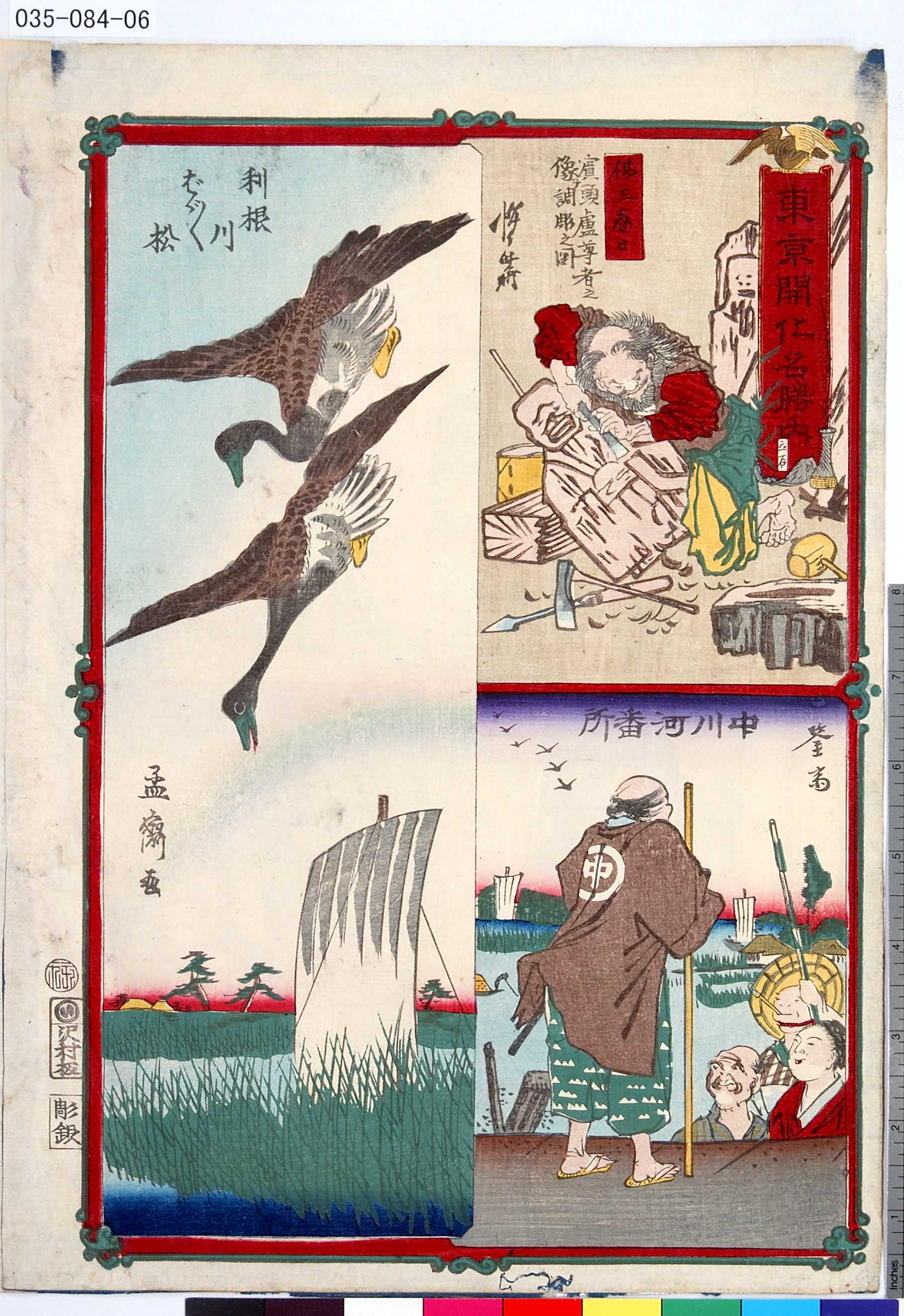
「東京開化名勝ノ内」 「立石」「仏工春日」「賓頭盧尊者之像ヲ調彫之図」「中川河番所」「利根川ばら/\松」
Woodblock print
.jpg)
「道化百万編 左」
Woodblock print
.jpg)
「築地浪除の夜景 左」
Woodblock print
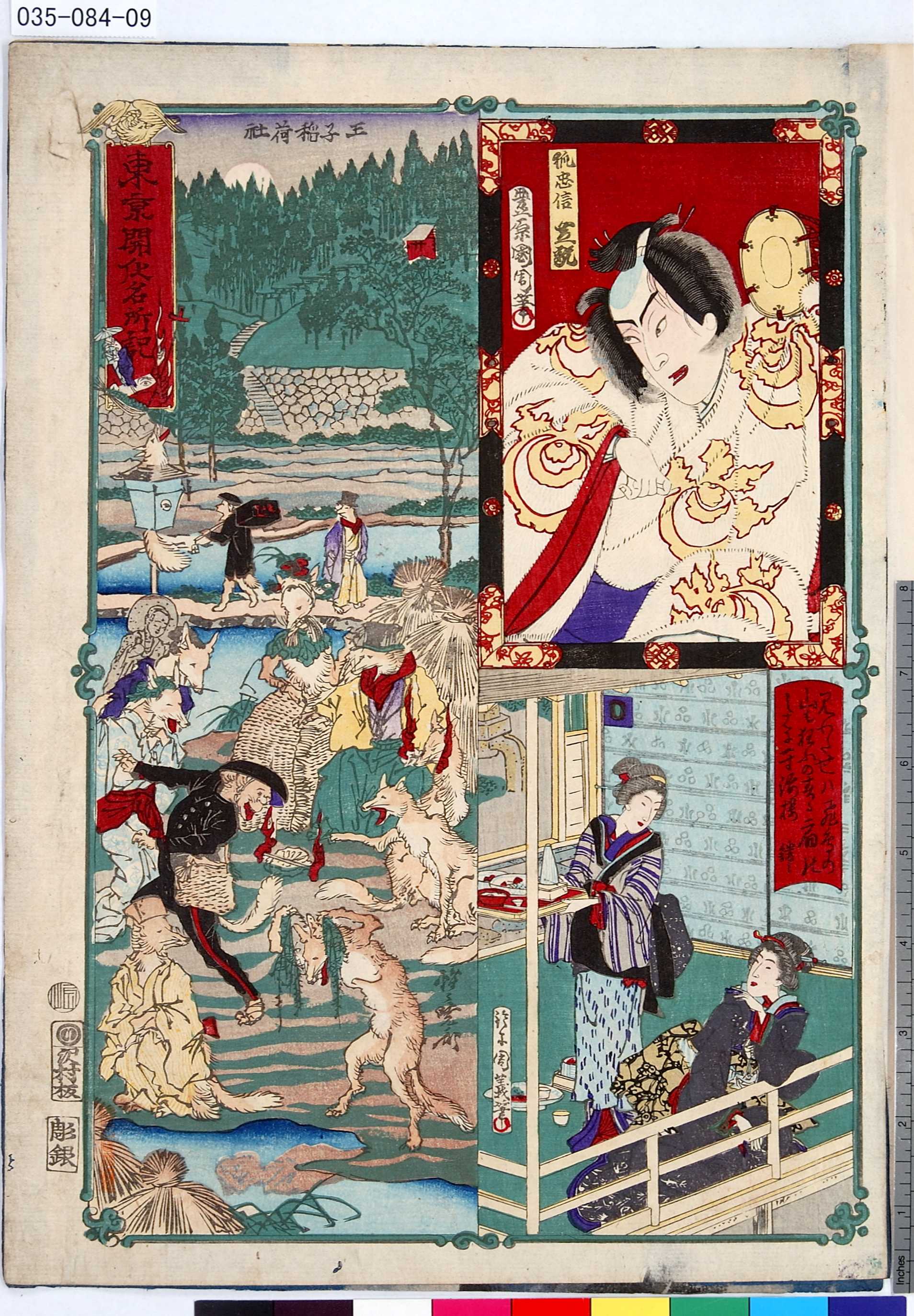
「東京開化名所記」 「王子稲荷社」「狐忠信 芝翫」
Woodblock print
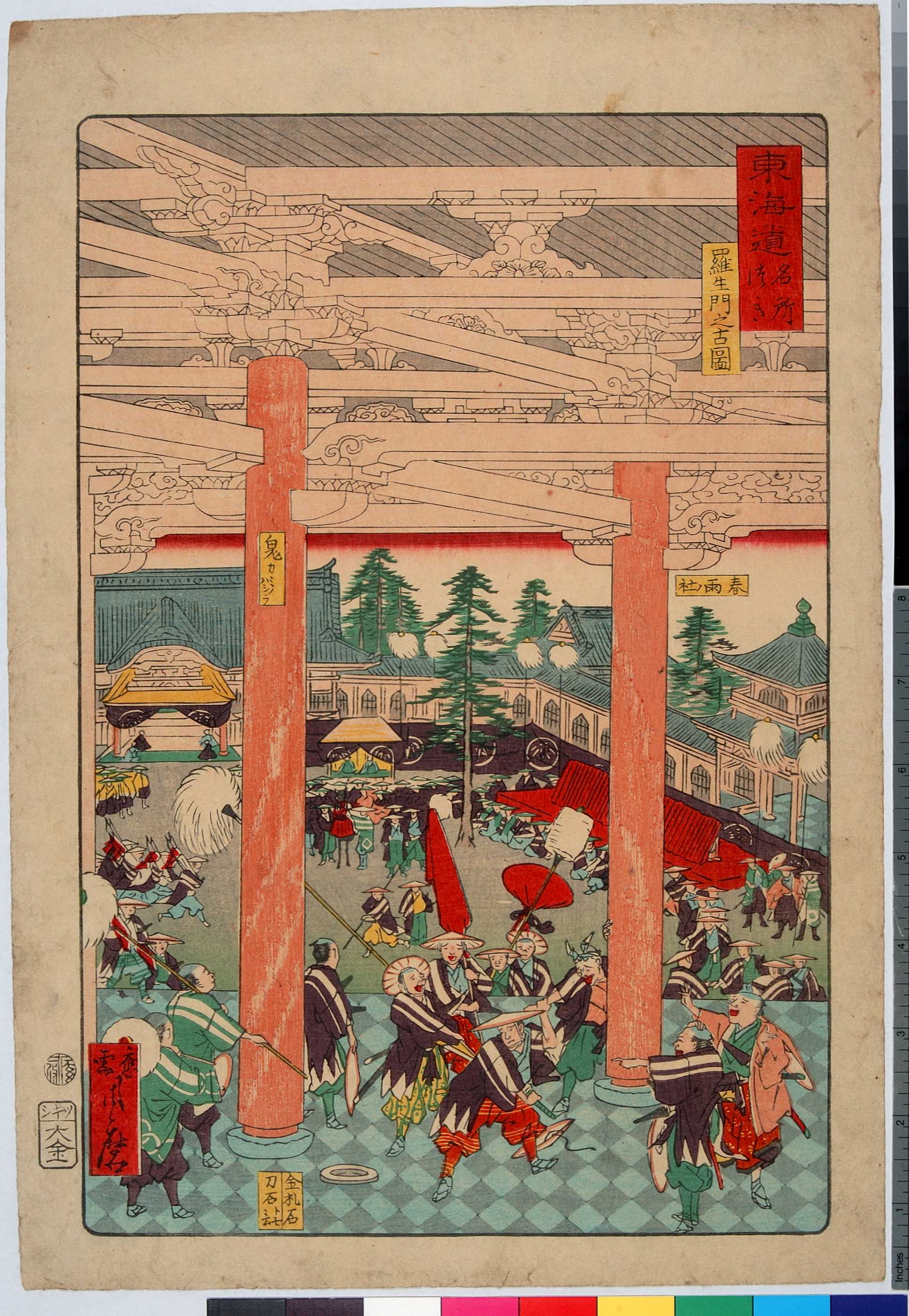
「東海道名所つゝき」「羅生門之古図」「春雨ノ社」「金札石刀石トモ云」「鬼カミノハシラ」
Woodblock print
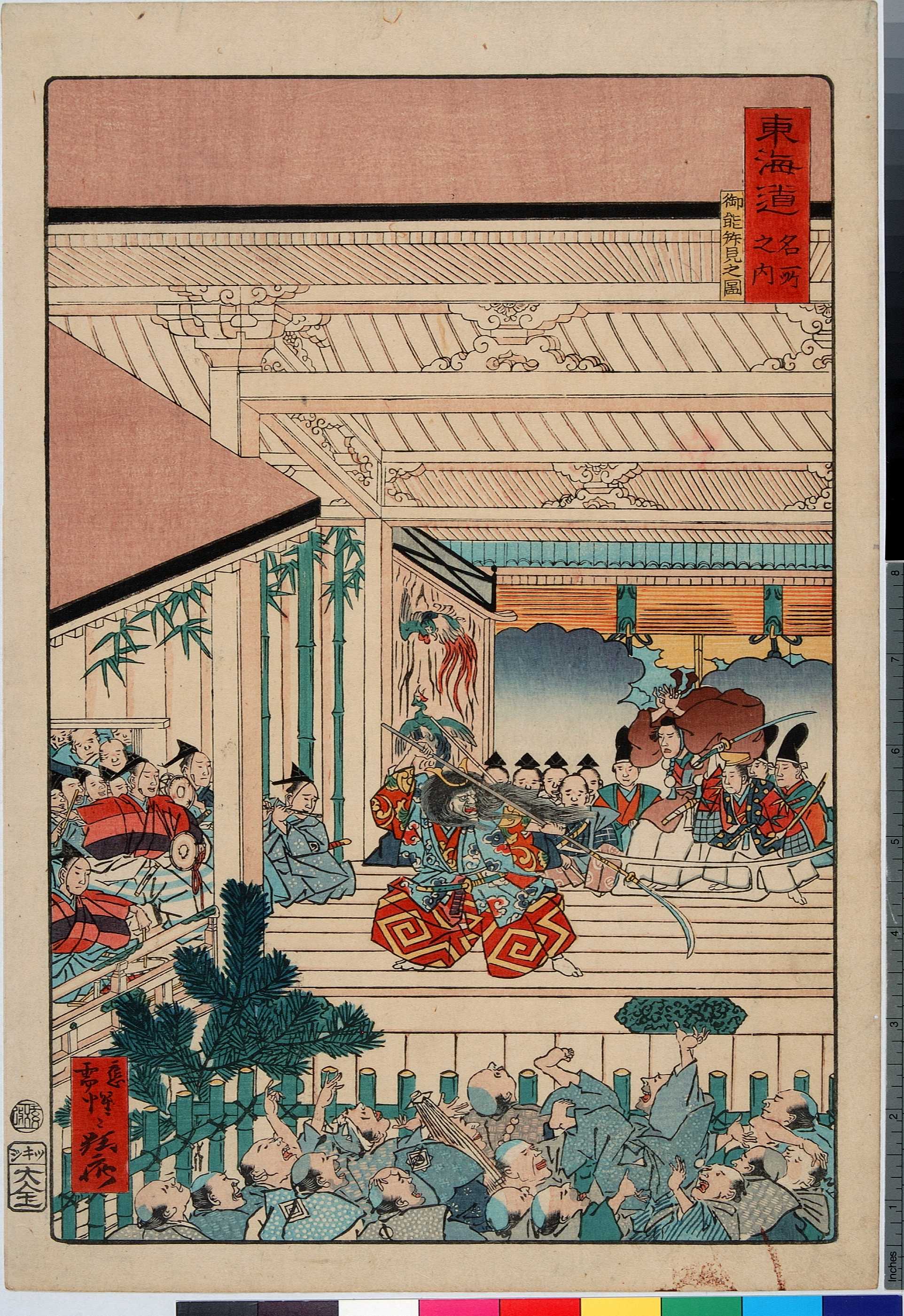
「東海道名所之内」「御能拝見之図」
Woodblock print
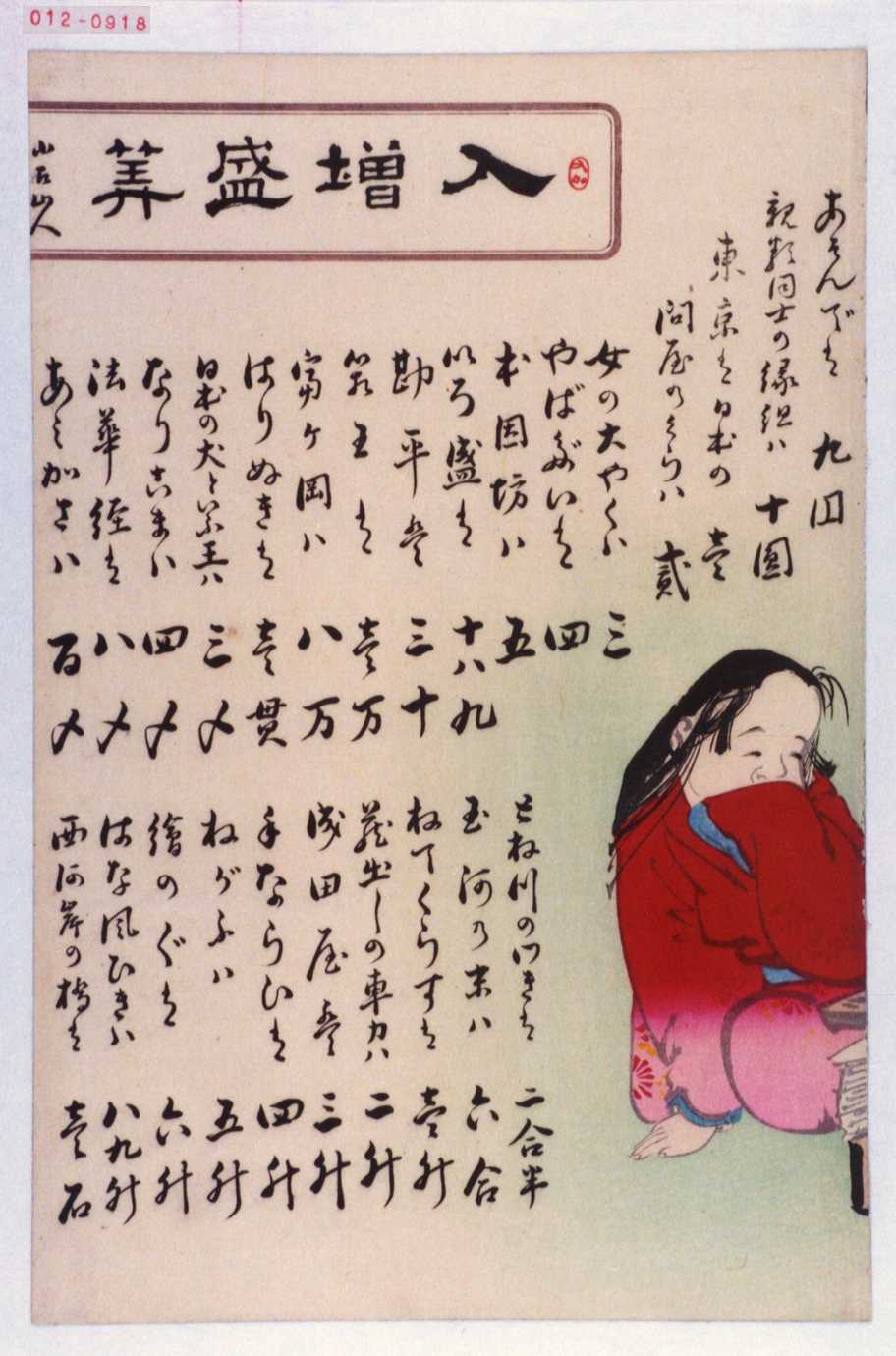
「算盛増入」
Woodblock print
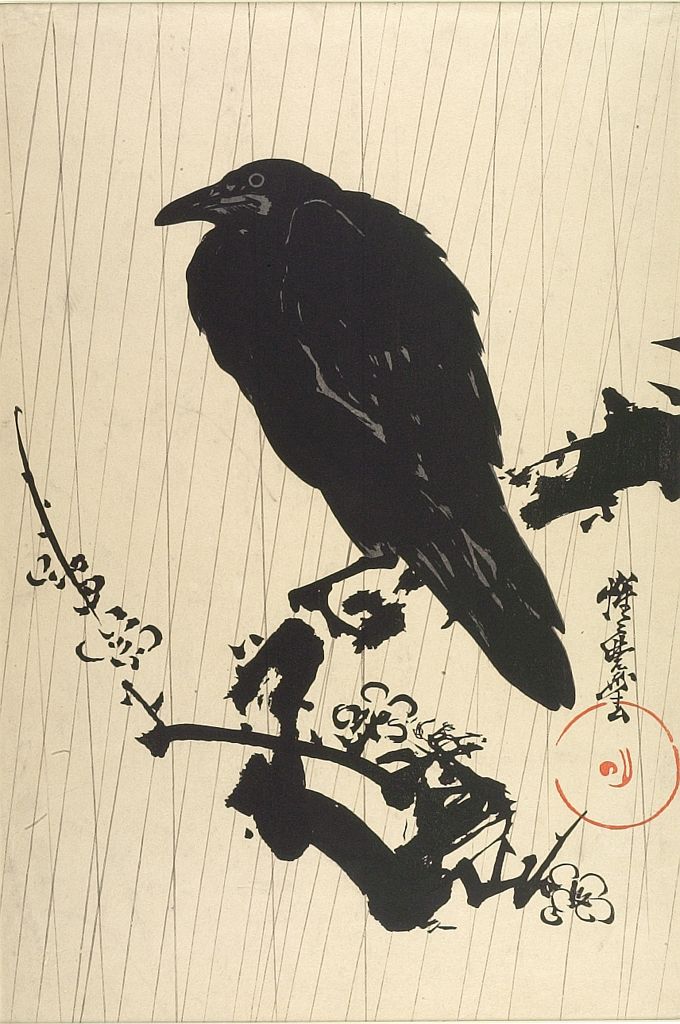
BLACK CROW IN RAIN
Woodblock print
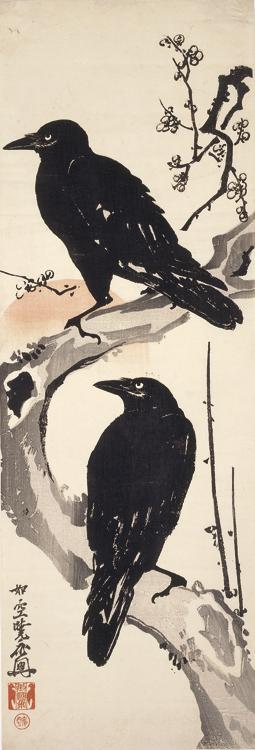
Crows on Plum Branch
Woodblock print
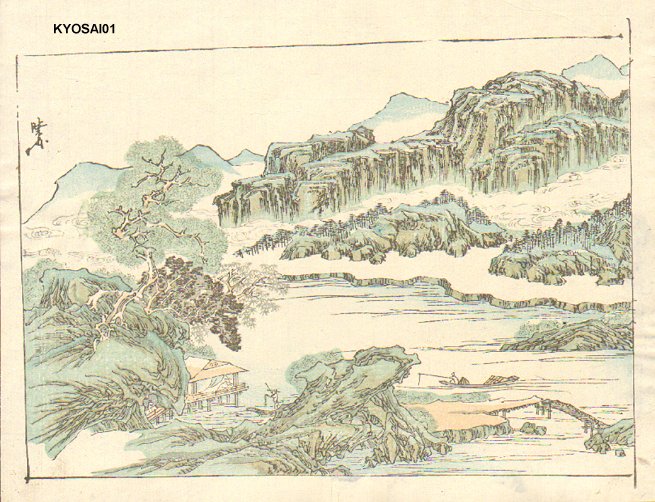
Landscape (SANSUI)
Woodblock print
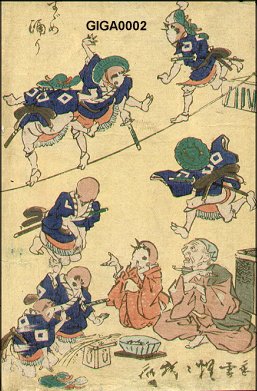
Proverb - Dancing like sparrows
Woodblock print
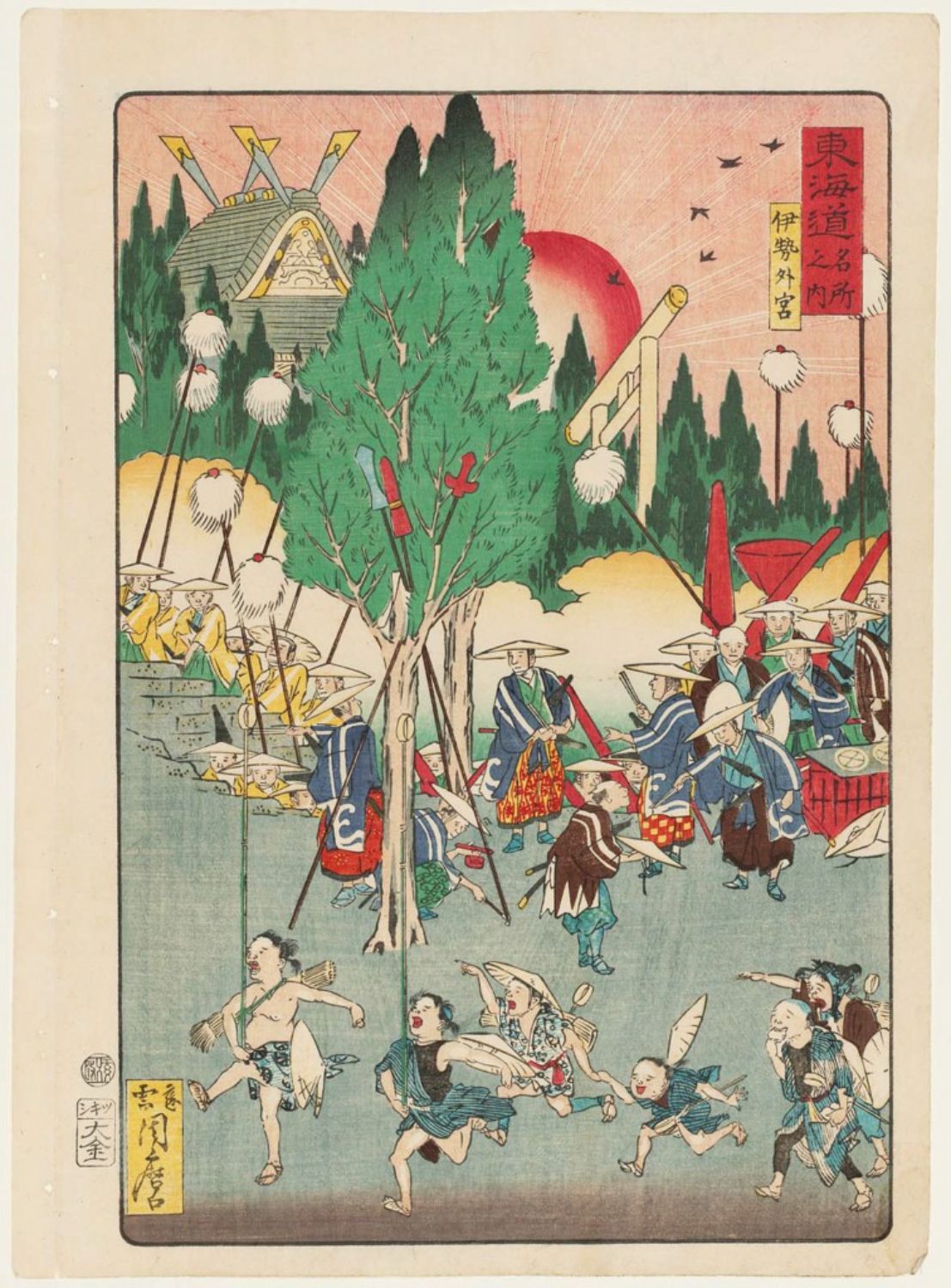
The Outer Shrine at Ise (Ise Gekû), from the series Scenes of Famous Places along the Tôkaidô Road (Tôkaidô meisho fûkei), also known as the Processional Tôkaidô (Gyôretsu Tôkaidô), here called Tôkaidô meisho no uchi
Woodblock print
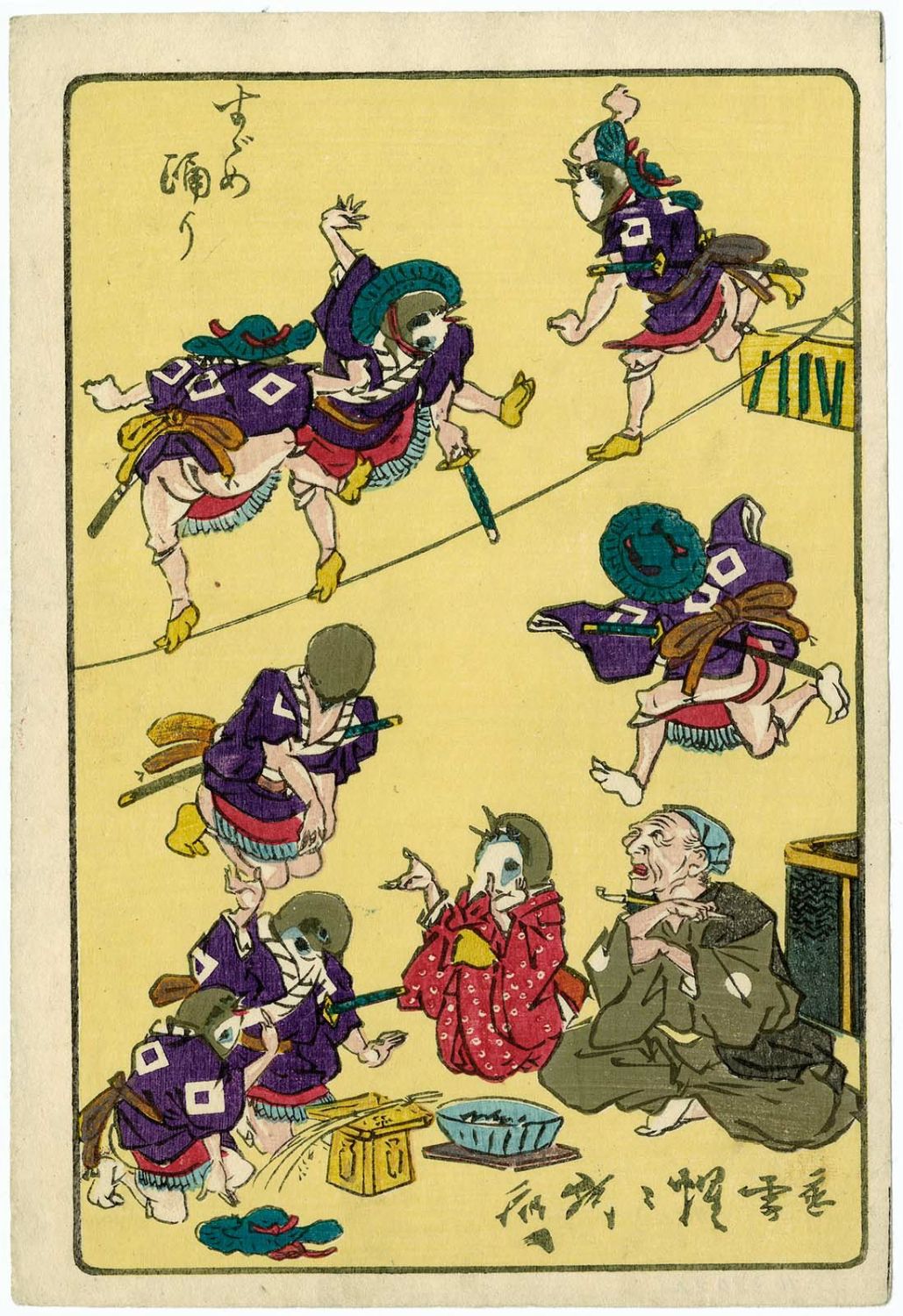
The Sparrow Dance (Suzume odori), from the series One Hundred Pictures by Kyôsai (Kyôsai hyakuzu)
Woodblock print
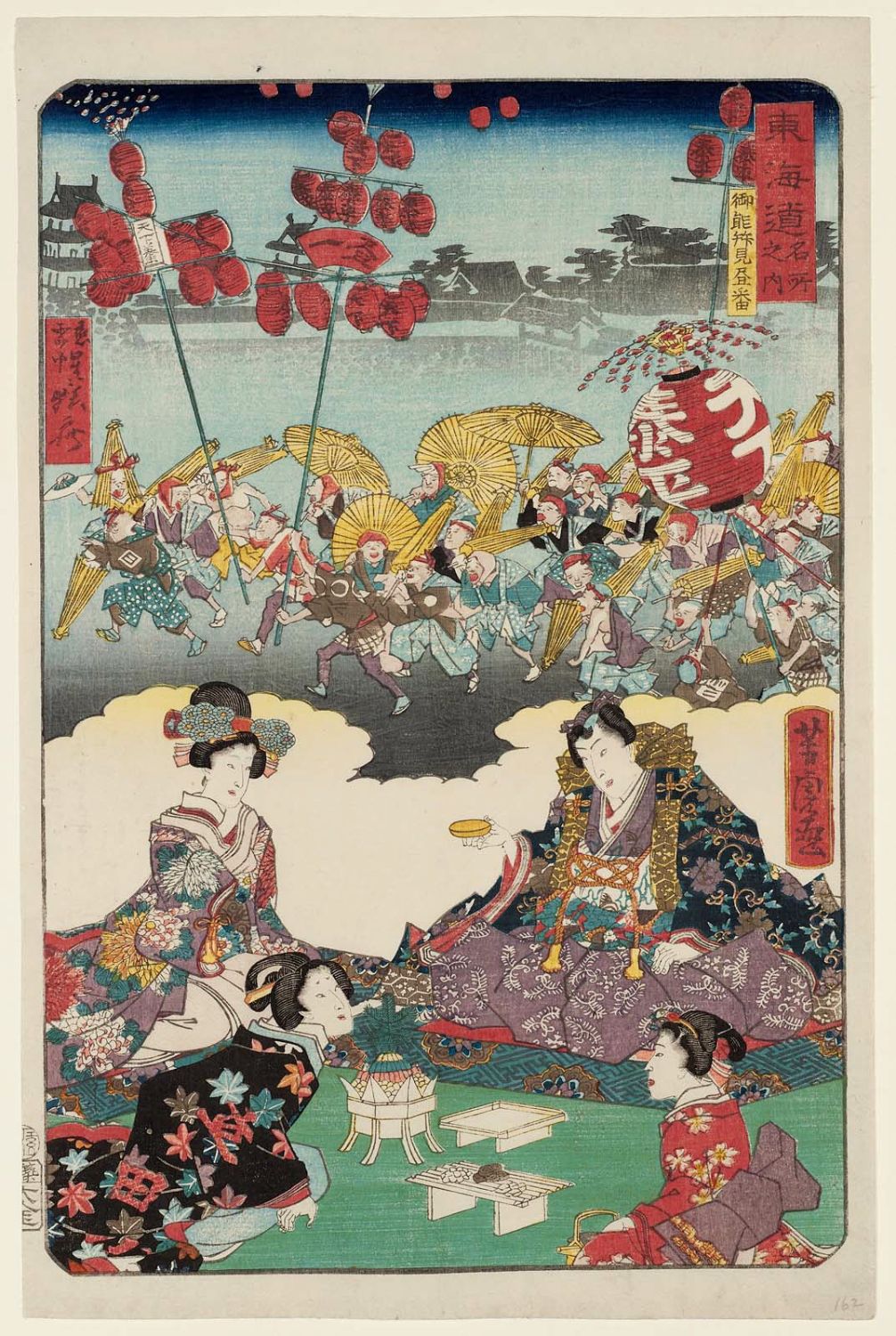
The Day of a Nô Performance (Onô haiken hiruban), from the series Scenes of Famous Places along the Tôkaidô Road (Tôkaidô meisho fûkei), also known as the Processional Tôkaidô (Gyôretsu Tôkaidô), here called Tôkaidô meisho no uchi
Woodblock print
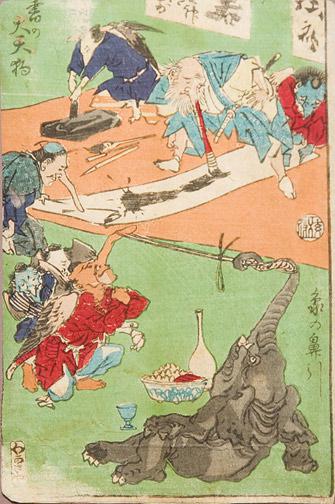
Tengu
Woodblock print
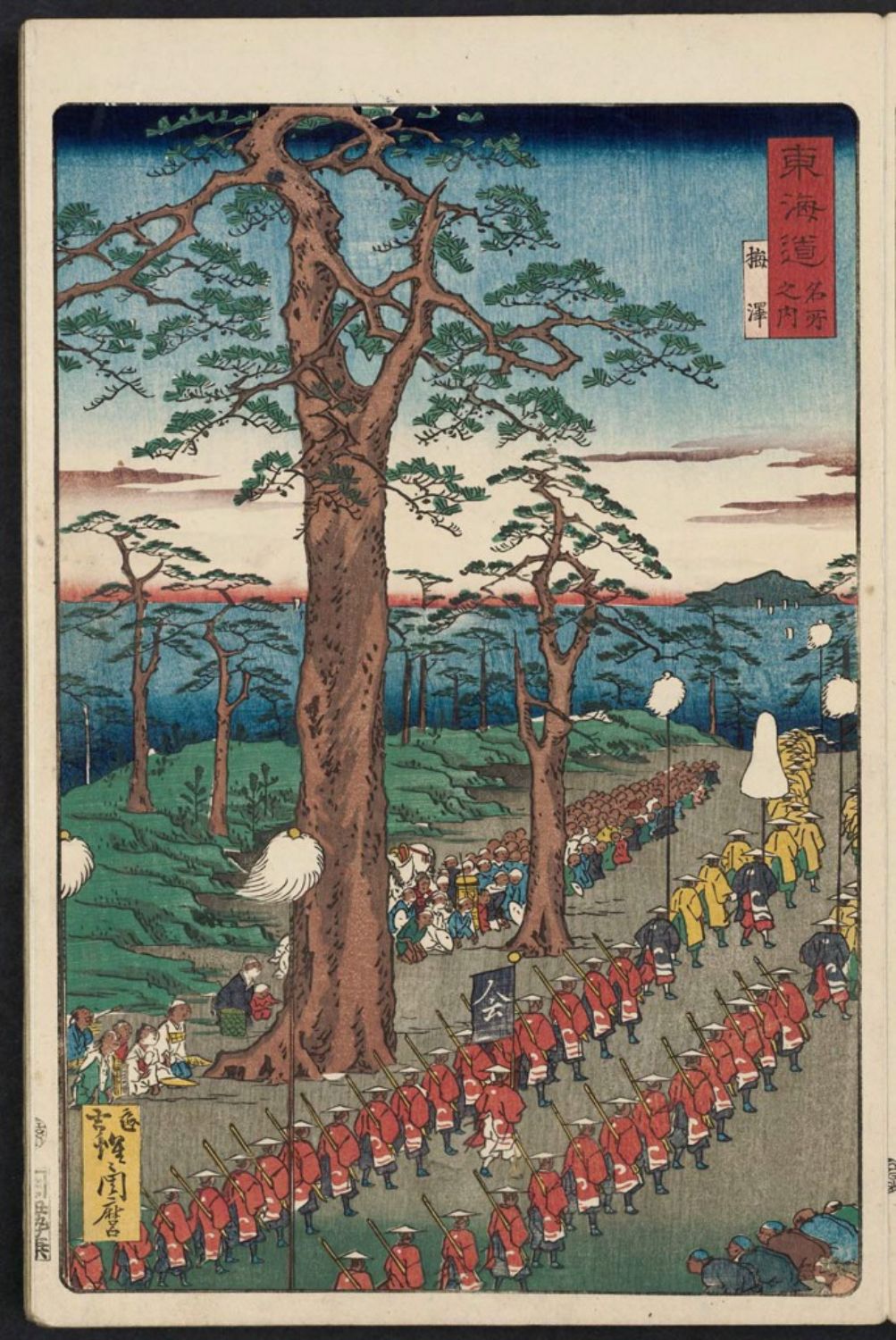
Umesawa, from the series Scenes of Famous Places along the Tôkaidô Road (Tôkaidô meisho fûkei), also known as the Processional Tôkaidô (Gyôretsu Tôkaidô), here called Tôkaidô meisho no uchi
Woodblock print
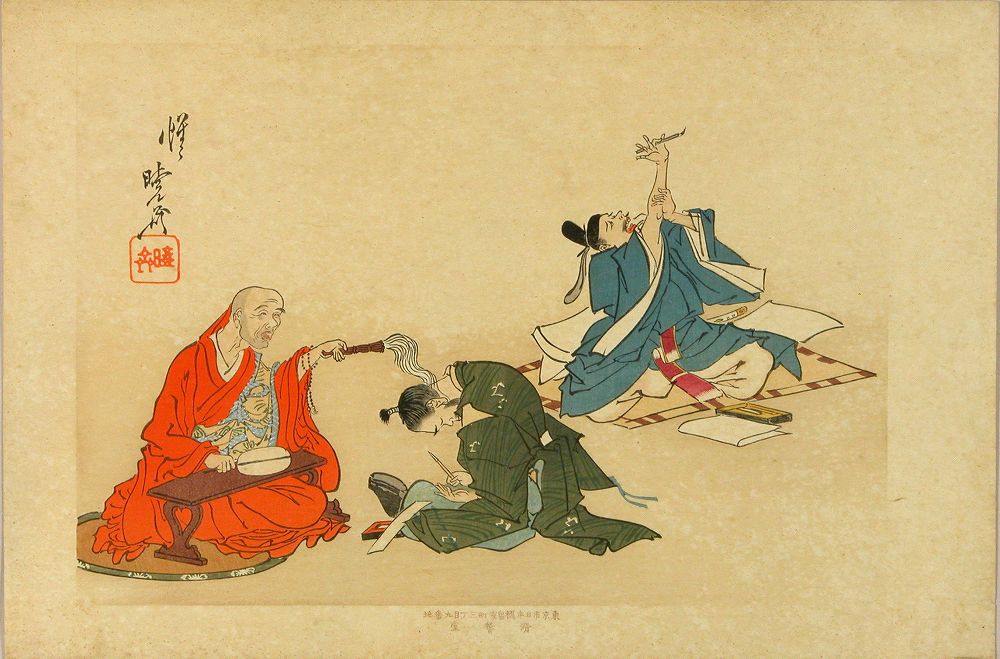
A plate from
Woodblock print
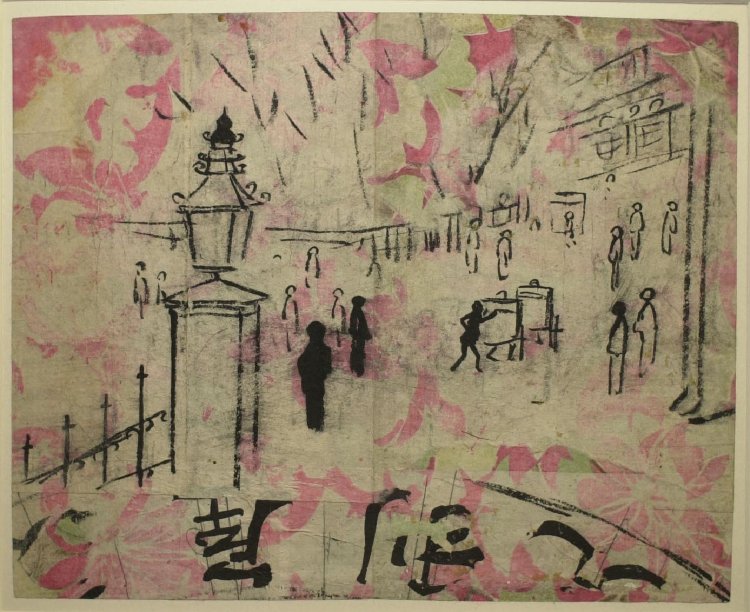
print / drawing
Woodblock print
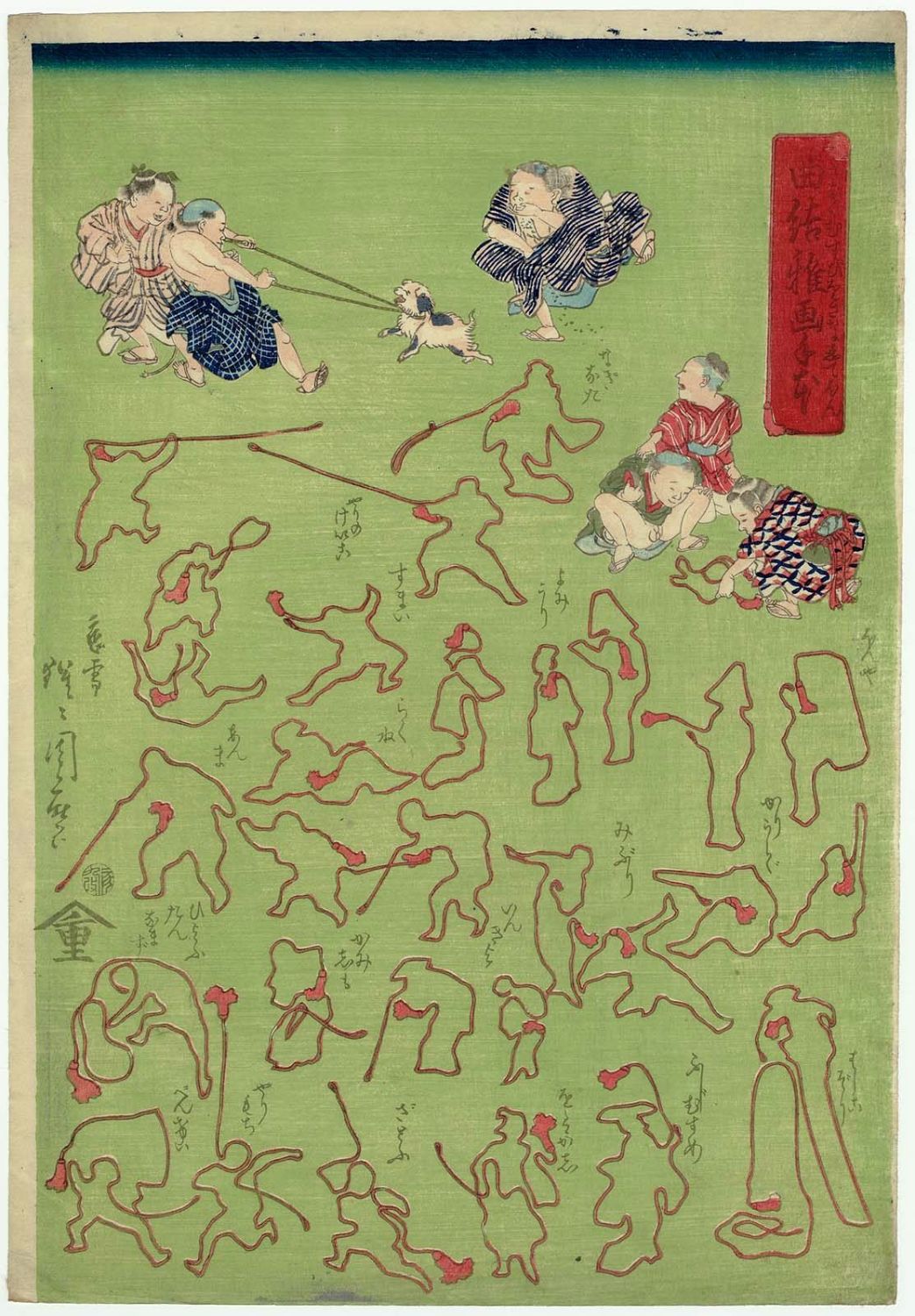
Woman Fighting with Naginata and others, from the series A Children's Handbook of String Pictures (Kyokumusubi osana tehon)
Woodblock print
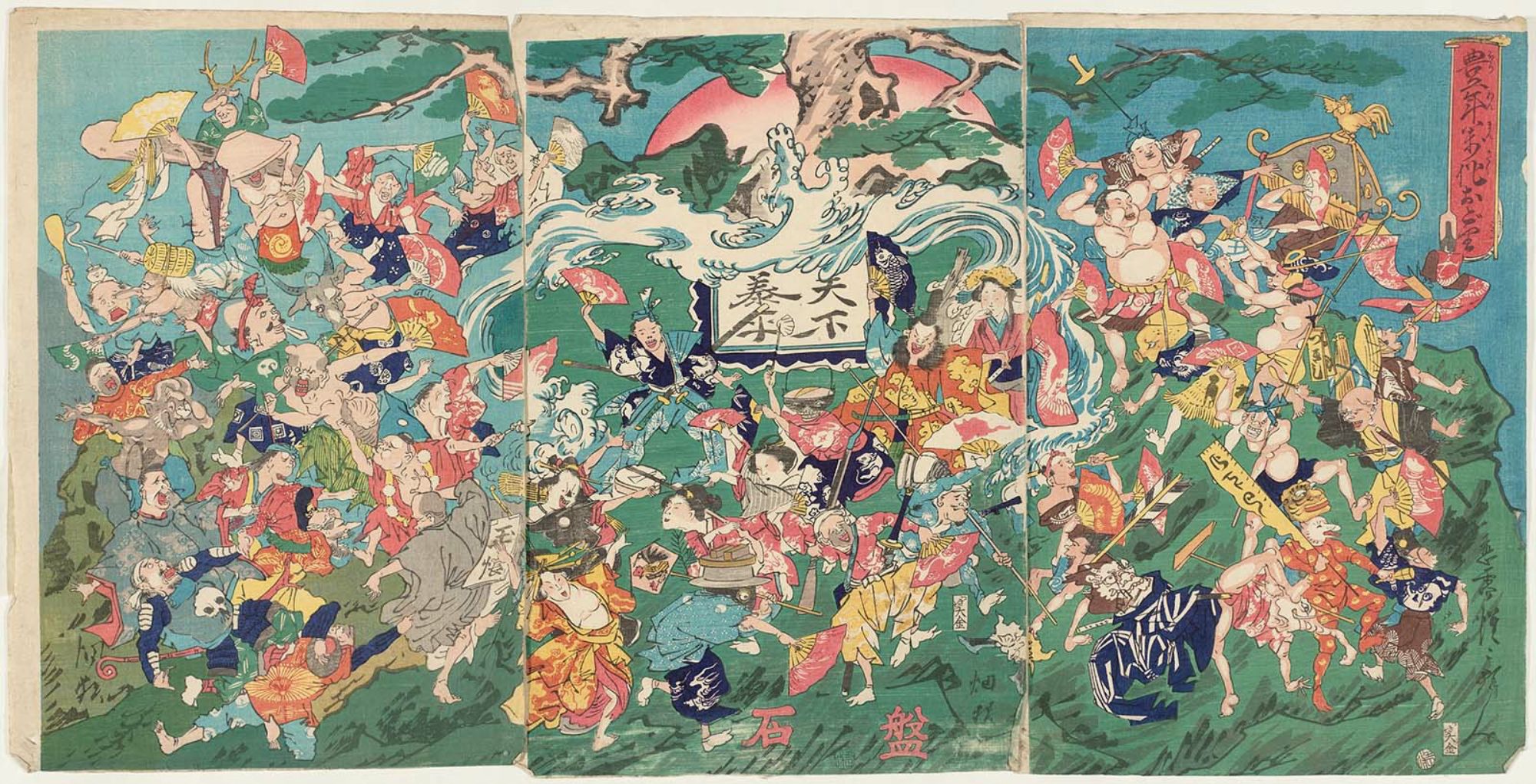
Dance of the Harvest Festival (Hônen mansaku odori)
Woodblock print
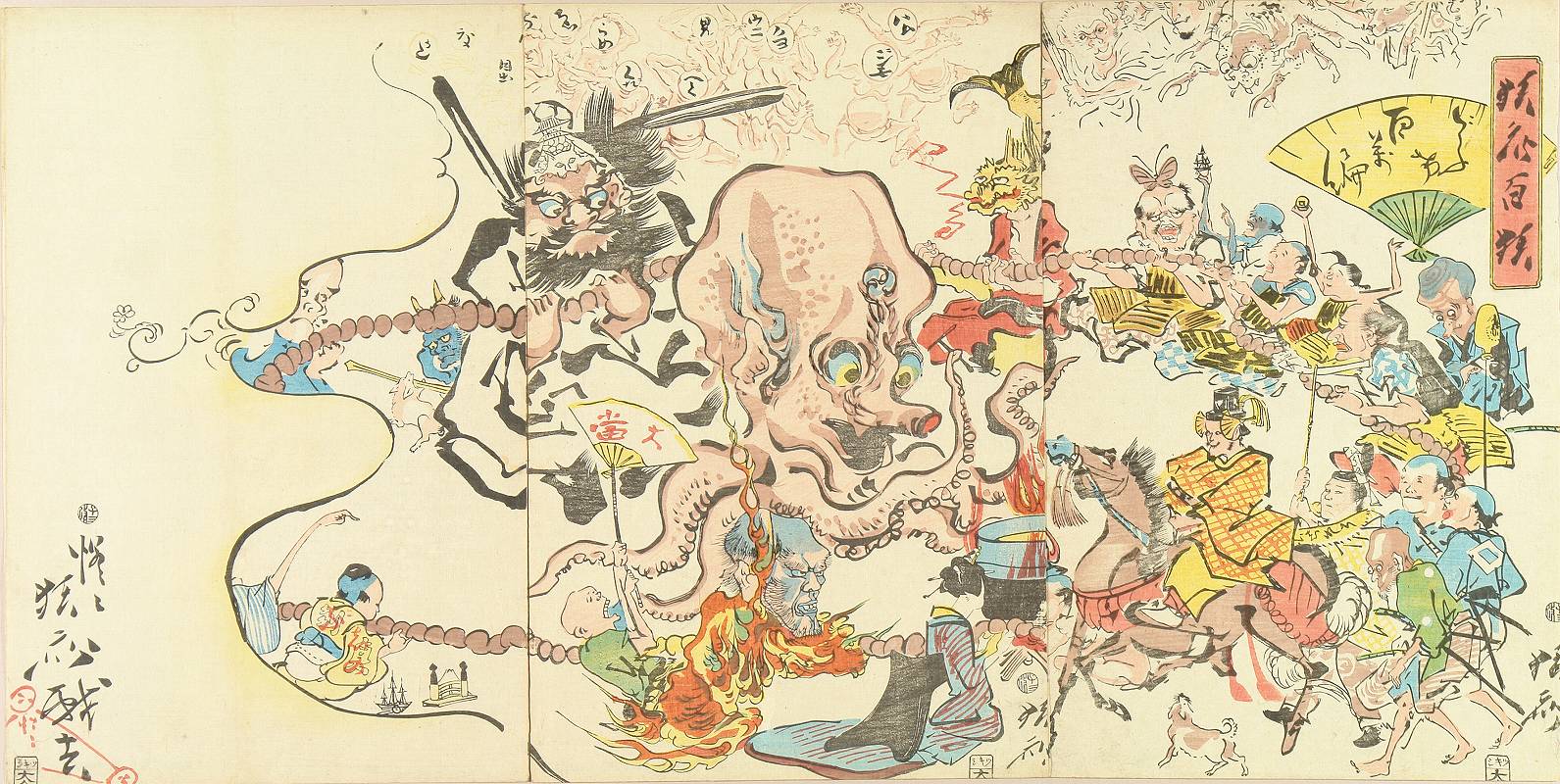
A comic picture titled Kyosai hyakukyo, doke hyakumamben, triptych, 1864
Woodblock print

"Tsuzoku Isoppu monogatari 通俗伊蘇譜物語 (A Popular Version of Aesop's Fables)"
Woodblock print
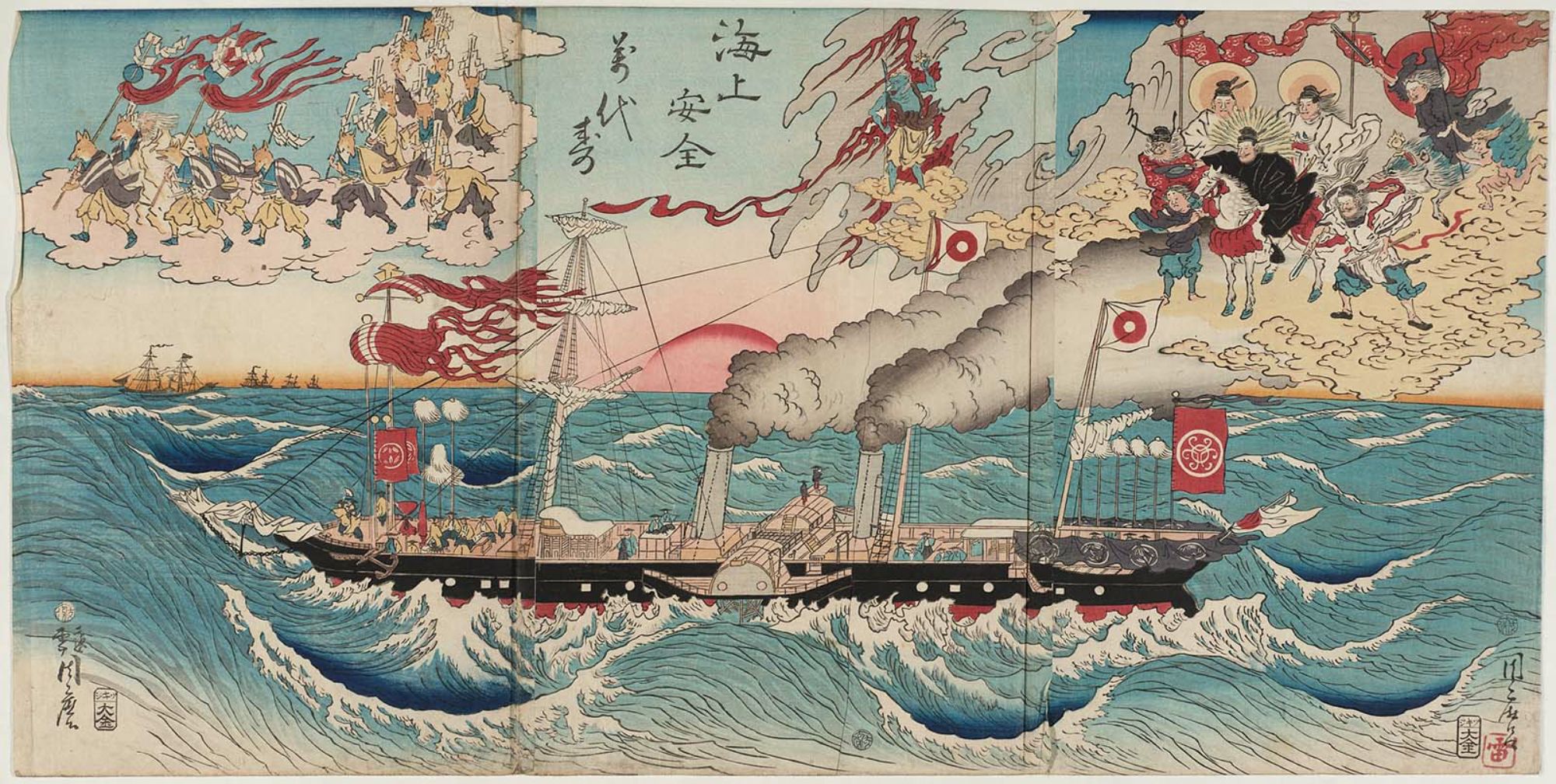
Congratulations on Maritime Security for All Eternity! (Kaijô anzen bandai kotobuki)
Woodblock print

Famous Views of the Tokaido: The Rashomon Gate as It Was Once Was
Woodblock print