Mori Sosen
森狙仙
1747–1821
Japan
Biography
Mori Sosen (森狙仙, 1747-1821) was an Osaka-based animal painter of the late Edo period, the most famous member of the Mori school and one of the defining figures of Japanese monkey painting. His exact birthplace is uncertain — early accounts variously give Nishinomiya, Osaka, or Nagasaki — but he spent essentially his whole career in Osaka rather than in the more prestigious art centers of Kyoto and Edo, and he built his reputation through close observation of living animals rather than through copying the canonical Chinese models that dominated orthodox Kano practice.
Sosen's earliest training was in the Kano tradition: he first studied Kano-style painting under Yamamoto Joshunsai. After Joshunsai's death his manner shifted decisively toward realism, under the influence of the Chinese-derived naturalism of Shen Nanpin and, above all, the study-from-life practice associated with Maruyama Ōkyo. The Maruyama school, founded in Kyoto by Ōkyo in the 1770s, had revolutionized eighteenth-century Japanese painting by insisting on direct observation of nature — Ōkyo built finished compositions from accumulated sketches rather than from textbook models. The closely related Shijō school, founded by Ōkyo's pupil Matsumura Goshun, softened that realism with the literati brushwork of the Nanga tradition. Sosen's mature work belongs to this naturalistic current, and he is conventionally classed within the broader Maruyama-Shijō orbit.
Monkeys were Sosen's signature subject from early in his career, and he became so identified with them that in about 1808, at the age of sixty-one, he changed the first character of his art-name to 狙 — a character meaning 'monkey' or 'macaque' — replacing the earlier homophone he had used. The change formally fused his identity with his subject. Contemporary anecdotes describe him keeping monkeys in his Osaka studio and traveling to mountain areas to observe them in their habitat, and his paintings show a degree of anatomical and behavioral accuracy — the weight distribution of a mother holding her young, the way fur ruffles around a branch grip, the particular alert expression of a Japanese macaque — that would have been impossible without long study from life. Deer were another favorite subject, and he also painted boars, peafowl, and the broader range of animals favored by Edo-period patrons.
Together with his elder brother Mori Shūhō (1738-1823), Sosen established an Osaka animal-painting school that paralleled the Kyoto-based Maruyama lineage. He passed his observational method to the next generation chiefly through Mori Tetsuzan (1775-1841) — Shūhō's son and one of Maruyama Ōkyo's leading disciples, whom Sosen adopted as his heir — and the school continued after him through later painters such as Mori Ippō (1798-1871), who trained under Tetsuzan and was in turn adopted into the Mori line. The Mori school survived Sosen by several generations and became one of the principal channels by which the Maruyama-Shijō naturalist idiom reached the late Edo and early Meiji markets in western Japan. Sosen died in Osaka in 1821 at the age of seventy-four and was buried at the Saifuku-ji temple there. His paintings entered Western collections in significant numbers from the late nineteenth century onward, and his works are now held by the Metropolitan Museum of Art, the Art Institute of Chicago, the Cleveland Museum of Art, the British Museum, and other major institutions.
Key Facts
- Active Period
- 1747–1821
- Nationality
- 🇯🇵Japan
- Subjects
- Rain
- Works Indexed
- 8
Frequently Asked Questions
Mori Sosen (森狙仙, 1747-1821) was an Osaka-based animal painter of the late Edo period, the most famous member of the Mori school and one of the defining figures of Japanese monkey painting. His exact birthplace is uncertain — early accounts variously give Nishinomiya, Osaka, or Nagasaki — but he spent essentially his whole career in Osaka rather than in the more prestigious art centers of Kyoto and Edo, and he built his reputation through close observation of living animals rather than through copying the canonical Chinese models that dominated orthodox Kano practice.
Mori Sosen was active from 1747 to 1821.
Mori Sosen's prints frequently feature rain.
Original prints by Mori Sosen can be found in collections including Metropolitan Museum of Art, Cleveland Museum of Art, Art Institute of Chicago.
Woodblock Prints by Mori Sosen (8)
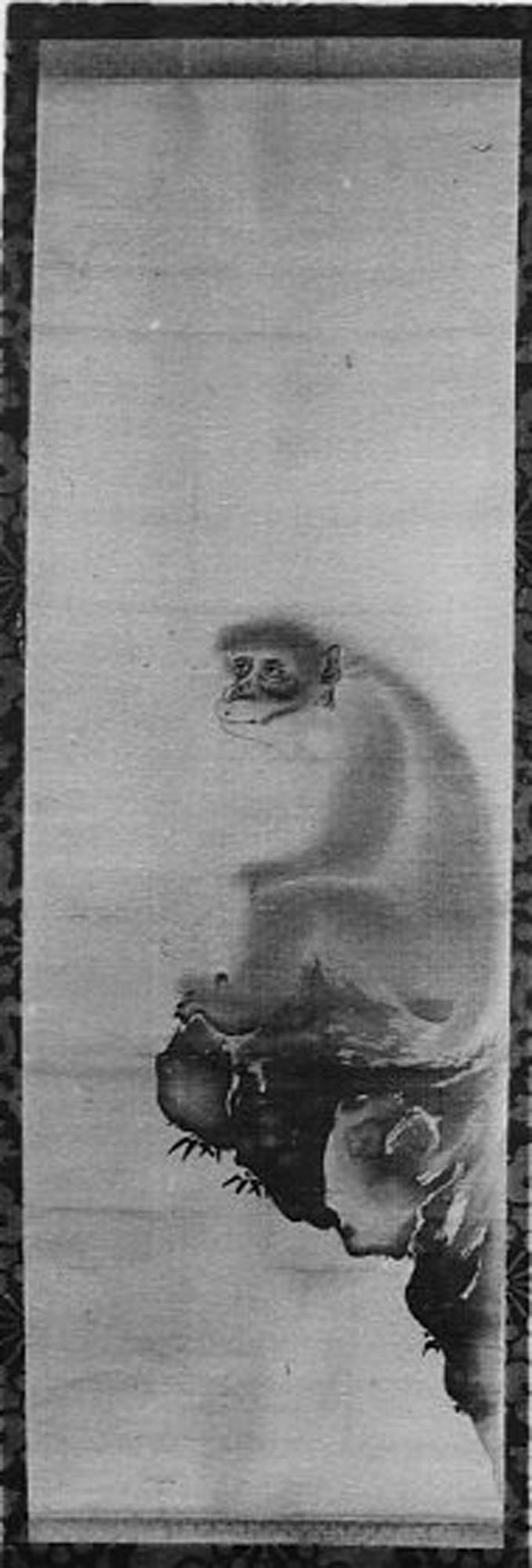
Monkey
18th century
Hanging scroll; ink and color on silk
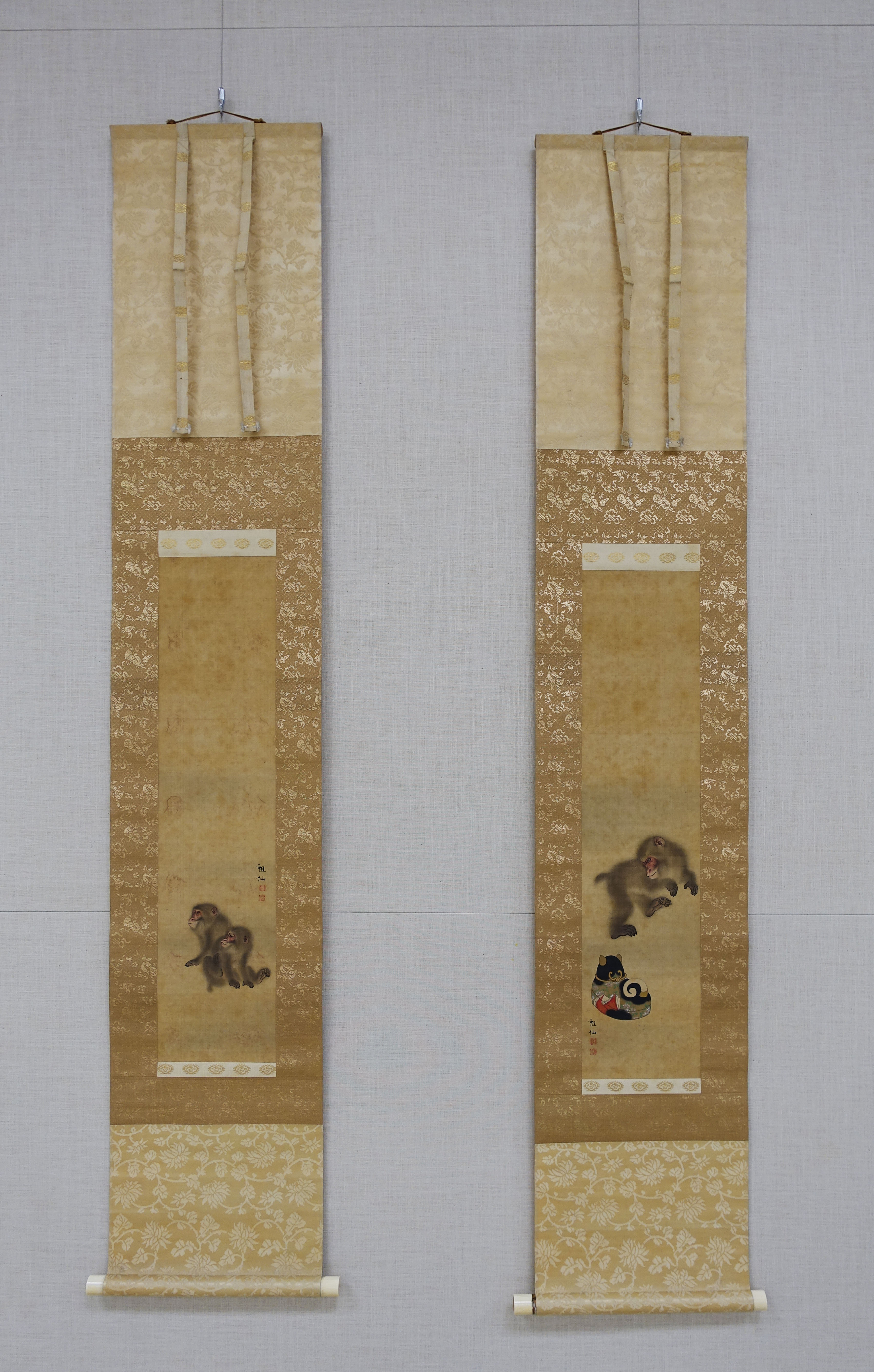
Monkeys at Play
Late 18th century–before 1807
Diptych of hanging scrolls; ink and color on silk

Tiger in the Rain
Late 18th–early 19th century
Hanging scroll; ink and colors on paper
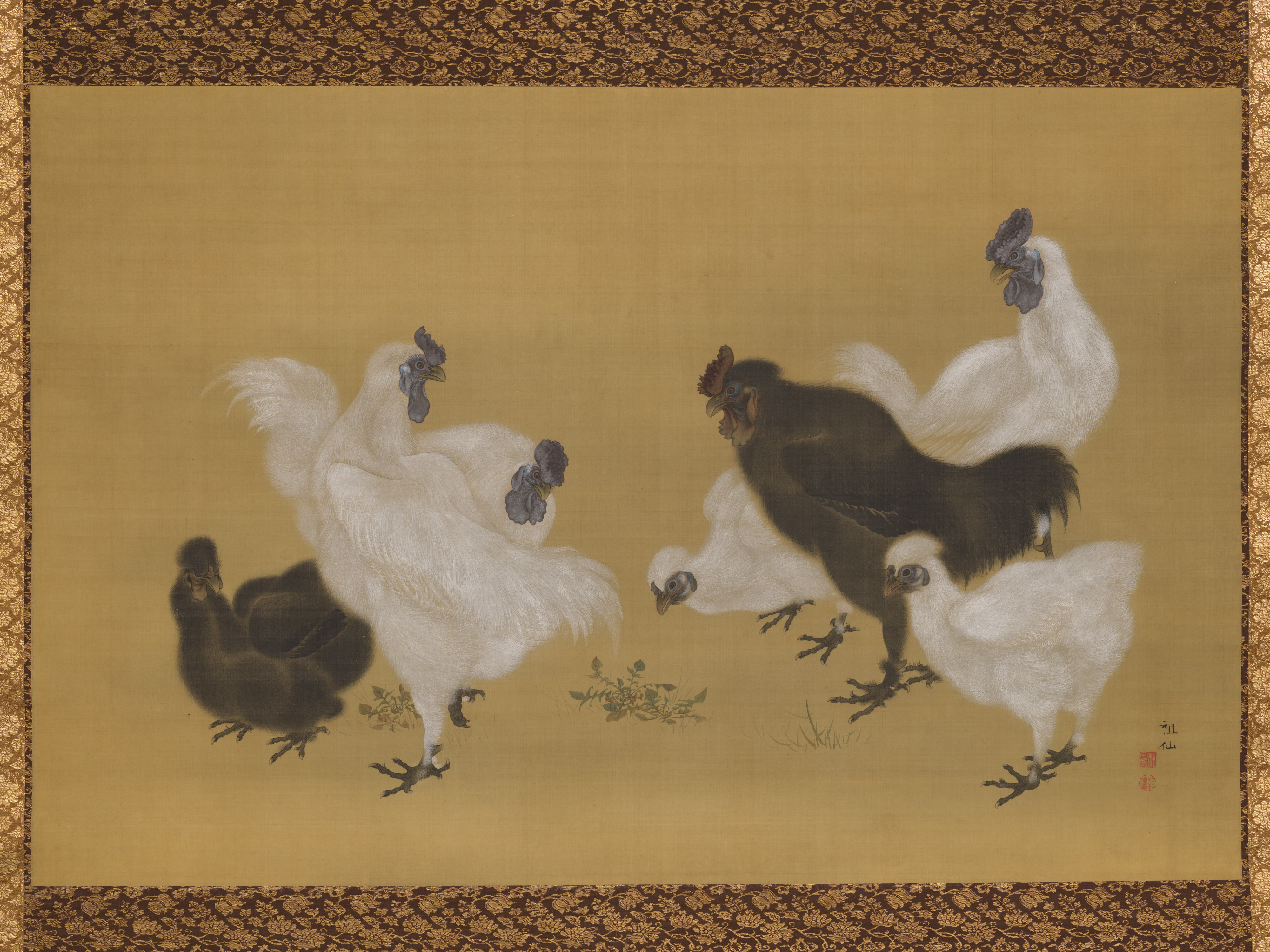
Silkies
before 1807
Hanging scroll; ink and color on silk
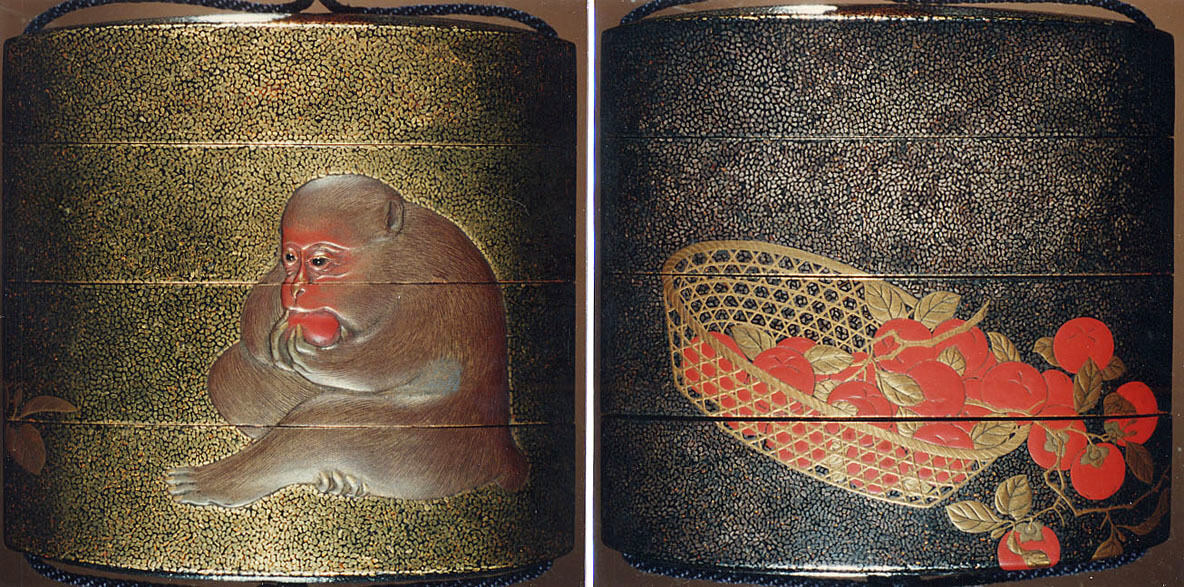
Case (Inrō) with Design of Basket of Persimmons and Monkey Eating Persimmon
19th century
Lacquer with gold and silver hirame, gold, red and coloured hiramakie, takamakie
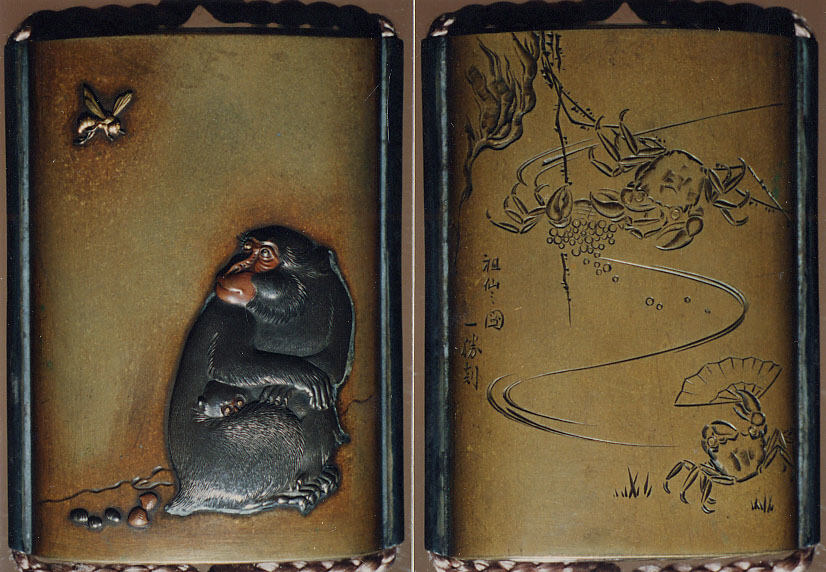
Case (Inrō) with Design of Seated Monkey Looking at a Wasp
19th century
Brass metal, incised, various applied metals
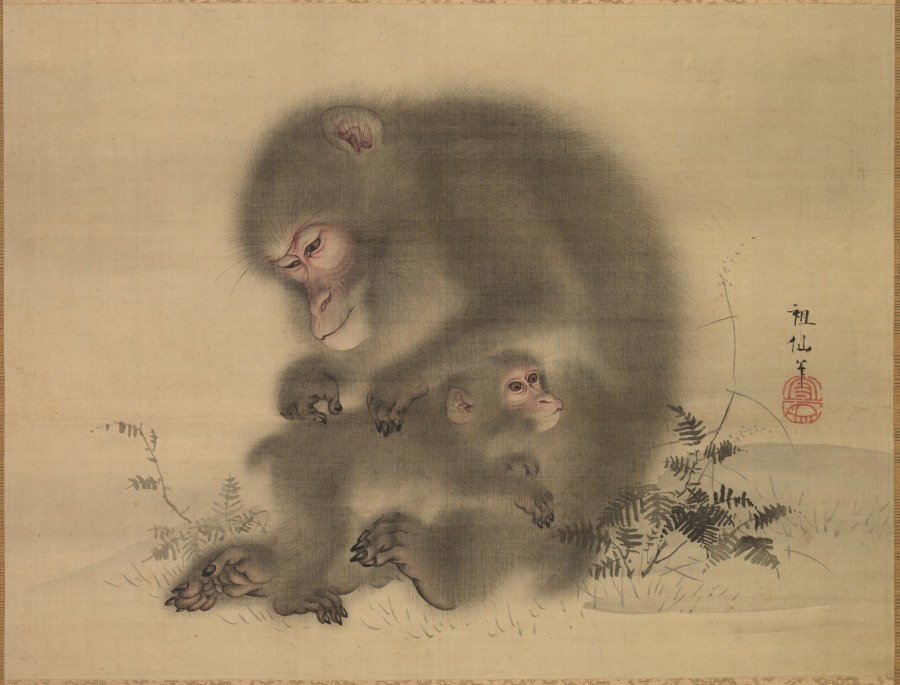
Monkeys
1820-1821
Hanging scroll; ink and light color on silk

Monkeys on a Fruit Tree
Late 18th–early 19th century
Hanging scroll; ink and colors on silk