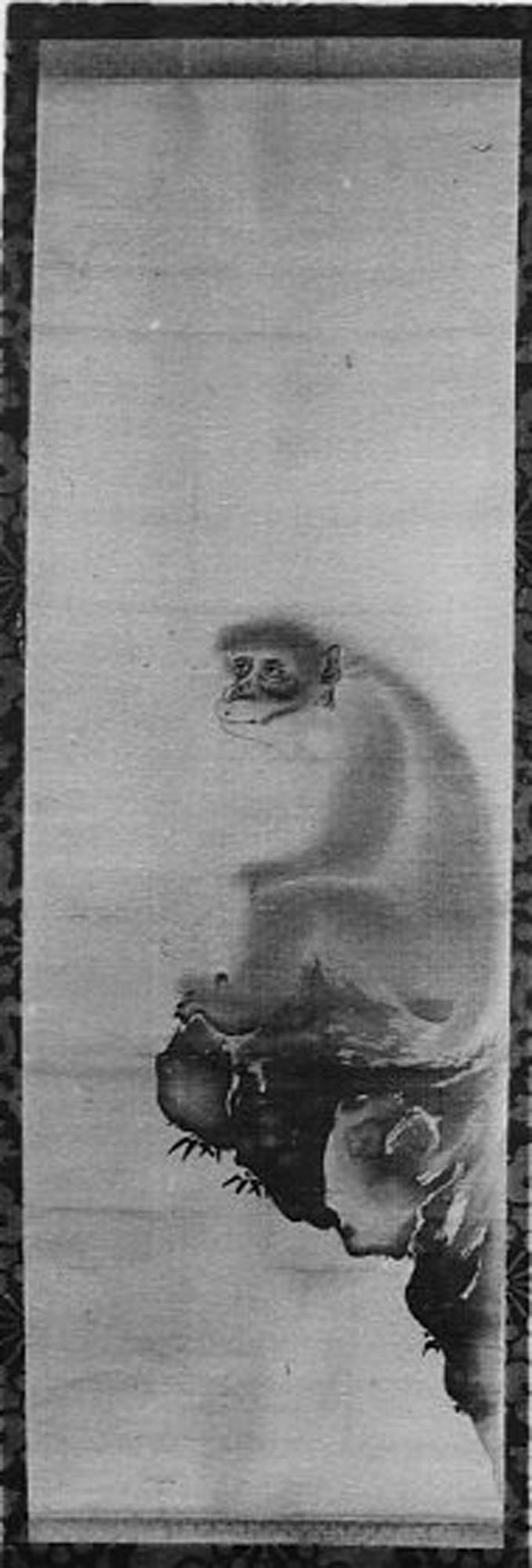
Monkey
by Mori Sosen
- Date:
- 18th century
- Medium:
- Hanging scroll; ink and color on silk
- Source:
- Metropolitan Museum of Art
Description
Monkey is a hanging scroll in ink and color on silk by Mori Sosen (森狙仙, 1747-1821), held in the Metropolitan Museum of Art (accession 52.177.22). The museum catalogues the work as eighteenth-century in style, placing it within Sosen's working period as the Osaka master who became identified with the monkey subject to the point of changing his name. The scroll measures 102.9 by 34.9 cm, a vertical format well suited to a single monkey study. Individual-figure monkey paintings of this kind were the building blocks of Sosen's reputation: each scroll a sustained portrait of a single Japanese macaque rendered with the close anatomical attention that came from long observation of living animals. Working in the Maruyama-Shijō tradition founded by Maruyama Ōkyo, Sosen developed a vocabulary for monkey fur, weight, and posture that no earlier Japanese painter had achieved — the slight slump of the shoulders, the loose curl of the tail, the alert tilt of the head — and that became the standard reference for the subject through the nineteenth century. The Metropolitan's scroll shows that vocabulary in its purest form.
More Prints by Mori Sosen
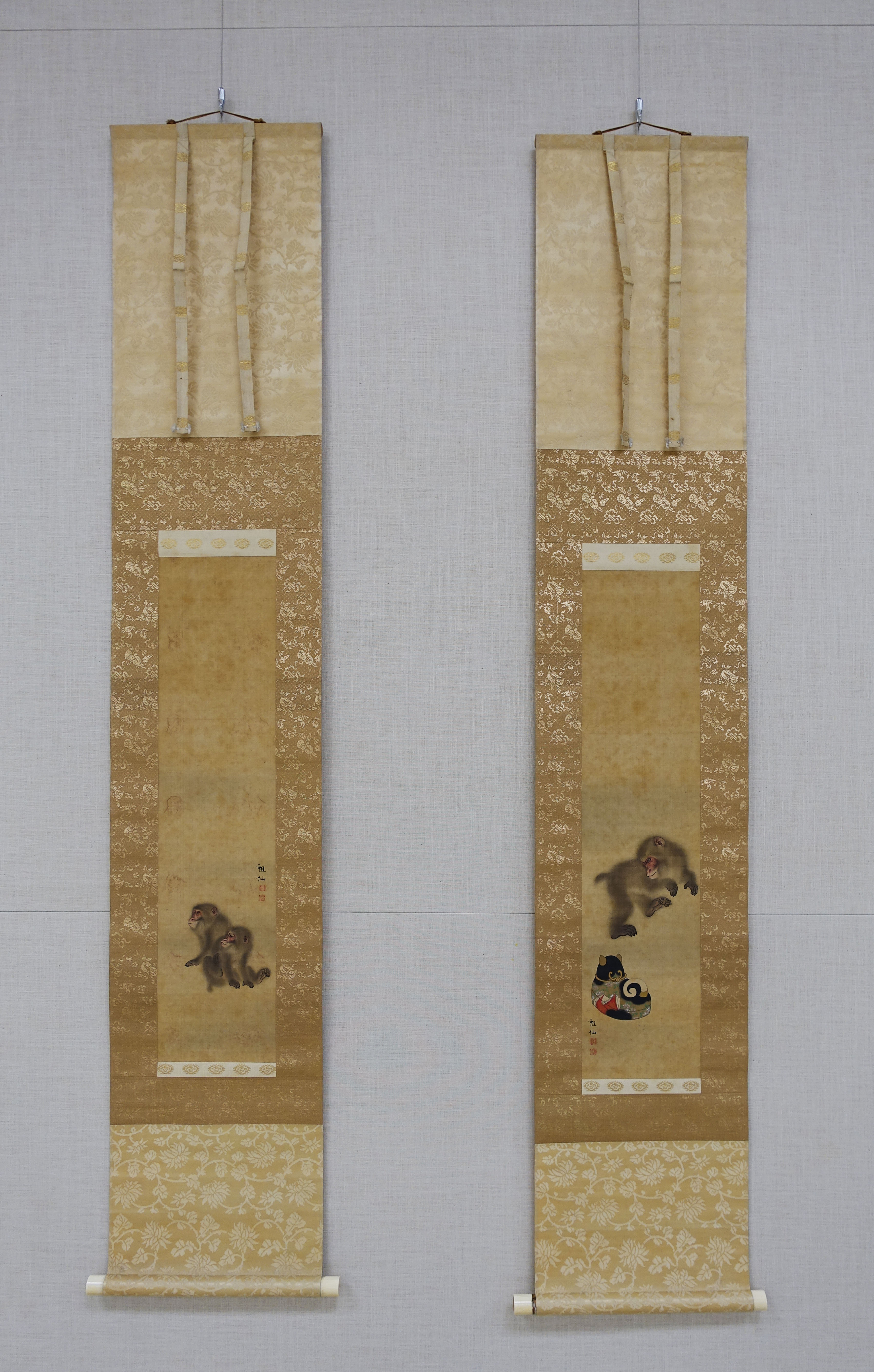
Monkeys at Play
Late 18th century–before 1807
Diptych of hanging scrolls; ink and color on silk
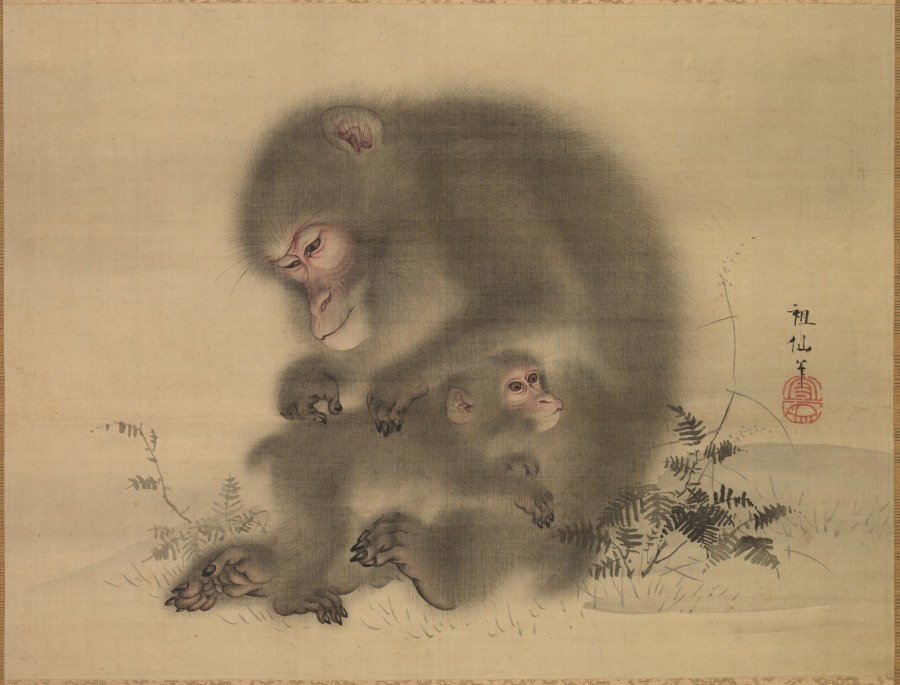
Monkeys
1820-1821
Hanging scroll; ink and light color on silk

Monkeys on a Fruit Tree
Late 18th–early 19th century
Hanging scroll; ink and colors on silk

Tiger in the Rain
Late 18th–early 19th century
Hanging scroll; ink and colors on paper
Frequently Asked Questions
Monkey was created by Mori Sosen (森狙仙) in 18th century.