Biography
Noël Nouët (1885–1969) was a French painter, illustrator, and poet who spent much of his adult life in Japan, where a selection of his ink sketches of Tokyo were issued as shin-hanga woodblock prints. Working from a European artistic sensibility deepened by long residence in Japan, Nouët is best remembered for his atmospheric views of the Japanese capital in the 1930s.
Born Frédéric Anges Nouët on 30 March 1885 in Locmine, in Brittany, he adopted the pen name Noël Nouët as a young man and developed an early fascination with Japanese art. He moved to Japan in 1926, initially teaching at Shizuoka High School, and from 1930 served as a professor of French at the Tokyo School of Foreign Languages. He remained in Japan for roughly three and a half decades, becoming a familiar figure in French-Japanese cultural life; in 1951 he taught French to the future Emperor Akihito.
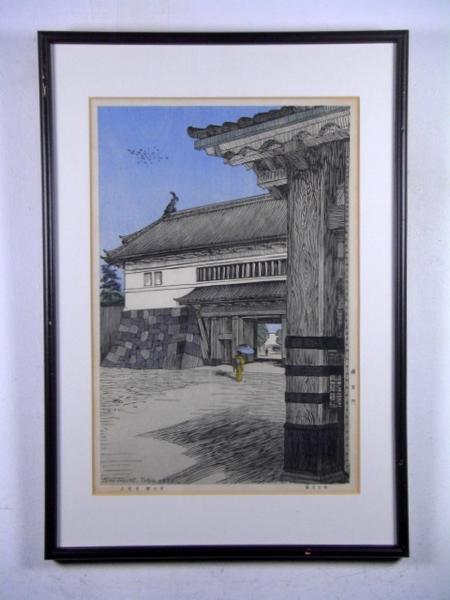
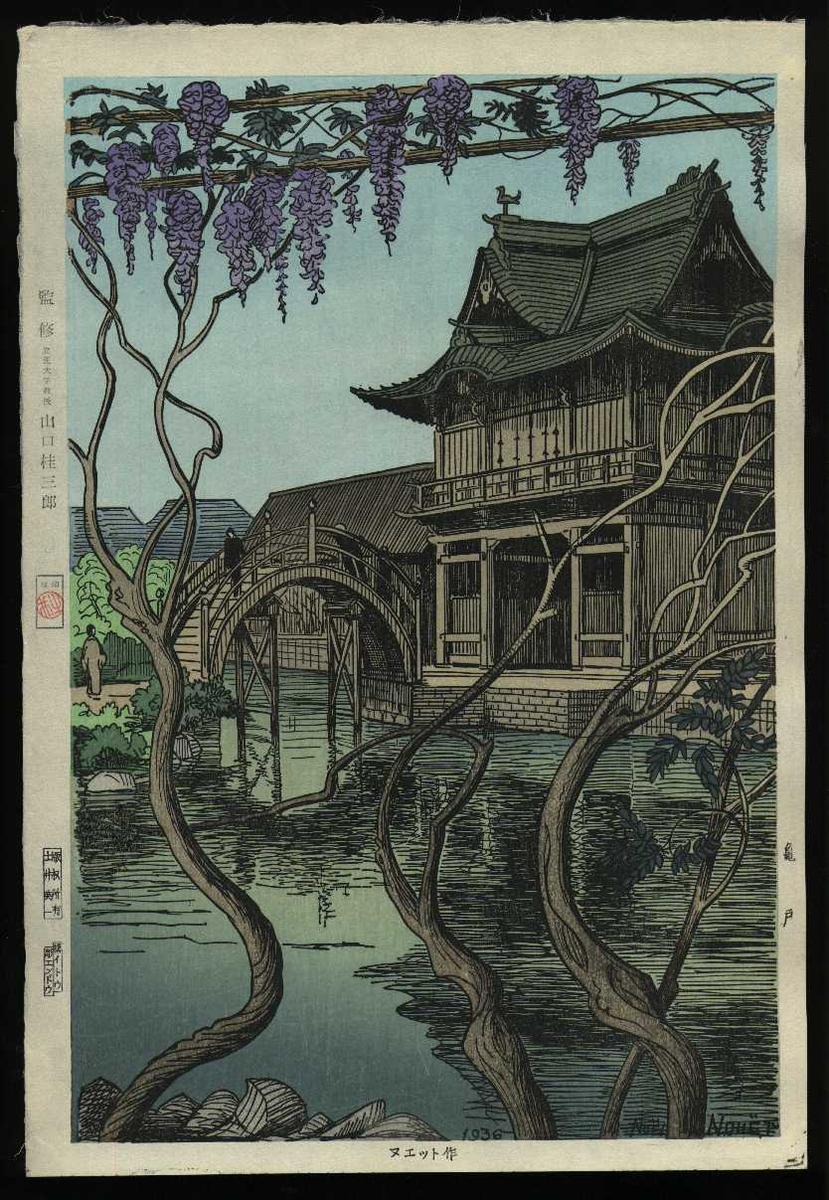
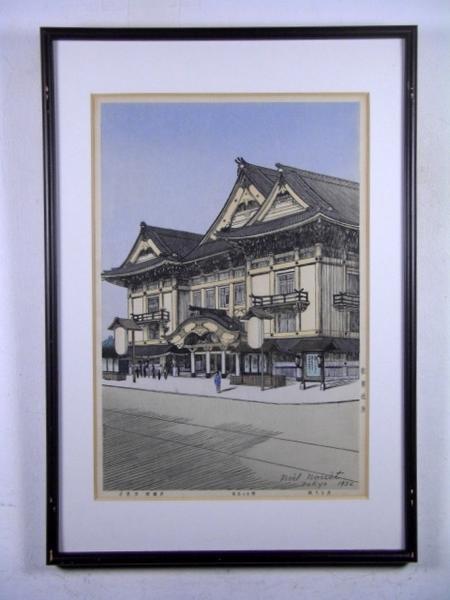
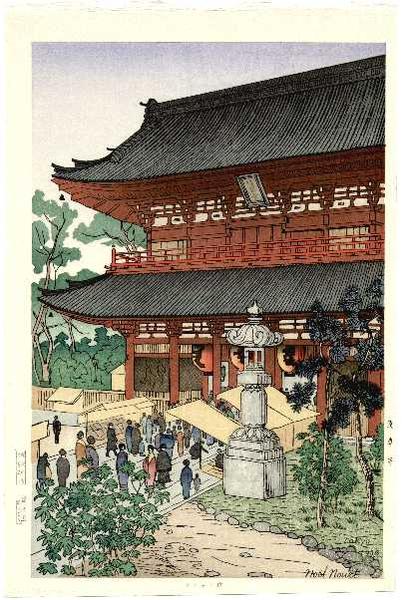
Nouët's involvement with woodblock printmaking grew out of his drawing rather than any formal training in the craft. In the mid-1930s the publisher Doi transformed about two dozen of his ink sketches of Tokyo into shin-hanga prints — views and scenes of the city that took in landmarks such as Akasaka, Nihonbashi Bridge, Inokashira Park, and Shinobazu Pond. The Japan Times had already published collections of his Tokyo drawings as lithographs earlier in the decade. Carved and printed by skilled Japanese craftsmen, the woodblock versions paired a European draughtsman's line with the tonal subtlety of the shin-hanga workshop, and Nouët's affection for the older landscape tradition led friends to nickname him a latter-day Hiroshige.
His Tokyo prints are of particular historical interest, since they document the appearance of the prewar city — much of which was subsequently transformed by wartime bombing and postwar reconstruction. Nouët remained in Tokyo through the Second World War, during which his home was destroyed in the 1945 air raids.
Nouët also wrote on Japanese subjects, and his position as a French intellectual long resident in Japan gave him an unusual vantage on both cultures. He returned to France around 1960, after more than three decades in Japan, and died in 1969. His Tokyo prints remain his most enduring legacy — the record of a Western artist who lived in Japan for decades and absorbed its visual traditions deeply enough to make them his own.
Key Facts
- Active Period
- 1885–1969
- Nationality
- 🇫🇷France
- Movement
- Shin-hanga
- Works Indexed
- 27
Frequently Asked Questions
Noël Nouët (1885–1969) was a French painter, illustrator, and poet who spent much of his adult life in Japan, where a selection of his ink sketches of Tokyo were issued as shin-hanga woodblock prints. Working from a European artistic sensibility deepened by long residence in Japan, Nouët is best remembered for his atmospheric views of the Japanese capital in the 1930s.
Noël Nouët was active from 1885 to 1969. They were associated with the Shin-hanga movement.
Noël Nouët's work was shaped by the Shin-hanga tradition in Japanese woodblock printmaking. Shin-hanga: ## What is Shin-hanga? Shin-hanga (新版画), literally "new prints," is the early twentieth-century revival of the collaborative Japanese woodblock workshop, organized between roughly 1915 and 1960 by the Tokyo publisher Watanabe Shōzaburō (1885–1962) and a handful of competing houses.
Original prints by Noël Nouët can be found in collections including Japanese Art Open Database, Ohmi Gallery, ukiyo-e.org, wbp.