
Biography
Shimizu Toshi (清水登之, 1887–1945) was a Meiji–Taishō–Shōwa yōga (Western-style) painter whose unusually international career carried him from a Tochigi farming village to Seattle, New York, Paris, and Madrid before he returned to Tokyo in 1927 and, in 1930, became a founding member of the Independent Art Association. Working principally in oil — and sometimes grouped with the sōsaku-hanga (creative print) movement, though print was never his primary medium — he produced one of the most consistent bodies of urban modernist painting by any Japanese artist of his generation, with a corpus of New York street scenes, European travel paintings, and late Tokyo subjects that survives largely in the Tochigi Prefectural Museum of Fine Arts, the National Museum of Modern Art, Tokyo, the Hiroshima Museum of Art, and various private and regional collections in Japan. He died at his family home in Tochigi on 7 December 1945, four months after the end of the Pacific War and shortly after learning of the death of his eldest son in combat, having spent the war years producing official battle paintings for the Japanese military — a final phase that complicates but does not diminish the importance of his earlier work.
Shimizu was born on 1 January 1887 in the village of Kokufu (now part of Tochigi City) in Shimotsuga District, Tochigi Prefecture, in the northern Kantō region inland and north of Tokyo. His early ambition was a military career, and as a young man he sat the entrance examination for the Imperial Japanese Army Academy. He failed the exam — a setback that, by his own later account, led him to consider artistic study as an alternative. In 1907, at the age of twenty, he sailed for the United States, joining the wave of Japanese emigration to the West Coast that had begun in earnest after the Sino-Japanese War of 1894–95 and that would be sharply curtailed by the Gentlemen's Agreement of 1907–08 and the Immigration Act of 1924. He arrived in Seattle and supported himself for several years through the kinds of menial labor — railroad work, domestic service, restaurant work — that defined the immigrant Japanese economy of the Pacific Northwest in the first decade of the twentieth century. Around 1912 he came into contact with the Dutch painter Fokko Tadama, who ran a small painting school in Seattle and is now also remembered as a teacher of the Issei painters Kenjiro Nomura and Kamekichi Tokita. Tadama gave Shimizu his first systematic instruction in Western-style oil painting and helped place him at a local art school, and through this training Shimizu acquired the academic foundation in figure drawing and tonal painting that would underlie his mature work.
He married around this period, and in 1917 he and his wife relocated to New York City — a move that decisively shaped the rest of his American career. He enrolled at the Art Students League of New York, where he studied under John Sloan (1871–1951), the senior figure of the Ashcan School and one of the most influential teachers of urban realist painting in early-twentieth-century America. Sloan's emphasis on the immediate observation of New York street life — the elevated-train platforms, the corner saloons, the tenement courtyards, the ethnic enclaves of the Lower East Side — gave Shimizu both a subject and a method. His New York paintings of the early 1920s, of which Chinatown at Night is among the best-known surviving examples, belong recognizably to the Ashcan tradition while also reading as records of the city from the unusual vantage of an Issei observer. In 1921 he was awarded a prize at the Art Institute of Chicago's annual exhibition of American painting and sculpture, but the award was rescinded when the jury learned that he was a Japanese national rather than an American citizen — an incident that places his New York career squarely within the larger history of Asian American exclusion.
In 1924 Shimizu and his wife sailed for France, traveling with the yōga painter Miyake Katsumi. They settled for a time in Paris, where he painted along the Seine, and over the following two years they traveled through Spain and elsewhere in Europe. The Spanish paintings of the mid-1920s — among them his views of Toledo — give the strongest sense of the impact of European travel on his work: a brighter, more saturated palette than the dark Ashcan tonality of New York, and an interest in the formal structure of Spanish urban architecture and in the figures of monks, soldiers, and street workers he encountered in Castilian towns. A Toledo painting was recognized at the Salon of the Société des Artistes Indépendants in Paris, and he also exhibited at the Salon d'Automne, gaining French institutional visibility for his work for the first time.
Shimizu returned to Tokyo in 1927, after twenty years abroad. In November 1930 he became one of the fourteen founding members of the Dokuritsu Bijutsu Kyōkai (Independent Art Association), formed by a group of yōga painters — among them Fukuzawa Ichirō, Satomi Katsuzō, and Migishi Kōtarō — several of whom had broken from the Nikakai (Second Section Association) in search of a more rigorously modernist framework for Western-style painting in Japan. The Dokuritsu-ten, the association's annual exhibition, first held in early 1931, became the principal venue for his Tokyo work through the 1930s. His Tokyo paintings of the late 1920s and 1930s extend the urban-observation mode of his New York and European years into Japanese subject matter — Asakusa entertainment districts, suburban scenes, street workers — and his interest in collective human subjects (crowds, processions, refugees, soldiers) became more pronounced as the political climate darkened through the decade. He is sometimes associated with the sōsaku-hanga (creative print) movement of the same period, though his principal medium remained oil.
The last phase of Shimizu's career was shaped by the Second Sino-Japanese War (from 1937) and the Pacific War (from 1941). Like a number of senior yōga painters of his generation — among them Fujita Tsuguharu, Miyamoto Saburō, Ihara Usaburō, and Tsuruta Gorō — Shimizu accepted official commissions for sensō kiroku-ga (war record paintings) under the auspices of the Imperial Japanese armed forces, producing large oil compositions depicting combat and its aftermath in China and the wider theater of war. Among these are battlefield scenes from the Jiangnan (Kōnan) campaign of the late 1930s and Refugee Group (1941), the latter among the works now held by the Tochigi Prefectural Museum of Fine Arts. Many Japanese war record paintings of the period were gathered by the Allied occupation after the war and are now held at the National Museum of Modern Art, Tokyo, on indefinite loan from the United States, where they remain accessible to scholars but are rarely exhibited. Shimizu and his family were evacuated to his ancestral home in Tochigi in the final months of the war. In June 1945 he learned that his eldest son, Ikuo, had been killed in combat, and he died at home on 7 December 1945, four months after the surrender, at the age of fifty-eight.
Shimizu Toshi's posthumous reputation has tracked the long arc by which Japanese yōga of the interwar period has come back into critical visibility. The Tochigi Prefectural Museum of Fine Arts, established in his home prefecture in 1972, became the principal institutional custodian of his work, holding important surviving New York and Paris paintings and mounting periodic exhibitions; its catalogues remain an indispensable scholarly source on his life. The National Museum of Modern Art, Tokyo, and the Hiroshima Museum of Art hold further works, and additional easel paintings survive in regional and corporate collections across Japan. In the larger picture of twentieth-century Japanese art, Shimizu occupies a distinctive position as one of the most consistently urban-modernist of the Issei painters who returned to Japan after long American careers, and as one of the few Japanese yōga painters of his generation whose work documents the New York street life of the Ashcan period from the inside. His New York street scenes of the early 1920s, such as Chinatown at Night, together with the Spanish works of the mid-1920s and the late Tokyo subjects of the 1930s, make a coherent record of an international yōga career that ran from Tochigi to Seattle to New York to Paris and back to Tochigi, and that survived the catastrophe of the war by a matter of weeks.
Key Facts
- Active Period
- 1887–1945
- Nationality
- 🇯🇵Japan
- Movement
- Sōsaku-hanga
- Works Indexed
- 10
Frequently Asked Questions
Shimizu Toshi (清水登之, 1887–1945) was a Meiji–Taishō–Shōwa yōga (Western-style) painter whose unusually international career carried him from a Tochigi farming village to Seattle, New York, Paris, and Madrid before he returned to Tokyo in 1927 and, in 1930, became a founding member of the Independent Art Association. Working principally in oil — and sometimes grouped with the sōsaku-hanga (creative print) movement, though print was never his primary medium — he produced one of the most consistent bodies of urban modernist painting by any Japanese artist of his generation, with a corpus of New York street scenes, European travel paintings, and late Tokyo subjects that survives largely in the Tochigi Prefectural Museum of Fine Arts, the National Museum of Modern Art, Tokyo, the Hiroshima Museum of Art, and various private and regional collections in Japan. He died at his family home in Tochigi on 7 December 1945, four months after the end of the Pacific War and shortly after learning of the death of his eldest son in combat, having spent the war years producing official battle paintings for the Japanese military — a final phase that complicates but does not diminish the importance of his earlier work.
Shimizu Toshi was active from 1887 to 1945. They were associated with the Sōsaku-hanga movement.
Shimizu Toshi's work was shaped by the Sōsaku-hanga tradition in Japanese woodblock printmaking. Sōsaku-hanga: ## What is sōsaku-hanga? Sōsaku-hanga (創作版画, "creative prints") was a twentieth-century Japanese print movement defined by a single commitment: the artist must design, carve, and print every work alone.
Original prints by Shimizu Toshi can be found in collections including Private collection (Japan), Private collection (exhibited Tokyo National Museum of Modern Art, 1982), Tochigi Prefectural Museum of Fine Arts, Miyagi Museum of Art.
Woodblock Prints by Shimizu Toshi (10)

In Front of a Theater
プロクター座前
1922
Oil on canvas
Chinatown at Night, New York
夜のチャイナタウン、ニューヨーク
1922
Oil on canvas

Icecream Pavilion
アイスクリーム・パヴィリオン
1922
Oil on canvas
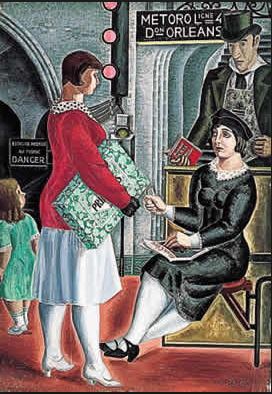
Subway Station
地下鉄停車場
1924
Oil on canvas

Madrid
マドリード
1925
Oil on canvas

Seine Riverside
セーヌ河畔
c. 1925
Oil on canvas

Merry-Go-Round
メリー・ゴーランド
1925
Oil on canvas
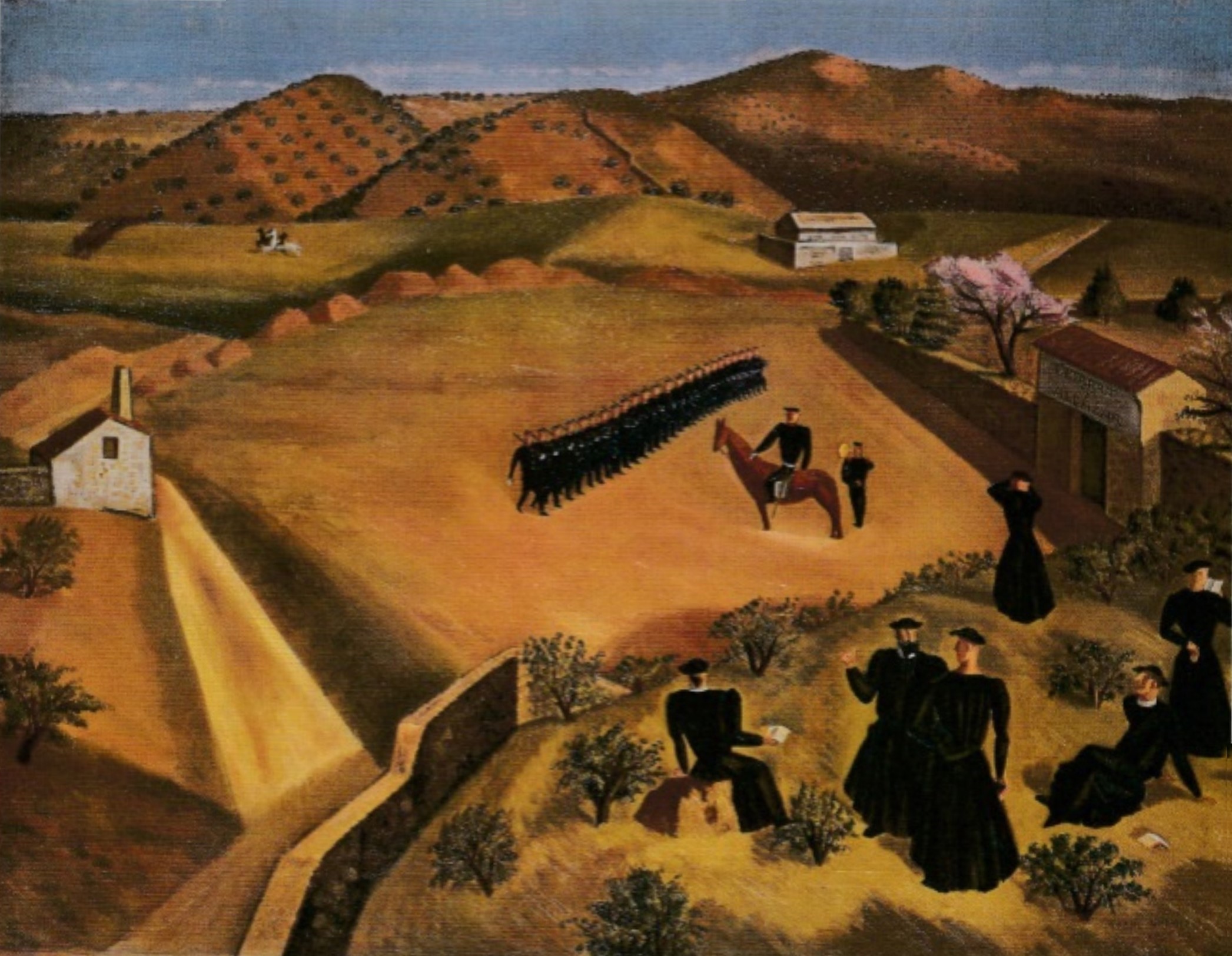
Outskirts of Toledo
トレドの郊外
1925
Oil on canvas
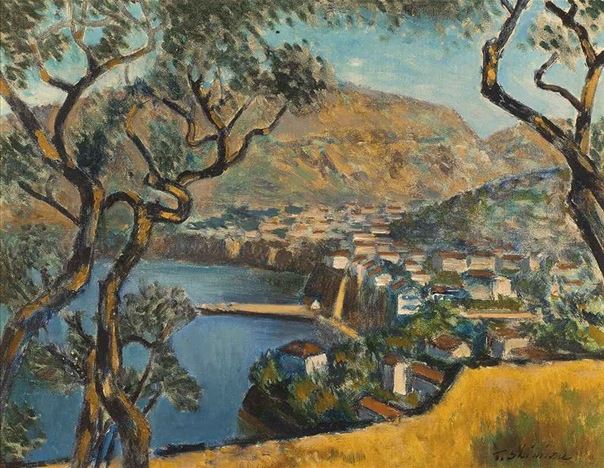
Italy
イタリア
1926
Oil on canvas

City Scene
街景
Before 1945
Oil on canvas