Biography
Suga Tatehiko (菅楯彦, 1878-1963) was a Japanese nihonga painter and print designer who became one of the leading figures of the Osaka art world in the first half of the twentieth century. Born in Tottori in 1878 with the given name Totaro, he received his earliest training from his father, a former samurai and painter, and grounded himself in the Tosa school and the older yamato-e tradition of narrative Japanese painting. In the early 1900s he also studied Western painting techniques in Osaka, and he drew freely on a range of classical schools in forming a personal style.
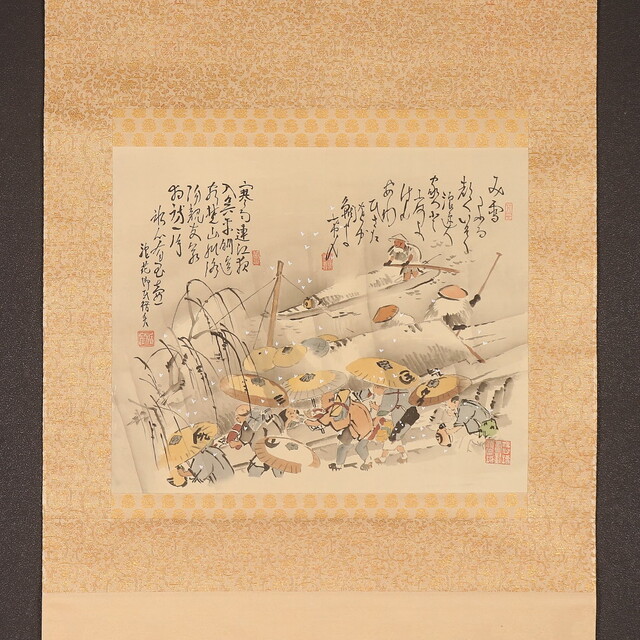
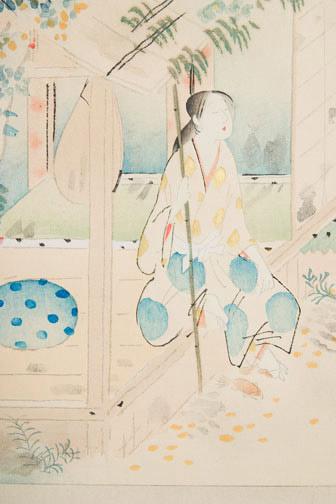
Settling in Osaka, Suga made the life, history, and customs of the city his central subject, becoming closely associated with the genre of Naniwa (Osaka) scenes — depictions of the manners, festivals, and everyday elegance of the old merchant capital, rendered with the refinement of yamato-e. His command of historical and folk subject matter set his work apart from the landscape and bird-and-flower specialists of his generation.
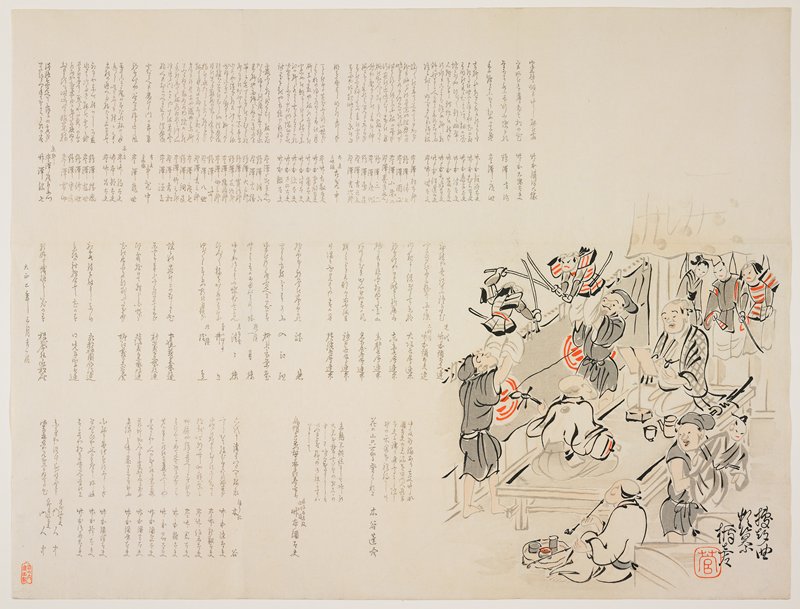
Suga exhibited at the Nitten, the national art exhibition, and was a member of the Osaka Art Society, remaining an influential presence in the city's painting circles for decades. A number of his designs were also realized as woodblock prints, cut by the carver Yamagishi Kazue and pulled by the printer Nishimura Kumakichi, carrying his painterly vision of Osaka into the medium of the print.
His standing was recognized with high honors late in his career: he became the first nihonga painter to receive the Onshi-sho, the Imperial Gift Prize of the Japan Art Academy, in 1958, and in 1962 he was named among the first Honorary Citizens of Osaka. He died in 1963 at the age of eighty-five. Far from an obscure figure, Suga Tatehiko is remembered as a distinctive interpreter of Osaka's cultural heritage whose paintings and prints are preserved in museum and private collections of modern Japanese art.
Key Facts
- Nationality
- 🇯🇵Japan
- Movement
- Meiji/Taishō Prints
- Subjects
- AbstractFiguresSnow ScenesSummer
- Works Indexed
- 4
Frequently Asked Questions
Suga Tatehiko (菅楯彦, 1878-1963) was a Japanese nihonga painter and print designer who became one of the leading figures of the Osaka art world in the first half of the twentieth century. Born in Tottori in 1878 with the given name Totaro, he received his earliest training from his father, a former samurai and painter, and grounded himself in the Tosa school and the older yamato-e tradition of narrative Japanese painting. In the early 1900s he also studied Western painting techniques in Osaka, and he drew freely on a range of classical schools in forming a personal style.
Suga Tatehiko's work was shaped by the Meiji/Taishō Prints tradition in Japanese woodblock printmaking. Meiji/Taishō Prints: Meiji and Taishō era prints (1868–1926) bridge the transition from traditional ukiyo-e to the modern shin-hanga and sosaku-hanga movements.
Suga Tatehiko's prints frequently feature abstract, figures, snow scenes, summer.
Original prints by Suga Tatehiko can be found in collections including ukiyo-e.org, robynbuntin.