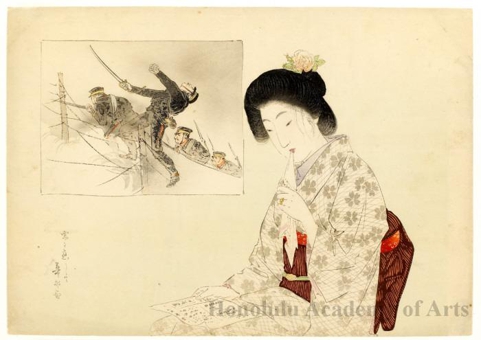
Suzuki Kason
鈴木華邨
1860–1919
Japan
Biography
Suzuki Kason (鈴木華邨, 1860-1919) was a Meiji and Taishō nihonga painter and kuchi-e illustrator who worked principally in the kachō-e (bird-and-flower) and bijin-ga (beautiful women) genres, drawing on an unusually broad training in the Maruyama-Shijō, Tosa, and ukiyo-e traditions to produce both formal paintings for the new salon exhibition system and the brightly colored woodblock frontispieces (kuchi-e) that introduced popular Meiji literary magazines. He is one of the most recognizable kuchi-e designers of the 1890s and 1900s, especially through his work for the Hakubunkan magazine Bungei Kurabu (Literary Club), and his paintings circulated widely enough to earn him representation in the Boston Museum of Fine Arts, the Metropolitan Museum of Art, the Honolulu Museum of Art, the Rijksmuseum, the British Museum, and the Minneapolis Institute of Art, among other Western institutions.
He was born in Edo (Tokyo) in 1860, in the closing years of the Tokugawa shogunate, under the personal name Suzuki Sōtarō (鈴木宗太郎). He developed his manner by studying across several traditions: the Tosa school, which gave him a foundation in the classical Yamato-e idiom and in the conventions of figure painting drawn from the long courtly tradition of Heian and medieval picture-scrolls; the Maruyama-Shijō style of naturalistic sketching that descended from Maruyama Ōkyo and Matsumura Goshun; and the formal vocabulary of the late Edo ukiyo-e tradition. The combination, which would later define his mature manner, gave him equal facility in the courtly figure style, in the close zoological observation of birds and plants that defined Shijō kachō-e, and in the densely patterned color and graphic clarity of woodblock-derived ukiyo-e. By the 1880s he had established himself in Tokyo as an independent painter under the art name Kason (華邨, "flower hamlet"), a name that announced his commitment to the kachō-e tradition.
Kason's institutional career tracked the development of the Meiji exhibition system. He took part in the government-sponsored exhibitions through which Meiji painters negotiated the boundary between Edo-period painting traditions and the new structures of national cultural display, including the domestic industrial expositions (Naikoku Kangyō Hakurankai). He went on to exhibit at the Bunten (Ministry of Education Fine Arts Exhibition) from its founding, showing in the first and third Bunten of 1907 and 1909, and at other major Tokyo painting societies of the period. In 1910 he sent a painting of a ferry boat in rain to the Japan-British Exhibition in London, where it won a gold prize, an international recognition that placed him among the senior nihonga painters whose work the Japanese government chose to promote abroad. His work was acquired during his lifetime by Western museums and collectors interested in contemporary Japanese painting, and his name appears in the British Museum's biographical authority records (BIOG2680).
The most influential strand of Kason's production for the wider history of Japanese prints was his work as a kuchi-e (frontispiece) designer for popular literary magazines. From the early 1890s through the early 1910s the Meiji publishing industry developed a market for full-color woodblock frontispieces bound into mass-market fiction magazines and novels, designed by leading painters and printed to a high color-printing standard by the same workshops that produced fine art prints. Kason became one of the most prolific and admired kuchi-e designers of this period, contributing repeatedly to Bungei Kurabu (Literary Club, published by Hakubunkan from 1895), and producing kuchi-e and shōsetsu illustrations for novels by major Meiji writers including Ozaki Kōyō and others associated with the Ken'yūsha literary society. Surviving examples in the Metropolitan Museum (Autumn Shower, 1904; The Daughter Manju, c. 1906; Young Monk Performing a Buddhist Rite, Meiji period; Risō to genjitsu, Meiji period) and the Museum of Fine Arts, Boston (Autumn Showers / Shigure, Bungei kurabu 10:13, 1904) document the consistent visual character of this work: small-scale figural compositions in a Shijō-derived idiom, with carefully rendered seasonal details, restrained color, and the technical refinement of late Meiji color woodblock printing. Many of Kason's Bungei Kurabu kuchi-e were carved and printed in the same Tokyo workshops that produced the shin-hanga prints of the next generation, and they form part of the technical bridge between Meiji kuchi-e and shin-hanga.
In his independent paintings and full-format woodblock prints, Kason continued to work the kachō-e and seasonal-figure subjects of his training. The Honolulu Museum of Art preserves four representative works (Autumn Shower, 1904; Beautiful Woman in Spring, 1897; Battledore, 1911; Viewing Cherry Blossoms, 1914) that show the range of his bijin-ga in seasonal settings, while the Rijksmuseum holds important examples of his bird-and-flower paintings, including a kingfisher on a lotus branch, plovers in flight, an aged crow on a snowy branch, a tit on a tea branch, and autumn grasses under a full moon, several of them entering Dutch collections as gifts or purchases in the early decades of the twentieth century. The Minneapolis Institute of Art's Ghost (yūrei-zu) demonstrates the breadth of his subject-matter beyond bird-and-flower work and connects him to the long Japanese painting interest in supernatural imagery. Across this body of work, his line and color are recognizable for their combination of Shijō naturalism with a slightly archaizing decorative sensibility derived from Tosa and ukiyo-e, and his signatures and seals (most commonly 華邨 Kason in seal script, with paired hakubun and shubun seals) are distinctive in the Meiji art market.
Kason died in 1919, during the Taishō period. Within the larger picture of Meiji and Taishō Japanese art he occupies a useful intermediate position: not one of the canonical founders of nihonga in the Tokyo or Kyoto academies, but a senior working painter whose kuchi-e output significantly shaped how the late Meiji reading public encountered contemporary painting, and whose paintings preserved the bird-and-flower and figure idioms of the late Edo Kyoto traditions into the early twentieth century. For collectors today, Kason's most accessible works are the Bungei Kurabu kuchi-e and his Honolulu Museum of Art prints; major paintings appear less frequently in Western collections but are well represented in Japan, in major Dutch collections including the Rijksmuseum, and in the records of the British Museum. His career, alongside those of contemporaries such as Tomioka Eisen and Mizuno Toshikata, marks the transitional period in which Japanese woodblock printing moved from the late Edo ukiyo-e tradition through the magazine kuchi-e of the 1890s and 1900s and toward the early twentieth-century revival of artist-led prints in shin-hanga and sōsaku-hanga.
Key Facts
- Active Period
- 1860–1919
- Nationality
- 🇯🇵Japan
- Subjects
- Autumn Foliage
- Works Indexed
- 4
Frequently Asked Questions
Suzuki Kason (鈴木華邨, 1860-1919) was a Meiji and Taishō nihonga painter and kuchi-e illustrator who worked principally in the kachō-e (bird-and-flower) and bijin-ga (beautiful women) genres, drawing on an unusually broad training in the Maruyama-Shijō, Tosa, and ukiyo-e traditions to produce both formal paintings for the new salon exhibition system and the brightly colored woodblock frontispieces (kuchi-e) that introduced popular Meiji literary magazines. He is one of the most recognizable kuchi-e designers of the 1890s and 1900s, especially through his work for the Hakubunkan magazine Bungei Kurabu (Literary Club), and his paintings circulated widely enough to earn him representation in the Boston Museum of Fine Arts, the Metropolitan Museum of Art, the Honolulu Museum of Art, the Rijksmuseum, the British Museum, and the Minneapolis Institute of Art, among other Western institutions.
Suzuki Kason was active from 1860 to 1919.
Suzuki Kason's prints frequently feature autumn foliage.
Original prints by Suzuki Kason can be found in collections including Museum of Fine Arts, Boston, Honolulu Museum of Art, Metropolitan Museum of Art.
Woodblock Prints by Suzuki Kason (4)
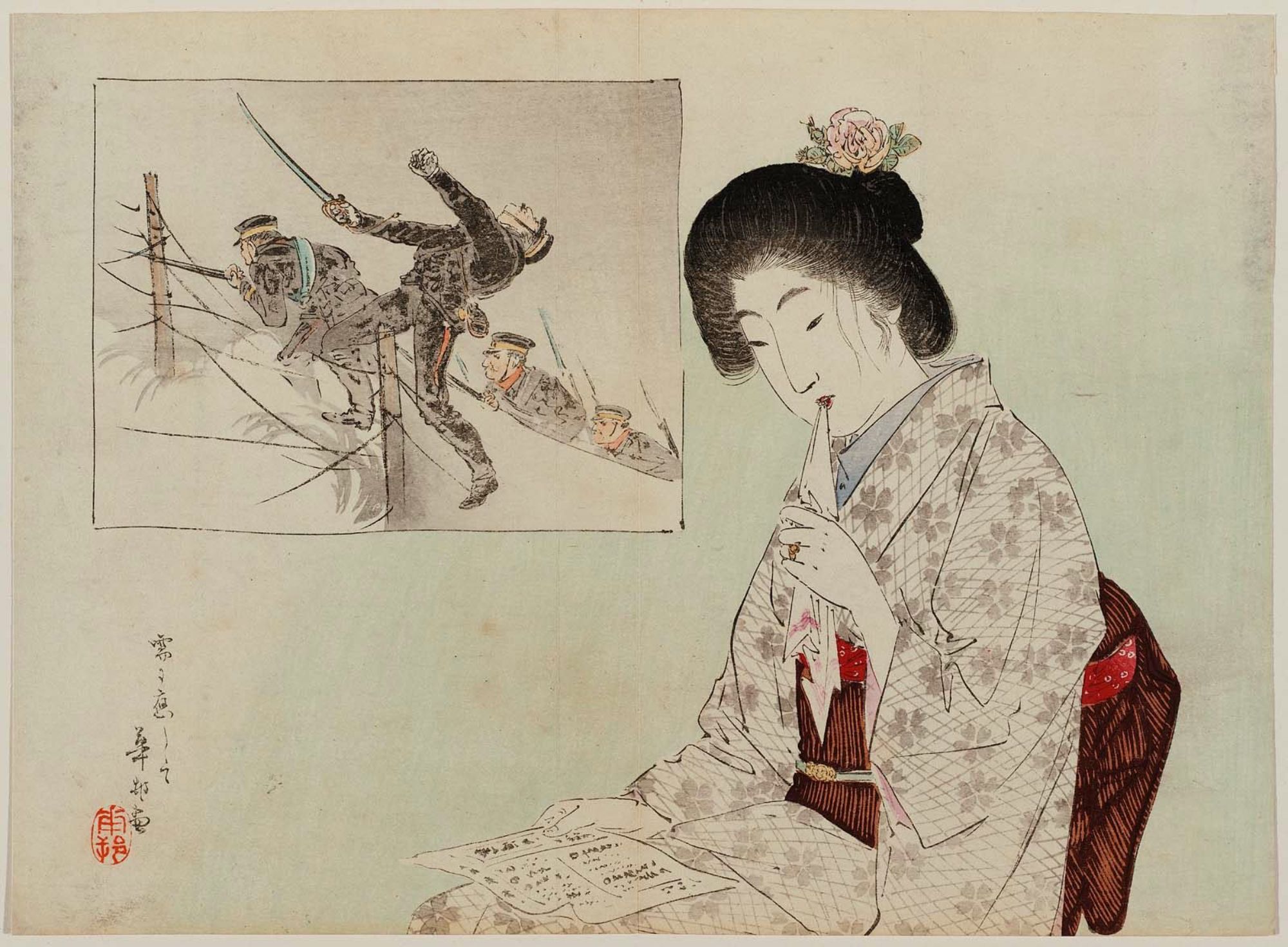
Autumn Showers (Shigure), frontispiece illustration from the literary magazine Bungei kurabu 10, no. 13
1904
Woodblock print; ink and color on paper
Autumn Shower
1904
Woodblock print; ink and color on paper
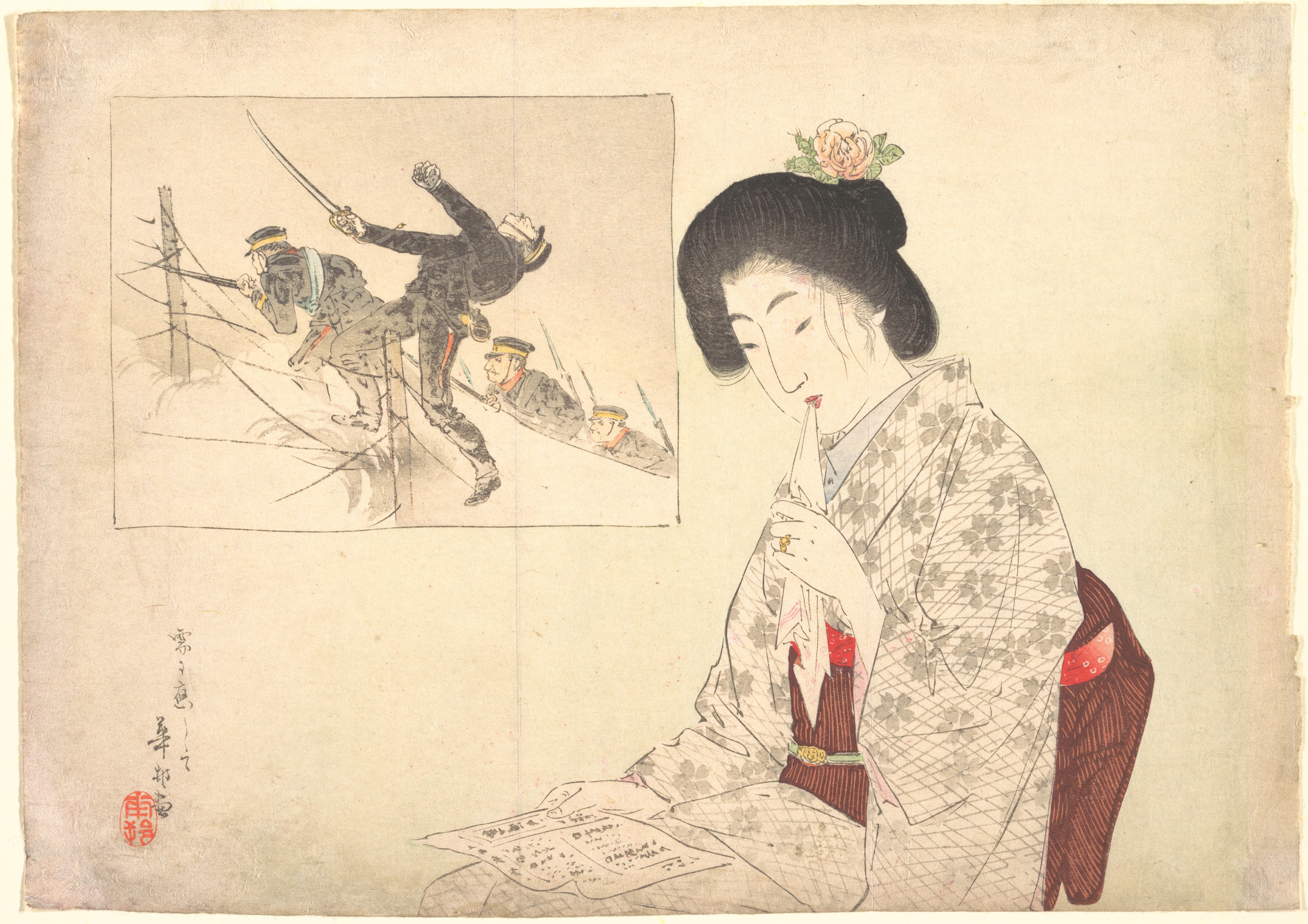
Autumn Shower, Illustration from Bungei Kurabu (Literary Club)
1904
Frontispiece; woodblock print; ink and color on paper
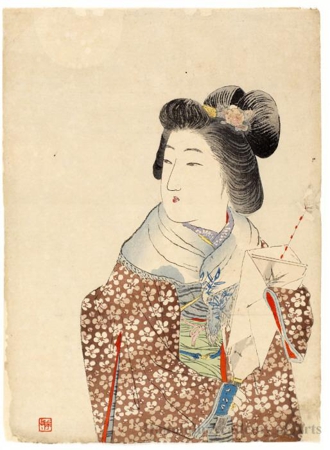
Battledore
1911
Woodblock print; ink and color on paper